What treatment does a Guadalajara data center actually need?
A Guadalajara data center needs a segregated, site-specific treatment train for cooling tower blowdown, sanitary sewage, condensate and potentially oily washdown, with the final design established by a verified water balance and legal discharge route. Untreated CTBD at 4–6 cycles of concentration from 500 mg/L makeup typically reaches about 2,000–3,000 mg/L TDS and may exceed the applicable 2,000 mg/L monthly-average limit. Baseline RO, high-recovery RO, minimal liquid discharge (MLD) and zero liquid discharge (ZLD) are therefore competing responses to different recovery targets and brine-management constraints, not interchangeable equipment selections.
Treat cooling tower blowdown as the principal recoverable stream, but do not assume it is the campus’s only wastewater. Domestic sewage, generator-room and UPS-area washdown, and humidification or air-handling condensate should remain separate until their contaminants and legal routes are established. At 4 CoC, blowdown is 25% of makeup flow; at 6 CoC, it is 20% (HydropureWater, 2026).
The architecture must respond to four conditions: measured water flows, the authorized discharge route, the internal reuse demand and the route available for concentrate or brine. This also explains why a modular RO skid is not equivalent to a complete high-recovery or ZLD facility. The former may describe membrane equipment; the latter must include pretreatment, controls, concentrate handling and a defensible disposal or reuse route.
Map every water stream before selecting equipment
A complete water balance is the defensible starting point for equipment sizing because each stream presents a different contamination and recovery constraint. Separate CTBD from chiller and adiabatic-cooler blowdown, humidification bleed-off, air-handling condensate, domestic wastewater, generator-room washdown, UPS battery-room washdown and diesel day-tank areas before deciding whether they can share treatment.
The blowdown relationship follows blowdown-to-makeup ratio = 1 ÷ (CoC − 1). Therefore, at 4 CoC, blowdown equals 25% of makeup; at 6 CoC, it equals 20% (HydropureWater, 2026). A screening example in the same 2026 source places a 30 MW campus at WUE 0.5 Gal/kWh and approximately 1,000,000 L/day of makeup, generating about 250,000 L/day of CTBD at 4 CoC. This is a screening calculation, not a substitute for metering.
| Stream | Principal design issue | Minimum separation or characterization |
|---|---|---|
| Cooling tower and chiller blowdown | Scaling, salinity, residual chemicals | Independent flow, conductivity, TDS, hardness, silica, sulfate, temperature and chemistry data |
| Humidification bleed and air-handling condensate | Low concentration but possible contamination | Keep separate; characterize conductivity, TDS and treatment need before reuse |
| Domestic wastewater | Organic and biological load | Separate sanitary route or dedicated biological treatment |
| Generator, UPS and battery-area washdown | Oil, fuel or battery acid | Segregate before dosing or membrane treatment |
Install meter points sufficient to reconcile makeup, evaporation, blowdown and reuse. The laboratory program should include flow, conductivity, TDS, pH, suspended solids, hardness, silica, sulfate, temperature, oil and grease, together with a record of the cooling chemical program (HydropureWater, 2026). The [domestic sewage treatment reference for a Mexican data center](/blog/14236-domestic-sewage-treatment-in-belo-horizonte-2026-guide.html) provides a useful separation check, while a [dissolved air flotation machine](/product/4-dissolved-air-flotation-daf-machine.html) addresses oily or colloidal washdown before combination with other streams.
Determine the local discharge and reuse limits
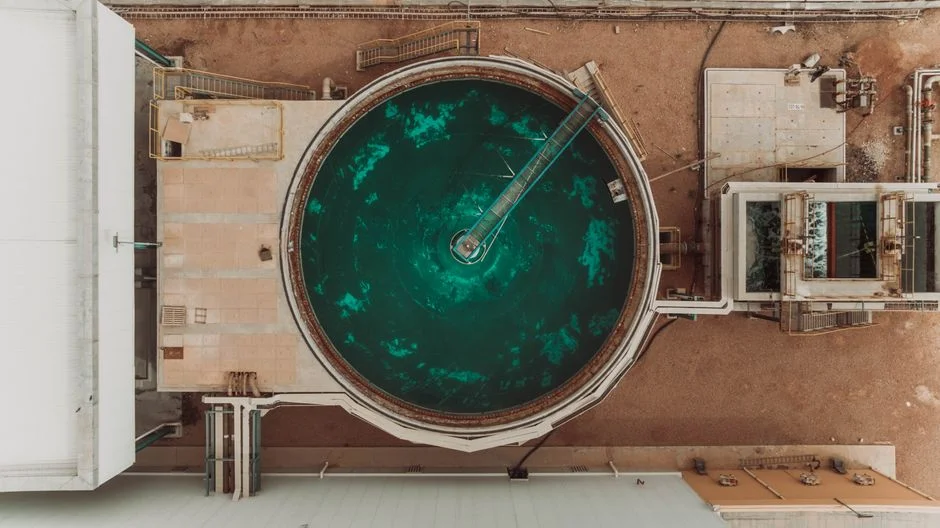
Untreated CTBD at 4–6 CoC from approximately 500 mg/L SIAPA makeup generally reaches about 2,000–3,000 mg/L TDS, so dilution is not a dependable compliance strategy. The receiving-water classification and permit route must be confirmed before treatment is selected; generic treatment performance cannot establish legal compliance.
For the Río column of NOM-001-SEMARNAT-2021, the monthly-average limits include 2,000 mg/L TDS, 1,000 mg/L sulfate, 1,000 mg/L chloride and 60 mg/L total nitrogen, together with Pb at 0.6 mg/L, Cd at 0.2 mg/L, Hg at 0.02 mg/L and total Cr at 1.5 mg/L. The same column contains a separate instantaneous temperature ceiling of 40 °C (NOM-001-SEMARNAT-2021, DOF 11-Mar-2022).
| Compliance question | Relevant limit or control | Engineering implication |
|---|---|---|
| What is the monthly-average TDS limit? | 2,000 mg/L in the Río column | Size membrane separation and verify blended discharge quality |
| What is the temperature criterion? | 40 °C instantaneous ceiling in the Río column | Provide cooling or sufficient storage to prevent a hot instantaneous discharge |
| Can the discharge enter SIAPA sewer? | CONAGUA Condiciones Particulares de Descarga and SIAPA rules may add chloride and thermal constraints | Obtain written acceptance of flow and concentrate quality |
| Which receiving-water column applies? | Depends on the receiving-water classification | Do not apply the Río envelope until the route is verified |
At 5 CoC, SIAPA makeup at 500 mg/L TDS produces approximately 2,500 mg/L TDS before treatment, according to HydropureWater’s 2026 field-data calculation. For municipal sewer discharge, obtain the applicable local conditions and confirm how CTBD and its brine will be handled; the [2026 discharge-limit analysis](/blog/14247-how-do-mining-plants-near-stillwater-meet-sewer-limits-in-2026.html) illustrates why receiving-water classification must be checked rather than assumed.
Compare baseline RO, high recovery, MLD and ZLD
Baseline brackish-water RO is generally limited to 75–80% recovery on CTBD chemistry because silica and calcium sulfate constrain stable operation (IDE technical brief, 2026). The correct architecture follows from the discharge and reuse requirements, not from a preference for the most advanced equipment.
For an edge or colocation site below 5 MW, baseline RO is defensible when SIAPA accepts the residual brine and permeate can serve non-critical applications. An [industrial reverse osmosis system](/product/6-reverse-osmosis-ro-water-purification.html) addresses the membrane separation step, but it does not by itself resolve pretreatment, controls or concentrate disposal.
High-recovery RO becomes relevant when freshwater is constrained or discharge costs are punitive. The supplied configuration combines UF, RO and a brine desalter or fluidized-bed crystallizer, reaching 90–95% overall recovery with permeate silica near 1 mg/L in IDE MAXH₂O case data (2026). A [0.03 µm PVDF ultrafiltration pretreatment](/product/17-ultrafiltration-uf-water-treatment-system.html) can form part of that train, but the recovery guarantee must be tied to the full system rather than to RO alone.
MLD is described as the most cost-effective configuration for facilities between 5 and 30 MW when a small residual has a lawful on-site reuse, storage or hauling route (HydropureWater, 2026). ZLD adds evaporation and crystallization, reaches 95–99% recovery and leaves a dry salt residue, but applies where no liquid may leave the site and the MIA requires zero surface-water or sewer release. The same source describes this condition as uncommon outside hyperscale builds.
| Architecture | Appropriate campus or condition | Recovered water | Residual handling | Principal procurement issue |
|---|---|---|---|---|
| Baseline RO | Edge or colocation below 5 MW with an accepted sewer route | Permeate for permitted non-critical reuse | Remaining brine discharged under an accepted envelope | Confirm RO recovery and concentrate acceptance separately |
| High-recovery RO | Constrained makeup or punitive discharge costs | Permeate suitable for the specified reuse | Desalter or crystallizer solids plus residual liquid | Define recovery on the complete train |
| MLD | Mid-size 5–30 MW with a lawful residual route | RO permeate plus any permitted non-potable reuse | Small residual stored, reused or hauled | Define storage, haul manifest and discharge basis |
| ZLD | No lawful liquid-discharge route | RO permeate and distilled water | Concentrate evaporated; salts leave as solid residue | Obtain a site-specific brine and salt-disposal assessment |
Build a pretreatment train that protects the membranes
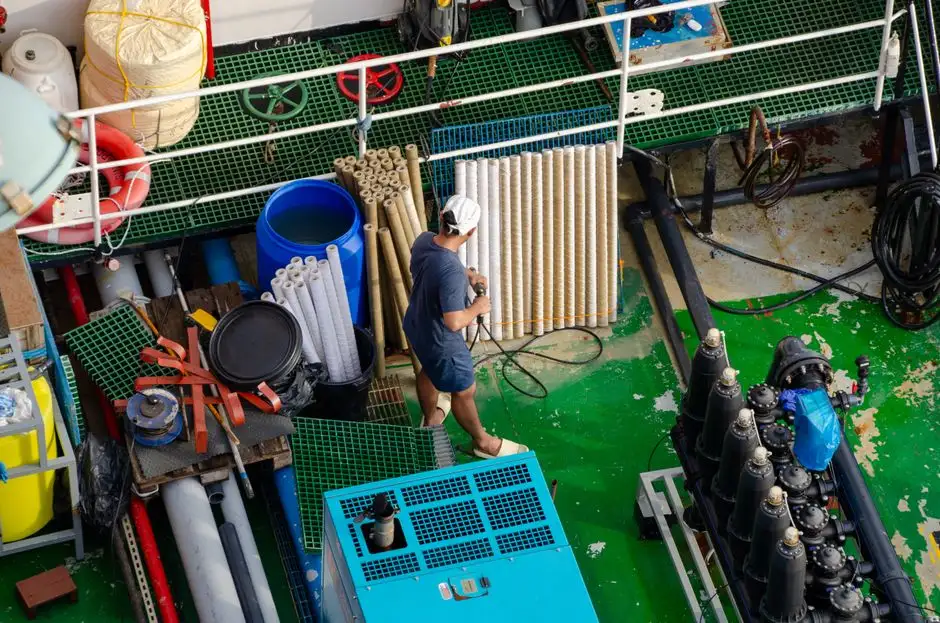
Cooling tower blowdown requires filtration and chemistry control before RO because suspended solids, colloids, iron, scaling species, residual oxidants and treatment chemicals can compromise the membrane system. SIAPA’s reported hardness and the CTBD silica range make generic pretreatment assumptions unreliable (HydropureWater, 2026).
Start with multi-media filtration to remove suspended solids, turbidity, iron and colloids and deliver the SDI required by the selected RO design. A [multi-media filter for pretreatment](/product/7-multi-media-filter-ultrapure-water.html) can serve this role. Where the selected RO train requires stronger colloidal or biological control, use the catalogued 0.03 µm PVDF UF system; its stated acceptance limit is 300 ppm turbidity, with automatic backwash and air scour.
Antiscalant dosing should be controlled by PLC and selected against the measured sulfate, silica, hardness and alkalinity profile. That is more defensible than prescribing a generic chemical program. Residual oxidants and the cooling chemical program also need to be checked against membrane and antiscalant compatibility.
Oily or colloidal washdown should be treated before it joins a common train. The catalogued [DAF machine](/product/4-dissolved-air-flotation-daf-machine.html) covers 4–300 m³/h, but the selected capacity must follow the contaminated washdown flow rather than total campus wastewater. Domestic wastewater should follow a permitted sewer route or dedicated biological treatment; combining it with CTBD would add organic and solids loading to the industrial membrane process.
Size the system for flow, seasonality and recovery
The treatment skid should be sized from measured blowdown flow, cycles of concentration and required recovery—not directly from IT load. The screening case from HydropureWater (2026) is a 10 MW campus with approximately 15 million gallons, or 57,000 m³, of monthly makeup at 4 CoC, producing approximately 3.75 million gallons, or 14,200 m³, of monthly CTBD.
Turndown is a design requirement because Guadalajara’s mild winter reduces evaporation and therefore lowers both makeup and blowdown. The supplied research recommends RO operation across 30–110% of nominal flow (HydropureWater, 2026). A unit that cannot throttle down may encourage direct sewer dumping, removing the intended water and compliance benefits.
| Sizing input | Evidence or required project input | Design consequence |
|---|---|---|
| Measured CTBD flow | Metered, seasonally reconciled stream | Sets nominal membrane and pretreatment capacity |
| CoC and makeup chemistry | 4–6 CoC screening cases; measured TDS, hardness, silica and sulfate | Sets concentrate chemistry and pretreatment requirements |
| Recovery basis | RO recovery and total-system recovery defined separately | Sets reject quantity and residual-management scope |
| Seasonal turndown | 30–110% nominal-flow operating range | Prevents seasonal excess capacity from becoming an operating liability |
| Condensate reuse | 30–150 mg/L TDS range in the supplied research | Filtration and disinfection may support non-critical reuse without RO loading |
Condensate at 30–150 mg/L can often be reused after basic 5 µm filtration and UV or chlorine disinfection, according to HydropureWater (2026). Keeping it out of the RO train reduces membrane loading and reject volume. Size brine storage, desalter feed, utilities and controls from the selected recovery train and confirmed discharge envelope; [RO and UF membrane selection](/product/24-ro-uf-membranes-filter-elements.html) should follow the feed analysis rather than precede it.
Calculate operating cost and the investment case
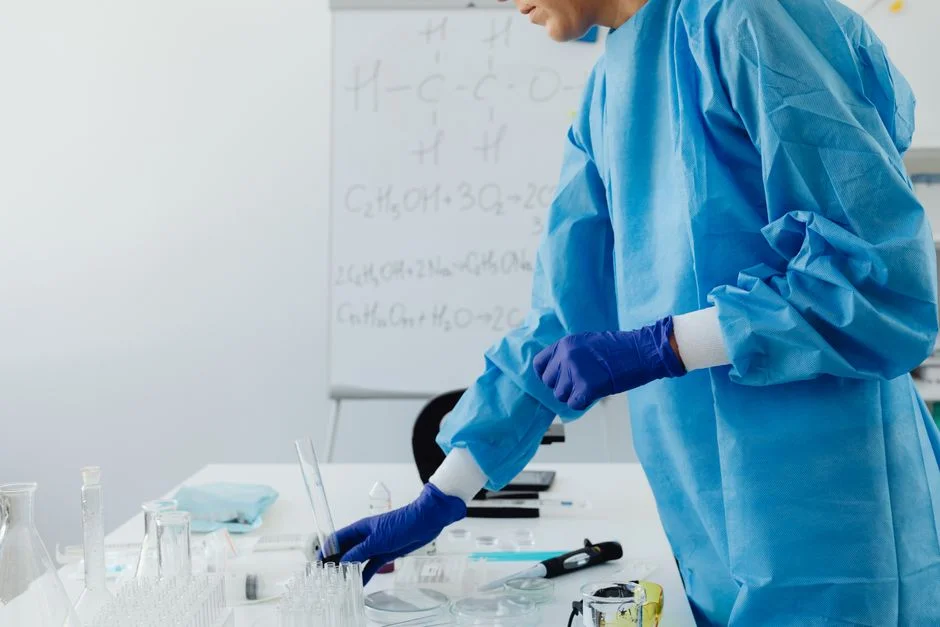
The investment case must include displaced freshwater, sewer and discharge costs, treatment utilities, chemicals, labor, concentrate handling and the value assigned to compliance risk. A water-price comparison alone will usually understate avoided costs.
The supplied 2026 research places the installed cost of a 100–200 m³/day modular high-recovery RO plus brine-desalter train at USD 250,000–800,000. Initial screening assumptions are 0.5–1.0 kWh/m³ of permeate for RO and 15–25 kWh/m³ of distillate for mechanical vapor recompression, with CFE industrial tariffs at approximately USD 0.08–0.12/kWh (HydropureWater, 2026).
The same research gives a 15 MW reference case with USD 200,000 of capital and 60% blowdown recovery. It produces a 6.7-year simple payback on water savings alone, improving to 3–5 years when avoided SIAPA water, sewer or discharge fees, mitigation offsets and reduced pumping costs are included. Those avoided-cost inputs must be supported by the project’s actual tariffs and permit conditions before approval.
| Investment line | Screening basis | Approval requirement |
|---|---|---|
| Installed treatment cost | USD 250,000–800,000 for the stated 100–200 m³/day modular train | Obtain a scope-aligned quotation with the recovery boundary defined |
| Energy | RO: 0.5–1.0 kWh/m³ permeate; MVR: 15–25 kWh/m³ distillate | Price using the applicable CFE tariff and duty profile |
| Freshwater displacement | At 90% reuse, 2,300–5,000 m³/month for the stated 10 MW screening case | Confirm monthly CTBD and the resulting SIAPA displacement |
| Payback | 6.7 years on water savings alone; 3–5 years with specified avoided costs | Document each avoided-cost line separately |
Use the [UF pretreatment design reference](/blog/10075-ultrafiltration-pretreatment-for-ro-2026-engineering-guide.html) to define membrane-protection requirements and the [UF system cost and sizing guide](/blog/5704-ultrafiltration-system-cost-in-2026-capex-opex-sizing-guide.html) as a commercial-scope reference, not as a substitute for site quotations.
Issue a procurement package that prevents compliance and scale-up risk
A procurement package should require the supplier to guarantee a defined feed-water basis, flow diagram, mass balance and complete recovery boundary—not merely a membrane model and permeate flow.
Require the following information in the technical schedule:
- Measured feed-water basis and operating envelope, including seasonal flow and chemistry limits.
- RO recovery stated separately from total-system recovery.
- Permeate-quality and concentrate-destination commitments tied to the verified discharge route.
- Silica, calcium-sulfate and calcium-carbonate controls used in the performance guarantee.
- Turndown range, membrane replacement assumptions and clean-in-place triggers.
- Local permitting support, commissioning acceptance criteria, operator training and spare-parts strategy.
- References for comparable CTBD duty.
Specify monitored variables for flow, conductivity, TDS, pH, silica, hardness, sulfate, temperature and differential pressure, with alarms connected to scaling and membrane-fouling risks. Require a control narrative showing how the system responds to abnormal feed chemistry, loss of pretreatment, high differential pressure and concentrate-level excursions.
Do not accept an unqualified ZLD recommendation. Require a site-specific assessment of brine volume, salt generation, storage, transport, ultimate disposal and the permit basis for any residual liquid. The [2026 CAPEX, OPEX and sizing guide](/blog/5704-ultrafiltration-system-cost-in-2026-capex-opex-sizing-guide.html) can support internal comparison, but the final commercial and compliance commitments belong in the purchase documents.
Frequently Asked Questions
What wastewater treatment does a data center in Guadalajara need?
It needs a site-specific system covering the measured CTBD and each separate wastewater stream, plus treatment of sanitary sewage and segregated washdown according to their contaminant risks. Baseline RO is appropriate where SIAPA accepts the brine and the campus has limited recovery needs; high-recovery RO suits constrained freshwater or costly discharge; MLD requires a lawful residual route; and ZLD is justified only where no liquid may leave the site and the MIA requires zero release (HydropureWater, 2026).
How much does wastewater and cooling blowdown treatment cost?
The supplied installed range is USD 250,000–800,000 for a 100–200 m³/day modular high-recovery RO plus brine-desalter train (HydropureWater, 2026). Request a quotation stating whether UF is included, whether recovery is RO-only or total-system recovery, the concentrate destination, storage requirements and utility connections. Also request separate energy and chemical assumptions for the quoted duty.
How should the treatment system be sized?
Size it from metered blowdown, CoC, makeup chemistry, required recovery and seasonal turndown—not from IT load alone. Use the 10 MW screening case—approximately 57,000 m³/month of makeup and 14,200 m³/month of CTBD at 4 CoC—only to check scale. Final sizing should use measured flows and the [domestic sewage treatment reference](/blog/14236-domestic-sewage-treatment-in-belo-horizonte-2026-guide.html) to confirm that sanitary and industrial streams are not combined unintentionally.
Which discharge limits must the system meet?
For the Río column, NOM-001-SEMARNAT-2021 uses monthly-average limits—including 2,000 mg/L TDS—and a separate 40 °C instantaneous ceiling (NOM-001-SEMARNAT-2021, DOF 11-Mar-2022). SIAPA sewer discharge also requires review of CONAGUA’s Condiciones Particulares de Descarga and local sewer rules. Obtain the receiving-water classification and project-specific permit commitments before selecting the treatment train.
How should a treatment supplier be qualified?
Require a site water balance, feed analysis or pilot, a clear boundary between RO and total-system recovery, an identified reject-management plan, local service capability and comparable CTBD references. Test whether the supplier can provide commissioning criteria, operator training, monitored variables, scaling controls and performance guarantees tied to the authorized discharge envelope.
Related equipment and engineering reading
- Data Center Wastewater & Cooling Blowdown Treatment in Guadalajara, Mexico (2026 Guide)
- Data Center Cooling Blowdown Treatment in Mexico City: 2026 Engineering Guide
- Data Center Wastewater & Cooling Blowdown Treatment in Ecatepec de Morelos, Mexico (2026 Guide)
- Data Center Wastewater Treatment in Ciudad Nezahualcoyotl