Separate the data center's wastewater and blowdown streams
A data center in Ciudad Nezahualcoyotl requires two coordinated treatment paths: treatment of domestic and process wastewater before sewer or permitted discharge, and treatment of cooling tower blowdown before reuse or authorized disposal. The final requirements depend on measured flows, water chemistry, cooling cycles of concentration, discharge route, and current Mexican and local permits. A practical blowdown train starts with physical separation, then adds targeted polishing; when blowdown is reused as cooling makeup, salinity, silica, hardness, corrosion risk, and concentration cycles must be controlled.
The first design task is to define the facility boundary and assign every stream to an outlet. Cooling tower blowdown is not interchangeable with sanitary wastewater: evaporation leaves dissolved salts and may carry residual biocides, corrosion inhibitors, anti-scalants, and metals. Domestic wastewater follows a different treatment logic, while process wastewater may require source-specific pretreatment.
Free cooling adds a separate evaluation. A once-through system can release elevated-temperature water, whereas evaporative cooling avoids that direct thermal-discharge condition but still consumes water through evaporation. The analysis must distinguish water consumed, water discharged, and water returned for reuse.
Reuse is not automatically the lower-impact option. The 2026 preprint Reclaiming Cooling found a wastewater-reuse scenario with about twice the global warming potential of the freshwater case; treatment energy represented roughly 80% of the difference. The 2026 data center blowdown-treatment guide for Aden provides a comparative framework, but Ciudad Nezahualcoyotl flows, tariffs, and permit conditions must be established independently.
| Stream | Main contaminants or characteristics | Decision still required |
|---|---|---|
| Cooling tower blowdown | Concentrated salts, suspended matter, treatment chemicals, and cooling-program residues | Discharge, lower-grade reuse, or cooling-makeup reuse |
| Domestic wastewater | Organic matter, suspended solids, and sanitary contaminants | Separate sewer or permitted treatment route |
| Process wastewater | Depends on the generating process | Source-specific characterization and pretreatment |
| Free-cooling discharge | Elevated temperature and whatever constituents entered with the source water | Receiver-specific temperature and chemistry requirements |
Request 12 months of utility bills, cooling-system logs, chemical inventories, and hourly or daily flow records. The supplied research contains no Ciudad Nezahualcoyotl-specific project flow, tariff, or current permit limit, so these documents and regulator confirmation are necessary inputs.
Build a verified water balance before choosing treatment capacity
The theoretical blowdown ratio is 1/(CoC−1), where cycles of concentration (CoC) measures the concentration of dissolved solids in circulating water relative to makeup water. A 4-CoC system has a 25% blowdown ratio and a 6-CoC system has a 20% ratio.
Increasing CoC from 4 to 6 reduces blowdown by 5 percentage points of makeup flow, or 20% by volume. The trade-off is higher fouling, scaling, and microbiologically influenced corrosion risk. Genesis Water Technologies reports that actual blowdown can exceed theoretical calculations by 15–30% because of unmeasured losses and emergency dumps, so the theoretical ratio is a screening calculation rather than a final sizing basis.
Establish the baseline with makeup water, blowdown, evaporation, conductivity, pH, suspended solids, temperature, and relevant chemical residuals. Include operating conditions that trigger extra discharge, not just the normal steady-state balance. The regional data center blowdown treatment framework describes the same sequence: measure the actual system, then size treatment around observed variability.
| Quantity | Calculation or evidence | Engineering use |
|---|---|---|
| CoC | Ratio of dissolved solids in circulating water to dissolved solids in makeup water | Defines concentration risk and theoretical blowdown |
| Theoretical blowdown ratio | 1/(CoC−1) | Initial screening calculation |
| 4-CoC theoretical ratio | 25% of makeup flow | Benchmark only |
| 6-CoC theoretical ratio | 20% of makeup flow | Five percentage points below 4 CoC |
| Operational adjustment | Actual blowdown may exceed theory by 15–30% | Use measured peaks for final sizing |
Reuse can justify a stronger business case when treatment energy is evaluated properly. The 2026 Open Engineering preprint reports an indirect water penalty of approximately 0.93 L/m³ for wastewater reuse, less than 0.1% of the direct freshwater-displacement benefit. That finding supports reuse as a planning input, but it does not remove the project’s energy and residual-management obligations.
Choose the discharge route before selecting the process train
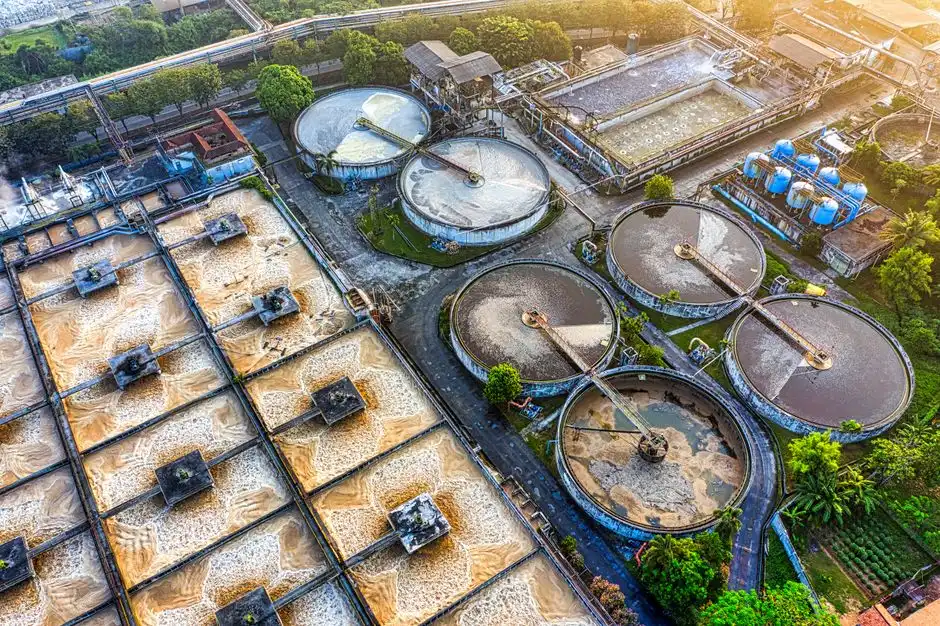
The selected endpoint determines which contaminants need removal. A municipal sewer, surface water, cooling makeup, toilet flushing, equipment washing, and irrigation are different regulatory and technical pathways, even when they receive the same initial clarification step.
- Municipal sewer: confirm the industrial pretreatment requirements, prohibited materials, local discharge permit, and whether cooling chemicals are accepted or require pretreatment.
- Surface water: establish the receiving authority’s current temperature, salinity, pH, solids, and chemical limits before selecting equipment. The supplied sources provide U.S. permit and pretreatment context, not current Mexican or Ciudad Nezahualcoyotl limits.
- Cooling-makeup reuse: define the required cycles of concentration and composition of the returning makeup. Test conductivity, total dissolved solids, hardness, calcium, silica, alkalinity, chloride, sulfate, pH, suspended solids, and constituents used in the cooling program.
- Lower-grade reuse: specify quality only after confirming the receiving use and its local requirements. Potable-quality treatment is not automatically necessary for toilet flushing, equipment washing, or a permitted irrigation application.
Cooling-makeup reuse is the most chemistry-intensive route because evaporation concentrates the constituents that can foul equipment or impair cooling control. Lower-grade reuse may need less salt removal, but it still requires protection of people, equipment, and the receiving environment.
| Route | Critical design question | Required evidence |
|---|---|---|
| Municipal sewer | What does the local pretreatment program require? | Current permit and authority confirmation |
| Surface water | Which receiving-water limits apply? | Current federal, state, and local requirements |
| Cooling makeup | Can chemistry support the intended CoC safely? | Full water analysis and cooling-system model |
| Lower-grade reuse | What quality is necessary at the point of use? | Use definition and applicable rules |
Include treatment energy in the route comparison. The 2026 wastewater-reuse study found a treatment train with about twice the global warming potential of the freshwater case, with roughly 80% of the difference attributable to treatment energy. A route that saves water but requires disproportionately high pumping and membrane treatment must still pass the whole-life business case.
Match treatment technology to the required water quality
Clarification should remove material that can be separated physically; additional treatment should be added only for contaminants that determine the selected discharge or reuse endpoint. Media filtration or dissolved air flotation can remove suspended solids and colloidal material.
For cooling-makeup reuse, the design must address dissolved salts, silica, calcium carbonate, calcium sulfate, hardness, and biological stability, as well as suspended solids. A DAF system for cooling-blowdown pretreatment can provide physical separation, while UF pretreatment for high-quality blowdown reuse can remove suspended material ahead of more sensitive downstream processes.
Brine reverse osmosis (RO) becomes relevant when dissolved-salt reduction is required, but recovery is constrained by scaling. IDE reports that conventional brackish-water RO commonly reaches 75–80% recovery before scaling becomes unmanageable. A defensible RO comparison must include antiscalant dosing, membrane protection, cleaning, concentrate disposal, permeate quality, and controls that divert off-spec water.
| Technology | Principal role | What it does not solve by itself |
|---|---|---|
| Media filtration | Suspended-solids removal | Dissolved salts, silica, or scale-forming ions |
| DAF | Suspended solids and floatable contaminants | Cooling-chemical concentration or salinity |
| UF | Physical separation and membrane pretreatment | Removal of dissolved salts |
| Brine RO | Dissolved-ion separation | Recovery limits created by scaling and concentrate handling |
| Softening and chemical control | Hardness or scaling control | Complete dissolved-salt removal |
IDE’s advanced brine-desalter case is a reference, not a guaranteed outcome: it operated at around 95% recovery and reduced permeate silica to about 1 mg/L. Applying that concept to Ciudad Nezahualcoyotl would require site chemistry, concentrate fate, reliability requirements, and a full comparison with conventional RO. The data center blowdown treatment guide for Jabalpur provides additional context for modular treatment selection.
Direct-to-cooling reuse can also require upstream softening, filtration, disinfection, conductivity control, and a managed cooling chemical program. Where the endpoint is lower grade, those added steps should not be installed merely because the technology is available; each stage should have a defined contaminant-removal or operational-control duty.
Size, operate, and verify the treatment system
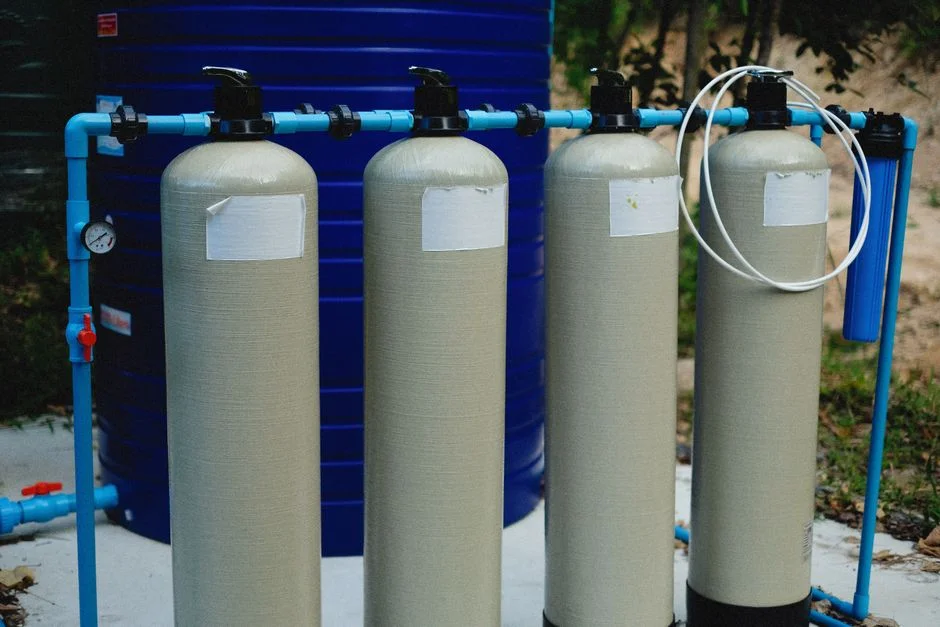
Size each stage from measured peak-hour flow, expected operating hours, and the required treatment duty. Redundancy should follow the consequence of an outage and the availability of an approved disposal or storage route. The supplied research supports modular systems in the 100–300 GPM range for facilities seeking immediate impact without hyperscale complexity, but that range is a planning reference.
| Procurement item | Required scope | Acceptance evidence |
|---|---|---|
| Design flow | Measured peak-hour basis, operating hours, and redundancy | Approved water balance and equipment sizing calculation |
| Process stages | Only those required by the confirmed endpoint | Process description and contaminant mass balance |
| Instrumentation | Flow, pressure, differential pressure, conductivity, pH, turbidity, temperature, and chemical dose | Functional tests and control narratives |
| Residuals | Sludge, concentrate, and off-spec water handling | Destination, handling method, and contingency plan |
| Performance test | Permeate quality, recovery, energy, cleaning, chemical use, and residual handling | Commissioning results under defined conditions |
Specify interlocks that divert off-spec water and protect membranes and cooling equipment when scaling-risk conditions rise. Do not accept a performance guarantee without defining test conditions, sampling points, run duration, and recovery calculations.
Genesis Water Technologies reports that physical separation followed by targeted treatment can reduce makeup-water demand by 15–25%. Use that as a feasibility benchmark only; an unmeasured site cannot be credited automatically. A reverse-osmosis water purification system should be evaluated as a salt-removal stage with its full energy, cleaning, and concentrate consequences, not as a stand-alone water-saving guarantee.
Compare total cost of water: avoided potable water, sewer charges, disposal, chemicals, labor, energy, membrane cleaning, and residuals handling. Also identify the permit-dependent items that cannot yet be priced: local utility tariffs, discharge fees, analytical requirements, and the selected discharge route.
Frequently Asked Questions
How much does wastewater and cooling-blowdown treatment cost in Ciudad Nezahualcoyotl?
No defensible price can be stated without measured flow, water chemistry, discharge route, reuse target, utility tariffs, operating hours, redundancy, and residual-disposal requirements. Ask each supplier for a quotation that separates equipment, installation, membranes or media, controls, chemical inventory, energy, maintenance, cleaning, and concentrate or sludge handling. The supplied research contains no site-specific equipment price or Ciudad Nezahualcoyotl tariff, so a generic unit price would not support procurement.
Which treatment supplier and capacity should the project select?
Select against the confirmed endpoint, not the broadest technology offered. A cooling-makeup design must
Frequently Asked Questions
What treatment does a data center in Ciudad Nezahualcoyotl need for cooling tower blowdown?
Cooling tower blowdown in Ciudad Nezahualcoyotl typically requires a multi-stage treatment process to address high concentrations of total dissolved solids (TDS), silica, and alkalinity. The process must include chemical precipitation to reduce hardness and silica, followed by membrane filtration to meet the standards set by CONAGUA (Comisión Nacional del Agua) for industrial reuse or discharge. Given the local water chemistry, the treatment train must specifically target a reduction in conductivity to levels below 2,000 µS/cm to prevent scaling in recirculating systems.
How much should a data center budget for blowdown treatment and reuse equipment?
Capital expenditure for a robust blowdown treatment system in this region typically ranges from $250,000 to $750,000 USD, depending on the volume of water processed and the required recovery rate. Operational costs should be budgeted at $0.80 to $1.50 per cubic meter of treated water, accounting for chemical reagents, membrane replacement cycles every 18 to 24 months, and energy consumption for high-pressure pumping systems.
Should the project use DAF, UF, or reverse osmosis for cooling-blowdown reuse?
A hybrid approach is recommended rather than choosing a single technology. Dissolved Air Flotation (DAF) is necessary if there is significant suspended solids or organic contamination from intake water, while Ultrafiltration (UF) should be utilized as a pre-treatment step to protect downstream membranes. Reverse Osmosis (RO) is mandatory as the final stage to achieve the high-quality permeate required for cooling tower makeup, typically targeting a salt rejection rate of 98% to 99.5%.
How do we size a data-center wastewater treatment system when actual blowdown exceeds theoretical calculations?
Systems should be sized using the "worst-case" operating scenario, which assumes the cooling towers operate at the minimum Cycles of Concentration (CoC) during peak ambient temperature events. Engineers should incorporate a 20% to 30% safety factor above the maximum theoretical blowdown rate to account for drift, unexpected leaks, and potential future increases in IT load. Modular equipment designs are preferred to allow for the addition of parallel treatment skids if actual field data indicates higher-than-projected wastewater volumes.
What permit and water-quality information is needed before selecting equipment for Ciudad Nezahualcoyotl?
Before equipment selection, you must obtain a wastewater discharge permit (Descarga de Aguas Residuales) from the local water authority and conduct a comprehensive laboratory analysis of the blowdown. This analysis must include testing for pH, electrical conductivity, total hardness, alkalinity, silica, chloride, and sulfate levels. Furthermore, compliance with NOM-001-SEMARNAT-2021 is essential to ensure that any final reject stream or treated water meets the specific national environmental standards for discharge into municipal sewer systems or water bodies.