What Changes When an EV Plant Expands?
Ford does not need a fixed ETP design merely because it expands an EV plant; it needs an expansion-ready automotive wastewater treatment system based on the wastewater streams generated by expanded production and utility systems. The likely train separates clean and contaminated streams, provides equalisation, and uses physico-chemical pretreatment before biological treatment where biodegradable organics are significant. DAF addresses suspended solids, oil and grease, and colloids; MBR becomes relevant where higher-quality effluent or reuse is required. Capacity, advanced treatment, and sludge handling must follow wastewater testing, the reuse or discharge route, and the applicable permit—not production volume alone.
An EV-plant expansion can change both hydraulic loading and pollutant composition because battery, body, paint, and utility operations may expand at different rates and generate different waste streams. Vehicle-production volume cannot therefore be converted directly into ETP capacity. The review must map body- and paint-shop wash water, process rinses, oily and solids-bearing wastewater, cooling and boiler blowdown, sanitary wastewater, stormwater, and production-floor washings.
Each stream requires a different sampling and segregation decision. Paint-shop wastewater may carry contaminants that interfere with biological treatment; cooling blowdown may alter flow, temperature, or chemistry; concentrated process rinses can create disproportionate organic or chemical loads. High-strength, toxic, or concentrated streams should be isolated rather than diluted into a common flow. The treatment implications of automotive paint-shop streams are examined in the automotive paint-shop pretreatment before DAF guide, while a broader battery-gigafactory wastewater treatment framework provides a useful comparison for expansion planning.
Production-wise sampling is necessary because industrial flow and quality can change significantly during production. A single composite sample can conceal batch discharges, cleaning cycles, or high-concentration periods.
The supplied research does not provide Ford-specific wastewater flows, permit limits, production schedules, or analytical results. Those inputs must be verified before any ETP equipment is selected.
Start With Wastewater Characterisation, Not Tank Capacity
An industrial effluent treatment plant must be sized against measured flow and pollutant load, because low-volume wastewater can be more difficult to treat than a larger, dilute flow. WTE’s complete industrial ETP guide identifies flow, pH, BOD, COD, TSS, oil and grease, conductivity, TDS, colour, metals, and industry-specific contaminants as the minimum evaluation set and recommends production-wise assessment where possible.
For the Ford expansion, the hydraulic review compares design flow with actual flow in m³/day. The organic review converts measured organic strength into kg BOD/day and compares that value with the biological system’s design capacity. These are different checks: adequate hydraulic capacity does not establish adequate treatment capacity.
The permit review should place the post-expansion characterization alongside three records: the permitted daily flow, the permit’s parameter list, and actual operating and self-monitoring data from the preceding 12 months. If the expansion changes production mix or effluent composition, the permitted parameter list may no longer describe the expected discharge.
Equalisation should be included where flow and pollutant loads vary. WTE states that equalisation tanks balance hydraulic and pollutant loading, while mixing or aeration can prevent solids settlement and minimise septic conditions. It also notes that biological and chemical systems operate more reliably when sudden changes in flow and concentration are controlled.
| Design input | Information required | Decision enabled |
|---|---|---|
| Hydraulic loading | Measured flow in m³/day, including production, cleaning, blowdown and sanitary streams | Equalisation, pumping, DAF, biological and membrane capacity |
| Organic loading | Measured BOD and COD, with loading expressed as kg BOD/day where used for biological sizing | Whether biological treatment is required and whether aeration and biomass control are adequate |
| Physical contaminants | TSS, oil and grease, colloid indicators and settleability | Whether screening, coagulation, DAF or clarification should precede biological treatment |
| Chemical and process contaminants | pH, conductivity, TDS, colour, metals and contaminants specific to coatings, process rinses and utilities | Segregation, chemical control, toxicity management and advanced treatment |
| Regulatory route | Permitted daily flow, parameter limits, reuse requirement and discharge destination | Final treatment objective and advanced-stage selection |
Flow monitoring and production-wise sampling should begin before design work is finalised. A separate review of an acquired or existing plant should follow the structure in the automotive-plant wastewater compliance and treatment guide.
Build the Treatment Train Around the Pollutants
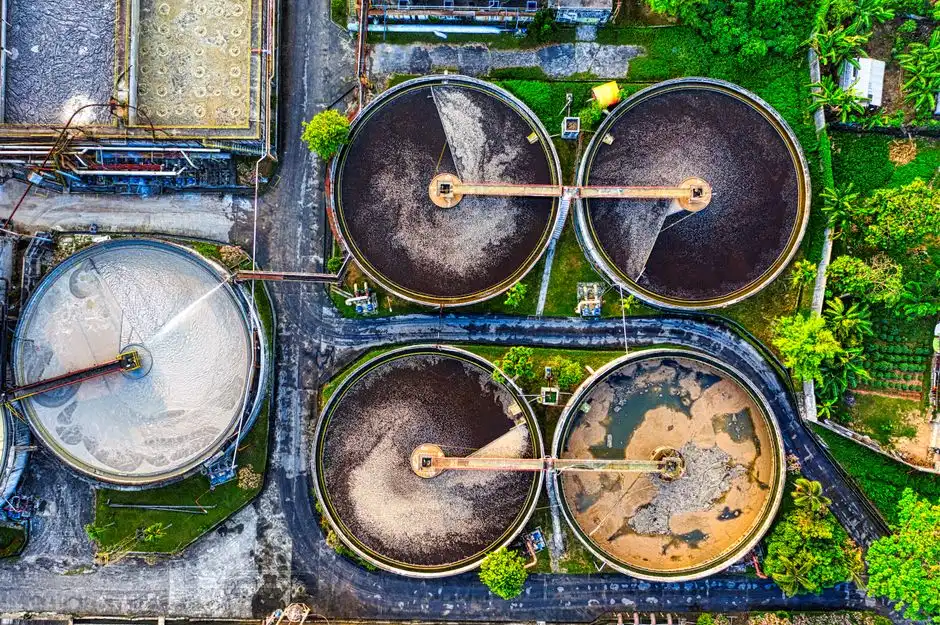
The treatment train should follow the contaminant and effluent objective, rather than copying a standard layout. WTE defines a typical sequence as screening, equalisation, pH correction, coagulation-flocculation, clarification, biological treatment, filtration, and optional advanced treatment. It also makes the essential qualification: not every industrial wastewater stream requires every stage.
Screening protects downstream pumps, valves, mixers, and equipment from packaging materials, fibres, and rags. Equalisation controls hydraulic and pollutant variation. pH correction prepares the wastewater for downstream treatment, with automatic monitoring and dosing generally preferred where characteristics fluctuate.
Coagulation and flocculation apply where colloids, colour, certain metals, or other contaminants require destabilisation or precipitation. Clarification then separates the resulting solids from the liquid stream. WTE specifically advises selecting chemicals through wastewater chemistry and jar testing rather than adopting a standard chemical package; overdosing can increase chemical cost and sludge production without improving treatment.
| Wastewater challenge | Potential treatment step | Selection condition |
|---|---|---|
| Coarse solids and packaging fragments | Screening | Required before pumping and downstream equipment |
| Variable flow and pollutant load | Equalisation with controlled mixing or aeration | Production and cleaning discharges vary materially |
| Acidic or alkaline wastewater | pH correction and controlled dosing | Downstream chemistry requires a stable operating range |
| Colloids, suspended solids, FOG, oil and grease | Coagulation-flocculation and DAF or clarification | Oil, grease or colloidal material could impair biological or membrane treatment |
| Significant biodegradable organics | MBBR, SBR or MBR | Selection depends on COD characteristics, biodegradability, toxicity, hydraulic variation, footprint and treated-water quality |
| Residual solids | Secondary clarification or membrane separation | Required to protect the reuse route or produce a compliant effluent |
| Residual dissolved salts or specific contaminants | UF, RO or other advanced treatment | Primary and biological treatment cannot meet the defined reuse quality |
DAF is relevant where suspended solids, FOG, oil and grease, or colloidal matter must be removed before biological or membrane treatment. A DAF system for automotive wastewater pretreatment should therefore be evaluated as a process step, not as a substitute for complete characterisation.
Biological treatment is required only when biodegradable organic matter is significant. WTE identifies MBBR, SBR, and MBR as alternatives: MBBR uses microorganisms on carrier media, SBR separates biological treatment and clarification into a timed batch sequence, and MBR combines biological treatment with membrane separation. An integrated MBR wastewater treatment system becomes attractive when the required water quality and operating envelope justify membrane separation.
Paint-shop wastewater, cooling blowdown, and sanitary sewage should not be assumed compatible with one common train. Each needs stream-specific assessment before equalisation and final treatment. Chemical dosing should be supported by an automatic chemical dosing system sized from jar-test results and actual flow variation.
Sludge is part of the treatment process. The design must cover collection, thickening, dewatering, storage, and disposal. Equipment such as a plate-frame filter press must be matched to sludge characteristics and the intended disposal route; sludge dewatering should not remain outside the ETP scope.
Choose the Effluent Route Before Sizing the Advanced Stage
The treated-water destination determines the required effluent quality and therefore the advanced-treatment scope. Permitted discharge, cooling, washing, process reuse, and other applications are different performance objectives. UF or RO cannot be selected merely because an expansion is planned; each stage should solve a stated quality gap.
UF is considered when the required separation needs exceed conventional clarification or filtration, while RO can address dissolved salts and other contaminants that remain after biological treatment. WTE states that advanced processes such as UF, RO, activated carbon, or evaporation may be necessary when primary and biological stages cannot achieve the specified reuse quality. The relevant equipment references are an ultrafiltration system for pretreatment and solids separation and an RO system for high-purity water production.
HydropureWater lists an integrated MBR range of 10–2,000 m³/day as a manufacturer product reference. That range describes available equipment; it does not establish Ford’s required capacity. Actual selection must follow site flow, pollutant load, operating envelope, and the reuse or discharge specification.
Zero-liquid-discharge projects require a separate commercial assessment. HydropureWater’s 2026 full-ZLD reference places retrofits at $5M–$15M, depending on influent characterisation, discharge destination, and recoverable byproducts. The same 2026 PCB hybrid-ZLD case reports 99.8% copper recovery and a byproduct credit against capital expenditure. Those figures apply to that specific concept and should be treated as benchmarks, not universal Ford expectations.
Life-cycle evaluation should include chemical consumption, energy use, sludge handling, membrane cleaning and replacement, labour, and the value of recovered water or saleable byproducts. A treatment route that meets the water quality but creates disproportionate operating cost or residual-solids risk may not be the best procurement outcome.
Test Whether the Existing ETP Can Absorb the Expansion
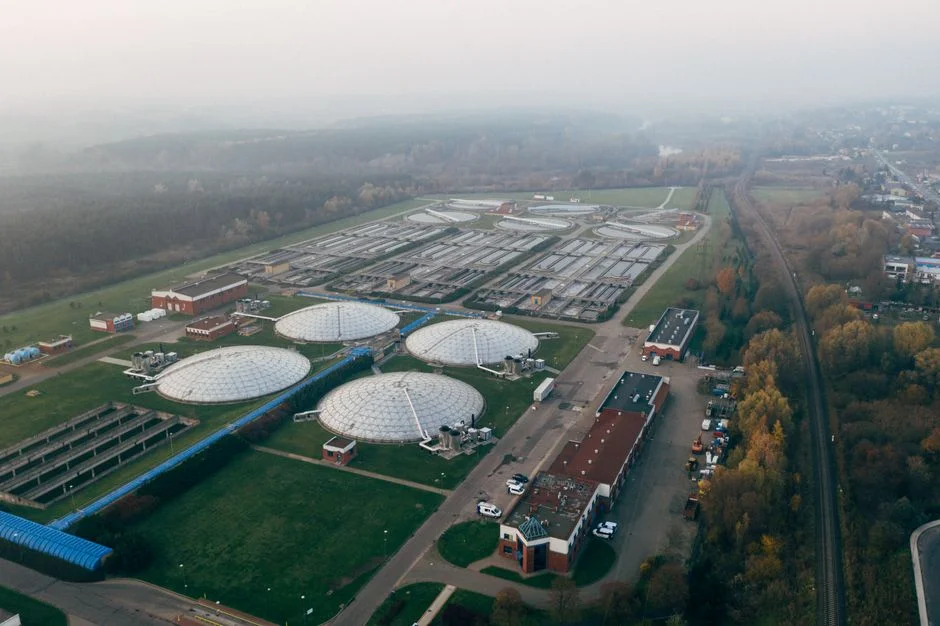
An existing ETP should pass four separate tests: capacity, condition, compliance, and operating cost. Equipment age alone cannot determine whether the plant can absorb Ford’s expansion.
The capacity review compares actual hydraulic and organic loading with design capability, then tests every unit against the expansion scenario. The condition review examines whether the clarifier, aeration tank, MBR cassettes, RO train, blowers, pumps, tanks, coatings, electrical systems, PLCs, and SCADA history can support the proposed duty.
HydropureWater’s 2026 due-diligence research reports an MBR membrane service life of 5–8 years under normal conditions, with cassettes older than seven years carrying near-term replacement liability. It also gives major-OEM PLC obsolescence windows of 7–10 years and notes that an ETP commissioned before 2018 may already contain unsupported hardware. These are screening references, not substitutes for an engineering inspection.
Operators should review blower and pump operating hours, concrete-tank cracking, rebar exposure, coating failure, electrical condition, PLC models, and the SCADA retention period. HydropureWater’s research describes 90 days of SCADA retention as unusable for meaningful trend analysis and three or more years as the standard for robust review.
| Scorecard area | Evidence to request | Decision question |
|---|---|---|
| Capacity | Actual flow, organic loading, expansion wastewater characterization and unit design data | Can the existing train treat the expanded flow and load within its operating envelope? |
| Condition | Asset age, refurbishment history, operating hours, membrane dates, inspection reports and SCADA trends | Will required upgrades become immediate liabilities? |
| Compliance | Permit, 12 months of effluent data, transfer provisions, notices of violation and consent orders | Can the permit cover the expansion and changed discharge route? |
| Operations | O&M scope, chemical use, energy use, sludge records, disposal contracts and EPC warranty status | What is the verified operating and replacement cost? |
Permit transferability is a critical diligence item. HydropureWater notes that a current permit is not necessarily assignable and that transfer failure can force an 18–24 month reapplication cycle. The permit review should cover the permit number, issuing authority, expiry, renewal history, permitted flow, parameter list, transfer triggers, name-change provisions, and unresolved enforcement matters.
Hidden liabilities also require review: sludge-lagoon capacity and condition, hazardous-waste manifests, third-party disposal contracts, chemical-supplier indemnities, O&M scope, EPC warranty status, and any unresolved notices or consent orders. Where sludge dewatering is inadequate, the screw-press capacity and sizing guide provides a separate basis for checking that bottleneck. The acquisition due-diligence structure is set out in the automotive-plant wastewater compliance and treatment guide.
Compare the Main ETP Options for an Expanded Automotive Plant
The leading options are not interchangeable: DAF is principally a solids and FOG-removal step, MBR combines biological treatment with membrane separation, and MBR plus UF/RO or ZLD is a higher-complexity reuse route. The correct comparison starts with the required effluent quality.
| Option | Principal role | Strengths | Procurement focus |
|---|---|---|---|
| DAF-assisted treatment | Remove suspended solids, FOG, oil and grease, and colloidal matter before biological or membrane treatment | Can reduce downstream solids and organic loading while protecting sensitive processes | Inlet oil loading, chemical demand, recovered sludge characteristics and available footprint |
| MBR-based treatment | Remove biodegradable organics while separating biomass through membranes | Produces a higher-quality stream within a compact biological treatment package | Influent biodegradability, toxicity, membrane pretreatment, cleaning and replacement exposure |
| MBR plus UF/RO or ZLD | Meet more demanding reuse, discharge or zero-liquid-discharge objectives | Extends the available water route and can support recovery objectives in suitable projects | Water-quality specification, energy, concentrate or brine handling, ZLD economics and residual management |
HydropureWater’s 2026 DAF catalogue covers 4–300 m³/h across 13 standard models. Its integrated MBR specification includes filtration below 1 μm and covers 10–2,000 m³/day. These are manufacturer catalogue references. Neither range can select equipment for Ford without verified flow, load, operating hours, and treated-water requirements.
Compare the concepts using effluent quality, footprint, chemical use, energy use, sludge production, maintenance burden, asset condition, and expansion flexibility. Existing equipment can improve the comparison if it is in good condition and has useful hydraulic capacity; it can reduce the comparison if membrane, electrical, structural, or control assets carry near-term liabilities.
HydropureWater’s 2026 benchmark for a basic ETP upgrade with civil and electromechanical work, but no major process change, is $280–$620 per m³/day treated. This is a preliminary benchmark with a defined scope, not a quotation for an automotive expansion. No reliable project price can be produced from flow capacity alone. A procurement quotation should follow wastewater analysis, process design, the reuse or discharge route, site constraints, and a defined scope of supply.
Move From Design Decision to Commissioning
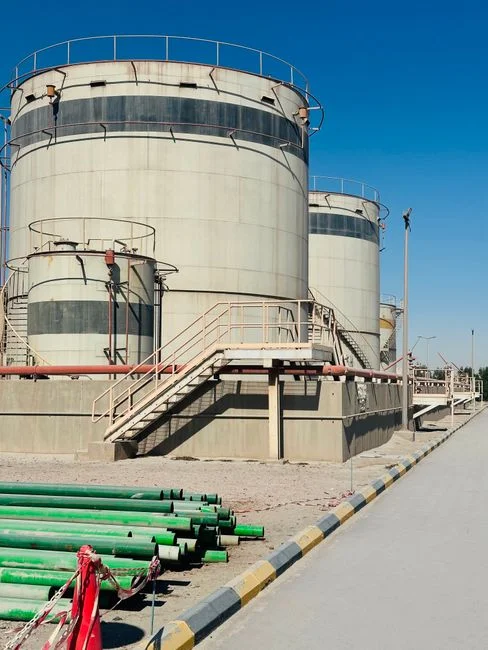
The expansion should progress through a controlled sequence: wastewater characterisation; stream segregation; pilot or jar testing where chemistry remains uncertain; treatment selection; permit review; detailed process design; equipment procurement; installation; and commissioning. This sequence prevents equipment selection from running ahead of the wastewater and compliance basis.
Detailed design should produce a P&ID and process-flow diagram. It must show the treatment sequence, recycle streams, sludge lines, chemical-dosing points, bypass arrangements, and treated-water route. WTE regards these documents as as important as the equipment itself during execution and commissioning.
Instrumentation and controls should match the process. Relevant measurements can include flow, pH, dissolved oxygen, and pressure, with control points determined by the selected train. WTE states that automatic pH monitoring and dosing are generally preferred where wastewater characteristics fluctuate.
Chemical selection should follow laboratory testing and jar tests rather than a standard chemical package. This is particularly important for coagulation and flocculation because overdosing can increase sludge generation and operating cost while transferring the problem downstream.
Commissioning should test operating performance rather than only equipment start-up. Equalisation, dosing, aeration, sludge separation, membrane operation, SCADA records, and alarm response all need an acceptance method. If the objective includes lower energy consumption, the cavitation air-flotation energy-efficiency guide provides a relevant treatment reference for aeration assessment.
Operator transition is part of the project. Training should cover the process logic, chemistry, control system, preventive maintenance, sludge handling, laboratory sampling, and permit reporting. A well-designed ETP can underperform when maintenance, equalisation, dosing, aeration, or sludge separation is not managed properly.
Finally, identify performance indicators before acceptance. The 2026 process-schedule and KPI guide provides a useful structure for defining monitoring, maintenance, and compliance checks. These controls should be translated into enforceable O&M performance tests.
Frequently Asked Questions
What ETP does Ford need after expanding its EV plant?
Ford needs an expansion-ready, industrial effluent treatment plant designed around the actual wastewater streams from the expanded body, paint, battery, process, utility, sanitary, and stormwater systems. The train should normally assess segregation and equalisation, then apply DAF or clarification where solids, oil and grease, or colloids require it, biological treatment where biodegradable organics are significant, and advanced treatment where the discharge or reuse objective demands it. Ford-specific flow, contaminant data, permit conditions, and sludge requirements must be verified before equipment selection.
How should an expanded EV plant size an ETP?
Size the ETP from measured hydraulic loading in m³/day, organic loading in kg BOD/day where used for biological design, and the expanded wastewater characterization. The design should also reflect peak and variable production conditions, equalisation requirements, stream segregation, equipment operating envelopes, and the treated-water specification. A second check should compare the proposed duty with the current permit’s permitted daily flow and parameter list.
Does Ford need DAF, MBR, or both?
That decision depends on the contaminants and required effluent quality. DAF is justified where suspended solids, FOG, oil and grease, or colloidal matter could impair downstream biological or membrane processes. MBR is justified where biodegradable organic loading is significant and the required water quality supports biological treatment with membrane separation. Both may be appropriate, but they should be selected as linked process steps rather than as interchangeable products.
How much does an automotive ETP expansion cost in 2026?
A reliable price cannot be produced from flow capacity alone. HydropureWater’s 2026 benchmark for a basic ETP upgrade with civil and electromechanical work and no major process change is $280–$620 per m³/day treated, but that scope excludes a major process transformation. Its 2026 full-ZLD benchmark is $5M–$15M. For procurement, request a project-specific quotation based on wastewater analysis, process design, effluent and reuse criteria, site constraints, civil works, automation, membranes, and sludge handling.
What should Ford check before accepting or expanding an existing ETP?
Check four things: capacity, condition, compliance, and operating cost. For capacity, compare actual and post-expansion flow and organic loading with the design. For condition, inspect major units, membranes, blowers, pumps, tanks, electrical systems, PLCs, and SCADA history. For compliance, test permit transferability, permitted parameters, the preceding 12 months of effluent data, and any enforcement matters. For operating cost, verify chemical and energy consumption, sludge records, disposal contracts, O&M scope, and warranty status before accepting the asset.