What Makes Nashville Data Center Wastewater Different?
Nashville data center projects must manage cooling blowdown, treatment-system backwash, cleaning wastewater, and sanitary sewage as separate streams rather than through one generic wastewater system. Evaporative cooling concentrates dissolved minerals and treatment chemicals, but local requirements remain partly unresolved. A project should characterize water source, cooling chemistry, flow, and treatment program, then obtain discharge criteria from the receiving authority before the site plan is fixed. Sanitary sewage follows a separate path, and stormwater is not an appropriate route for concentrated process wastewater.
Metro Council approved data-center zoning regulations in July 2026 that classify facilities by size and electrical load and impose different requirements by class, according to NewsChannel 5’s 2026 report. The rules require closed-loop cooling systems, utility confirmation of serving capacity, daytime and nighttime noise limits, and 24-hour noise monitoring. These are confirmed planning constraints, but they are not discharge authorization.
Metro’s Data Center Impact Assessment & Policy Recommendations identified cooling-system wastewater as an issue needing further evaluation, including whether existing contaminant standards adequately address possible process-water impacts. NewsChannel 5 reported that potential substances in closed-loop discharge may include heavy metals and PFAS; the report expressly did not say Nashville’s water had been contaminated by data centers. Keep zoning compliance, utility capacity, and wastewater permitting on separate approval tracks. This stream-by-stream approach follows the logic in the 2026 data-center wastewater treatment guide and the wastewater and cooling blowdown treatment guide.
Separate Every Wastewater Stream Before Selecting Equipment
Process wastewater segregation is the first design decision because equal treatment of unequal streams creates treatment and permitting problems. RSP Engineers identifies cooling-tower blowdown as the primary process-wastewater stream in most large-scale data centers and distinguishes it from domestic sanitary flow, which is typically smaller.
Evaporative cooling removes water while leaving dissolved solids and treatment chemicals behind. Backwash from softeners or reverse-osmosis units and equipment-cleaning wastewater can have different contaminant profiles, so origin alone does not establish compatibility. Air-handling condensate and sanitary sewage also require their own design assumptions. This segregation logic is consistent with the regional data-center wastewater treatment analysis.
| Stream | Typical source | Design consequence |
|---|---|---|
| Cooling blowdown | Evaporative cooling-system purge | Evaluate concentrated salts, treatment chemicals, metals, pH and temperature against the selected receiving route. |
| Softener or RO backwash | On-site water-treatment regeneration | Characterize separately; do not assume compatibility with cooling blowdown. |
| Equipment-cleaning wastewater | Cleaning chemicals and wash water | Document products used and segregate incompatible residues. |
| Air-handling condensate | Coil condensation | Assess destination and chemistry independently. |
| Sanitary sewage | Restrooms and kitchens | Use the domestic wastewater route and do not mix it with process streams in design assumptions. |
The practical output is a segregated water balance with a destination assigned to every stream. That prevents the error of sending concentrated blowdown through a general site drain while sizing equipment for diluted average flows.
Characterize the Blowdown Before Choosing a Treatment Train
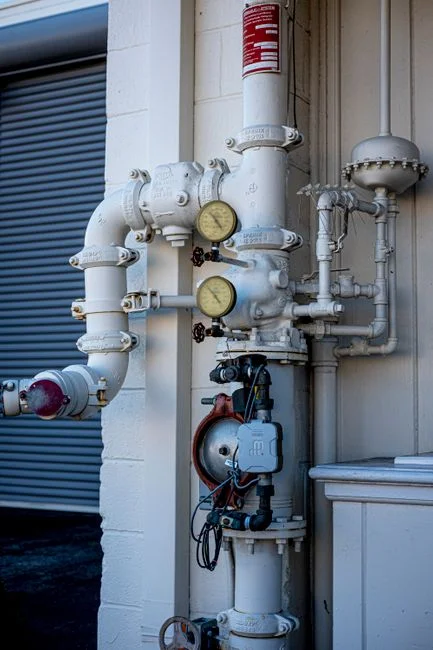
Cooling-blowdown treatment requires site-specific characterization because the same cooling system can produce different chemistry under varying source-water and chemical-control conditions. Water Utility Report, updated April 14, 2026, states that blowdown can contain elevated salts, heavy metals, biocides, corrosion inhibitors, and altered pH, depending on source water and the chemical-treatment program.
Request a complete water balance and chemical-treatment inventory. It should cover source-water chemistry, cycles of concentration, makeup flow, blowdown flow, temperature, pH, biocides, corrosion inhibitors, and antiscalants. RSP Engineers identifies pH, TDS, chlorides, sulfates, phosphates, residual treatment chemicals, temperature, and metals such as copper and zinc as constituents that can affect sewer acceptance or receiving infrastructure.
| Observed problem | Potential control | Required design basis |
|---|---|---|
| Acidic or alkaline blowdown | pH neutralization using an automatic chemical dosing system | Measured pH range, chemical demand and receiving-authority limit |
| Suspended solids | multi-media filtration system | Solids characterization, hydraulic loading and disposal route |
| Selected metals | Chemical precipitation or ion exchange | Target metal, influent concentration and residual or solids handling requirement |
| Dissolved-solids reduction | industrial reverse osmosis system | Source chemistry, scaling risk, pretreatment, permeate quality and concentrate management |
RO is not a substitute for characterization. Its suitability depends on source chemistry, scale-forming constituents, pretreatment, and the quality required at the discharge or reuse point. Use a dedicated sampling program to establish baseline chemistry, then select the smallest train that demonstrably addresses the permit conditions. Do not use generic concentration limits or assume that filtration removes dissolved salts.
Choose a Permitted Discharge Path Before Designing the Treatment System
The discharge decision controls the treatment train: sanitary sewer with an industrial-user permit and direct surface-water discharge under an NPDES permit are the relevant pathways identified by RSP Engineers. Each requires agency approval, and neither can be assumed from the site’s zoning status.
For the sewer route, submit expected flow, chemical constituents, and proposed pretreatment to the local sewer authority and confirm connection requirements, capacity, and discharge limits early. For direct discharge, confirm the receiving-water pathway, applicable water-quality standards, and NPDES requirements before equipment is specified. Do not route industrial process wastewater to a stormwater system; RSP Engineers identifies that practice as prohibited under the Clean Water Act.
| Decision | Approval path | Information the project must obtain |
|---|---|---|
| Sanitary sewer | Industrial-user permit and sewer-connection review | Accepted flow, local limits, chemical constituents, pretreatment proposal, monitoring and connection conditions |
| Direct surface-water discharge | NPDES permit and applicable water-quality standards | Receiving-water pathway, applicable limits, discharge point, monitoring and reporting conditions |
| On-site reuse | Water-quality and operational approval for the intended use | Treatment performance, storage, distribution, application restrictions and backstop disposal route |
| Stormwater system | Not a permitted alternative for industrial process wastewater | A sanitary-sewer or NPDES route must be developed instead |
Metro’s wastewater review and the sewer authority’s industrial-user review answer different questions. Zoning approval does not establish that a proposed discharge is acceptable. RSP Engineers recommends early utility coordination, chemical characterization, and integration of pretreatment into the initial site plan to reduce the risk of redesign.
Build a Treatment System That Fits the Permit and Future Loads
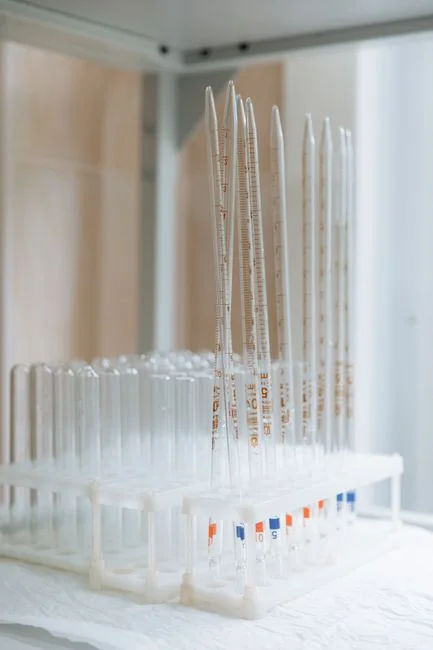
Equipment selection should follow the issued permit, expected source-water chemistry, treatment-chemical package, and future operating flexibility. RSP Engineers notes that chemical precipitation, advanced filtration, pH neutralization, and RO may be needed depending on chemistry and local limits; no single process is universally sufficient.
Allocate space early for treatment skids, tanks, pumps, chemical storage, secondary containment, drainage, sampling points, and maintenance access. The same engineering guidance gives an illustrative footprint range of a few hundred square feet for simple pH neutralization and several thousand square feet for filtration and chemical precipitation. These are planning examples, not Nashville requirements.
Cumulative loading must also be evaluated. Water Utility Report, updated April 14, 2026, explains that a small, well-managed discharge to a system designed for it differs from multiple facilities sending concentrated discharges to the same infrastructure. Ask the receiving authority whether other proposed data centers or industrial users will connect to the same system and how their flows and chemistry will be assessed together.
Evaluate reuse only after the blowdown chemistry and discharge constraints are known. Treated water may support construction dust control, cooling-loop reuse, or irrigation, where water quality and operational constraints permit. Reuse also needs storage, distribution, residual-treatment controls, and a backstop for outages or off-specification water. Equipment options such as a rotary mechanical bar screen or dissolved-air flotation equipment should be justified by the characterization rather than added as generic pretreatment.
Plan for Monitoring, Compliance and Nashville's Unsettled Risks
A treatment skid becomes a compliance system only when monitoring, sampling, reporting, and operating responsibility are defined. Include flow and pH monitoring points in the design; the remaining laboratory and reporting obligations depend on the issued permit. RSP Engineers states that industrial discharge permits can require regular sampling, certified-laboratory analysis, and automated monitoring of parameters such as pH and flow.
Metro’s 2026 impact assessment recommended further work on vibration, increases in background noise, and cooling-system wastewater contaminants. It also recommended a working group involving Metro, Nashville Electric Service, and the Tennessee Valley Authority to develop compliance procedures, coordinate enforcement, and assess resource needs. These actions remain forward-looking requirements or recommendations rather than proof that an individual facility has violated a discharge standard.
Do not characterize potential PFAS or metal exposure as confirmed contamination. The defensible sequence is source characterization, treatment verification, permit compliance, and documentation. Track updates to contaminant standards, industrial-user limits, discharge routes, and monitoring expectations throughout facility operation. The broader 2026 industrial wastewater treatment guide provides context for process selection, while project-specific permit conditions remain controlling.
- Complete the segregated water balance and chemical inventory.
- Collect baseline source-water, blowdown, backwash, cleaning, and sanitary-waste data.
- Obtain written sewer-authority or NPDES pathway requirements.
- Select treatment only after permit limits and water chemistry are known.
- Reserve treatment, storage, monitoring, and maintenance space in the site plan.
- Verify treatment performance and establish operating, sampling, and reporting responsibilities.
For a development decision, the immediate deliverables are a discharge-path memorandum, a conceptual treatment train, a preliminary equipment and footprint plan, and a permit-interface schedule. These items should be resolved before the data-center site design is frozen.
Frequently Asked Questions
How much should a Nashville data center budget for cooling blowdown treatment?
No project-specific price can be stated from the supplied research because the treatment flow, chemistry, permit limits, footprint, chemical demand, and reuse requirements are not yet defined. Request a basis-of-estimate package that separates equipment, foundations and utilities, chemical storage, pretreatment and RO, monitoring, commissioning, operating labor, analytical testing, residual disposal, and off-specification management. Also request a schedule showing which permit decisions trigger which cost items.
Should blowdown go to the sanitary sewer or be treated for direct discharge?
Start with the sanitary-sewer industrial-user pathway because it is the common option described by RSP Engineers, but do not commit until the sewer authority accepts the flow and chemistry. Evaluate direct discharge only after confirming the receiving-water pathway, NPDES requirements, and applicable standards. Run a parallel check: if sewer pretreatment or capacity constraints are unacceptable, determine whether direct discharge can be permitted without creating a more onerous treatment and monitoring obligation.
What treatment equipment is needed for pH, metals and high dissolved solids?
Use equipment that addresses measured constituents: pH neutralization for acidic or alkaline water, filtration for suspended solids, precipitation or ion exchange for selected metals, and RO when dissolved-solids reduction is required. The supplied research does not establish a universal Nashville equipment package. Obtain source-water and blowdown analyses, the chemical-treatment inventory, permit limits, and concentrate-disposal requirements before selecting capacities.
How should a data-center team select a wastewater-treatment supplier?
Check whether the supplier can demonstrate the required treatment sequence from project chemistry rather than offering a standard package. Require a clear performance basis, pretreatment criteria, chemical and residual handling, controls, monitoring provisions, footprint, and maintainability, plus references for comparable operating conditions. For schedule assurance, ask the supplier to identify utility, permit, long-lead-item, and commissioning dependencies; the