Choose the Nanofiltration Job Before Choosing the Equipment
A nanofiltration system for tannery wastewater serves two distinct purposes: concentrating chromium(III) into a recycle stream or polishing biologically treated effluent for reuse. The first route treats chromium-bearing process water as a separation problem; the second treats final effluent as a quality-polishing problem. Published research found that chromium concentration depended strongly on the chloride-to-sulfate ratio, with performance best near a ratio of 1, and identified 14–16 bar as the optimum transmembrane-pressure range for the membrane tested. Because tannery effluent contains chromium, sulfide, chloride, sulfate, dyes, surfactants, and organic matter, pretreatment and membrane selection must be based on site-specific water analysis and pilot testing.
Start the procurement process by defining the product stream. Specify whether the required outputs are a chromium-bearing concentrate, reusable permeate, discharge-quality permeate, or a combination. That decision determines the feed stage, acceptance criteria, recovery target, concentrate route, and whether NF is the primary separation step or the final polishing step.
NF membranes are commonly characterized as middle-pressure processes with pore sizes on the order of 1 nm. Their charged surfaces preferentially retain multivalent ions while permitting relatively greater passage of monovalent ions. This behavior supports chromium concentration and partial salt fractionation, but it also makes the chloride-to-sulfate balance central to membrane selection. The membrane configuration should therefore be selected around the intended separation, not around a generic “tannery duty.” Membrane element and vessel options are discussed under RO and UF membrane elements and pressure vessels.
| Decision | Chromium-recovery route | Reuse-oriented route |
|---|---|---|
| Primary objective | Concentrate chromium(III) into a defined recycle stream. | Reduce residual salts and refractory COD from biologically treated effluent. |
| Position in process | Chromium-bearing separation stage, with its required upstream controls. | Tertiary polishing after biological treatment. |
| Product to define | Chromium-bearing concentrate and its acceptance composition. | Permeate against the plant’s reuse or discharge specification. |
| Central performance variable | Chromium retention, chloride-to-sulfate ratio, flux at actual salinity, and process stability. | Refractory COD removal, salt passage, permeate quality, and concentrate disposition. |
How Tannery Feed Chemistry Changes NF Performance
Tannery wastewater can contain chromium and other heavy metals, organic compounds, surfactants, sulfides, chlorides, and dyes, so membrane behavior must be evaluated against the complete feed composition rather than chromium concentration alone. RSC Advances, 29 July 2026, identifies this mixed pollutant load and reviews the need to combine physical, chemical, and biological treatment. For NF, the particular concern is how suspended material, organics, sulfide, and dissolved salts interact with membrane surface charge and concentrate osmotic pressure.
NF’s separation mechanism includes both size exclusion and electrostatic effects. The Donnan exclusion effect favors passage of monovalent ions into the permeate while retaining multivalent ions more strongly. In the chromium study, that behavior enabled chromium concentration and separation of chromium from chloride in model tanning effluent. It does not mean that chloride removal can be guaranteed: salt passage remains dependent on feed composition, membrane properties, operating pressure, and recovery.
The chloride-to-sulfate ratio is therefore a feed-composition variable, not a fixed pump setting. “Application of nanofiltration for chromium concentration in the tannery wastewater,” ScienceDirect, found the optimum ratio close to 1 for the tested system. Wastewater ageing reduced process efficiency only slightly in that experiment, but the feed was prepared in a laboratory installation; seasonal production changes, batch dumps, and varying bath chemistry still require representative site testing.
The same study also demonstrates why permeate flux cannot be selected independently of salinity. At chloride concentrations of 5, 10, and 15 g/dm³, permeate flux fell by about 46%, 65%, and 74%, respectively, relative to the base chromium solution because the osmotic-pressure gradient increased (ScienceDirect, “Application of nanofiltration for chromium concentration in the tannery wastewater”).
Request a feed analysis covering chromium species and concentration, chloride, sulfate, conductivity, TDS, pH, sulfide, COD, suspended solids, hardness, temperature, flow, and relevant organic or surfactant indicators. Include variability across production campaigns, not one grab sample.
| Feed variable | Why it affects NF | Information to request |
|---|---|---|
| Chloride and sulfate | Control ion fractionation, osmotic pressure, and chromium concentration performance. | Concentrations, chloride-to-sulfate ratio, and variability. |
| Chromium species and concentration | Determine the target separation and retention requirement. | Species, total concentration, and process-stream origin. |
| Organics, sulfide, surfactants, and solids | Can foul the membrane, alter surface condition, or obscure analytical results. | COD, relevant organic indicators, sulfide, surfactant indicators, and TSS. |
| General water chemistry | Defines osmotic effects, scaling risk, cleaning requirements, and flow basis. | Conductivity, TDS, hardness, pH, temperature, and flow. |
Where chemical conditioning is considered, require compatibility and residual-control data for automatic chemical dosing; the supplied research does not support a universal chemical or dose for tannery wastewater.
Build a Pretreatment Train That Protects the Membrane
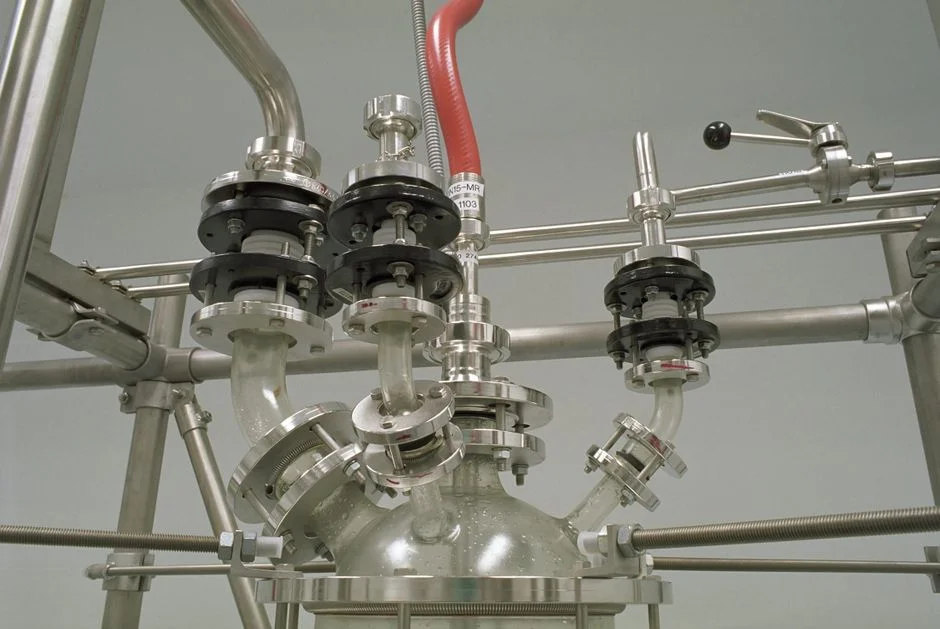
Bulk solids and organic matter should be removed before NF because membrane separation is least reliable when colloids, colloids-associated contaminants, or high organic loads accumulate on the membrane surface. Biological treatment can reduce suspended solids and much of the organic load, but refractory COD and dissolved salts may remain. The 2022 study “Application of Nanofiltration and Reverse Osmosis Membranes for Tannery Wastewater Reuse” in Water states that physico-chemical and biological processes remove suspended solids and high percentages of organic matter, while refractory COD and salts remain.
Evaluate clarification or DAF when the analysis shows suspended solids, colloids, fats, oils, or floatable material. For example, DAF pretreatment for tannery wastewater is offered with automatic skimming and a treatment range of 4–300 m³/h across 13 models; that equipment range does not establish suitability for any particular feed. The required hydraulic and contaminant performance must be confirmed by site data and pilot testing.
Cartridge or multimedia filtration should follow removal of upstream solids, not substitute for it. A multi-media stage can remove suspended solids, turbidity, and colloids and provide feed protection for downstream membranes, but its effectiveness depends on upstream hydraulic and organic performance. Multimedia filtration for downstream membrane protection should therefore be specified from measured solids and turbidity rather than added as an automatic stage.
Set pH and chemical compatibility against the selected NF membrane’s operating envelope. Ask the supplier to state the permitted range, residual concentration limits, cleaning compatibility, and consequences of chemical carryover. The review in RSC Advances, 29 July 2026, supports integrated physical, chemical, and biological treatment for the multiple pollutant classes in tannery wastewater, but it does not establish that biological polishing can replace membrane separation.
- Confirm biological or physico-chemical removal of bulk COD and suspended solids.
- Evaluate DAF or clarification for floatables, colloids, and residual solids.
- Apply cartridge or multimedia filtration if pilot data shows further solids control is required.
- Confirm pH, dosing compatibility, and residual-chemical control before NF.
- Select hollow-fiber ultrafiltration pretreatment only where its feed and cleaning requirements are justified by the analysis.
- Confirm the NF configuration before selecting membrane elements and pressure vessels.
None of these units is mandatory by default. The correct train follows the wastewater analysis, reuse objective, membrane constraints, and pilot results.
Select NF Operating Controls from Pilot Data
NF should be controlled by a defined flux and rejection envelope, not by pressure alone. The ScienceDirect chromium study describes NF as a middle-pressure membrane process operating at 1–3 MPa and identifies 14–16 bar as the optimum transmembrane-pressure range for the membrane examined. It explicitly warns that the optimum changes when membrane permeation properties differ, so those values are a pilot reference rather than a commercial prescription.
Increasing pressure can raise flux, but it can also increase concentration effects, salt passage, compaction, and fouling pressure. A staged pressure increase lets the operator identify the stable operating region while monitoring normalized permeate flux, chromium retention, chloride passage, sulfate rejection, conductivity, COD rejection, temperature, crossflow, recovery, and cleaning frequency. Trend-based cleaning triggers are more defensible than waiting for pressure to reach a predefined ceiling.
The osmotic effect reported by the ScienceDirect study should be carried into every recovery case. Chloride increases reduced flux substantially at the three concentrations tested, so recovery cannot be specified independently of salinity and concentrate composition. The pilot should test the intended recovery under representative feed chemistry and identify whether flux remains stable as the concentrate forms.
| Control | Pilot measurement | Commercial question |
|---|---|---|
| Hydraulic performance | Permeate flux, normalized flux, transmembrane pressure, crossflow, and temperature | What flux and pressure are guaranteed at the stated feed composition and recovery? |
| Separation performance | Chromium retention or COD rejection, as applicable, plus chloride passage and sulfate rejection | Which membrane and operating window produce the specified product quality? |
| Fouling and cleaning | Cleaning frequency, cleaning recovery, and normalized-flux trend | How are cleaning triggers and acceptance criteria defined? |
| System availability | Instrument response, interlocks, pump operation, and control response | What testing is required before handover? |
The process flow should be explicit: equalization and sampling; biological or physico-chemical pretreatment; solids filtration; NF skids; permeate storage or reuse; chromium-bearing concentrate handling; and membrane cleaning. Relevant valves, gauges, filter media, and control components should be identified in the NF skid instrumentation and treatment-parts schedule.
Compare Chromium Recovery with Reuse-Oriented NF

Chromium-recovery and reuse-oriented NF require different acceptance evidence. For chromium concentration, the decisive variables are chromium retention, chloride-to-sulfate ratio, flux at actual feed salinity, and performance stability as wastewater composition changes. For reuse-oriented treatment, the buyer must define the plant’s reuse specification and test refractory COD reduction, conductivity or salt passage, permeate quality, and concentrate handling.
| Evaluation item | Chromium recovery | Reuse-oriented NF |
|---|---|---|
| Primary objective | Chromium(III) concentration for possible process recycling. | Desalination and residual-COD polishing after biological treatment. |
| Feed expectation | Chromium-bearing stream with specified chloride and sulfate balance. | Biologically treated effluent retaining refractory COD and dissolved salts. |
| Key separation target | Chromium retention with suitable concentrate composition. | Permeate meeting the defined reuse or discharge requirement. |
| Concentrate consideration | Potential value or return route must be verified. | Disposal, further treatment, or controlled reuse must have a site-approved route. |
| Principal risks | Variable feed salinity, low flux, incomplete chromium separation, and recycle compatibility. | Residual salts, refractory COD, membrane fouling, and concentrate disposal. |
| Pilot acceptance metrics | Chromium retention, flux, recovery, salt passage, and stability. | COD rejection, conductivity or salt passage, reuse-quality permeate, flux, and cleaning recovery. |
Published work has considered ion exchange for salt elimination but rejected it for the biologically treated tannery wastewater studied because it was not economically competitive at the high salt concentration (MDPI, “Application of Nanofiltration and Reverse Osmosis Membranes,” 2022). That finding is application-specific and should be revisited with current supplier pricing and site water chemistry.
A combined NF and RO train may be justified where broader salt removal is needed. Evaluate that option from pilot separation data rather than assuming maximum purification is required. For a broader configuration, review the implications of RO purification for the treated-water route, including higher-pressure demand, pretreatment, and concentrate management.
Require each bid to separate membrane skid cost from pretreatment, controls, pumping, storage, cleaning chemicals, membrane replacement, concentrate treatment, installation, commissioning, and lifecycle support. A low skid price is not comparable unless the operating boundary and included scope are identical.
Control the Concentrate and Validate Commercial Performance
The concentrate must be designed as an output stream, not as an unavoidable by-product. For every proposed recovery case, request a concentrate mass balance covering flow, chromium, chloride, sulfate, conductivity, COD, and pH. Ask the supplier to state whether the projected composition is based on pilot data, a validated model, or generic tannery assumptions. Unverified concentrate composition is not an adequate basis for a return-to-process or disposal guarantee.
Evaluate options appropriate to the site: further concentration, precipitation or chemical recovery, controlled reuse, or disposal. The chromium study identifies chromium recirculation as an objective, but its model-solution results do not establish that every concentrate will be acceptable in a tanning bath. Compatibility trials and a mass balance are still required.
The RSC Advances review, 29 July 2026, reports that integrated physical, chemical, and biological treatment can address the multiple pollutant classes in tannery wastewater. That supports a coordinated treatment strategy, not the assumption that biological polishing replaces NF separation or that any concentrate can be recycled without assessment.
| Acceptance area | Required evidence | Commercial condition |
|---|---|---|
| Product quality | Chromium retention and salt passage, or COD rejection and permeate quality, according to route. | Guarantee tied to stated feed chemistry, recovery, and operating window. |
| Hydraulic performance | Steady flux, normalized flux, pressure, crossflow, and cleaning recovery. | Reference conditions and permitted deviation must be stated. |
| Concentrate | Flow and complete constituent balance at every recovery case. | Disposition and reuse constraints documented. |
| Controls and electrical | Interlocks, instrumentation, alarms, and control-response testing. | Acceptance test and handover criteria defined. |
| Lifecycle cost | Cleaning chemicals, consumables, membrane replacement assumptions, and support. | Price basis and replacement interval disclosed. |
Request membrane replacement pricing, cleaning intervals, expected cleaning consumption, replacement assumptions, and whether any performance guarantee is conditional on site-water chemistry and the supplier’s stated operating window. No credible supplier should guarantee flux, rejection, or recovery from generic tannery data alone.
Concentrate-management hardware should also be evaluated against the measured stream. A lamella clarifier may support solids separation where required, while a plate-and-frame filter can remove concentrated particulate material, but neither removes dissolved salts automatically. Their inclusion in the proposal should therefore follow the concentrate analysis rather than complete the equipment list mechanically.
Frequently Asked Questions
Can nanofiltration treat raw tannery wastewater without pretreatment?
No blanket approval is appropriate. NF normally follows controls for bulk solids and organic matter because biological or physico-chemical treatment and membrane separation solve different problems. The Water study, 2022, reports that biological and physico-chemical processes remove suspended solids and much organic matter, while refractory COD and salts remain for NF or RO to address. The pretreatment scope should follow representative feed analysis and the selected membrane’s constraints.
How does feed chemistry affect nanofiltration sizing?
Chloride, sulfate, chromium, conductivity, and osmotic pressure must be included in the design basis. The ScienceDirect chromium study found the optimum chloride-to-sulfate ratio close to 1 for its tested membrane and reported flux reductions of about 46%, 65%, and 74% at chloride concentrations of 5, 10, and 15 g/dm³ relative to the base chromium solution. Use representative site samples in a pilot before fixing membrane area, recovery, or pressure.
How should supplier quotations be compared for a nanofiltration system for tannery wastewater?
Normalize the quotations by separating membrane performance, pretreatment, controls, recovery, concentrate management, cleaning chemicals, membrane replacement, installation, commissioning, warranty conditions, and lifecycle support. Compare each item against the same feed composition, recovery case, permeate or concentrate specification, and operating window. A membrane skid price alone does not provide an actionable capital-cost or performance comparison.
What operating data must a supplier receive before sizing the equipment?
Request chromium species and concentration, chloride, sulfate, conductivity, TDS, pH, sulfide, COD, suspended solids, hardness, temperature, and flow, together with information about production variability and concentrate disposal. Require the supplier to identify which data were measured, which were estimated, and which pilot tests are needed to close the gaps.
Is nanofiltration or reverse osmosis preferable for tannery effluent reuse?
NF is the more targeted choice for the multivalent-ion concentration and partial salt-fractionation objectives studied, while RO should be evaluated where broader salt rejection is required. That decision should follow pilot data and an assessment of higher-pressure demand, pretreatment, energy, membrane replacement, and concentrate implications. The 2022 MDPI study compared both membrane types on biologically treated tannery wastewater and supports treating the choice as a separation requirement, not a preference between equipment categories.