What Changes When You Move from Activated Sludge to MBR
For chemical wastewater in Saint Ansgar, MBR is usually the stronger choice when the plant needs low suspended solids, reliable separation during batch or toxicity slugs, a compact retrofit, or water reuse. Conventional activated sludge remains defensible for steady, readily biodegradable flows with stable settling, ample space, and discharge limits that do not require near-reuse quality. HydropureWater reports MBR operating at 20–60 days SRT and 8,000–15,000 mg/L MLSS, with less than 1 μm membrane filtration and about 60% less footprint than CAS. The trade-off is higher CAPEX and OPEX, plus fouling-control and pretreatment requirements that must be included in the design.
Both technologies use an activated-sludge biological stage. The decisive architectural change occurs at the secondary separation step, not in the organisms used to remove dissolved organics, ammonia, and other biodegradable components.
CAS sends mixed liquor to a secondary clarifier, where biological floc must settle by gravity. Effluent quality therefore depends on floc formation, sludge settleability, hydraulic loading, and clarifier operation. A chemical slug that damages floc structure or raises sludge volume index can carry biomass into the discharge.
MBR retains sludge and unsettlable colloids with submerged membranes. This physical barrier decouples sludge retention time from hydraulic retention time and reduces dependence on settling. HydropureWater’s integrated submerged-PVDF MBR system specifies filtration below 1 μm.
Saint Ansgar Site Inputs That Should Drive the Decision
The enforceable discharge or reuse envelope must come from the plant’s current permit, not from a generic MBR comparison. The supplied research does not establish a Saint Ansgar-specific permit limit, so the first procurement action is to obtain the current NPDES or pretreatment permit, identify the discharge destination, and document the receiving sewer or surface-water limits, monitoring frequency, and any reuse requirement.
| Site input | Evidence needed before selection | Why it changes the decision |
|---|---|---|
| Permit and destination | Current permit, receiving sewer agreement, applicable limits and monitoring schedule | Defines the required treatment envelope and whether polishing is necessary |
| Wastewater chemistry | COD, BOD, TSS, pH, salinity or chloride, surfactants, solvents, recalcitrant organics and toxicity | Determines biological loading, inhibition risk and pretreatment requirements |
| Hydraulic pattern | Average flow, peak flow, campaign dumps, cleaning cycles and production changes | Exposes whether clarifier performance is a credible operational risk |
| Physical constraints | Available footprint, maintenance access, sludge-truck access, power and cooling-water demand | Separates a technically suitable process from an installable treatment train |
| Reuse application | End-use chemistry, required quality and whether RO or demineralization is needed | Prevents treating MBR permeate as finished water without adequate polishing |
| Representative data | Seasonal and campaign-period sampling before final SRT, membrane-area, equalization and pretreatment sizing | Prevents equipment sizing from one unrepresentative composite sample |
Ask whether campaign slugs coincide with solvent washdowns, surfactant production, cleaning operations or pH excursions. If they do, equalization, pH control and free-oil or solvent removal may be more important to schedule reliability than the nominal difference between CAS and MBR.
Map the site envelope before selecting equipment: footprint, access for maintenance and sludge trucks, electrical capacity, cooling-water demand and the intended reuse application. A Saint Ansgar conclusion should remain permit-dependent until the receiving authority’s written conditions are in the project file.
MBR and CAS Performance for Chemical Wastewater
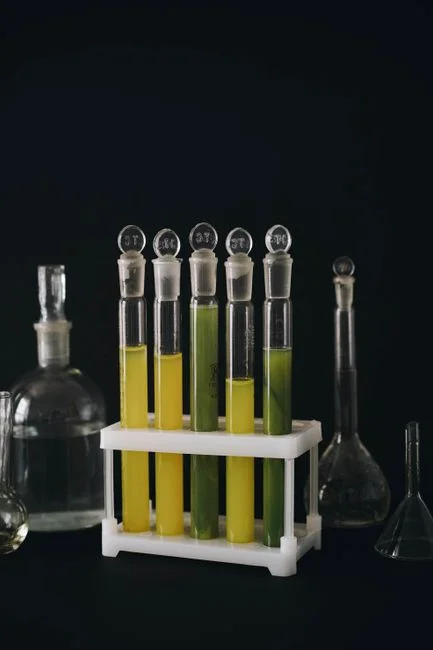
MBR provides the stronger separation margin when batch slugs, recalcitrant loads, reuse or limited footprint determine the outcome. Its higher SRT can retain slow-growing nitrifiers and organisms associated with degradation of recalcitrant compounds, but it cannot make refractory or toxic substances automatically biodegradable.
| Parameter | Conventional activated sludge | MBR | Source and scope |
|---|---|---|---|
| Sludge retention time | 5–15 days | 20–60 days | HydropureWater S2, directional chemical-wastewater comparison, 2026 |
| Mixed liquor suspended solids | Not stated in supplied research | 8,000–15,000 mg/L | HydropureWater S2, directional chemical-wastewater comparison, 2026 |
| Separation mechanism | Gravity settling in a secondary clarifier | Physical retention by submerged membrane | HydropureWater S4, 2026 |
| Effluent TSS | 10–30 mg/L at best | Less than 5 mg/L; broader comparison of less than 1–5 mg/L | HydropureWater S2 and S4, 2026 |
| Effluent turbidity | Not stated in supplied research | Less than 1 NTU | HydropureWater S2, directional chemical-wastewater comparison, 2026 |
| Observed sludge yield | 0.30–0.45 kg VSS/kg COD | 0.10–0.25 kg VSS/kg COD | HydropureWater S2, directional chemical-wastewater comparison, 2026 |
| Waste-activated-sludge difference | Baseline | 20–40% less | HydropureWater S2, directional chemical-wastewater comparison, 2026 |
| Footprint | Baseline | Approximately 60% less than conventional systems | HydropureWater S6 verified product catalog, product specification |
| Settleability sensitivity | Effluent depends on floc formation, sludge settleability and clarifier hydraulics | Less dependent on settleability because solids are physically retained | HydropureWater S4, 2026 |
| Reuse relevance | Can support reuse where its effluent quality is sufficient | Closer to low-TSS reuse applications; polishing may remain necessary | HydropureWater S2, directional comparison, 2026 |
| Principal operating risk | Clarifier upset, sludge washout and sensitivity to poor settling | Membrane fouling, cleaning demand and scouring-energy use | HydropureWater S2 and S4, 2026 |
The DF-series membrane module provides a supplier-specific reference point, but its performance still has to be matched to the wastewater and operating envelope. The S2 figures are directional industry-comparison values, not guaranteed project outputs.
Winter design must use the site’s mixed-liquor temperature. HydropureWater S4 reports that nitrification rates roughly halve for each 10 °C decrease. Evaluate minimum-temperature biology and SRT for Saint Ansgar rather than assuming warm-weather rates persist. Membrane separation controls washout, but it does not eliminate the biological effect of cold temperature.
Pretreatment and Membrane Protection
The defensible process sequence is equalization and pH control, then oil, grease and free-solvent removal where needed, followed by biological treatment, membrane separation and polishing only as required by the discharge or reuse target. Pretreatment is part of membrane reliability, not an accessory to be added after the main equipment order.
- Equalize and control pH. HydropureWater S2 identifies equalization, pH control and sometimes oil/water separation as requirements for either biological train.
- Remove free oil, grease and solvent carryover. HydropureWater S4 emphasizes removing these substances before MBR membranes because they can foul or damage the membrane barrier.
- Control surfactants and suspended solids. Upstream removal and automatic chemical dosing protect flux and reduce dependence on aggressive membrane cleaning.
- Run biology before membrane separation. The membrane retains biomass; it does not remove unbiodegradable compounds that passed through the biological stage.
- Add polishing only against a defined endpoint. Reuse requirements may require RO, demineralization or another polishing step.
The DF-series product specifications in HydropureWater S6 use 0.1 μm PVDF flat-sheet elements with integrated aeration for continuous membrane scouring and individually replaceable membrane elements. Those are manufacturer specifications and must be checked against the selected module and operating duty.
HydropureWater S4 reports a 0.5 bar transmembrane-pressure alert for MF on high-strength feed. Treat this as a monitoring reference—not a universal warranty threshold or Saint Ansgar design limit. Establish site alarm and action levels from pilot data, membrane geometry and the supplier’s control philosophy.
For streams containing suspended solids, FOG, oil and grease, or colloidal matter, evaluate DAF pretreatment for chemical wastewater. HydropureWater S6 states a DAF design range of 4–300 m³/h; confirm actual duty and performance through jar testing or pilot work rather than selecting from the catalog range alone.
Comparing Capital Cost, Operating Cost, and Reuse Value
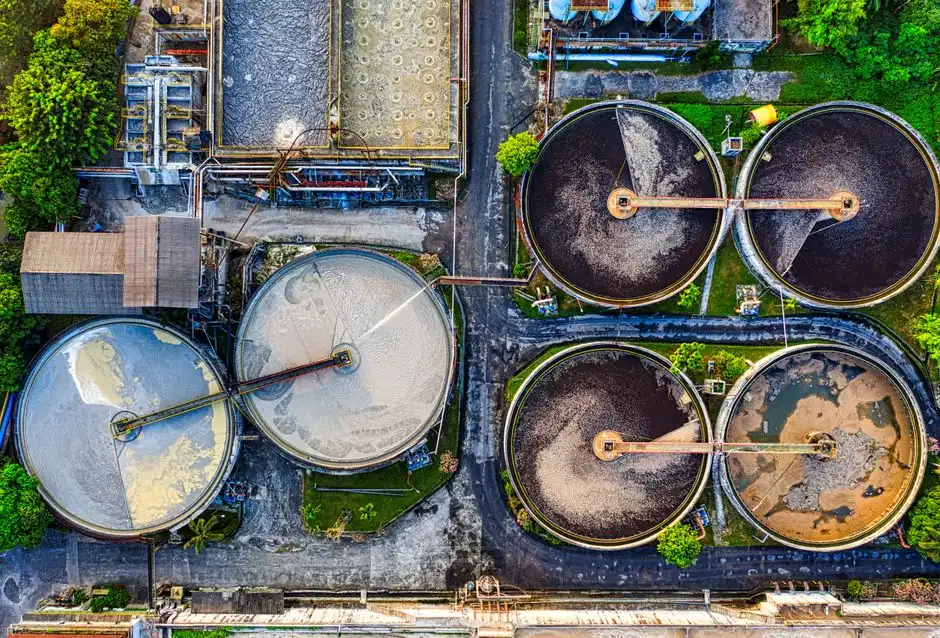
Equipment price alone cannot separate CAS from MBR because equalization, pretreatment, civil work, aeration, cleaning, sludge handling and reuse value change the delivered lifecycle. Normalize every proposal to the same hydraulic and effluent basis before comparing vendors.
| Cost element | CAS treatment | MBR treatment | Comparison method |
|---|---|---|---|
| Equipment CAPEX | Baseline aeration and clarification equipment | Includes membrane equipment and related ancillaries | Separate supplied equipment from civil, electrical, piping, installation, freight and taxes |
| Pretreatment and equalization | Required to control biological loading and pH | Same basic requirements plus stricter protection of membranes | Include DAF, oil removal, pH dosing and storage in both cases where applicable |
| Aeration and scouring | Bas aeration for biological treatment | Adds membrane-scouring air and associated equipment | Price energy at the project design flow and mixed-liquor temperature |
| Cleaning and replacement | No membrane cleaning or replacement | Cleaning chemicals, membrane replacement and spare strategy | HydropureWater S2 specifies weekly 500–1,000 mg/L NaOCl maintenance cleaning, semiannual citric acid or NaOH recovery cleaning and 0.1–0.3 m/s crossflow scouring |
| Sludge treatment | 0.30–0.45 kg VSS/kg COD observed yield | 0.10–0.25 kg VSS/kg COD observed yield | Include dewatering, hauling distance, disposal route and disposal method |
| Operator labor | Clarifier, biological process and sludge controls | Adds TMP, flux, scouring and cleaning-management duties | Price the actual staffing and alarm-response model |
| Reuse value | Credit only where effluent meets the stated reuse specification | Credit only after confirming required polishing | Model no-reuse and reuse scenarios separately |
HydropureWater S2 gives a directional 2026 comparison for a 1,000 m³/day chemical stream: MBR capital cost is approximately 1.4–1.8 times CAS, while operating cost is 1.2–1.5 times CAS per cubic metre treated. Its directional operating-cost ranges are $0.15–$0.30/m³ for CAS and $0.25–$0.50/m³ for MBR. These are estimates, not quotations, and do not include a Saint Ansgar site price.
Use the 2026 MBR cost-per-m3 guide as a comparison framework, then replace the directional figures with matched vendor bids. Require the same design flow, average and peak load, influent basis, target effluent, reuse rate, SRT, membrane flux, redundancy, civil-work boundary and 2026 energy and chemical prices.
Compare treatment cost with the value of water actually reused. MBR permeate should not be called direct boiler-feed water until the required polishing train and site chemistry have been verified. The cash flow should include membrane replacement, cleaning chemicals, sludge hauling and disposal; consider downstream plate-and-frame filtration where biosolids dewatering is required.
Choose CAS, MBR, or a Hybrid Retrofit
Choose CAS when the wastewater is steady and readily biodegradable, sludge settles consistently, space is available, initial cost is the priority and CAS can reliably meet the discharge requirement. Choose MBR when batch slugs, recalcitrant loads, a tight footprint, low-TSS reuse or additional separation margin justify the extra pretreatment and operating controls.
| Decision condition | Preferred route | Required evidence before approval |
|---|---|---|
| Steady, readily biodegradable flow; stable settling; ample space | CAS | Representative seasonal data, settleability assessment and proof that the permit envelope is met |
| Campaign or slug-prone flow; low-TSS reuse; tight site | MBR | Equalization study, toxicity and fouling assessment, pilot data and matched lifecycle cost |
| Serviceable aeration basin and clarifier; incremental reuse requirement | Hybrid retrofit | Hydraulic, biological, pretreatment and membrane-loading review |
| Overloaded clarifier or inhibited biology | Correct the constraint before adding membranes | Investigate settling, toxicity, equalization and organic loading first |
| Specific solvents, surfactants, high salinity or unusual pH excursions | Pilot before final selection | Wastewater-specific biology and membrane-fouling test results |
A hybrid retrofit is appropriate when the existing biology remains serviceable and added membrane separation can meet a tighter effluent or reuse envelope with less disruption than replacing the complete train. Do not install membranes downstream of overloaded biology or an unreliable clarifier without first resolving equalization, toxicity, settleability and pretreatment constraints.
Write performance guarantees around the actual permit or reuse envelope: flow basis, TSS, turbidity, COD where applicable, membrane flux, cleaning frequency and reject-water handling. A supplier should not guarantee an application that has not been represented by representative wastewater testing.
Questions to Ask Before Ordering Equipment
The equipment order should follow a wastewater-specific design review, not precede it. Give each supplier the same influent, permit and reuse information and require comparable responses.
- Request membrane material, pore size, module area, design flow, expected flux, crossflow requirement, operating chemistry, cleaning chemistry, replacement interval and included ancillaries.
- Ask how equalization, aeration, pumping, pretreatment, redundancy, sludge handling, odor control, instrumentation and future expansion will be sized.
- Require a mass and energy balance plus a transparent lifecycle model separating supplied equipment from site-specific civil, electrical, piping, taxes, freight and installation.
- Confirm factory and site acceptance testing, performance-test methodology, membrane-cleaning acceptance criteria, spare-parts availability, operator training, remote monitoring and failure-response times.
- Require a wastewater-specific pilot plan when the supplied chemistry falls outside the manufacturer’s documented application envelope.
For the MBR scope, ask the supplier to identify exclusions explicitly. A complete comparison should tie the integrated submerged-PVDF MBR system to the equalization, pH-control, pretreatment, aeration, controls, sludge route and final polishing requirements—not present membrane equipment as a stand-alone treatment plant.
Frequently Asked Questions
Is MBR always better than conventional activated sludge for chemical wastewater?
No. CAS can be appropriate for steady, readily biodegradable flows with stable settling and adequate space. MBR earns its premium mainly through tighter separation, biomass retention, compact footprint and reuse capability, but it also adds membrane fouling control, cleaning and pretreatment requirements.
What does an MBR cost compared with CAS for a chemical wastewater plant?
HydropureWater S2 provides a directional 2026 case in which MBR capital cost is roughly 1.4–1.8 times CAS and operating cost is 1.2–1.5 times CAS per cubic metre on a 1,000 m³/day stream. For procurement, request matched bids using the same flow, loading, effluent target, civil-work boundary, reuse rate and 2026 utility prices.
Can the existing CAS plant be upgraded with MBR modules?
Sometimes. A hybrid configuration can retain usable biology and add membrane separation, but the existing clarifier, aeration capacity, equalization, pretreatment and membrane loading must be evaluated first. If the biological or settling constraints are unresolved, adding membranes will not create a defensible performance guarantee.
What pretreatment is required before an MBR for chemical wastewater?
The supplied research supports equalization and pH control, plus oil, grease and solvent removal where needed. HydropureWater S4 identifies DAF as a common upstream option for high-FOG chemical streams. The final scope should follow wastewater testing, including representative slug concentrations and membrane-fouling trials.