Determine which discharge rules govern the Hoover connection
Mining and metals plants near Hoover that discharge to a municipal sewer generally meet pretreatment limits through the POTW program under Clean Water Act §307(b) and 40 CFR Part 403, rather than through an NPDES permit alone. The local POTW may impose site-specific limits at the point of connection. A defensible treatment train begins with equalization and PLC-controlled pH adjustment, followed by precipitation, clarification, filtration and metal-sludge dewatering. Jar tests, a 12-month influent characterization, the current sewer-use ordinance and applicable federal standards must be reviewed before equipment is sized.
EPA’s pretreatment framework defines industrial-user discharge to a POTW as an indirect discharge and assigns day-to-day enforcement to the POTW. EPA explains that local limits are site-specific, may be numeric or narrative, and apply at the end-of-pipe discharge from an industrial user—meaning the point of connection, not merely the outlet from the final treatment vessel (U.S. EPA, “Pretreatment Standards and Requirements-Local Limits”).
NPDES addresses direct discharges to waters of the United States. A mining operation can still require NPDES authorization for separate surface-water or stormwater outfalls while its industrial wastewater enters a municipal sewer. These pathways can coexist at one facility; the sewer discharge must be evaluated under the POTW program rather than accepted under the NPDES permit for a different outfall.
The applicable federal category also must be identified. The supplied HydropureWater research identifies 40 CFR Part 437 for ore mining and dressing, Part 433 for metal finishing, and Part 440 for metal-mining categorical standards. These categories are not alternatives that all control simultaneously: Part 437 or Part 440 applies when the operation falls within the corresponding ore-mining or metal-mining subcategory, while Part 433 addresses qualifying metal-finishing operations (HydropureWater, “How Mining/Metals Plants Near Price, US Meet 2026 Pretreatment Limits”).
| Requirement or pathway | What it governs | Hoover decision |
|---|---|---|
| Clean Water Act §307(b) and 40 CFR Part 403 | Indirect discharge from an industrial user to a POTW | Obtain the receiving POTW’s current sewer-use ordinance, pretreatment limits, monitoring rules and connection procedures. |
| NPDES | Direct discharges to surface waters and separately permitted stormwater outfalls | Review each outfall separately; do not use the NPDES permit as the basis for sewer compliance. |
| 40 CFR Part 437, Part 440 or Part 433 | Applicable categorical industrial-user requirements | Identify the actual mining or metal-finishing activity and subcategory before applying numeric standards. |
| POTW local limits | Site-specific constraints intended to protect the POTW, its sludge and receiving waters | Verify numeric limits at the point of connection; no Hoover-specific numeric limits were verified in the supplied research. |
Do not size equipment from the federal categorical standard alone. The receiving POTW’s limits, prohibited-discharge provisions, monitoring frequency and enforcement terms form the binding local envelope. For the permit pathway beyond the legal classifications, see the industrial-user sewer discharge decision guide.
Build the permit and wastewater envelope before selecting equipment
The equipment envelope should be built from current documents and measured chemistry, not from a generic mining-water profile. Obtain the receiving POTW’s discharge limits, applicable categorical standard, current NPDES permit where relevant, 2025–2026 Discharge Monitoring Report data and a 12-month influent characterization. This is the approach described in the mining pretreatment compliance guide.
Characterize acidic drainage and spent process water for pH, TSS, dissolved and total metals, sulfate, TDS and flow variability. The supplied HydropureWater research describes raw mining wastewater at pH 2–4, with TSS in the hundreds to several thousand mg/L; it identifies Pb, Cu, Zn, Cd, Ni and As among relevant metals and reports elevated sulfate and TDS (HydropureWater, “How Mining & Metals Plants Meet Pretreatment Limits Before Sewer Discharge”). Those values characterize the source material, not verified Hoover limits.
Separate continuous plant flow from batch discharges associated with shift changes, dump-leach cycles and mill clean-outs. Average flow can conceal the peak hydraulic and chemistry load that controls equalization, pumping, dosing and clarification. For batch-heavy flows, the research gives an 8–24-hour average-daily-flow equalization envelope as a screening consideration; the final basin must still be selected from tested peak, batch and turndown data (HydropureWater, “How Mining & Metals Plants Meet Pretreatment Limits Before Sewer Discharge”).
Jar testing establishes the pH window for each metal and the required coagulant and flocculant doses. Properly controlled precipitation systems in operating mining and metals installations have achieved 85–95% total-metals removal, according to Fluence as cited by HydropureWater in 2024-11. Treat that as a performance reference—not a guarantee for Hoover chemistry or proof of compliance with an unverified local limit.
Before issuing a sizing specification, require the design basis to identify the limiting parameter, design flow, tested pH window, residual turbidity or TSS target, sludge-generation estimate, monitoring point and the permit document supporting each criterion.
Follow a treatment sequence built for metal-bearing sludge
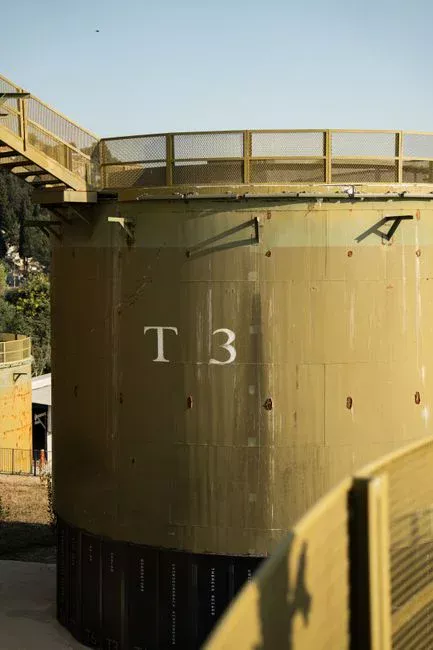
Equalization must precede precipitation because uncontrolled batch peaks can exhaust chemical capacity and overload clarification before the water reaches filtration. The basin should attenuate batch chemistry and hydraulic peaks, provide controlled feed to the treatment train and leave enough operating flexibility for the plant’s actual production cycle.
Next, use a PLC-controlled chemical dosing skid for acid or alkali adjustment. The supplied HydropureWater research states that pH correction converts dissolved iron, arsenic and manganese into hydroxide precipitates before coagulation and filtration (2026). The target pH must be established by jar testing for each parameter; one range cannot be assumed to suit every metal or local limit.
Coagulant and flocculant addition then converts dispersed material and metal hydroxide particles into larger flocs suitable for capture. The research reports polymer coagulant-aid dosing of 0.5–3 mg/L and reports 85–95% total-metals removal in properly controlled precipitation installations (Fluence, as cited by HydropureWater, 2024-11). Those results justify including flocculation, but not copying the dose without testing.
| Process block | Primary function | Selection evidence and design constraint |
|---|---|---|
| Equalization | Attenuates batch peaks and stabilizes chemistry | Use the research’s 8–24-hour average-daily-flow envelope only as a screen; final volume requires measured flow and batch data. |
| pH adjustment | Precipitates dissolved metals as hydroxides | Set the operating window through jar testing for each metal and parameter. |
| Coagulation and flocculation | Aggregates suspended material and metal-hydroxide particles | Research reports 0.5–3 mg/L polymer aid; verify dose and mixing on site chemistry. |
| DAF or lamella clarification | Separates precipitated and suspended solids | DAF: 5–25 m/h hydraulic loading and 90–98% TSS removal. Lamella: 20–40 m/h surface loading and roughly one-third the footprint of a conventional clarifier (HydropureWater, 2026). |
| Multimedia filtration | Polishes residual TSS | Anthracite, sand and garnet; research reports residual TSS below 10 mg/L. Size for the backwash cycle, not average flow alone. |
| UF before RO or reuse | Removes residual colloids that can foul RO | HydropureWater describes 0.03-micron PVDF hollow-fiber UF. Include only when reuse, RO protection or another verified requirement justifies it. |
DAF is the stronger choice when oil, grease or fine colloidal material is present because microbubbles lift particles that may separate poorly in a conventional settler. Lamella clarification is suited to a principal load of metal-hydroxide sludge where surface loading and footprint drive the decision. The DAF versus lamella clarifier selection guide provides a more detailed comparison.
Polishing with anthracite, sand and garnet catches residual solids after clarification. The filter must have enough backwash and waste-handling capacity for hydraulic surges and clarifier carryover; it is not merely an average-flow vessel. If reuse or RO is in scope, add UF ahead of the membrane system. A dissolved air flotation system for metal wastewater or multimedia filtration package should be selected from verified chemistry, hydraulic loading and site constraints rather than from process name alone.
Choose the treatment hardware from the wastewater and footprint
Choose DAF when the stream contains oil, grease or fine colloidal material; choose lamella when metal-hydroxide sludge dominates, flow is higher and footprint is constrained. This is a process-selection rule, not a guarantee of effluent performance. The vendor must demonstrate that the proposed surface or hydraulic loading matches the tested sludge and settling behavior.
For an initial feasibility screen, the supplied research describes a DAF product range of 4–300 m³/h across 13 models (HydropureWater, 2026). That range does not establish the required size. Final selection must use peak and average flow, batch response time, floc characteristics, required clarification area and available footprint.
Use an automatic chemical dosing skid for pH adjusters, coagulants, flocculants and specialty chemicals. Stage dosing when influent pH swings exceed 2 pH units, as recommended in the supplied HydropureWater research (2026). Each reagent should have independent metering, calibrated verification and an operating range supported by jar testing. A PLC improves control, but it does not replace chemical storage, containment, secondary containment or emergency response provisions.
Hydroxide precipitation is the default because the chemistry is established and operation is comparatively straightforward. Sulfide polishing should be treated as a slipstream option when the verified POTW limit requires it—not assumed from a representative value. The research reports sulfide residuals of 0.01–0.05 mg/L for Cu, Zn, Cd and Ni, but also 2–4 times higher reagent cost and the need for sealed reactors and H₂S scrubbing (HydropureWater, 2026).
| Selection question | Evidence the buyer should require | Decision consequence |
|---|---|---|
| DAF or lamella? | Oil/grease and colloid analysis, settling data, required hydraulic or surface loading, site footprint | DAF for floatable or colloidal load; lamella for metal-hydroxide sludge where space is constrained. |
| What equalization and dosing capacity? | 12-month flow record, batch volumes, pH swing data, jar-test reagent demand | Controls basin volume, pump capacity, skid size and operating reserve. |
| Which sludge dewatering arrangement? | Projected sludge volume, solids concentration, batch versus continuous operation, disposal destination | Sets plate area, plate count and manual, hydraulic or PLC operation. |
| Is sulfide polishing needed? | Verified local limit, jar-test residual, reagent consumption and H₂S controls | Add only where hydroxide precipitation cannot meet the confirmed requirement. |
Metal sludge requires a disposal plan. The supplied research reports 25–35% dry-solids cake from a plate-and-frame filter press (HydropureWater, 2026). Select the plate-and-frame filter press from sludge volume, solids concentration, filtrate-return impact and continuous or campaign operation. Clarifier or DAF performance, filter backwash demand and sludge storage must be checked as one hydraulic system; treating only the liquid line can create an unmanageable solids bottleneck.
Close the compliance risks that cause equipment or discharge failures

The most consequential design error is placing filtration before pH correction and precipitation. The supplied research states that reversing the sequence raises chemical consumption and media loading and can cause first-pass noncompliance (HydropureWater, 2026). Preserve the process order unless a validated alternative demonstrates equivalent chemistry, solids capture and compliance.
Check three capacity assumptions explicitly. First, verify peak and batch loading rather than relying on average flow. Second, provide filtration backwash capacity and an approved waste route. Third, provide sludge storage and dewatering capacity for the solids removed from the water. The treatment equipment is not complete if those support systems cannot handle its actual operating pattern.
Assess disinfection only where required by the POTW or by contaminated contact-water streams. The research lists chlorine dioxide at 1–5 mg/L where residual is requested and UV as the non-chemical alternative where residual oxidant is discouraged (HydropureWater, 2026). A chlorine dioxide generation package or UV disinfection system should not be included merely because contact water exists; establish the receiving-POTW requirement first.
Require the supplier to provide written evidence of metal-hydroxide precipitation competence, verifiable mining or metal-finishing project experience, on-site commissioning and a guaranteed media-and-resin supply chain. The controls package should define alarms, fail-safe reagent response, data logging, calibration and operator training. These are measurable qualification requirements, not statements of product preference.
Reject a bid that promises compliance without reviewing the current POTW limits, applicable categorical standard, DMR data, 12-month influent characterization and final equipment proposal. Ask each bidder to trace every proposed unit to a design parameter and identify which permit condition it addresses. For broader capital planning, use the industrial wastewater treatment cost and ROI framework while keeping Hoover-specific quotations and local requirements separate from general cost assumptions.
Frequently Asked Questions
Does NPDES or POTW pretreatment control a mining plant’s sewer discharge?
POTW pretreatment controls an industrial sewer discharge under Clean Water Act §307(b) and 40 CFR Part 403, with local limits applied at the point of connection. NPDES governs direct surface-water discharges and may separately cover a site’s stormwater or other outfalls. A facility can therefore carry both forms of authorization for different discharges. The receiving POTW’s current ordinance and applicable categorical standard must be obtained before sizing.
What should a buyer request when comparing treatment-plant cost and budget?
Request a priced equipment schedule, separate installation and civil-work allowances, chemical operating estimates, sludge-disposal assumptions, controls scope, commissioning cost and each supplier’s exclusions. Do not accept a project total without the governing local limits, design flow, influent characterization and reagent assumptions. The industrial wastewater treatment cost and ROI framework is useful for organizing those inputs, but Hoover-area suppliers should provide site-specific quotations; the supplied research contains no defensible Hoover price.
How should equipment be sized for a mining pretreatment train?
Use jar tests to establish parameter-specific pH windows and reagent doses, then combine those results with a 12-month influent characterization, peak and batch flows, verified POTW limits and the applicable federal category. Size equalization from measured batch behavior, clarification from tested solids characteristics, filtration from the backwash cycle and dewatering from projected sludge volume. Vendor literature ranges are screening tools, not substitutes for those inputs.
What should buyers verify before selecting a wastewater supplier?
Require comparable mining or metal-finishing references, written precipitation and clarification performance evidence, controls and alarm documentation, on-site commissioning, operator training and confirmation of consumable and spare-parts availability. The bid should also identify permit-support responsibilities, boundary conditions, excluded civil work and performance testing tied to the confirmed point-of-connection requirements. Reject a proposal that promises compliance without reviewing the permit documents and tested chemistry.
When does UF or RO belong in a sewer-discharge treatment train?
Add UF when the verified project requires reuse, RO protection or another barrier that removes residual colloids. The supplied research describes 0.03-micron hollow-fiber UF ahead of RO and identifies colloids as a RO-fouling concern (HydropureWater, 2026). For a sewer-only discharge, size the train to the confirmed local limits; do not add membrane capacity solely because treated water could theoretically be reused.