What Columbus Metal Fabricators Should Compare
For fabricated metals wastewater in Columbus, MBR usually offers the stronger biological separation barrier, but the winning decision is the complete treatment train—not the membrane reactor alone. Conventional activated sludge may require less initial capital, while MBR replaces gravity clarification with membrane separation; neither substitutes for source control, oil removal, chemical metals precipitation, or current pretreatment requirements. Before selecting either process, obtain the discharge permit, applicable Columbus-area sewer limits, wastewater characterization, operating schedule, and available footprint. Bidders should quote biological treatment, metals removal, oil and grease pretreatment, sludge handling, and compliance support as separate scopes.
The relevant waste streams include stamping lubricants, machining coolants, drawing compounds, plating rinses, free and emulsified oil, suspended solids, and dissolved metals. Their combined effect matters more than any individual pollutant: lubricants can interfere with settling, metals may be dissolved or particle-bound, and intermittent dumps can upset biological loading.
Use the 2026 MBR cost and selection guide to structure the comparison, but confirm current Franklin County or Columbus requirements with the authority having jurisdiction. A nominal membrane pore size or generic biological-performance range is not a discharge guarantee.
How the Two Biological Processes Handle Metals Wastewater
MBR combines activated-sludge biology with membrane separation, while conventional activated sludge separates biomass by gravity in a clarifier. The EPA classified MBR as a biological treatment technology in Emerging Technologies for Wastewater Treatment and In-Plant Wet Weather Management, EPA 832-R-06-006, February 2008. The commercial fabricated-metals comparison reports MBR MLSS of 8,000–12,000 mg/L versus 2,000–4,000 mg/L in CAS; these are reported comparison values, not design requirements.
The same commercial source attributes an MBR advantage to retaining more biomass, allowing a longer solids retention time at the same hydraulic retention time. That mechanism may help treat slowly degradable organic material, but it does not establish removal of a specific dissolved metal at a Columbus site. Metal fate still depends on chemical form, pH, chelating agents, precipitation chemistry, and solids separation.
| Decision factor | Conventional activated sludge | Membrane bioreactor |
|---|---|---|
| Biological separation | Activated sludge followed by gravity clarification | Activated sludge with submerged membrane separation |
| Reported MLSS comparison | 2,000–4,000 mg/L | 8,000–12,000 mg/L |
| Primary separation risk | Poor settling, sludge carryover, and variable clarification | Membrane fouling, clogging, and transmembrane-pressure increase |
| Metal-treatment role | Can remove metals associated with removed solids; may need polishing | Can provide more consistent particulate separation; dissolved metals still require appropriate treatment |
| Evidence status | Commercial comparison values, not Columbus performance guarantees | |
Reliable solids separation can improve consistency for particulate-bound metals because those metals remain with the captured solids. It does not replace chemical treatment for dissolved metals. Confirm the required endpoint against current local limits, then select precipitation chemistry and confirm residuals analytically.
Pretreatment That Must Be Resolved Before Choosing MBR
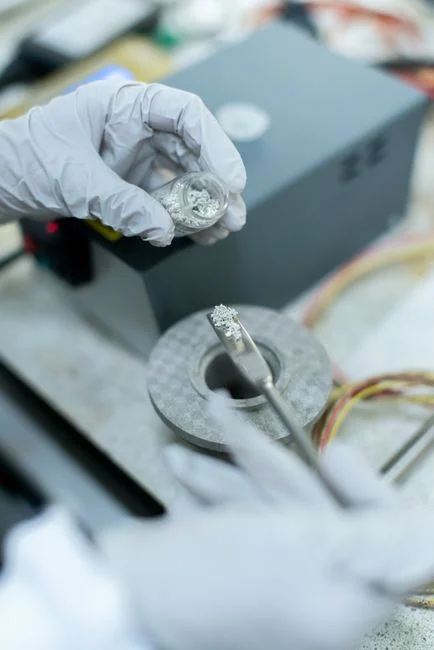
An MBR should receive wastewater screened of fibrous material and stripped of free and emulsified oil before biological treatment. The supplied commercial guide warns that excessive free-floating oil can coat membrane surfaces and cause irreversible fouling; it therefore supports DAF or oil-water separation ahead of MBR. Chemical precipitation should precede biology when regulated metals require removal, while equalization should moderate variable industrial flows.
The intended process sequence is screening, oil removal, required metals precipitation, equalization, biological treatment, and final compliance verification. A GX Series rotary bar screen addresses fibrous material; DAF pretreatment for metals wastewater addresses recoverable oil and floatables. The integrated MBR membrane bioreactor then performs biological treatment and membrane separation.
| Equipment or design input | Reported configuration or required information | Engineering significance |
|---|---|---|
| DF Series membrane modules | 0.1 μm PVDF flat-sheet modules | Requires site-specific confirmation of flux, scouring, cleaning, and actual wastewater performance |
| Integrated aeration | Provided for membrane scouring | Air demand belongs in electrical, operating, and noise reviews |
| Module configurations | 80–225 m² | Configuration choices reported by the product source; selection requires hydraulic and fouling calculations |
| Output configurations | 32–135 m³/day | Available reported scale points, not a Columbus design recommendation |
| Energy claim | HydropureWater reports 10–20× lower energy use than external cross-flow systems | Manufacturer claim requiring proposal-level confirmation using the selected configuration |
Size pretreatment from flow and batch-discharge records, oil and grease results, TSS, pH, metal species, chelating agents, temperature, and chemical-dosing demand. Assess whether individual high-concentration dumps should be segregated rather than sent directly to equalization and biology. Chemical precipitation controls must also coordinate with downstream biology; the automatic chemical dosing system should be evaluated against measured dosing demand, not selected by nominal tank size.
Effluent Reliability, Footprint, and Operating Risk
Reliable solids separation is MBR’s principal biological-process advantage over a clarifier. The supplied commercial guide reports sub-1 μm MBR filtration and TSS below 5 mg/L, while its verified product catalog describes near-reuse-quality effluent with 60% smaller footprint than conventional systems. Those claims require project-specific confirmation and do not establish Columbus permit compliance.
MBR replaces one failure mode with another. A clarifier can lose solids because of poor floc, bulking, foaming, or hydraulic disturbance. An MBR can lose treatment performance because oil and solids foul membranes, modules clog, transmembrane pressure rises, or air scouring and controls fail. The DF Series flat-sheet MBR modules therefore require a fouling-control plan, not only a membrane surface area.
| Reliability question | Conventional activated sludge | Membrane bioreactor |
|---|---|---|
| Solids barrier | Clarifier settling and carryover | Membrane filtration and module integrity |
| Principal operating concern | Sludge condition, solids inventory, and clarifier performance | Fouling, clogging, cleaning, scour air, and pressure control |
| Reported solids-separation performance | Clarifier carryover may require polishing | Sub-1 μm filtration and TSS below 5 mg/L reported by the commercial guide |
| Reported footprint comparison | Conventional system basis | 60% smaller footprint reported by the verified product catalog |
| Operator requirements | Sludge wasting, clarifier control, and process troubleshooting | All CAS duties plus membrane maintenance and specialized controls |
The supplied research identifies extracellular polymeric substances, or EPS, as a principal foulant in aerobic MBRs. Pilot testing should therefore use the plant’s actual coolant and wastewater matrix, including emulsified oil and metals-bearing solids. Evaluate recovery after shutdowns, cleaning frequency, maintenance response time, spare-module strategy, operator competency, and availability of replacement parts. Membrane modules, scour aeration, recirculation, cleaning chemicals, and labor belong in both lifecycle cost and risk assessment.
Capital and Operating Cost for a Columbus Project
The commercial fabricated-metals guide gives a general screening estimate of $80,000–$180,000 in 2026 dollars for the capital-cost difference between MBR and CAS on a 50 m³/day metals stream. It is not a Columbus quotation, does not include every site condition, and must not be used as a budget guarantee.
Build the MBR estimate from membrane modules, frames or cassettes, scour aeration, recirculation, electrical service, controls, piping, and pretreatment interfaces. Build operating cost from electricity, chemical cleaning, membrane replacement, labor, analytical monitoring, pretreatment chemicals, and sludge handling. Treat sludge volume, dewatering performance, and disposal route as site-specific inputs rather than assumed savings.
| Cost category | Items for Columbus budget development | Information required from bidders |
|---|---|---|
| Initial capital | MBR equipment, aeration, recirculation, electrical, controls, civil work, and pretreatment interfaces | Itemized scope based on the common influent and flow basis |
| Pretreatment | Screening, oil removal, equalization, precipitation, and chemical delivery | Separate pricing and performance boundaries |
| Operation | Power, cleaning chemicals, labor, monitoring, and membrane replacement | Consumption assumptions and replacement terms |
| Residuals | Sludge generation, dewatering, hauling, and disposal | Site-specific waste characterization and disposal route |
| Comparison | CAS equipment plus clarifier, polishing if required, and operating labor | Ten-year present-value alternatives using identical assumptions |
Do not import the commercial guide’s sludge-disposal price, sludge-reduction percentage, or payback estimate into a Columbus approval package; the supplied evidence does not independently validate them. Where sludge dewatering is considered, obtain bids for a plate-and-frame filter press using measured residual-solids characteristics rather than generic cake-solids assumptions.
Procurement should issue one influent basis, define the required effluent endpoint and guarantee conditions, request membrane-life and cleaning guarantees, price pretreatment separately, and compare ten-year present-value options. The EPA’s February 2008 technology assessment cautions that some vendor-supplied information involved estimates or lacked full-scale verification and recommends collecting current, site-specific information.
A Decision Framework for Columbus Fabricated Metals Plants
A defensible Columbus selection follows seven steps: confirm the permit; characterize the wastewater; control or segregate oils; select pretreatment; pilot-test biology and membrane flux; compare lifecycle cost; procure performance guarantees. This sequence prevents a membrane decision from obscuring unresolved source-control or pretreatment problems.
| Decision condition | Preferred pathway | Verification required |
|---|---|---|
| Variable wastewater, constrained footprint, and stable solids separation are priorities | Evaluate MBR with full pretreatment | Representative pilot testing, fouling response, operator capability, and recovery testing |
| Stable wastewater, adequate land, reliable existing clarifier, and lower initial capital priority | Evaluate CAS | Clarifier performance, polishing need, sludge handling, and lifecycle comparison |
| Reliable biological system already exists and solids carryover can be polished | Retain CAS and evaluate tertiary filtration | Existing-system variability, polishing reliability, and cost of retained equipment |
| Oil, chelated metals, or batch dumps threaten the chosen process | Resolve source control and pretreatment before selecting biology | Measured stream characterization and a complete treatment-train scope |
Every bid should state whether oil removal, metals precipitation, disinfection, sludge dewatering, controls, startup, training, and permit support are included. Use the same influent dataset, testing protocol, flow basis, and effluent definition for each bidder. The DAF versus clarifier comparison for fabricated metals wastewater can help separate solids-removal performance from biology selection.
Pilot Testing and Procurement Checklist
Representative testing must cover production, cleanup, and dump-discharge periods rather than one composite sample. Test oil and grease, TSS, COD, pH, temperature, dissolved metals, and any chelating or drawing compounds actually present in the process.
| Stage | Required action | Decision output |
|---|---|---|
| Characterization | Collect representative samples across normal production, cleanup, and batch discharges | Confirmed flow, pollutant, and variability basis |
| Pretreatment pilot | Test the intended screening, oil-removal, precipitation, and equalization sequence | Measured residual contaminants and chemical demand |
| Biology and membrane pilot | Test actual wastewater, flux behavior, fouling, cleaning response, and recovery | Evidence for module sizing and operating limits |
| Proposal review | Request membrane material, pore size, module area, design flow, scour-air demand, controls, replacement terms, and cleaning protocols | Comparable technical and commercial scope |
| Compliance confirmation | Confirm current Columbus-area discharge and local sewer requirements with the authority having jurisdiction | Documented applicable endpoint before ordering |
Request the membrane material, pore size, module area, design flow, scour-air demand, controls scope, replacement terms, and cleaning protocol in writing. The integrated MBR membrane bioreactor should be selected only after site wastewater, pretreatment, permit, and pilot-test data are available.
Frequently Asked Questions
How much more does MBR cost than conventional activated sludge for fabricated metals wastewater in Columbus?
The only supplied capital benchmark is the commercial guide’s general estimate of $80,000–$180,000 in 2026 dollars for the MBR-CAS capital difference on a 50 m³/day metals stream; it is not a Columbus quote. Request an itemized Columbus bid using the same influent, flow, pretreatment, controls, and residual-handling basis. Also request ten-year operating-cost alternatives, because electricity, cleaning, labor, chemicals, membrane replacement, and sludge handling can change the comparison.
Which biological process is easier to size and procure for a Columbus plant?
Size from measured flow and wastewater variability, not a generic m³/day rating. Give bidders the same sampling plan, pretreatment requirements, temperature data, and effluent definition. Then compare clarifier or membrane area, tankage, aeration, controls, module redundancy, installation access, operator requirements, and delivery schedule. Confirm equipment dimensions and lead time before finalizing the civil layout.
Does a 0.1 μm membrane automatically make an MBR compliant?
No. The 0.1 μm value describes the DF Series membrane pore size, not a discharge guarantee. Compliance depends on the complete treatment train, actual residuals, mass loading, discharge category, sampling, and current Columbus-area requirements. Confirm permit conditions with the authority having jurisdiction and validate the proposed train through representative testing.
When should a Columbus fabricator retain CAS instead of selecting MBR?
Retain CAS when wastewater is comparatively stable, adequate land is available, the clarifier is reliable, and lower initial capital is the overriding priority. Evaluate tertiary filtration if solids carryover requires polishing. Make that decision only after comparing measured variability, sludge handling, operating labor, pretreatment needs, and lifecycle cost against an MBR alternative tested on the same wastewater basis.