What does a Zanzibar data center actually need to treat?
A Zanzibar data center needs separate treatment strategies for cooling-tower blowdown, sanitary sewage, equipment washdown, firewater and any process wastewater, because their contaminants and reuse destinations differ. Cooling-tower blowdown is chemically conditioned circulating water concentrated by evaporation; sanitary wastewater requires biological treatment and disinfection. A defensible design begins with a source-and-discharge inventory, a measured water balance and confirmation of the intended reuse or discharge route. The supplied research contains no verified Zanzibar water-quality data or numeric effluent limits, so equipment selection cannot be frozen until the operator tests the source and obtains current requirements from NEMC and the relevant Zanzibar authorities.
Map every inlet and outlet: cooling-tower makeup, evaporation, blowdown, domestic sewage, staff wastewater, firewater, equipment washdown, cooling-plant water and process wastewater. Establish whether makeup comes from a public supply, groundwater, surface water, rainwater or another source. The more detailed data-center wastewater and cooling-blowdown treatment framework provides a transferable structure, while the data-center cooling-blowdown treatment guide illustrates why climate, grid conditions and chemical logistics must accompany the process diagram.
Do not combine the streams into one unidentified wastewater system. Blowdown reuse requires control of dissolved solids, hardness, silica and treatment chemicals; sewage treatment primarily addresses biodegradable organics and pathogens. For scale context, IDE (2026) says a 100-megawatt data center can use up to 2 million liters of water per day. That is an industry benchmark, not a Zanzibar site forecast, and it cannot substitute for measured IT load, cooling configuration and operating data.
Request a 12-month operating record where available, supplemented by seasonal source-water testing. It should document makeup demand, tower cycles, actual blowdown, emergency dumps, water quality and interruptions affecting operation. The two academic Zanzibar results supplied for this review concern the Zanzibar International Film Festival and provide no usable treatment or regulatory evidence; they should not support any technical claim.
How much cooling blowdown must the system handle?
Size the treatment train from a measured water balance and the worst credible operating event, not from average daily water use. Genesis Water Technologies (2026) gives the theoretical relationship as blowdown equal to 1 divided by cycles of concentration minus one. At 4 cycles, blowdown is 25% of makeup; at 6 cycles, it is 20%. Moving from 4 to 6 cycles therefore reduces blowdown by 5 percentage points, or 20% relative to the 4-cycle volume—not the 50% reduction sometimes assumed.
Genesis Water Technologies (2026) illustrates scale with a 10 MW example: 15 million gallons of monthly intake and 3.75 million gallons of recoverable monthly blowdown at 4 cycles. This is not a Zanzibar demand estimate. Its operational guidance also says actual blowdown can exceed theoretical calculations by 15–30% because of unmeasured losses and emergency dumps.
For a screening calculation only, IDE (2026) states that a 100 MW facility can use up to 2 million liters per day. If a proposed Zanzibar facility actually has that IT load and water-based cooling, the theoretical blowdown at 4 cycles would be 500,000 liters per day. The site operator must verify actual cooling-water demand before using even that screening result. Equipment sizing should then address peak blowdown, dump events, recovery outages and permitted operating ranges.
| Input or calculation | Supported value | Design use |
|---|---|---|
| 100 MW facility water use | Up to 2 million L/day, IDE (2026) | External screening context only; not a Zanzibar forecast |
| Blowdown at 4 cycles | 25% of makeup, Genesis Water Technologies (2026) | Calculate theoretical continuous blowdown |
| Blowdown at 6 cycles | 20% of makeup, Genesis Water Technologies (2026) | Evaluate source control against scaling and biological risks |
| Reduction from 4 to 6 cycles | 5 percentage points, or 20% relative, Genesis Water Technologies (2026) | Correct the common 50% assumption |
| Actual versus theoretical blowdown | 15–30% above theoretical calculations, Genesis Water Technologies (2026) | Include in peak and contingency assessment |
| 10 MW reference case | 15 million gal/month intake and 3.75 million gal/month recoverable blowdown at 4 cycles, Genesis Water Technologies (2026) | Scale illustration only |
The procurement flow is therefore: measure makeup; establish tower cycles; calculate theoretical blowdown; add operating and emergency events; reconcile with actual flow meters; and size pretreatment, RO and concentrate handling against that envelope.
Which Zanzibar water source and reuse destinations should the design prioritize?
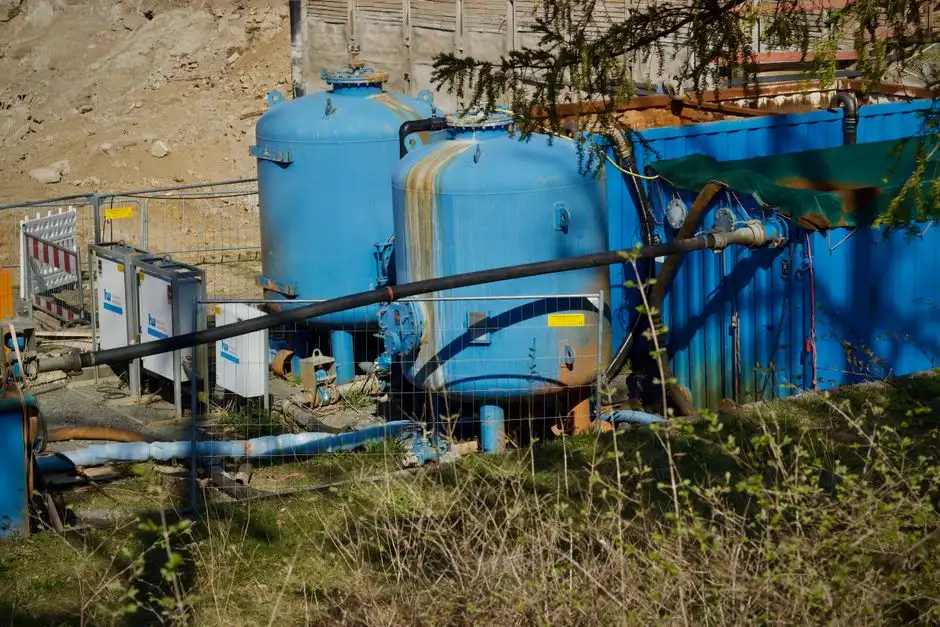
The preferred destination is the one that reduces freshwater demand without creating a new permit, water-quality or operational burden. For this site, rank destinations in this order: return to the cooling tower, use for equipment or process washing, use for toilet flushing or another approved non-potable demand, and only then discharge to an authorized sewer or receiving water.
Source characterization cannot be inferred from another Tanzanian city. The supplied Mwanza guide describes Lake Victoria surface water as generally low in TDS but variable in algae, organics and microbial load. That is a Mwanza analogue, not evidence about Zanzibar’s groundwater, public supply, rainwater or surface-water quality. The buyer should request current information from the Zanzibar Water Supply Authority on source reliability, quality, tariffs and connection conditions, plus written NEMC and relevant-authority requirements for reuse and discharge. The industrial water-reuse compliance overview can structure those questions, but it does not provide Zanzibar limits.
Ask each treatment supplier to evaluate options against freshwater reduction, equipment size, energy demand, chemical resupply, concentrate fate, operator competence and grid reliability. A high-recovery solution that requires continuous imported chemicals or an unconfirmed disposal route is not a complete Zanzibar proposal.
Genesis Water Technologies (2026) reports a Texas facility recovering 2.5 million gallons of blowdown per month and reducing municipal-water consumption by 35%. Treat this as an external reference case. It is not an expected Zanzibar result, because source chemistry, tower operation, permitted reuse, climate, tariffs and operating practices must all be reproduced locally.
| Reuse or discharge priority | Required destination quality | Key unresolved input |
|---|---|---|
| Cooling-tower makeup | Control of dissolved solids, hardness, silica, suspended solids, microbiology and treatment-chemical residuals | Measured blowdown chemistry and tower acceptance limits |
| Equipment or process washing | Quality appropriate to each use and residual controls | Written non-potable reuse approval |
| Toilet flushing or approved non-potable use | Defined physical, chemical and biological limits | Authority approval and site demand profile |
| Authorized sewer or receiving-water discharge | Current permit and receiving-water conditions | Numeric NEMC limits, discharge procedure and fees |
Before comparing capital cost, obtain the actual freshwater tariff, discharge fees, sewer restrictions and concentrate options. Without those inputs, the lowest-cost route cannot be established responsibly.
Which treatment train best fits Zanzibar conditions?
For cooling-tower make-up recovery, the baseline train is side-stream filtration followed by UF and RO. The Mwanza guide (2026), cited in the HydropureWater research, reports UF recovery of 90–95% at 10–30 psi, RO dissolved-solids rejection of 95–99%, and blowdown-RO recovery of 50–85%. The hollow-fiber ultrafiltration pretreatment system removes suspended material and biological fragments before the industrial reverse osmosis blowdown-reuse system addresses dissolved solids.
Where the makeup source is biologically active, add controlled disinfection, but validate chemistry against membrane compatibility. The Mwanza guide recommends UV or chlorine dioxide where appropriate and warns that free chlorine reaching RO membranes must be avoided. RO should follow confirmed control of turbidity, biological loading and scaling constituents.
Conventional brackish-water RO is usually limited to 75–80% recovery, according to IDE (2026). Its cited MAXH₂O application operated at around 95% recovery and reduced permeate silica to about 1 mg/L by combining membrane separation with controlled precipitation of sparingly soluble salts. That is a chemistry-aware high-recovery architecture, not a generic claim that standard RO can run at the same rate.
If direct tower reuse is not viable, match pretreatment to the discharge objective. Filtration may be enough for suspended solids; DAF is relevant for suitable oily or floatable solids; coagulation can support removal where the wastewater profile supports it. None of these removes the dissolved salt load that characterizes cooling blowdown.
Sanitary wastewater requires a biological train. The WSZ integrated sewage-treatment package is relevant where its 1–80 m³/h capacity matches measured flows, while the MBR wastewater-treatment option becomes relevant when footprint and near-reuse-quality effluent justify the added process complexity.
Use an industrial water softener only where measured hardness creates a scaling or pretreatment problem; the referenced KJ-WT series has a stated 1–45 T/h capacity range. Where concentrate disposal is constrained, the Mwanza guide (2026) cites MVC recovery of 95–98% and distillate TDS below 10 mg/L. Its $1–$3 million CAPEX for 10,000–30,000 GPD and 15–25 kWh per 1,000 US gallons are imported planning benchmarks requiring local feasibility review.
Reserve full ZLD for sites where reuse, sewer discharge and surface discharge are all blocked. The Mwanza guide estimates $3–$8 million CAPEX and $5–$15 per thousand gallons OPEX, making it a last-resort comparison rather than the default.
| Objective or stream | Indicative train | Scaling limit or decision gate |
|---|---|---|
| Blowdown to cooling-tower makeup | Side-stream filtration → UF → RO → controlled makeup | RO recovery normally 50–85% in the cited blowdown design; higher recovery requires chemistry-aware design |
| Biological make-up control | Filtration plus validated UV or chlorine-dioxide treatment before UF | Protect membranes; avoid free chlorine entering RO |
| Sanitary wastewater | Biological treatment and disinfection; MBR where justified | Match measured flow, footprint and reuse quality |
| Hardness control | Measured basis followed by softening if required | Do not soften without a scale or pretreatment need |
| Constrained concentrate route | Concentration or MVC assessment | Validate energy tariff, materials, maintenance and final residual route |
| No permitted disposal route | Full ZLD comparison | Use only after sewer, receiving-water and reuse options are blocked |
How will pretreatment, controls and residuals affect reliable operation?
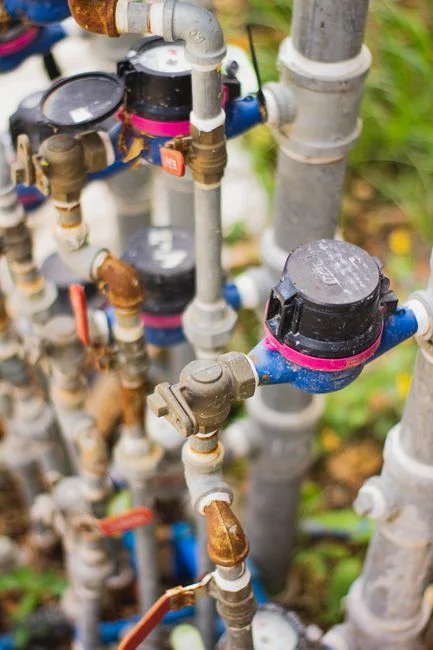
Pretreatment must be designed for the worst credible source-water event, including biological growth, not the annual average. The Mwanza guide (2026) identifies algae, organics and microbial load as important variables in a tropical lake-water design. Those observations are a design lesson, but Zanzibar source testing must determine the actual pretreatment load.
Where turbidity, colloids and SDI control are required ahead of RO, compare a multi-media pretreatment filter with side-stream filtration. The referenced HydropureWater system is specified to produce SDI values suitable for downstream membrane protection. UF then provides the finer barrier before RO.
For biological control, evaluate on-site chlorine-dioxide generation through the industrial chlorine-dioxide generator or UV disinfection through the UV water sterilizer. The chlorine-dioxide range includes cooling-loop and process-wastewater applications, but the selected chemistry must be approved by the membrane and chemical suppliers. A disinfectant selection is incomplete without a residual and compatibility basis.
Use an automatic chemical-dosing system for pH, antiscalant, disinfectant or coagulant where required. PLC control should coordinate flow, differential pressure, conductivity, pH, turbidity, permeate quality and interlock states. Include automatic diversion when permeate quality is outside limits, controlled shutdown during power loss, clean-in-place access and a written membrane-cleaning plan.
Redundancy and logistics are part of reliability, not optional extras. Specify critical spares, membrane elements, instrumentation, dosing pumps and chemical storage; document delivery lead times and outage responses. Tropical humidity and grid interruptions may affect equipment and staffing, but the supplied research does not quantify Zanzibar outage frequency, so resilience duration should come from the operator’s site data.
Plan for residuals before signing the equipment order. Softener regeneration sludge, clarifier sludge and any chemical precipitates require collection, dewatering, storage and an approved disposal route. The plate-and-frame filter press is relevant where the generated sludge requires mechanical dewatering.
| Reliability feature | Acceptance evidence to request |
|---|---|
| Worst-case pretreatment | Defined source-water envelope, event sample and selected barrier |
| Automatic controls | PLC functional description, interlocks, alarms and fail-safe states |
| Permeate protection | Automatic diversion test and permeate-quality instruments |
| Cleaning and redundancy | Cleaning method, membrane replacement plan, critical-spares list |
| Residuals management | Mass balance, dewatering arrangement and approved destination |
| Island logistics | Delivery lead times, local spares, training and outage procedure |
What should a supplier guarantee before the buyer awards the contract?
A supplier should guarantee performance against a defined feed-water and operating envelope, not against an undefined “Zanzibar wastewater” condition. The contractual feed specification must cover makeup and blowdown flow, temperature, TDS, hardness, silica, suspended solids, biological loading and treatment chemicals. It should also define normal and peak operation, including dump events and grid-outage response.
Require guaranteed recovery, permeate quality and energy use per cubic metre. Tie each guarantee to the tested design feed and state the boundary over which energy and chemical consumption are measured. A permeate TDS claim without a recovery guarantee is incomplete because the two parameters determine freshwater displacement and concentrate generation.
Ask for named membrane models, reference installations in tropical or grid-constrained environments, chemical-compatibility evidence, a fouling and cleaning plan, and a membrane-replacement cost basis. Review the proposed membrane and filter-element package and the treatment-parts and media schedule for model consistency.
Commissioning should test feed and permeate flow, conductivity, pressure, recovery, turbidity, permeate quality, disinfection performance and automatic-control interlocks. The acceptance protocol must specify sampling points, instruments, test duration, rejection criteria and the remedy for non-compliance.
The commercial model should include avoided freshwater, avoided discharge, the value of reused water and lifecycle operating costs. Obtain current Zanzibar tariffs and fees before calculating return on investment. Do not build a business case around freshwater savings while leaving concentrate disposal, chemicals, membranes, power or sludge disposal unpriced.
HydropureWater’s Mwanza guide gives $250,000–$500,000 installed and $1.50–$3.00 per thousand gallons OPEX for a 50,000 GPD-class RO train. Use this only as a screening benchmark, not a Zanzibar quotation. It excludes the unresolved local scope, taxes, import logistics, site works, permits and disposal cost unless specifically priced.
| Contract item | Minimum requirement before award |
|---|---|
| Feed envelope | Measured upper and normal limits for every material water-quality and operating parameter |
| Performance | Guaranteed recovery, permeate quality and energy per cubic metre at stated loads |
| Equipment identity | Named membranes, filters, instruments, controls and treatment media |
| Acceptance testing | Method, duration, instruments and pass/fail criteria for each guarantee |
| Operations | Training, remote support, spares, response times and outage procedure |
| Commercial case | Local tariffs, discharge fees, chemical supply, power, membrane and residual costs |
What evidence should be collected before the final design is frozen?
The design basis should close five evidence gaps in sequence. First, obtain current written NEMC effluent limits, receiving-water conditions, reuse requirements and discharge procedures from the relevant authority; the supplied research contains no Zanzibar numeric effluent limits. Second, confirm the Zanzibar utility’s source, seasonal quality, available flow, tariffs, pretreatment requirements and sewer-discharge restrictions directly with the responsible bodies.
Third, complete source-water testing across wet and dry conditions and include event sampling for algae or biofilm where relevant. Fourth, survey every stream’s measured flow and chemistry, including actual blowdown, emergency dumps, domestic flows and equipment washdown. Fifth, model grid outages, chemical-delivery delays, membrane fouling, permit constraints and residual-storage limits before selecting the final train.
| Evidence item | Owner | Required output |
|---|---|---|
| Regulatory and reuse conditions | Environmental lead | Current written limits, procedures and approval pathway |
| Water-source and utility conditions | Project engineer | Source reliability, seasonal quality, flow, tariff and connection requirements |
| Source-water testing | Water-treatment engineer | Wet- and dry-season analytical dataset plus event samples |
| Flow and chemistry survey | Operations team | Measured water balance for each wastewater stream |
| Resilience scenarios | Design team | Approved outage, fouling, logistics and permit scenarios |
The industrial water-reuse compliance overview can support the compliance workstream, but local written requirements and site data remain the deciding evidence.
Frequently Asked Questions
What is the cheapest practical way to treat cooling-tower blowdown in Zanzibar?
Start with source control and reuse: optimize cooling cycles, recover heat where practical, and use side-stream filtration if measured water quality supports it. Add UF and RO when dissolved solids must be removed before the water returns to the tower or before a defined discharge limit applies. MVC or ZLD should be compared only after local electricity, maintenance, concentrate handling and disposal constraints are known. The selected route should reduce freshwater demand and avoid creating an unmanageable residual stream.
How much should a data-center blowdown treatment system in Zanzibar cost?
No defensible Zanzibar quotation exists in the supplied research. HydropureWater’s Mwanza guide gives $250,000–$500,000 installed and $1.50–$3.00 per thousand gallons OPEX for a 50,000 GPD-class RO train, but this is an imported planning band, not a local budget. Require a quotation based on measured flow and chemistry, local civil works, import and installation logistics, power, chemicals, membranes, operator labor, residual handling, permits and Zanzibar water and discharge tariffs.
Should the project use UF and RO or an MBR?
Use UF and RO for concentrated cooling blowdown when the objective is dissolved-solids control and cooling-tower makeup recovery. Use an MBR for wastewater requiring biological treatment, solids separation and near-reuse-quality effluent. These are different stream and product objectives; the decision follows measured source chemistry, required destination quality, footprint, operator capability and residual handling rather than equipment preference.
Can a supplier guarantee the system will meet Zanzibar’s discharge requirements?
A supplier should not guarantee unseen regulatory limits. The buyer must first obtain current written requirements from NEMC and the relevant authority, including applicable water-quality limits, receiving-water conditions and discharge procedures. Then require the supplier to guarantee system performance against the defined feed-water envelope and permit envelope. Regulatory interpretation remains the authority’s responsibility; equipment acceptance should be tied to measurable discharge or reuse criteria supplied by that authority.
What must be measured before ordering equipment?
Measure makeup and actual blowdown flow, tower cycles, emergency dumps, source-water seasonal quality, hardness, TDS, silica, suspended solids, biological load, temperature and treatment chemicals. Record domestic flow, equipment-washdown composition, available freshwater flow and tariff, sewer-discharge restrictions, concentrate destinations, grid reliability and chemical-delivery lead times. Without these inputs, neither equipment capacity nor lifecycle economics is defensible.