Which Rules Govern an Oxford-Area Sewer Discharge?
Mining and metals plants near Oxford that discharge to a municipal sewer generally comply through the Clean Water Act §307(b) pretreatment program, federal categorical standards, and the receiving POTW’s sewer-use permit—not through a direct-discharge NPDES permit for that sewer discharge. EPA’s local-limits process identifies pollutants of concern, analyzes data, calculates allowable headworks loadings, and adopts enforceable local limits. A practical treatment train typically segregates and equalizes wastewater, controls pH, precipitates metals, removes oil and solids, polishes the effluent, and dewateres the resulting sludge. Final equipment and operating targets must be based on the specific Oxford-area POTW permit, applicable 40 CFR category, influent testing, and compliance sampling point.
An indirect discharger sends wastewater to a POTW rather than discharging directly to surface water. The governing pathway is Clean Water Act §307(b), implemented through 40 CFR Part 403 and the industrial user permit or equivalent control mechanism administered by the POTW. For a mining or metals operation, also review the applicability language in 40 CFR Part 437 for ore mining and dressing and 40 CFR Part 433 for metal finishing. Classification depends on the processes performed, not simply the site’s business description.
EPA’s complete mining and metals pretreatment guide explains the relationship among national pretreatment standards, categorical standards, and local limits. The hierarchy is not a simple “one rule always wins” test. The controlling industrial user permit, applicable regulation, sewer-use ordinance, and state or local requirements must be read together. EPA’s Local Limits Development Guidance, published in 2021, states that the guidance is not itself a regulation and that, if guidance conflicts with a permit or regulation, the permit or regulation controls.
| Document or authority | Engineering relevance | Decision to make |
|---|---|---|
| 40 CFR Part 403 | Federal indirect-discharger framework | Confirm POTW pretreatment authority and local program |
| 40 CFR Part 437 | Possible categorical requirements for ore mining and dressing | Read the applicable subcategory and applicability language |
| 40 CFR Part 433 | Possible categorical requirements for metal finishing | Confirm whether finishing processes are present and applicable |
| POTW industrial user permit | Site-specific enforceable conditions | Extract limits, averaging periods, monitoring, and sampling point |
| Sewer-use ordinance | Local discharge prohibitions and operating conditions | Identify provisions not fully repeated in the permit |
| NPDES permit | May govern separate direct surface-water or stormwater outfalls | Map outfalls separately; do not treat them as sewer discharges |
For a regional process, see the regional mining pretreatment compliance example. The key distinction is permit traceability: every proposed treatment stage should answer which legally controlling document and parameter it addresses.
Build a Permit-Ready Wastewater Inventory
A defensible equipment design begins with a stream-by-stream wastewater inventory, not a generic treatment train. EPA’s Local Limits Development Guidance, published in 2021, distinguishes data collection at POTWs, within collection systems, and at industrial users. That distinction supports the same engineering discipline: identify what enters each stream, where it goes, who monitors it, and which discharge characteristics can change the treatment result.
Evaluate acid mine drainage and spent process solutions, leach-pad runoff, brine, scrubber blowdown, equipment wash, floor wash, cooling water, and hauled waste separately where they exist. The 2026 mining pretreatment guide provides a screening profile of pH 2–4 in raw acid mine drainage and spent process solutions, TSS in the hundreds to several thousand mg/L, and dissolved Pb, Cu, Zn, Cd, Ni, and As. It also identifies elevated sulfate and TDS as characterization inputs. Those values are screening references, not Oxford permit limits.
| Inventory field | Information required | Why it affects the design |
|---|---|---|
| Stream origin | Process step, collection point, and batch versus continuous discharge | Separates concentrated slugs from reusable rinse flows |
| Flow | Average, peak, batch duration, discharge timing, and seasonality | Sets equalization and treatment capacity |
| Chemistry | pH, metals, TSS, oil and grease, cyanide, sulfate, TDS, and relevant process reagents | Defines unit operations and chemical demands |
| Analytical basis | Total recoverable metals, dissolved metals, or both; required method and detection limit | Controls filtration, sampling, and compliance evidence |
| Disposal route | Hauler, treatment facility, waste determination, and filtrate destination | Closes the residuals-management loop |
Ask the POTW to confirm the required analytical basis, preservation, filtration for dissolved metals, detection limits, monitoring frequency, and legal sampling point. Also request current results, flow variability, chemical usage, batch timing, and available sampling history. The Oxford-area fabricated-metals compliance guide emphasizes the same stream-segregation issue for rinse water, spent solutions, scrubber blowdown, wash water, and floor wash.
Treat cyanide-bearing streams separately. Residual cyanide can form soluble metal-cyanide complexes that pass through hydroxide precipitation, so a metals train cannot substitute for cyanide control. High sulfate or TDS also requires an explicit POTW decision: treatment does not automatically make the stream acceptable for sewer discharge.
Turn POTW Limits into a Treatment Design Basis
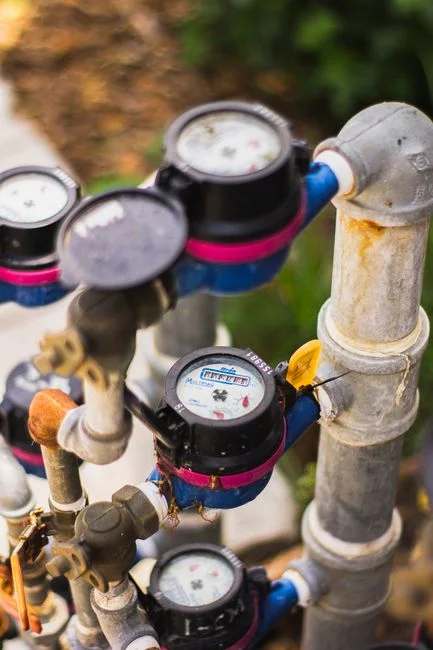
The design basis is the controlling POTW permit or sewer-use ordinance, read together with the applicable categorical regulation—not a vendor-selected pH or metals target. EPA’s Local Limits Development Guidance, published in 2021, presents a five-step framework that gives the POTW a defensible method for determining enforceable site-specific conditions.
- Determine the pollutants of concern.
- Collect and analyze data.
- Calculate maximum allowable headworks loadings for each pollutant.
- Designate and implement local limits.
- Address collection-system concerns.
For an industrial user, this framework has a practical translation. Identify every limit and averaging basis: instantaneous, daily maximum, monthly average, mass-based loading, or another condition. Then identify the compliance point, monitoring frequency, analytical method, sample preservation, and reporting process. A concentration limit without an agreed flow basis cannot establish whether the plant has exceeded a headworks loading.
The 2026 mining pretreatment guide gives regulatory examples from 40 CFR Part 433: copper at 3.38 mg/L daily maximum and 2.07 mg/L monthly average, and total chromium at 2.77 mg/L daily maximum and 1.71 mg/L monthly average. These are not Oxford-area POTW limits. A local condition may require a lower equipment target. Every numerical target in the procurement package should therefore carry a source and an averaging period.
| Design-basis item | Required entry | Pre-tender resolution |
|---|---|---|
| Parameter | Exact regulated constituent or characteristic | Confirm name, form, and units |
| Limit | Numerical value from the controlling instrument | Attach source citation |
| Averaging basis | Instantaneous, daily maximum, monthly average, or loading | Define the compliance calculation |
| Monitoring | Frequency, method, detection limit, preservation, and filtration | Obtain written POTW confirmation |
| Sampling point | Plant outfall, collection system, or POTW manhole | Confirm who samples and who witnesses |
| Design target | Internal operating target and equipment guarantee | Explain any margin below the permit limit |
Do not finalize equipment sizing until these items are known. The pretreatment compliance guide for another industrial sector illustrates the same discipline: the governing permit and analytical requirements must become measurable design inputs before treatment selection.
Segment the Streams Before Treating Them
Segregation is the first defense against a batch discharge overwhelming the metals-precipitation and clarification stages. Route concentrated spent solutions and batch dumps separately from lower-volume rinse streams where practical. Keep oil-contaminated cooling and wash streams away from cyanide or metals precipitation equipment when their chemistry is incompatible.
Equalization then smooths flow, pH, and metal-load changes before dosing. The 2026 mining pretreatment guide references 8–24 hours of average daily flow as a sizing range for comparison with the plant’s actual batch profile. That is not a universal requirement. The selected volume must reflect batch duration, peak flow, inventory, and POTW discharge conditions.
Automatic staging matters when influent pH changes sharply. The same guide identifies a ±0.2 automatic pH-control band and recommends staged dosing when influent swings exceed 2 pH units. These values are design references from the guide, not Oxford permit limits. An automatic chemical dosing system with PLC control can coordinate pH adjustment, coagulant, flocculant, and cyanide-treatment reagents, but its control narrative must be tied to the actual wastewater chemistry.
- Identify incompatible or toxic streams.
- Notify the POTW before changing or combining the discharge route.
- Route concentrated batches to controlled treatment or equalization.
- Equalize compatible flows before clarification.
- Interlock high-pH, low-pH, excessive-flow, and chemical-delivery conditions.
This sequence prevents a treatment unit from receiving a slug its chemistry was not designed to handle. It also creates a better operating record: operators can distinguish a failed unit operation from an upstream batch-discharge event.
Select Equipment for the Failing Parameter

Each unit operation should control a named permit parameter and have a documented failure mode. The equipment decision begins with the wastewater’s dominant separation problem, not with a predetermined treatment train.
For oil, grease, colloids, and suspended solids, compare an industrial DAF system for mining wastewater with a lamella clarifier for metal hydroxide sludge. The 2026 mining pretreatment guide reports DAF hydraulic loading of 5–25 m/h and lamella surface loading of 20–40 m/h. Its engineering comparison favors DAF for oily or colloidal streams and lamella for dense metal-hydroxide flocs or space-constrained installations. These loading values are references from that guide; final hydraulic loading must follow representative wastewater testing and the selected configuration.
| Failing parameter | Potential treatment | Design and operating evidence required | Principal failure mode |
|---|---|---|---|
| Oil, grease, colloids | DAF with chemical conditioning | Oily and colloidal influent test; skid performance; skimming and sludge handling | Carryover, emulsification, or poor floc formation |
| Dense metal-hydroxide solids | Lamella clarification | Floc characteristics, settled-solids testing, hydraulic loading, sludge withdrawal | Blanket buildup or carryover |
| pH and precipitated metals | PLC-controlled dosing, hydroxide precipitation, clarification | Jar or pilot pH window and reagent dose | Wrong pH window, overdosing, or unstable floc |
| Very low residual metals | Sulfide polishing | Residual-metal target, sealed-reactor design, and H₂S control | H₂S release or insufficient residual removal |
| Residual TSS | Multimedia filtration | Filtration rate, differential-pressure trigger, backwash recovery | Filter breakthrough or excessive backwash carryover |
| Metal-bearing solids | Plate-and-frame dewatering | Sludge characterization, cake handling, filtrate return, approved disposal route | Filtrate upset or noncompliant waste classification |
The 2026 guide reports 85–95% total-metals removal in properly controlled precipitation installations. It also reports sulfide residuals of 0.01–0.05 mg/L for Cu, Zn, Cd, and Ni, compared with 0.5–2.0 mg/L for hydroxide, while requiring sealed reactors and H₂S control. For final solids polishing, the guide reports multimedia filtration at 1–2 m/h with residual TSS below 10 mg/L. For metal-bearing sludge, it reports plate-and-frame dewatering to 25–35% dry solids. These figures support screening; they do not replace jar or pilot testing.
Use representative wastewater to establish the optimum pH window and reagent dose. Then determine cake yield, solids capture, filtrate quality, chemical consumption, and disposal requirements. A plate-and-frame filter press can reduce sludge volume, but the waste characterization and approved route must be resolved before finalizing it.
Prove Compliance at the Required Sampling Point
A passing laboratory result only proves compliance if it was collected from the legally relevant location and under the permit’s required conditions. The 2026 Oxford-area fabricated-metals guide notes that a mismatch between the plant sample point and the POTW sampling point can undermine an otherwise favorable result. Confirm whether the POTW samples at the plant outfall, within the collection system, or at its own monitoring manhole.
For each sample, record the location, flow, date and time, sampling method, operators, preservation, analytical method, chain of custody, and any split samples. Preserve enough information to reconstruct what was represented: a short grab sample during a batch dump may not characterize a permitted discharge condition. Coordinate collection times with batch timing, chemical dosing, and flow records.
Before the first formal compliance event, run a pretreatment-system performance test. Reconcile each result against every permit parameter and averaging period. The record should include influent, intermediate-stage, and final-effluent results, because a compliant final sample does not reveal which unit operation is providing the margin.
Retain chemical dosage, pH, flow, solids, alarm, and operator logs. These records explain excursions and corrective actions. EPA’s Local Limits Development Guidance, published in 2021, distinguishes sampling at POTWs, in collection systems, and at industrial users because those datasets serve different purposes. Data used to develop local limits should not be conflated with routine industrial-user compliance monitoring. The sampling-point compliance guide provides related evidence-chain guidance.
Plan Commissioning, O&M, and Sludge Disposal
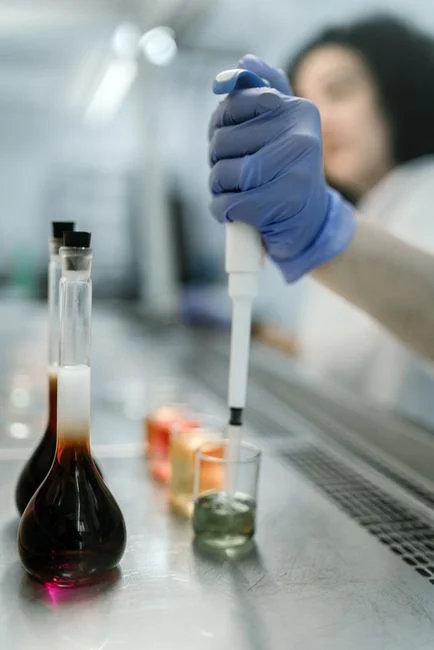
Commissioning should test each treatment stage independently before the full train operates. Confirm feed-pump rotation, interlocks, pH control, solids collection, sludge withdrawal, filtrate return, alarm response, and the designated final sampling point. A staged test exposes a chemical-feed or solids-handling defect before it appears as a combined-train failure.
Define operating responses for high pH, low pH, excessive flow, clarifier carryover, chemical interruptions, and abnormal metal or TSS results. Each response needs an operator action, a hold or diversion rule, an alarm level, and an escalation path. Tie chemical storage and delivery to the operating plan so a reagent interruption does not become an uncontrolled batch discharge.
Characterize metal-bearing sludge under the applicable hazardous-waste framework before dewatering begins. Confirm the waste determination, acceptance criteria, approved route, transport documentation, and whether filtrate may return to the process headworks. The 2026 Oxford-area fabricated-metals guide specifically warns that an overlooked TCLP result can turn routine disposal into a hazardous-waste event.
- Verify equipment condition, calibration, and chemical inventory.
- Confirm each operating response with operators.
- Coordinate maintenance with the POTW monitoring calendar.
- Review recent excursion trends.
- Prioritize capital work at the unit operation linked to recurring excursions.
Do not rely only on calendar-based servicing. For separation-selection logic, compare the DAF versus clarifier selection for metals wastewater and the comparison for automotive wastewater. These are engineering comparisons, not substitutes for testing the Oxford site’s wastewater.
Equipment Selection Checklist for Oxford-Area Projects
A defensible procurement package links each unit operation to a permit parameter, acceptance test, and residual-management obligation. Do not let the bid become a collection of equipment names disconnected from compliance.
- Require a parameter-to-equipment map, including what each device cannot control.
- Require expected influent and peak-flow conditions, batch data, and representative-wastewater testing rather than clean-water results alone.
- Request the control philosophy, alarm response, chemical-storage arrangement, maintenance access, sludge yield, solids capture, and utility requirements.
- Require every assumption concerning pH, metals, oil, TSS, cyanide, flow, batch duration, sampling method, and disposal route.
- Require FAT and SAT protocols using representative wastewater, with signed results tied to final permit conditions.
- Confirm compatibility with the selected compliance sampling point and the final treatment sequence.
| Bid deliverable | Required content | Acceptance check |
|---|---|---|
| Compliance map | Unit operation, permit parameter, source, and averaging basis | Every permitted parameter is addressed or expressly excluded |
| Design basis | Flow, batch profile, chemistry, detection limits, and sampling point | No unresolved assumption remains |
| Performance evidence | Representative-wastewater test or accepted pilot program | Results cover the agreed acceptance conditions |
| Control narrative | Set points, interlocks, alarms, hold conditions, and manual fallback | Operator actions are testable |
| Residuals plan | Sludge yield, characterization, dewatering, filtrate route, and disposal approval | Route is documented before award |
| Commissioning plan | FAT, SAT, performance test, sampling, and acceptance signatures | Acceptance criteria match the final permit |
Headworks requirements should be tied to actual debris and flow conditions; a rotary mechanical bar screen is not a substitute for process design. Similarly, an automatic chemical dosing system should be specified against measured chemistry, required turndown, reagent storage, and control interlocks. The 2026 mining and metals pretreatment guide provides the broader compliance sequence, while the Crystal Springs regional example shows how a local project can connect permits, streams, equipment, and sampling.
Frequently Asked Questions
Do mining plants need an NPDES permit when they discharge to a municipal sewer?
Not for the sewer discharge alone. That route is governed through Clean Water Act §307(b), 40 CFR Part 403, and the POTW’s permit or equivalent control mechanism. Separate surface-water or stormwater outfalls may require NPDES authorizations, so map each outfall separately.
Should equipment be sized from federal categorical limits or the Oxford-area POTW permit?
Use the controlling site-specific permit together with the applicable federal category. EPA’s 2021 Local Limits Development Guidance states that a permit or regulation controls if guidance conflicts. Check whether the adopted limit is instantaneous, daily maximum, monthly average, or mass based, and require the equipment proposal to cite every numerical target.
Is DAF or a lamella clarifier better for mining wastewater?
Use DAF when oil, grease, or colloidal material is the main separation problem; consider lamella for dense metal-hydroxide flocs or a space-constrained installation. The 2026 mining pretreatment guide reports DAF hydraulic loading of 5–25 m/h and lamella surface loading of 20–40 m/h. Confirm the choice with representative-wastewater jar or pilot trials rather than influent category alone.
How much equalization capacity does a mining pretreatment system need?
The 2026 mining pretreatment guide references 8–24 hours of average daily flow, but that is a comparison range rather than an Oxford requirement. Final sizing needs the plant’s batch-discharge duration, peak flow, operating inventory, seasonal changes, and POTW discharge conditions. Ask the supplier to show how the selected volume attenuates the measured batch profile.
What should a supplier provide to reduce compliance risk?
Require a parameter-to-equipment map, explicit design assumptions, representative-wastewater performance data, control narratives, FAT/SAT protocols, sludge-disposal assumptions, and a tie-in to the legally required sampling point. Also require the supplier to identify every limit it cannot control. For pricing decisions, request a quote broken down by unit, civil work, controls, chemical storage, commissioning, and residuals handling; no supported budget figure was available in the supplied research, so a defensible comparison requires current site inputs and vendor quotations.