What Petroleum Wastewater Changes About the Equipment Choice
For petroleum wastewater in Greensburg, DAF is usually the stronger choice when free or emulsified oil, FOG, colloids, and light solids are the principal contaminants; a clarifier is generally better for heavy, readily settleable solids and lower operating cost. DAF uses microbubbles to lift oil and suspended material, while a clarifier relies on gravity. Published petroleum DAF applications span 50–5,000 mg/L oil, often after API or CPI separation. Final selection should follow wastewater characterization, jar and pilot testing, downstream treatment needs, and permit or sewer requirements—not a generic equipment rule.
That range comes from Clean Technology Post’s 2026-08 review of petroleum DAF applications. It describes conditions in which DAF has been used; it is neither a universal performance guarantee nor an automatic sizing rule. For a factory or terminal near Greensburg, the first engineering task is to identify which contaminant fraction controls the treatment objective. A stream dominated by free oil, emulsified oil, colloids, or light solids points toward dissolved air flotation. A stream dominated by dense, rapidly settling solids points toward gravity sedimentation or a lamella clarifier.
Free oil can separate from water under gravity when its droplet condition permits. Emulsified oil is dispersed in very small droplets and is more difficult to separate without chemical breaking or conditioning. The emulsified-oil treatment process guide explains why source control, characterization, and chemical selection must precede equipment selection.
Before selecting a unit, obtain the following:
- Average and peak-hour flow, including production and upset conditions;
- Oil concentration and speciation: free, emulsified, dissolved, or total oil;
- Suspended-solids concentration and particle-size distribution;
- Temperature, pH, emulsifier information, and chemical use;
- API or CPI separator performance, if source separation is already installed;
- Final discharge, sewer-prepayment, reuse, or biological-treatment constraints.
Composite samples alone are not a defensible design basis. A petroleum waste stream can change materially with production, washdown, rain, tank drainage, and upset operations. Those operating envelopes determine whether DAF or a clarifier is economical.
DAF or Clarifier: Head-to-Head Engineering Comparison
DAF is usually the better fit for petroleum streams where capture of light oils, emulsions, colloids, or flocculated material matters more than minimum energy use. Ecologix Systems’ selection guide reports that a food-processing plant achieved 95% oil-and-grease removal with DAF versus 70% with a clarifier on the same stream. That is an illustrative application result, not a petroleum performance guarantee. Ecologix also reports a mining application in which a clarifier reduced solids by 90% at lower cost; its heavy-solids loading does not support transfer of that result to petroleum wastewater.
Clean Technology Post’s 2026-08 review provides the DAF design references below. It reports microbubbles of 10–100 µm, saturation pressure of 4–6 bar, recycle of 20–40%, dissolved air of 70–100 mg/L, and flotation-zone rise velocity of 5–15 m/h. These are published design references, not site-specific values for a Greensburg facility.
| Design factor | DAF | Clarifier or lamella clarifier |
|---|---|---|
| Primary mechanism | Microbubbles attach to oil droplets, solids, and flocculated contaminants; buoyant material is skimmed. | Heavier solids settle under gravity and are withdrawn as sludge. |
| Best contaminant profile | Free or conditioned emulsified oil, FOG, colloids, light solids, and flocculated material. | Heavy, readily settleable solids; oil removal is not the principal objective. |
| Chemical demand | Often requires pH adjustment, coagulant, flocculant, or emulsion-breaking chemistry. | May require conditioning when flocculation is needed for slow or light solids. |
| Utilities | Air compression and recycle pumping; Clean Technology Post identifies these as dominant energy loads. | Generally lower operating energy because gravity provides the separation force. |
| Footprint | Compact; published hydraulic-loading range is 5–30 m³/m²·h, with high-rate configurations using plate packs or lamella settlers reaching up to 40 m³/m²·h. | Can require more settling area when heavy solids and light contaminants must both be removed. |
| Sludge behavior | Typically 2–6% solids according to Clean Technology Post, 2026-08; dense grit may require bottom removal. | Generally lower-solids sludge than DAF, but no universal clarifier percentage can be inferred from the supplied research. |
| Operational behavior | Rapid response and strong capture of buoyant material; requires control of recycle, air, chemicals, and skimming. | Lower operating complexity for settling solids; less reliable for light oils and emulsions. |
| Maintenance | Inspect saturator, recycle pump, compressor, skimmer, valves, and bottom-solids removal. | Inspect scrapers, sludge collection, weir or surface condition, and structural access. |
A lower clarifier operating cost can be offset by poorer capture of light oils, emulsions, colloids, or flocculated contaminants. Conversely, installing DAF for a solids-dominated stream may add chemical, air, and sludge-handling costs without addressing the governing load.
Neither unit completes a petroleum wastewater treatment train. API or CPI separation, equalization, pH control, oil conditioning, biological treatment, or reuse polishing may still be required. Evaluate an industrial DAF system for petroleum wastewater against a lamella clarifier for heavy wastewater solids only after identifying the front-end and downstream constraints.
How to Size the Selected Treatment Unit
Final equipment sizing requires site wastewater characterization, flow and loading data, treatment targets, and pilot validation; published design references are only starting points for a request for proposal. The sizing worksheet should distinguish normal production from upset conditions and identify which values remain to be established by testing.
| Selected process | Inputs required for preliminary sizing | Design or test basis |
|---|---|---|
| DAF | Peak flow; oil loading; suspended-solids loading; required hydraulic retention; recycle rate; saturation pressure; target oil and solids removal. | Clean Technology Post, 2026-08, gives an air-to-solids reference of 0.005–0.06 mL air per mg solids. Insufficient air impairs removal; excess air wastes energy and can disrupt the sludge blanket. |
| DAF flotation area | Peak flow and selected hydraulic-loading rate. | Clean Technology Post, 2026-08, reports 5–30 m³/m²·h generally, with high-rate plate-pack or lamella configurations reaching up to 40 m³/m²·h. |
| Clarifier | Peak flow; allowable surface loading; side-water depth; expected settled-solids loading; sludge-removal basis. | Final settling-area calculation requires vendor design data; the supplied research provides no generic clarifier sizing values. |
| Chemical conditioning | Oil speciation; pH; temperature; emulsifier identity; jar-test results. | Establish the exact product and dose through jar or pilot trials rather than transferring a generic dose from another industry. |
For DAF, the vendor should show how peak flow and oil and solids loads determine tank area, retention, recycle, air supply, and skimming capacity. Hydraulic loading alone is not a complete design because air availability and contaminant attachment can govern performance. A recirculation system and automatic chemical dosing system must be coordinated with the wastewater’s actual chemistry.
For a clarifier, request the vendor’s calculation using peak flow, allowable surface loading, side-water depth, and expected settled-solids loading. Require the basis for sludge accumulation, withdrawal, and washout—not just the tank surface area. The applicable loading value must come from the vendor’s design process and must be checked against the factory’s flow and solids profile.
Mechanical scope should include holdup and release, bypass arrangements, sludge drawdown, odor control, and maintenance access. These items determine whether the unit can be isolated, cleaned, drained, and integrated with the factory treatment train without creating an operational bottleneck.
Use a Petroleum-Specific Decision Tree
The correct primary process follows the contaminant and treatment objectives, not the available equipment category. Use the following branches:
- If free oil, emulsified oil, or light solids dominate: test DAF after appropriate source separation and oil-conditioning steps. Include an API or CPI separator when free oil must be removed before flotation.
- If heavy, rapidly settling solids dominate and oil removal is not the main objective: evaluate a lamella clarifier for solids capture and lower operating complexity.
- If both heavy solids and oil require removal: evaluate API or CPI separation followed by DAF, or a staged clarification and flotation train. Ecologix Systems confirms that hybrid DAF and clarifier systems can address complex streams; that confirms the arrangement concept, not its performance in the factory’s wastewater.
- If the stream contains very dense grit: remove it upstream or provide DAF with bottom-solids handling. Clean Technology Post notes that dense materials may accumulate on the tank floor unless a bottom scraper is included.
- If the destination is biological treatment or reuse: define the downstream process before selecting the physical unit. The objective is to prevent residual oil and toxicity from overloading biological systems or membranes.
Jar testing and pilot-scale trials are the decision gates. Clean Technology Post identifies both as necessary for optimizing chemical and operating parameters. The broader petroleum-wastewater DAF versus clarifier guide provides an additional process-selection framework, but the factory’s wastewater remains the controlling evidence.
A useful pilot comparison should keep the same wastewater basis: analyze feed oil and solids, record chemical dose and operating controls, measure treated-water performance, and observe recovered sludge. It should also answer whether the unit can handle the loading envelope without excessive carryover, foam instability, sludge accumulation, or downstream treatment changes.
Plan for Chemicals, Sludge, and Pennsylvania Compliance
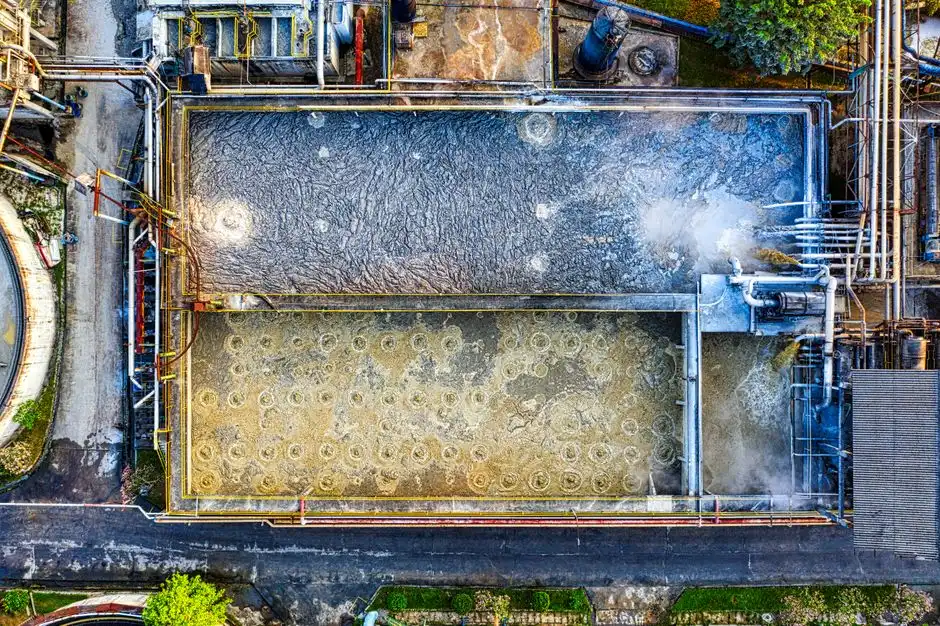
Chemical and residue planning can change the economics of the selected process. The chemical program should be evaluated for pH adjustment, coagulation, flocculation, and emulsion breaking. Exact products and doses must come from the wastewater analysis and jar or pilot trials. An plate-and-frame filter press may be relevant if the recovered sludge requires dewatering before authorized disposal, but its suitability depends on sludge characteristics and the disposal route.
DAF generally produces a more concentrated sludge stream than conventional sedimentation. Clean Technology Post reports typical DAF sludge solids of 2–6%, 2026-08. The supplied research does not provide a universal solids percentage for clarifier sludge, so the comparison should use the expected settled-solids stream and the facility’s actual dewatering and disposal costs. Oily sludge, wastewater-treatment sludge, and spent chemical containers should be included in the handling plan rather than labeled generically as by-products.
Pennsylvania’s Waste Management Guidance Manual for Project Delivery Appendices, published by the Pennsylvania Department of Transportation, identifies petroleum refinery wastewater-treatment sludges F037–F038 and petroleum-refining waste groupings K048–K052 and K169–K172 within the federal RCRA hazardous-waste framework. The manual also notes that states may manage hazardous-waste identification under their own programs and may impose stricter requirements.
The facility must determine whether its actual residues are characteristic or listed hazardous waste and obtain a qualified waste-characterization determination. The codes alone do not establish that a refinery sludge belongs to every petroleum-related facility; applicability depends on the waste’s source and regulatory status.
For Greensburg, check the facility’s actual discharge authorization, sewer-prepayment requirements, air permits for volatile oil or chemical storage, and waste-disposal obligations. The supplied research establishes no local oil-concentration limit. A process selection therefore cannot substitute for permit review or a qualified local compliance review.
Turn the Selection into a 2026 Factory Procurement Plan
A defensible procurement sequence is analysis, pilot validation, vendor comparison, installation planning, and site acceptance testing. Do not let equipment quotations outrun the evidence needed to define the process.
- Characterize the waste stream. Obtain flow records, production and upset scenarios, free and emulsified oil data, suspended-solids data, temperature, pH, emulsifier information, and downstream constraints.
- Validate the process. Run jar tests, then pilot-scale trials of the shortlisted DAF, clarifier, and any hybrid arrangement. Fix chemical products and operating controls only after reviewing those results.
- Issue the request for proposal. Require each supplier to state raw-water basis, flow and loading envelope, plot-space constraints, utilities, controls, sludge handling, redundancy, and required performance demonstrations.
- Separate scopes and costs. Distinguish equipment from foundations, piping, electrical work, chemical storage, odor control, startup, training, and long-term spare parts.
- Compare total cost of ownership. Include air compression, recycle pumping, chemicals, sludge handling, maintenance, and downstream treatment effects rather than comparing purchase price alone.
- Test before acceptance. Use the plant’s own wastewater and agreed analytical methods. Do not transfer the Ecologix food-processing or mining examples into a petroleum performance guarantee.
Startup support should include operator training, control-system integration, spare-parts availability, and a trial operating period before final acceptance. The US factory DAF-versus-clarifier selection guide offers a related procurement framework, while the mining-wastewater comparison remains industry-specific rather than direct evidence for petroleum service.
For this procurement, the published supplier scope is an industrial DAF system for petroleum wastewater stated as 4–300 m³/h across 13 standard models. The corresponding lamella clarifier for heavy wastewater solids combines sludge recirculation, flocculation, and inclined-plate separation, with stated surface-loading rates of 20–40 m/h. These figures identify available configurations; the factory’s wastewater and pilot results must determine which model is selected.
Frequently Asked Questions
When is DAF more economical for petroleum wastewater than a clarifier?
DAF is more likely to be economical when oil removal is a primary objective and the facility cannot accept poor capture of free oil, emulsions, colloids, or light solids. It may use less floor space than conventional sedimentation and produce a more concentrated sludge stream. The economic case must compare chemical use, air and recycle pumping, sludge handling, and downstream impacts—not just equipment price.
When should a factory choose a clarifier instead of DAF?
Choose a clarifier when heavy, readily settleable solids dominate, oil capture is secondary, and lower operating complexity and energy use are priorities. A lamella configuration can increase available settling area. Confirm the expected solids-loading and sludge-removal basis with the vendor, and use site wastewater rather than transferring results from mining or food-processing examples.
What information should a buyer request before requesting a DAF or clarifier proposal?
Request average and peak flow, oil concentrations and speciation, suspended-solids data, temperature, pH, emulsifier information, production and upset scenarios, downstream limits, plot-space constraints, utilities, sludge-handling requirements, and performance-test methods. Also request itemized pricing for equipment, foundations, piping, electrical work, chemical storage, odor control, startup, training, and spare parts. Without these inputs and pilot validation, no universal tank size or purchase price is defensible.
How should a supplier be selected without transferring another industry’s performance claim?
Require wastewater-specific trial results, a proposed mass and hydraulic balance, utility demand, control philosophy, sludge-handling details, service scope, and an acceptance test tied to the factory’s wastewater and agreed analytical methods. Treat the Ecologix food-processing and mining examples as illustrative only. For Pennsylvania compliance risk, obtain a qualified local review of the facility’s discharge or sewer requirements and a separate waste-characterization determination for oily sludge and treatment residues.