Separate the Wastewater Streams Before Selecting Equipment
A data center in Okayama generally needs two treatment paths: a biological train for sanitary wastewater and equipment drainage, and a continuous side-stream, UF and RO train for cooling-tower blowdown. The final design depends on sewer capacity, reuse commitments, blowdown chemistry, seismic and space constraints, and Okayama-area discharge requirements. UF protects RO from fouling; RO can return low-TDS permeate for cooling makeup or concentrate management. A 2026 Open Engineering study found that wastewater reuse had about twice the freshwater case's GWP, with treatment energy responsible for roughly 80% of the difference. Site testing and current permits are therefore essential before equipment sizing.
The first engineering task is to prepare a source-by-source wastewater inventory. List cooling-tower blowdown, sanitary sewage, humidifier purge, generator-test discharge, equipment-pad drainage, laboratory drains, and construction or commissioning wastewater. Do not combine them simply because they eventually reach the same sewer connection. Each stream has a different flow pattern, contaminant profile, treatment objective, and permit route.
Cooling blowdown should be treated as a continuous, chemistry-controlled side stream. Sanitary sewage and equipment drainage are intermittent and biologically dominated. Combining them can expose UF and RO membranes to biological solids and colloids, while continuous mineral-bearing blowdown can create scaling conditions that are inappropriate for a biological package. Source segregation should therefore be shown in the preliminary process flow diagram and in every supplier quotation.
Request 30–90 days of representative source-water and blowdown data. The record should include flow variability, pH, conductivity or TDS, suspended solids, silica, hardness, calcium, alkalinity, chloride, sulfate, residual biocide, corrosion inhibitor, and temperature. The Japan data-hall wastewater engineering guide reports 1,200–6,000 mg/L TDS and 10–50 mg/L suspended solids as screening values for cooling blowdown. These are non-site-specific guide values, not Okayama permit limits or a substitute for representative testing.
| Stream | Operating character | Primary design question | Initial equipment scope |
|---|---|---|---|
| Cooling-tower blowdown | Continuous, mineral and chemical concentration | Discharge, reuse, or concentrate management? | Side-stream filtration; UF and RO only where justified |
| Sanitary sewage | Intermittent, biologically dominated | Peak occupancy and effluent requirements | Headworks, biological treatment, disinfection, solids handling |
| Equipment-pad and humidifier drainage | Intermittent; quality depends on source | Segregate by chemistry and contamination risk | Equalization and treatment appropriate to the source |
| Laboratory and generator-test drain | Batch discharge; variable composition | Hold, sample, or pretreat before co-discharge? | Dedicated storage and controlled release |
For sanitary and equipment wastewater, assess an integrated MBR wastewater treatment package. If an underground installation is required, evaluate the underground integrated sewage-treatment option only after confirming soil, groundwater, access, and local approval requirements.
Confirm the Okayama Design Basis and Permit Route
Okayama has no verified site-specific source in the supplied research, so Osaka basin assumptions cannot be transferred to the project. The receiving sewer authority must confirm whether the intended route is direct sewer discharge, discharge through another treatment facility, discharge to an inland water body, or an approved reuse route. Obtain the current sewer agreement and written parameter limits before equipment selection.
Check national requirements together with applicable Okayama Prefecture and municipal ordinances, sewer agreements, water-withdrawal conditions, and basin restrictions. The Osaka City sewer ordinance, Yodo-basin conditions, and Osaka Bay discharge assumptions are not evidence of Okayama requirements. For reuse, also confirm whether the authority or owner requires a separate approval for cooling-loop make-up quality and whether returned water affects public-supply or downstream reuse controls.
The Japan data-hall wastewater engineering guide states that Japan has no national data-center ZLD mandate. Partial or full ZLD should therefore be presented as a site-driven option triggered by sewer constraints, water-withdrawal conditions, reuse commitments, concentrate disposal limits, or owner policy—not as a universal legal requirement.
Before requesting quotations, obtain written confirmation of sewer capacity, permitted flow, discharge parameters, monitoring obligations, chemical restrictions, pretreatment acceptance, sampling frequency, and who bears the cost of sewer upgrades. A technology that cannot legally or operationally discharge its final effluent is not a complete bid.
| Design-basis input | Evidence required before sizing | Owner or authority responsible |
|---|---|---|
| Cooling system | IT load, cooling technology, tower count, makeup source, design cycles of concentration, expected blowdown, expansion, peak operating hours | Data-center engineering team |
| Wastewater | Flow, organic load, solids, chemistry, discharge or reuse target, batch-event schedule | Owner, architect, local engineer |
| Discharge and reuse | Current permits, sewer agreement, flow capacity, water-withdrawal conditions, approved reuse route | Receiving sewer authority and environmental authority |
| Site and resilience | Seismic requirements, footprint, equipment-room height, access, noise, gradients, power, redundancy | Owner and local design team |
| Utilities | Electricity tariff, water price, sewer charge, chemical supply, disposal route | Owner and suppliers |
Record seismic criteria, available footprint, room height, maintenance access, noise limits, drainage gradients, electrical capacity, and redundancy philosophy. The local design team should confirm applicable Japanese requirements and standards for structural restraint, piping, controls, documentation, and commissioning.
Energy must be treated as a design variable. Open Engineering Inc.’s 2026 study, Reclaiming Cooling: Wastewater Reuse as a Strategic Resource for Data Center Water Management, found that the wastewater scenario had about twice the freshwater case’s GWP and that treatment energy accounted for roughly 80% of the difference. That evidence is from a comparative life-cycle study, not an Okayama-specific measurement.
Choose a Treatment Path from the Discharge Decision
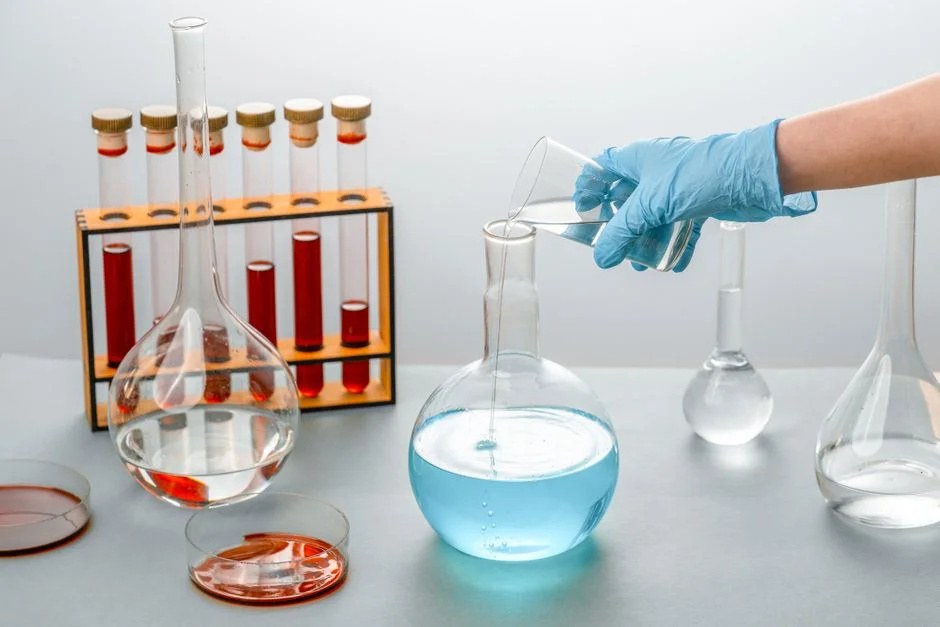
Sewer availability, planned sewer expansion, water-withdrawal pressure, binding reuse commitments, blowdown chemistry, and concentrate disposal options determine the treatment branch. The first question is not which membrane is most efficient; it is where the final liquid can lawfully and operationally go.
- If a sewer discharge is permitted, define filtration, chemical conditioning, and polishing against the actual Okayama limits. Add RO only if dissolved-solids limits or reuse economics justify it.
- If cooling makeup reuse is required, evaluate side-stream filtration, UF, RO, and permitted concentrate disposal. Qualify the permeate against the cooling control strategy rather than a generic permeate-TDS target.
- If near-zero liquid discharge is required because sewer capacity or concentrate disposal is constrained, compare RO with an evaporation or other approved concentrate-management step.
- If full ZLD is required, add solids isolation or crystallization and validate the complete water-and-salt mass balance.
| Decision gate | Preferred route | What must be demonstrated |
|---|---|---|
| Permitted sewer route exists and reuse is not required | Discharge-compliance treatment | Permit compliance, chemical compatibility, manageable sludge and residuals |
| Cooling makeup reuse is required | Side-stream filtration, UF, RO, approved concentrate route | Permeate suitability, recovery, membrane-fouling controls, concentrate disposal |
| Concentrate cannot be directly discharged | Partial ZLD | Evaporator or alternative performance over the complete mass balance |
| No liquid discharge route or binding zero-discharge commitment | Full ZLD | Solids isolation, salt balance, residue handling, reliability and operator burden |
The Japan data-hall wastewater engineering guide reports conventional brackish-water RO recovery of 50–85% before silica, calcium carbonate, and calcium sulfate reach scaling thresholds, and approximately 95% overall recovery in a reported high-recovery architecture using controlled precipitation and dynamic RO. These are preliminary technology benchmarks, not guaranteed performance for Okayama feedwater.
Evaluate the life cycle rather than water savings alone. Open Engineering Inc.’s 2026 study found that UF+RO wastewater energy usage grew to over five times that of freshwater, while improved cycles of concentration reduced blowdown and chemical consumption. The industrial RO cooling-water reuse system and PVDF ultrafiltration pretreatment should therefore be evaluated as an integrated process, with site energy and chemical consumption included in the comparison.
Specify Pretreatment, Reuse and Concentrate Controls
Side-stream filtration is the first barrier against suspended solids, biofilm fragments, and corrosion products reaching UF or RO. Its flow and duty must follow the site’s cooling-water chemistry and operating philosophy; they cannot be copied from another campus.
UF then protects RO from colloids, bacteria, and suspended solids. The HydropureWater UF catalog specifies hollow-fiber PVDF systems from 2,000 to 40,000 L/h, 0.03-micron membranes, automatic backwash and air scour, and feed turbidity up to 300 ppm. These are catalog capabilities, not a selection for the Okayama site.
| Checkpoint | Minimum information or function | Acceptance evidence |
|---|---|---|
| Side-stream filtration | Removal of solids, biofilm fragments, and corrosion products | Duty selected from source-water data; differential-pressure trend recorded |
| UF | Colloid and suspended-solids barrier before RO | Feed turbidity, flow, recovery, backwash, and cleaning performance |
| RO controls | Conductivity, silica, hardness or calcium, alkalinity, pH, differential pressure, permeate turbidity, cleaning trigger | Automatic sequences, interlocks, alarm setpoints, and data logging |
| Chemical compatibility | Antiscalant, biocide, corrosion inhibitor, and cleaning chemicals coordinated with membranes and cooling loop | Supplier compatibility statement and site chemical review |
| Concentrate | Volume and chemistry through discharge, evaporation, or crystallization | Complete mass balance and approved destination |
The multi-media filtration system and automatic chemical dosing package should be quoted as coordinated pretreatment items. Supplier quotations should identify dose-control ranges, chemical storage requirements, compatibility data, and cleaning chemicals rather than leaving them as unspecified allowances.
The HydropureWater industrial RO catalog states recovery rates up to 95% and fully automated PLC control. Treat 95% as a catalog capability that must be reconciled with actual Okayama feed chemistry, scaling risk, operating temperature, and recovery definition.
If RO concentrate is evaporated, evaluate the complete liquid-and-salt balance rather than evaporator recovery alone. The Japan data-hall guide reports mechanical vapor compression recovery of 95–98% and distillate below 10 mg/L TDS as a guide benchmark, not an Okayama requirement. Open Engineering Inc.’s 2026 study evaluated depth filtration, granular activated carbon, and chlorination as its primary train; it also examined UF+RO as a higher-recovery reuse alternative. These studies frame alternatives rather than establish one universally preferred train.
The RO and UF membrane and filter-element package should specify compatible materials, expected replacement basis, storage requirements, and spare strategy.
Build the Sanitary Wastewater Treatment Scope
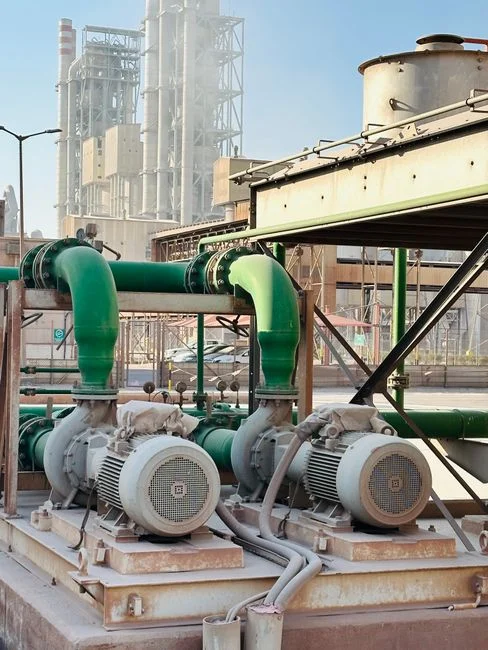
The biological system should be sized from sanitary flow, peak occupancy, equipment-drain batches, peak hydraulic loading, and the applicable discharge or reuse target. None of these inputs is supplied for Okayama, so reactor selection should remain open until the owner provides them.
Evaluate MBR where compact installation, automated operation, and low suspended-solids effluent are useful. The HydropureWater MBR catalog covers 10–2,000 m³/day and uses submerged PVDF membranes with filtration below 1 micrometre. These are catalog ranges; the selected capacity must be supported by peak and daily load data.
Protect the biological and membrane stages from fibrous debris, plastics, and other gross solids. The GX Series rotary mechanical bar screen is identified by the supplier as equipment for municipal and industrial wastewater headworks. Its duty should be checked against the expected sanitary solids and screening requirements.
| Sanitary package element | Procurement scope | Reason it must be defined |
|---|---|---|
| Headworks and equalization | Screening, solids removal, flow equalization, batch-drain control | Protects biology and membranes from intermittent loads |
| Biological treatment | MBR or other reactor selected from hydraulic and organic loading | Prevents oversizing or permit-risk undersizing |
| Disinfection | Method, contact requirements, monitoring and interlocks | Must match the final discharge or reuse route |
| Solids and odor | Sludge or solids removal, storage, odor control, cleaning route | Often omitted from reactor-only pricing |
| Standby | Redundancy, bypass, shutdown and emergency response | Protects continuous data-center operation |
Confirm source segregation before accepting any combined package. A dedicated sanitary package should not be sized to dilute or carry continuous cooling blowdown unless the local authority and design engineer explicitly approve that arrangement. If underground treatment is considered, the underground integrated sewage-treatment option should include excavation, groundwater, access, ventilation, and seismic implications in the quotation.
Compare Bid Packages by Lifecycle and Compliance Risk
Comparable quotations must include the same process boundary. Request itemized pricing for source-water analysis, pilot testing, pretreatment, UF, RO, pumps, tanks, piping, controls, chemical storage, redundancy, installation, commissioning, training, documentation, and warranty. State which items are exclusions.
Compare net water recovery, concentrate volume and quality, energy demand at the site tariff, chemical demand, membrane-cleaning frequency, expected membrane life, and operator workload. A low equipment price can be outweighed by more frequent cleaning, larger blowdown, or a concentrate stream without an approved destination.
Open Engineering Inc.’s 2026 study provides a financial test rather than an Okayama price. It found that reuse had about twice the freshwater case’s GWP, treatment energy accounted for roughly 80% of the difference, and the indirect water penalty was approximately 0.93 L/m³, less than 0.1% of the direct displacement benefit. These results concern the study’s modeled data-center scenario and cannot be converted directly into Japanese project economics.
| Quotation field | Information required from every supplier | Reason for comparison |
|---|---|---|
| Performance basis | Defined feedwater envelope, design flow, net recovery, product quality, availability | Prevents guarantees outside the characterized source water |
| Compliance | Permit assumptions, sampling points, test methods, alarm response, discharge hold points | Separates equipment compliance from site authorization |
| Lifecycle | Energy, chemicals, cleaning, membrane replacement, operator hours, spares | Exposes operating costs hidden in equipment-only bids |
| Local installation | Seismic restraint, footprint, room constraints, noise, freight, taxes, site works, Japanese documentation | Reflects the actual Okayama installation |
| Commissioning | FAT/SAT plan, performance test, training, data handover, warranty start conditions | Defines what the owner actually receives |
Do not use generic equipment cost bands as an Okayama budget. Obtain local quotations using the wastewater treatment plant cost breakdown methodology, but replace Jakarta-specific costs and local compliance assumptions with Okayama quotations. The scope should expressly include seismic restraints, space constraints, Japanese documentation, spares, freight, taxes, and site works.
Make acceptance criteria explicit: required permeate and effluent parameters, test methods, sampling points, availability guarantees, redundancy, alarm response time, and integration with campus systems. Ask each supplier to identify any guarantee that cannot be supported by the current source-water dataset or wastewater characterization.
Plan Commissioning Around the Real Operating Risks
Commissioning should prove the complete water balance and control response under representative wastewater conditions. Before start-up, establish baselines for makeup water, cooling-loop water, blowdown, sanitary flows, UF feed and permeate, RO feed and permeate, and concentrate.
- Verify flow balance, conductivity or TDS, turbidity, pressure, differential pressure, chemical interlocks, alarms, automatic backwash, membrane cleaning, and data logging.
- Test at the expected maximum cycles of concentration and at representative peak wastewater events. Clean-water commissioning alone does not demonstrate membrane protection or discharge compliance.
- Exercise automatic changeover, standby equipment, emergency bypass, shutdown, and non-compliant-discharge escalation.
- Complete operator training and issue preventive-maintenance schedules, a spare-membrane strategy, operating instructions, and an escalation procedure for a non-compliant discharge.
- Set a post-stabilization trend review covering membrane performance, chemical consumption, blowdown reduction, reuse-water savings, alarms, and operator workload.
Commissioning should also verify the supplier’s boundary: equipment performance, controls integration, site utilities, sampling, laboratory support, and permit documentation. The water-treatment parts, valves, and filter-media package should be checked against installed equipment compatibility and the approved spare-parts strategy.
Frequently Asked Questions
What will wastewater and cooling blowdown treatment cost for a data center in Okayama?
There is no defensible Okayama price in the supplied evidence. A budget needs local quotations for the selected source-water and reuse case, including pretreatment, membranes, tanks, controls, seismic installation, site works, commissioning, utilities, consumables, membrane replacement, and concentrate management. Suppliers should quote energy and chemical demand at the site’s tariffs so the owner can compare net present cost rather than equipment price alone.
How should a Japanese data-center wastewater supplier be selected?
Require demonstrated UF and RO experience with cooling blowdown, a complete controls and warranty scope, relevant references, and FAT or SAT plans. The supplier should guarantee performance only against defined feedwater limits and identify unsupported assumptions. Compliance documentation, alarm response, operator training, spare membranes, Japanese documentation, and local service support should be contractual deliverables.
How are cooling blowdown and sanitary treatment systems sized?
Cooling-system flow and design cycles of concentration determine blowdown volume and membrane duty; representative chemistry determines pretreatment and recovery. Occupancy, sanitary flow, and equipment-drain batch events determine the biological system’s peak hydraulic and organic loading. Neither sizing should be based on a generic data-center flow factor when site data are available.
Is zero-liquid-discharge treatment mandatory for a data center in Okayama?
The supplied evidence states that Japan has no national data-center ZLD mandate. The actual requirement depends on the current national rules, Okayama Prefecture and municipal conditions, the sewer agreement, basin restrictions, water-withdrawal conditions, and any binding owner or tenant commitment. The receiving sewer authority and environmental authority must confirm the route in writing before partial or full ZLD is selected.
Should sanitary wastewater and cooling blowdown share one treatment train?
Usually not. Sanitary wastewater and intermittent equipment drainage require biological treatment, while cooling blowdown requires continuous mineral and chemical control. Blending can foul membranes with biological solids and impose scaling conditions on biological equipment. Segregation at source, separate equalization and control, and a defined discharge or reuse route should be shown in the preliminary design.