What Changes When Google Acquires an Arizona Plant?
When Google acquires an Arizona plant, wastewater requirements follow the site’s actual waste streams, destinations, permits, and operating conditions—not Google’s identity alone. Before closing, determine whether each authorization continues, must be transferred or amended, requires ownership notice, or needs a new permittee-specific approval. ADEQ may control direct discharge, groundwater, or land disposal; a sewer authority may impose industrial-user and pretreatment requirements. Obtain written instructions from both, verify current permits, sampling and flow records, treatment capacity, reuse eligibility, and receiver acceptance for sludge or brine. Make any required authorization change a closing condition if continued operation would otherwise lack legal coverage.
Corporate ownership does not itself establish continuity. An unchanged production rate, outfall, or treatment train can still require an amendment, responsible-party update, ownership notice, transfer approval, or new permittee-specific authorization. The acquisition team should not treat a deed, closing announcement, purchase agreement, or seller representation as proof that an operating route remains lawful.
Keep three standards separate. The legal discharge or routing condition determines what the plant may lawfully do. An internal Google reuse specification may be more demanding, but it cannot authorize a discharge. Treatment objectives adopted for process reliability must still connect to a permitted route and a lawful destination for every residual.
Without assuming an undisclosed plant configuration, the diligence variables include cooling and domestic wastewater, process wastewater, reuse, groundwater withdrawals, residual disposal, and future production or campus changes. The same legal test applies whether the asset is a data center, industrial facility, or mixed-use campus.
Comparable transaction issues are addressed in Google plant acquisition wastewater requirements in Hungary and Google acquisition wastewater requirements in Mexico.
Classify Every Wastewater Route Before Closing
Each waste route must be mapped separately because approval by one authority does not establish authorization from another. Domestic collection, process wastewater, cooling or washdown, stormwater, on-site treatment, reuse, storage, evaporation, trucking, sludge, and brine can have different governing instruments and agencies.
| Waste route or asset | Controlling evidence | Diligence action | Authorization classification |
|---|---|---|---|
| Municipal sewer discharge | Industrial-user permit or equivalent, sewer ordinance, local limits, prohibited discharges, surcharges, monitoring terms, enforcement history, and reserved-capacity position | Reconcile the permit with actual flows and constituents; obtain written change-of-ownership instructions | Continuing, transfer, amendment, notification, or permittee-specific approval as directed in writing |
| Direct discharge | Current ADEQ authorization, amendments, named outfall, pollutant limits, monitoring points, reporting duties, and compliance schedules | Compare permit conditions with actual operations and outstanding correspondence | Confirm with ADEQ; do not infer continuity |
| On-site treatment or reuse | Facility-specific approval, reuse specification, operating conditions, sampling and reporting requirements, residual ownership | Determine whether the treatment system remains covered and who owns the residual | Continuing, amendment, responsible-party update, or new authorization |
| Brine storage, evaporation, or trucking | Authorization basis, waste profile, manifests, truck logs, disposal contract, and receiver acceptance criteria | Verify lawful capacity and acceptance beyond the identity of the hauler | Route-specific; written agency determination required |
| Stormwater | Coverage conditions, drainage map, regulated-area inventory, inspection records, sampling results, responsible-operator terms | Test whether the operator or co-permittee must change | Notice, amendment, or continuing coverage |
| Groundwater or land disposal | ADEQ authorization, containment or liner evidence, monitoring, closure duties, corrective-action history | Identify permittee-specific requirements and legacy contamination | Transfer, amendment, new approval, or continuing obligations |
For each route, the governing instrument’s transfer clause and the issuing authority’s written determination control. Classify the result as continuing, requiring transfer, requiring amendment, requiring ownership notification, or requiring a new permittee-specific authorization. For a municipal route, permission to use the sewer generally is not enough: written ownership instructions are necessary.
The Arizona acquisition diligence framework should be adapted to each actual waste route, not copied as a generic checklist.
Confirm Arizona Permit and Groundwater Authority
ADEQ and the relevant sewer authority should each state in writing whether a filing, amendment, transfer, notice, or new approval is required after closing. A generic regulatory webpage cannot substitute for the final filing determination. Preserve each response, the applicable transfer clause, filing instructions, recipient, and effective date in the closing record.
Where continued operation would lack valid legal coverage after closing, make the required authority change a closing condition. Confirm final certificates, reporting contacts, and the compliance calendar. Do not close on an assumption that approval is unnecessary.
Keep groundwater as a separate workstream rather than treating it as an outfall issue. Request historical assessments, soil and groundwater data, well logs, tank and pipeline records, spill reports, remediation files, enforcement correspondence, and continuing monitoring obligations. A compliant outfall does not establish that leaks, disposal areas, or treatment residuals have not affected groundwater.
Arizona’s direct potable reuse rules are a separate issue from industrial wastewater treatment. The EPA’s October 2025 summary identifies advance permitting under § R18-9-B806, application requirements under § R18-9-C816, and an annual report due by March 30 under § R18-9-E831. Confirm current requirements with ADEQ because an informational summary does not replace governing law.
Historical violations, missing files, groundwater impacts, and uncertain transfer provisions should remain visible in the purchase agreement. Do not absorb them into a general compliance representation. For additional Arizona context, see the Arizona wastewater treatment and compliance guide.
Handle On-Site Systems Through the Local Transfer Process
Maricopa County requires a seller transferring property served by an on-site wastewater treatment facility to retain a qualified inspector who inspects the facility within six months before transfer under A.A.C. R18-9-A316. This rule covers conventional septic systems and alternative on-site treatment facilities and takes precedence over conflicting contract terms, according to Maricopa County’s onsite wastewater ownership-transfer guidance.
- The seller must provide the buyer with the completed Report of Inspection and related permitting, operation, and maintenance documents before the transfer date.
- The buyer must submit a completed Notice of Transfer within 15 calendar days after property transfer and file it with the agency identified in the filing instructions.
- The buyer must identify the filing method, confirm the applicable fee, and retain submission evidence in the transaction file.
- For a property with more than one on-site system, the inspector must complete a Report of Inspection for each system.
Maricopa County lists a $60 Notice of Transfer fee for each individual parcel. Confirm the current fee and instructions with the county rather than applying that amount to every Arizona property or jurisdiction.
The same guidance states that a cesspool cannot be used for sewage disposal under A.A.C. R18-9-A309(A)(4). If the acquisition includes a cesspool or questionable on-site route, require a separate engineering determination rather than treating the property-transfer filing as validation of the disposal method.
Characterize Acquired-Site Waste Before Selecting Equipment
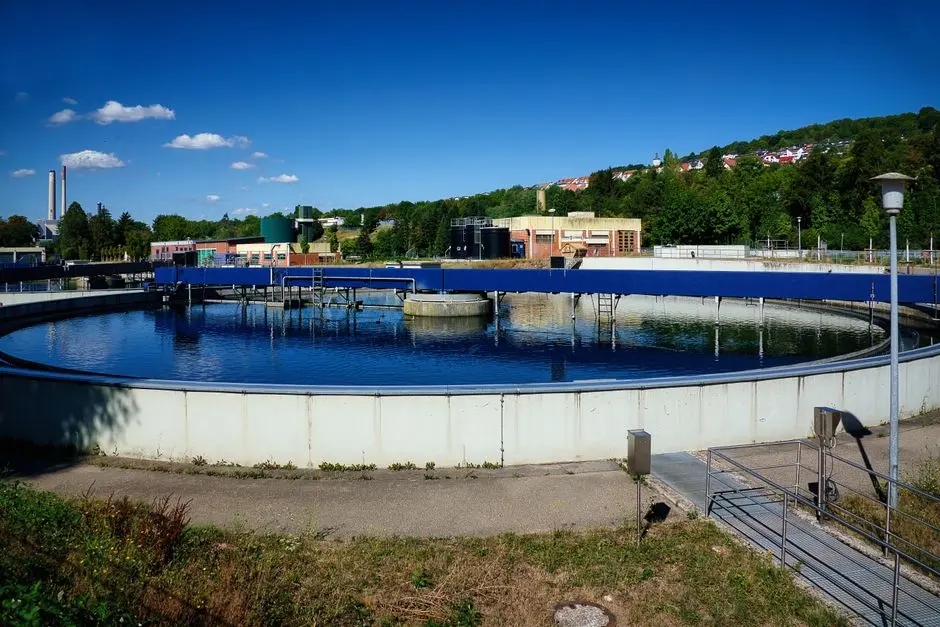
Installed treatment capacity is not demonstrated treatment capacity. Size the acquired system from verified flows, constituent mass loads, peak conditions, and the legal destination of each stream, then confirm performance with acquired-site wastewater.
- Collect representative samples with dates, locations, methods, and chain-of-custody records. Characterize pH, oil and grease, suspended solids, toxicity characteristics, metals, and organics; add salinity and conductivity for brine and reuse decisions.
- Build a source-to-destination mass balance. Do not combine streams merely because they share an outfall, treatment train, storage area, or truck.
- Use flow records, service agreements, local limits, inspection history, production records, chemical inventories, upset history, peak-load data, equipment condition, uptime, automation, and alarm history.
- Compare resulting treatment objectives with the actual permit, sewer conditions, or approved reuse specification. Supplier screening values are not discharge authorization.
- Run performance testing with acquired-site wastewater and include chemical consumption, residual generation, staffing, utilities, redundancy, fouling controls, and future operating assumptions.
| Acquired waste profile | Candidate treatment | Catalog screening value | Required validation |
|---|---|---|---|
| Oil, grease, FOG, suspended solids, or colloidal matter | Industrial DAF pretreatment system | HydropureWater lists 13 standard models from 4 to 300 m³/h | Mass load, peak flow, chemical use, recovered solids, and performance on acquired-site wastewater |
| Biodegradable wastewater supporting an approved low-turbidity reuse objective | MBR wastewater treatment system | HydropureWater lists 10 to 2,000 m³/day, filtration below 1 μm, and a 60% smaller footprint than conventional systems | Organic load, membrane condition, cleaning demand, downtime, effluent stability, and approved reuse route |
These catalog values screen candidate equipment; they do not prove compliance or adequate peak-load capacity. A small flow can carry a disproportionate constituent load, so flow alone is an inadequate design basis. The more detailed comparison in site-specific pretreatment limit guidance shows why local sewer conditions must be applied to actual feed chemistry.
Prove Reuse, Brine and Residual Routes Are Deliverable
Reuse is a permitted route with a specified quality class, monitoring schedule, reporting duty, operating conditions, and residual destination. An internal reuse specification can control Google’s operations but cannot authorize a discharge or prove that the receiving use is lawful.
The Arizona reclaimed-water values cited in the research include ≤2 NTU as a 24-hour average, ≤5 NTU in a single sample, and 0 organisms/100 mL in four of seven daily samples for the stated application. Match them to the exact approved use; they are not universal acquisition limits. Confirm the current classification and monitoring requirements with ADEQ and the receiving utility.
| Residual route | Evidence to obtain | Closing test |
|---|---|---|
| Reclaimed water or process-water reuse | Approval, quality class, supply agreement, monitoring records, operating log, and residual destination | The intended use and monitoring plan match the authorization |
| Brine | Flow, salinity, conductivity, chain-of-custody records, manifests, truck logs, and disposal contracts | The named receiver accepts the acquired waste profile and has lawful, durable capacity |
| Sludge | Waste profile, storage arrangements, manifests, receiver criteria, and disposal agreement | Dewatering has not been mistaken for proof of ultimate disposal acceptance |
| RO, UF, or ZLD residuals | Pretreatment, fouling, recovery, concentrate disposition, dryer or crystallizer performance, and residual-handling records | The entire train has lawful treatment and residual destinations |
ASU-derived research reports more than 50,000 gallons of brine daily at the referenced Nestlé Arizona facility, hauled off-site by tanker. Use that only as a diligence example, not as a permit limit or estimate for a Google site.
For sludge, evaluate dewatering separately from ultimate disposal. A filter press changes the cake’s physical form but does not establish that the receiver will accept it; how filter presses handle sludge dewatering explains the mechanical step but not residual acceptance. For a brine-management concept, the semiconductor ZLD water-sustainability guide provides process questions, not Arizona authorization.
Convert Findings into Closing and Capital Decisions
Every material wastewater finding should enter one transaction register with an owner, deadline, governing authority, evidence requirement, technical consequence, legal consequence, capital estimate, and contractual protection.
| Finding | Decision | Evidence or cure | Contractual treatment |
|---|---|---|---|
| Permit transfer or ownership update unconfirmed | Closing condition if continued operation depends on valid coverage | Written authority instructions, required filing, and effective confirmation | Pre-closing covenant with delivery-and-receipt evidence |
| Unresolved violation or unauthorized route | Determine whether a pre-closing cure is feasible | Notices, analytical reports, corrective-action records, and validated routing | Specific indemnity, escrow, price adjustment, or closing condition |
| Treatment-capacity deficit | Site-specific engineering study and capital decision | Verified flow, mass load, peak data, condition report, and performance test | Defined capital allowance, seller remediation, or closing condition |
| Groundwater or historical contamination | Separate liability workstream | Assessment history, monitoring data, spill records, and remediation files | Specific environmental indemnity, retained seller liability, escrow, or price adjustment |
| Uncertain sludge or brine acceptance | Confirm receiver criteria and available capacity; establish an alternative route | Disposal agreement, manifests, acceptance criteria, and capacity confirmation | Closing condition or targeted indemnity where continued operation depends on acceptance |
| Equipment transfers with the site | Accept only after condition and performance review | As-built drawings, maintenance and calibration records, operating history, and acquired-site testing | Baseline condition, seller remediation, or purchase-price adjustment |
Require seller delivery of permit copies, monitoring data, chemical inventories, manifests, as-built drawings, equipment-condition reports, training records, and emergency-response procedures. Assign post-closing responsibility for manifests, sludge disposal, calibration, maintenance, inspections, monitoring, reporting, and regulator correspondence. A closing certificate does not erase liability that survives the transaction.
Do not import fixed permit deadlines, categorical limits, capital multipliers, or equipment capacities from unrelated transaction articles. Obtain site-specific written determinations and supplier quotations. For sludge-equipment selection, use the detailed sludge press specifications and selection guide as technical input, not as a disposal authorization.
Frequently Asked Questions
Can Google’s acquisition automatically transfer the plant’s Arizona wastewater permits?
No automatic continuity should be assumed. Review each instrument’s transfer clause, identify the controlling authority, and obtain a written determination. Classify the result as continuing, requiring transfer or amendment, requiring ownership notification, or requiring a new permittee-specific authorization. If continued operation depends on valid coverage, make the required action a closing condition.
How much should Google budget for wastewater treatment after an Arizona acquisition?
The supplied research does not provide a defensible site-specific budget. Calculate capital and operating requirements from acquired-site flows, constituent mass loads, permit or sewer limits, reuse objectives, residual destinations, equipment condition, and supplier quotations. Treat any generic cost multiplier from an unrelated acquisition as a screening question, not a budget input.
Should Google buy the seller’s treatment system or install new equipment?
Retain the seller’s system only after acquired-site performance testing demonstrates compliance, adequate peak-load capacity, acceptable equipment condition, and a lawful destination for residuals. Review drawings, maintenance and calibration records, uptime, automation, alarms, and operating history. If those checks do not close the gap, price a targeted upgrade or replacement rather than accepting an unsupported capacity claim.
How should Google size DAF or MBR equipment for an acquired plant?
Size from representative constituent mass loads, flow variability, operating peaks, reuse requirements, fouling controls, and the applicable permit or sewer condition. A catalog flow range can screen candidates, but it cannot establish capacity or compliance. Validate the selected train with acquired-site wastewater and disclose chemical use, residual generation, redundancy, and operating limitations.
What is the highest-priority compliance risk after closing?
The highest-priority closing risk is continued operation without the required permit, transfer, amendment, or ownership coverage. Next are unauthorized routes, unresolved violations, treatment-capacity deficits, and uncertain sludge or brine acceptance. Groundwater contamination should be managed as a separate liability workstream rather than hidden inside the wastewater permit schedule.