What Google’s India acquisition changes—and what it does not
Wastewater obligations after Google acquires an Indian plant do not transfer automatically or universally. The buyer must identify the plant, seller and buyer entities, transaction structure, current environmental consent, municipal sewer requirements, wastewater streams, compliance history, and any post-closing production or chemical change. Each authorization must then be classified as unchanged, requiring an ownership filing or modification, requiring a new consent, or needing written sewer-authority confirmation. Indian requirements are site-specific; Google’s water-stewardship commitments do not replace regulatory approval.
Google’s March 2026 water-stewardship announcement covers local water efficiency, watershed protection, replenishment, and transparent water management. It does not identify an acquired Indian industrial plant or create an Indian wastewater authorization. It may inform the buyer’s reuse objectives, but legal compliance remains tied to the site, permit holder, receiving sewer authority, applicable rules, and proposed operating changes.
Before reaching a transaction conclusion, establish the plant location, seller and buyer legal entities, whether the transaction is an asset or share acquisition, the current consent holder, the receiving sewer authority, the post-closing production plan, and proposed chemical or process substitutions. Determine whether production will expand, contract, transfer, or be reshored. An acquisition announcement, purchase order, or management forecast is not evidence that approvals transfer automatically.
The wider governance context does not function as a transfer rule. Elsevier’s July 2022 Delphi study found persistent water scarcity to be the most significant driver for wastewater treatment and reuse in India, while enforcement and institutional collaboration remained important barriers. The study provides governance context, not evidence that a particular Google transaction or Indian consent changes hands in a prescribed way. Comparable Google plant acquisition wastewater diligence and plant-acquisition wastewater compliance frameworks are useful only for structuring the inquiry.
Classify every approval before closing
Each wastewater obligation requires a specific legal action supported by site documents; a single environmental consent does not cover every filing, agreement, monitoring duty, or disposal obligation. The supplied research establishes no universal India-specific change-of-control rule. Counsel must test the holder, site, transaction structure, and operating change against current site-specific requirements, with the competent Indian environmental authority and receiving sewer authority confirming the position.
- No regulatory change: retain the current authorization where the holder, site, permitted activity, and relevant conditions remain unchanged.
- Transfer or ownership filing: submit the applicable filing where the legal holder or transaction structure changes and the governing rule requires notification or transfer.
- Modification: amend affected conditions where production, chemicals, wastewater characteristics, treatment, monitoring, or discharge routes change.
- New authorization: obtain approval before beginning a regulated activity that the existing consent does not cover.
Keep municipal industrial-user approval separate, as the sewer authority may impose different prerequisites, local discharge limits, prohibited-discharge controls, monitoring duties, and slug-loading requirements.
| Action | Decision trigger | Required evidence |
|---|---|---|
| No regulatory change | Same holder, site, permitted activity, and relevant conditions | Current consent, confirmation of reporting continuity, updated contacts, and compliance calendar |
| Transfer or ownership filing | Rules or consent require action when the legal holder changes | Filed documents and agency acknowledgment or approval |
| Modification | Production, chemicals, stream characteristics, treatment, monitoring, or discharge route changes | Issued modification and effective operating conditions |
| New authorization | The proposed regulated activity is outside the current consent | Issued authorization and associated monitoring plan |
| Industrial-user review | Sewer classification, discharge quality, or slug loading changes | Executed agreement, modification, or written sewer-authority decision |
| Off-site residue review | Sludge or contaminated waste is generated or its route changes | Waste characterization, contracts, manifests, and disposal records |
Create one register row for every authorization. Record its type, issuing authority, holder, site, sewer authority, conditions, status, transfer mechanism, reporting party, sampling responsibility, deadlines, financial assurance, and approval evidence. The framework set out in the acquisition wastewater approval framework is a diligence structure, not an Indian legal rule.
Evidence standards include issued approvals, filed documents, written authority confirmation where needed, and a verified compliance calendar. The 2022 study identified defined reuse standards, enforced target-based regulation, regular monitoring, and sustainable financing as conditions supporting successful treatment and reuse in some Indian states. Those are governance findings, not substitutes for the site’s current approvals.
Build a stream-by-stream wastewater baseline
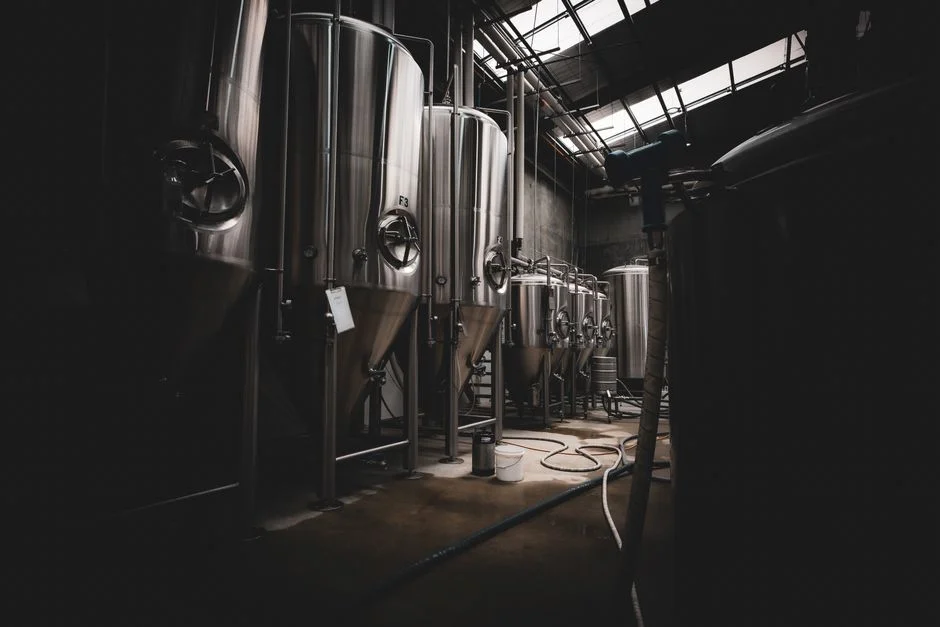
A plant-wide average cannot establish treatment suitability when different streams impose different contaminant, hydraulic, and residual-handling constraints. Build a traceable map from each generation point to its destination, treatment unit, chemical use, flow, representative analysis, and final sewer discharge or off-site disposal route.
| Baseline field | Evidence to obtain | Decision supported |
|---|---|---|
| Generation point and destination | Process diagrams, segregation boundaries, chemical-use records, and batch-dump records | Which treatment train receives each stream |
| Flow and loading | Flow-meter data, peak-flow information, representative samples, and pollutant mass-loading calculations | Hydraulic and contaminant capacity |
| Water quality | Representative analysis linked to sample date, laboratory method, operating condition, and production campaign | Treatment objectives and reuse feasibility |
| Treatment performance | Operating logs, bypass events, deviations, maintenance history, and corrective actions | Installed-asset condition and compliance margin |
| Future operating plan | Product mix, production forecast, chemical substitutions, expansion, contraction, or transferred production | Consent modifications and post-closing capacity |
For semiconductor-related operations, retain separate identities for cleaning-chemical, metals-bearing, organic, and general rinse-water streams until their treatment and reuse effects are understood. Samples should represent relevant operating campaigns rather than only a convenient day. Request production mix and forecast, chemical inventories and substitutions, batch dumps, peak flow, flow-meter data, treatment logs, and representative analytical results.
Reconcile the baseline with the buyer’s post-closing plan. Expansion, contraction, or transferred production can alter flow, contaminant concentration, mass loading, treatment reliability, and consent conditions. Sewer discharge, internal reuse, and off-site waste routes must remain distinguishable in the map. The semiconductor wastewater stream-characterization guide illustrates the source-to-treatment mapping method, but it does not establish the design for an Indian plant.
The July 2022 study supports fit-for-purpose treatment, stronger monitoring, and reuse frameworks. It does not provide site-specific treatment criteria or guarantee that installed equipment can handle the buyer’s future wastewater profile.
Verify sewer pretreatment and disposal obligations
Environmental consent does not by itself authorize every proposed sewer discharge or off-site waste route. Obtain the plant’s industrial-user classification, applicable local limits, prohibited-discharge controls, pretreatment monitoring and sampling duties, reporting periods, and slug-loading requirements directly from the receiving sewer authority.
Review whether added wastes, changed production, or changed discharge characteristics require further sewer review even when the environmental consent remains valid. If the municipality controls the decision, seek written sewer-authority confirmation rather than relying on an environmental regulator’s consent or a seller’s management representation.
Separate sewer-discharge streams from off-site waste, sludge, and contaminated-residue streams. For off-site material, verify the approved route, waste characterization, contracts, manifests, chain of custody, and disposal records. Permission to discharge treated liquid to sewer does not establish that a resulting residue can be sent to a particular contractor or disposal facility.
Do not import foreign discharge criteria into the Indian analysis. The supplied Texas benchmark cites VOC screening values of 10,000 ppmw, or at least 1,000 ppmw at 10 liters per minute, together with specified controls. Those figures belong to the cited Texas example; they are not Indian consent limits or municipal limits. The source-to-sewer pretreatment guide is useful for structuring that inquiry, not for supplying an Indian numerical standard.
Test whether existing treatment supports the post-closing plan
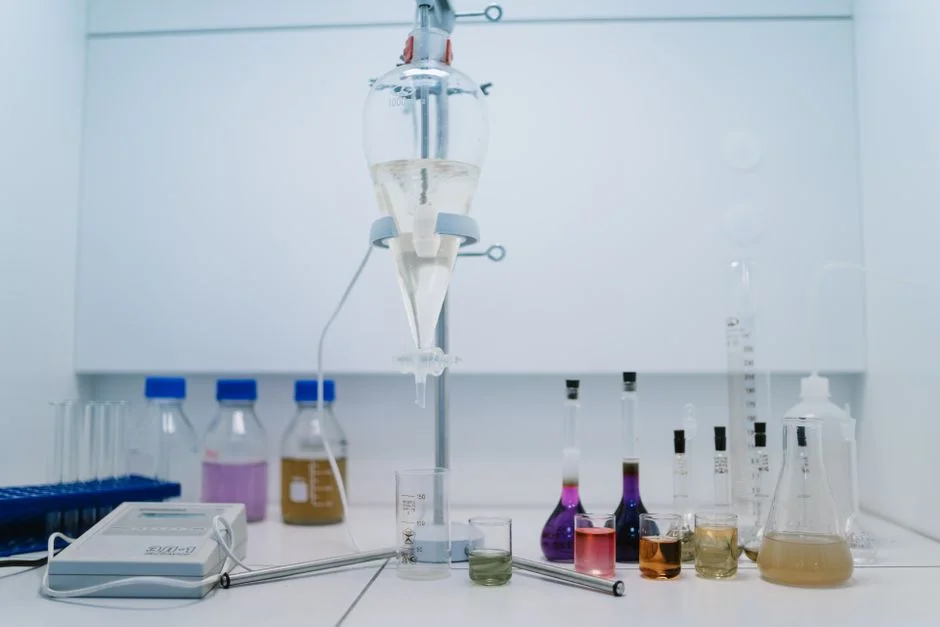
The installed treatment train must be tested against both the current legal envelope and the buyer’s future wastewater profile. A valid consent does not prove that the assets are reliable, correctly operated, or capable of receiving transferred or expanded production.
| Assessment area | Evidence required | Acceptance basis |
|---|---|---|
| Asset condition and redundancy | Maintenance history, inspections, bypass records, utilities, controls, and operator capability | Documented operating readiness |
| Hydraulic and contaminant capacity | Verified flows, batch dumps, pollutant loading, future production, and permit conditions | No unsupported gap or identified capital action |
| Treatment fit | Verified feed chemistry, required effluent quality, reuse objective, and pilot or treatability evidence | Process-specific performance demonstration |
| Residuals and integration | Sludge characteristics, approved disposal route, controls scope, footprint, utilities, and tie-ins | Compatible with site operations and authorization |
| Commercial assurance | Site-performance guarantees, commissioning tests, lifecycle-cost disclosure, and operating obligations | Enforceable supplier commitments |
Assign every gap a trigger, owner, decision date, and contractual or capital-plan consequence. Reconcile verified contaminant loading, peak and batch flows, permit conditions, future production, and installed capacity rather than comparing a catalog range with a plant average.
Select industrial DAF wastewater treatment only where source data supports removal of suspended solids, colloids, oil and grease, or FOG. The supplied DAF catalog covers 4–300 m³/h across 13 standard models; these are selection boundaries, not an approved design or proof of site performance.
Evaluate an MBR membrane bioreactor where biodegradability, toxicity, nutrients, solids, effluent quality, and reuse objectives support biological treatment and membrane separation. The supplied catalog lists 10–2,000 m³/day and filtration below 1 μm. That does not establish suitability without site-specific feed and performance evidence.
Evaluate RO where the required product-water specification justifies recovery and adequate pretreatment. The supplied industrial RO product states recovery up to 95%; this is a product claim, not guaranteed site performance. For variable feeds, require pilot evidence and guarantees covering site performance, permit compatibility, residual-waste routes, controls, utility demand, footprint, operator requirements, and lifecycle cost.
Turn unresolved findings into transaction protections
Wastewater diligence becomes transaction risk when each unresolved finding has an owner, a decision point, and a contractual or operational consequence. Escalate sampling disputes, historical exceedances, corrective actions, pending consent amendments, treatment constraints, and authority correspondence immediately; they can affect legal exposure, operating continuity, treatment capital, and valuation.
Set the evidence standard before closing: issued approvals, filed documents, written authority confirmation where required, and a verified compliance calendar. Then assign each item to a pre-closing condition, post-closing covenant, indemnity, holdback, or priced capital risk. If continued operation depends on an approval, make confirmation of that approval a closing requirement rather than an operational promise.
An optional 90-day diligence cadence can organize document requests, sampling, authority meetings, and engineering studies. This is an internal management tool, not a statutory deadline. The transaction wastewater risk framework illustrates the allocation method, but the applicable legal conclusion must come from Indian site-specific authorities.
Frequently Asked Questions
Does Google’s ownership automatically change an Indian plant’s wastewater consent?
No supplied source establishes a universal
Frequently Asked Questions
Does Google's wastewater permit automatically transfer when it acquires an industrial plant in India?
No, wastewater permits—specifically the Consent to Operate (CTO) issued by the relevant State Pollution Control Board (SPCB) under the Water (Prevention and Control of Pollution) Act, 1974—are non-transferable. Upon acquisition, the new entity must file for a transfer of consent or a fresh application within the stipulated timeframe, typically 30 to 90 days depending on the state, to avoid operating without valid authorization.
The transition requires a formal submission of the sale deed, updated board resolutions, and a verification of the existing Effluent Treatment Plant (ETP) capacity against the new operational baseline. Failure to update the CTO in the name of the legal successor can lead to immediate closure notices under Section 33A of the Water Act.
What should an Indian buyer request in wastewater and sewer-compliance due diligence?
Buyers must request the last 24 months of Continuous Effluent Quality Monitoring System (CEQMS) data, which must be cross-referenced with the SPCB’s centralized server logs. Additionally, request copies of all previous CTOs, Hazardous Waste Authorization (HWA) certificates, and third-party NABL-accredited laboratory test reports verifying compliance with the specific discharge standards mandated for the plant’s industrial category.
Furthermore, demand a complete inventory of the underground drainage network, including CCTV inspection reports to identify potential cross-contamination or leakages. Documentation verifying the legal disposal of sludge and spent chemicals via authorized Common Hazardous Waste Treatment, Storage, and Disposal Facilities (CHWTSDF) is also critical to mitigate historical liability.
How do I size DAF, MBR or RO treatment for a plant after an acquisition?
Sizing must be based on the peak hydraulic flow rate (m³/day) and the maximum pollutant load (BOD, COD, TSS, and TDS) determined through a 7-day flow equalization study. Dissolved Air Flotation (DAF) should be sized based on the surface overflow rate (SOR), typically ranging from 5 to 10 m/h for oil/grease removal, while Membrane Bioreactor (MBR) sizing depends on the Flux rate, which generally ranges from 15 to 25 LMH (liters per square meter per hour).
Reverse Osmosis (RO) systems must be sized based on the required permeate recovery rate—typically 75% to 85% for industrial reuse—and the Feed Silt Density Index (SDI), which must be kept below 3.0 to prevent membrane fouling. Designers should apply a 20% safety factor over the average daily flow to account for seasonal variations and peak production shifts.
Which supplier qualifications matter most when buying industrial wastewater treatment equipment?
The most critical qualification is the supplier’s track record of executing projects that meet the specific Zero Liquid Discharge (ZLD) or stringent discharge norms set by the Central Pollution Control Board (CPCB). Verify the supplier's ISO 9001:2015 and ISO 14001:2015 certifications, as well as their capacity to provide a Performance Guarantee (PG) that includes specific effluent quality parameters and power consumption limits (kWh/m³ treated).
Prioritize suppliers with an established local service network capable of a 4-hour response time for critical failures. Request references for plants currently operating with similar influent characteristics, as the efficacy of biological treatment (MBR) and chemical treatment (DAF) is highly sensitive to the specific chemical composition of the industrial wastewater.
How should unresolved wastewater-compliance risks be allocated in the purchase agreement?
Unresolved risks should be addressed through a specific environmental indemnity clause that survives the closing date, shifting financial responsibility for historical non-compliance to the seller. This is often supported by an escrow holdback account, typically valued at 1.5 to 2 times the estimated cost of remediation, including potential SPCB fines, infrastructure upgrades, and legal fees.
The agreement should explicitly define a "remediation period" post-closing, during which the seller remains liable for any pre-existing soil or groundwater contamination discovered during the transition. Clear delineations regarding regulatory reporting obligations for past violations must be established to ensure the buyer does not inadvertently assume liability for undisclosed environmental breaches.