Start with the discharge destination, not the equipment catalogue
Wastewater and cooling-tower blowdown treatment for an Aihara data center should begin with the final destination and measured blowdown chemistry, not a generic equipment list. Sewer discharge, direct surface-water discharge where legally available, and segregated onsite reuse impose different water-quality targets, pretreatment needs and monitoring duties. The supplied research does not establish Aihara-specific permit limits, receiving-water conditions, sewer pretreatment rules or cumulative-load capacity, so these must be confirmed with the competent authorities before process selection.
Water Utility Report, updated 2026-04-14, identifies discharge volume, expected chemistry, pretreatment requirements and whether the receiving wastewater system has assessed cumulative load as essential project inputs. That is the correct screening sequence for an Aihara data center. It is not defensible to copy Kyoto limits or assume that a Japanese data-center benchmark describes Aihara’s receiving route.
The route also changes the comparison basis. Open Engineering Inc’s 2026 life-cycle study compared sewer discharge and onsite reuse in terms of global warming potential, cumulative energy demand and freshwater displacement. Reuse may conserve freshwater, but wastewater treatment also consumes energy and chemicals. The relevant data center cooling-blowdown treatment roadmap should therefore compare each feasible Aihara destination on the same operating data.
| Destination | Design focus before equipment selection | Information required from Aihara |
|---|---|---|
| Municipal sewer | Accepted wastewater characteristics, pretreatment requirements, surcharge or residual-discharge conditions, and whether cumulative loading has been assessed. | Authority confirmation, sewer route, current rules, accepted analytes, discharge flow and chemical program. |
| Direct surface-water discharge | Whether the route is legally available, applicable receiving-water and thermal constraints, monitoring burden and residual-discharge control. | Competent-authority approval, receiving route, applicable limits, seasonal conditions and receiving-system data. |
| Segregated onsite reuse | Intended reuse quality, scaling and corrosion risk, residual chemicals, biological control, distribution compatibility and residual purge. | Reuse specification, loop chemistry, make-up demand, water-quality targets and validation protocol. |
Build the Aihara design basis from actual water chemistry
The Aihara design basis must be built from seasonal makeup-water analysis, paired blowdown sampling and operating records; values from Kyoto or another city are not Aihara inputs. Request conductivity or total dissolved solids, hardness, silica, alkalinity, chloride, sulfate, turbidity and temperature. The chemical inventory matters as much: identify biocides, corrosion inhibitors, scale-control products, oxidants and any site-specific contaminants before selecting analytical methods.
For blowdown, measure pH, conductivity or TDS, total suspended solids, particle-size distribution, oil and grease where relevant, residual oxidant, biocide concentration, corrosion inhibitor, scale-control chemicals and metals identified by the cooling chemical program or environmental risk assessment. Total suspended solids should not be treated as a single number when the design depends on whether the material is coarse debris, scale, colloids, biological floc or oily material.
Operating records close the mass balance. Retain loop conductivity, pH and temperature; makeup and blowdown flow; cycles of concentration; chemical dosing; and every controlled or emergency discharge. These records establish whether the proposed unit operations are sized for normal operation, seasonal peaks or atypical events.
The Kyoto benchmark supplies only a qualitative seasonal lesson: humidity and temperature affect evaporation and blowdown generation, so controls may require seasonal adjustment. It does not provide an Aihara makeup-water analysis, an enforceable Aihara limit or a transferable blowdown allowance. The site-specific treatment roadmap should therefore be used as a methodology reference, not as local evidence.
| Design input | Required information | Decision enabled |
|---|---|---|
| Makeup water | Seasonal chemistry, source variability and site-specific contaminants. | Expected cycles of concentration, scaling forecast and pretreatment selection. |
| Blowdown | Physical, chemical and biological constituents linked to the cooling program. | Clarification, polishing, disinfection and discharge compliance needs. |
| Operations | Flows, cycles of concentration, chemical doses, blowdown control and abnormal events. | Design flow, operating envelope, redundancy and controls. |
| Receiving route | Confirmed authority, applicable rules, capacity and monitoring requirements. | Treatment objective and final acceptance criteria. |
Match each contaminant and objective to the right unit operation

Water Utility Report, updated 2026-04-14, identifies elevated salts, suspended solids, biocides, corrosion inhibitors, heavy metals and altered pH as possible cooling-blowdown characteristics. These constituents call for different unit operations, and no single “blowdown treatment skid” can substitute for a contaminant-to-objective map.
- Protect the system and downstream units: use side-stream or multi-media filtration where suspended solids threaten equipment or polishing. A multi-media filtration system should be selected against measured turbidity, solids loading and required filtrate quality rather than nominal flow alone.
- Remove material that can be separated as float or sludge: consider a DAF system for cooling-blowdown solids and oil removal where analysis shows oil, grease, colloids, biological floc or solids that must form a skimmable concentrate. HydropureWater’s stated DAF range covers 4–300 m³/h across 13 models; model selection still requires site flow and loading data.
- Control confirmed chemical and pH objectives: use automatic dosing where the permit or reuse specification requires pH adjustment, coagulation, oxidant control or another specialty chemical. HydropureWater offers PLC-controlled, skid-mounted dosing systems, but the chemical, dose and control response must come from the site program and acceptance criteria.
- Remove particles before demineralization: use a hollow-fiber ultrafiltration pretreatment system where bacteria, colloids and suspended solids must be removed before RO or high-grade reuse. HydropureWater specifies 2,000–40,000 L/h capacity, 0.03-micron PVDF membranes, automatic backwash and air scour.
- Reduce dissolved solids for cooling make-up: use an industrial RO system for blowdown reuse when the reuse objective requires dissolved-solids reduction. HydropureWater states that recovery can reach 95%, subject to site chemistry and pretreatment; this is not a guaranteed Aihara recovery rate.
- Disinfect only against a defined risk: consider chlorine dioxide only where the confirmed reuse or cooling-loop application calls for it. Verify application, dose, residual and material compatibility against local requirements.
| Measured risk or objective | Indicative unit operation | Bid condition |
|---|---|---|
| Suspended solids and particulates | Side-stream or multi-media filtration | Provide measured solids loading and required filtrate quality. |
| Oil, grease, colloids or floatable biological solids | DAF with appropriate conditioning | Define constituent fractions, skimmings handling and required removal. |
| pH, oxidant or specialty-chemical target | Automatic chemical dosing | State chemical selection, control basis, storage and operator safeguards. |
| Particulate or microbial barrier before RO | UF | Provide feed chemistry, flux basis, backwash and membrane-fouling design inputs. |
| Dissolved-solids reduction for make-up | RO with confirmed pretreatment | Provide recovery target, concentrate route, scaling projection and membrane replacement basis. |
| Confirmed microbial requirement | Disinfection | Define receiving or reuse target, residual and monitoring point. |
Use a risk-based pretreatment sequence before polishing
Pretreatment should follow measured risk: remove gross solids and screening debris first, then address oil or colloids where present, clarify the stream, control pH and treatment chemicals, and finally apply membrane or reuse polishing. Reordering these steps solely to fit a skid layout can transfer contamination to membranes, dosing equipment or downstream reuse systems.
Softening belongs before RO only when hardness analysis demonstrates a need. HydropureWater’s KJ-WT industrial softener range is specified at 1–45 T/h for cooling systems and RO pretreatment, but flow alone cannot justify selection. The buyer must provide hardness, alkalinity, ionic profile, expected recovery and downstream scaling constraints.
Reuse quality should be separated by purpose. Blowdown sent to a low-grade non-potable service is not equivalent to water reused as cooling make-up. The latter requires stronger control of dissolved solids, hardness, silica, corrosion risk and treatment-chemical carryover. A site-appropriate industrial water softener may support pretreatment, but it cannot substitute for an RO train where dissolved-solids control is required.
Include sludge and skimmings handling only if the selected route creates them. If solids dewatering is necessary, the plate-and-frame sludge dewatering equipment should be assessed against measured dry-solids content, polymer demand and disposal logistics. The supplied research does not establish Aihara sludge classification, dehydration acceptance criteria or disposal requirements, so those remain permit and contract inputs.
Compare sewer discharge, river discharge and onsite reuse
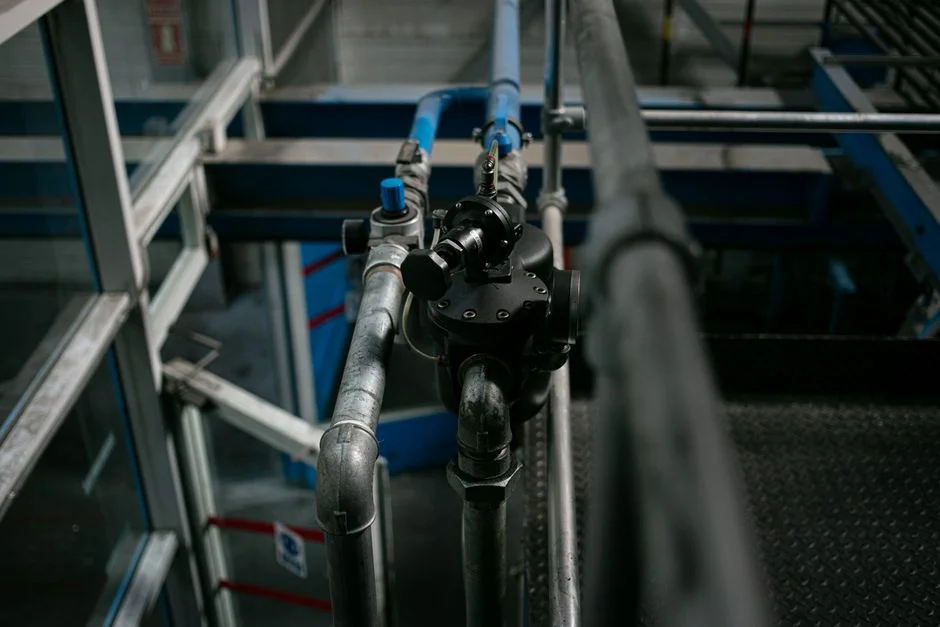
The three feasible destinations should be compared against the same verified site data rather than ranked by assumed freshwater value. Sewer discharge prioritizes characterization, pH, suspended solids, residual chemicals and pretreatment requirements; the receiving utility must confirm whether cumulative loading has been assessed. Direct surface-water discharge introduces a separate receiving-route approval and potential thermal constraint, but the Kyoto river framework cannot be transferred to Aihara. Onsite reuse can avoid a discharge obligation only if the receiving application, pipework and residual purge are compatible.
Open Engineering Inc’s 2026 study found that its wastewater scenario had about twice the global warming potential of the freshwater case, with treatment energy explaining roughly 80% of the difference. In the same study, UF+RO used more than five times the freshwater-case energy, although improved cycles of concentration reduced blowdown and chemical consumption. These are study-specific findings, not Aihara design values.
The study also calculated an indirect water penalty of approximately 0.93 L/m³ for wastewater reuse, described as less than 0.1% of the direct freshwater-displacement benefit. That comparison should not be converted into an Aihara savings estimate without local water, energy and chemical data. It does show why reuse planning should connect treatment performance with freshwater displacement rather than treating reuse as cost-free.
| Decision criterion | Sewer discharge | Direct surface-water discharge | Onsite reuse |
|---|---|---|---|
| Permit dependency | Sewer acceptance and pretreatment approval | Direct discharge authorization and receiving-system conditions | Reuse application requirements plus residual-purge route |
| Treatment emphasis | Protect sewer operation and meet accepted effluent characteristics | Meet receiving-water and applicable thermal conditions | Meet the specified reuse quality and protect the receiving loop |
| Resource tradeoff | Lower onsite treatment need but continued disposal and possible surcharges | Potentially substantial treatment and monitoring | Freshwater displacement offset by treatment energy and chemicals |
| Critical missing input | Aihara sewer rules and cumulative-load assessment | Aihara receiving route, limits and seasonal thermal conditions | Reuse specification, make-up demand and residual-purge route |
Plan commissioning and control as part of the treatment system
Commissioning should verify the treatment objective under actual Aihara chemistry rather than merely demonstrate that the skid starts. Define validation samples, acceptance tests, control integration, alarm response, reporting records and operator training in the vendor scope before award.
At minimum, install continuous or logged monitoring for flow, conductivity, pH and temperature. Add probes according to the chemical program and reuse objective; conductivity alone cannot identify a biocide, corrosion inhibitor or oxidant residual. Automate conductivity-based blowdown control and chemical dosing where appropriate, but retain manual verification for chemical residuals and unusual water conditions.
For UF and DAF, confirm automatic backwash, air scour, clean-in-place or accessible maintenance arrangements. Spare-part and membrane availability should be checked before equipment award, not after a failure. The automation and monitoring architecture for wastewater treatment should be applied to the site’s existing controls and operating procedures.
The Kyoto benchmark cites Genesis Water Technologies’ 2025 observation that actual blowdown can exceed theoretical calculations by 15–30% because of unmeasured losses and emergency dumps. That is an operational warning from a cited source, not an Aihara design allowance. Use measured flow, event logs and mass-balance reconciliation to establish the Aihara design basis.
Questions buyers should resolve before requesting a proposal
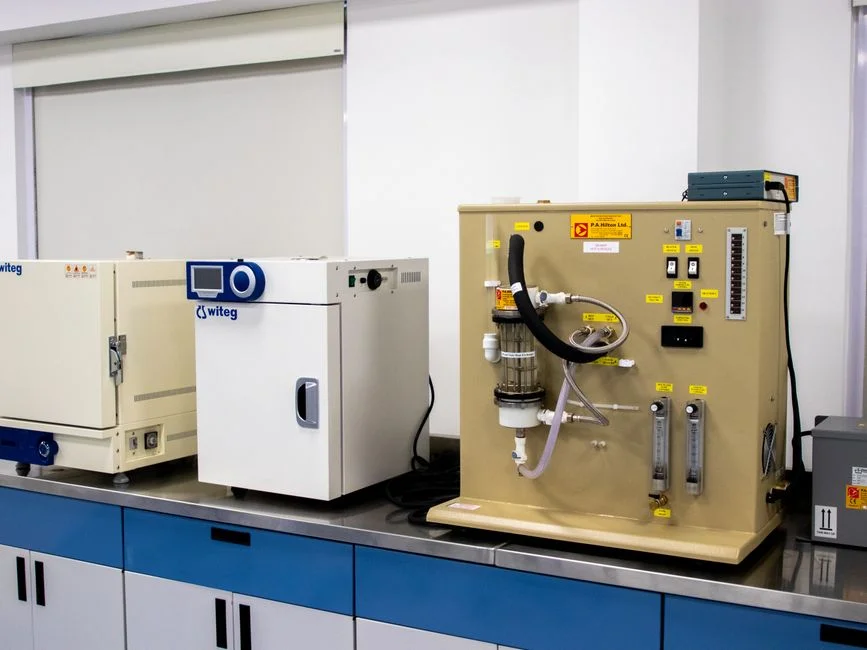
Comparable bids require bidders to state their assumptions before pricing. Each proposal should identify assumed makeup chemistry, blowdown chemistry, design flow, cycles of concentration, discharge route, recovery target, utility constraints, pretreatment requirements, chemical consumption, concentrate volume, energy demand, redundancy, automation scope and validation method.
Supplier screening should also require documented Japanese or comparable cooling-blowdown experience, local commissioning support, PLC and facility-controls integration, validation reporting, spare-parts availability and long-term membrane support. Regulatory documentation must be suitable for review by the actual Aihara authority; a generic compliance statement is not a substitute.
No defensible universal Aihara equipment size or budget can be calculated from the supplied evidence because site flow, chemistry, destination and reuse objectives are missing. A bidder should return gaps, assumptions and exclusions rather than silently fill them with generic values. The 2026 data center wastewater treatment guide provides a broader procurement framework, but Aihara decisions still require local verification.
| Information request | Required bidder response | Buyer check |
|---|---|---|
| Design basis | Stated chemistry, flow, cycles of concentration, destination and recovery target. | Values are measured or explicitly identified as assumptions. |
| Process and utilities | Treatment sequence, chemicals, energy, concentrate and redundancy. | Mass balance covers normal and abnormal operation. |
| Controls and validation | Instrumentation, PLC scope, alarms, testing and operator training. | Acceptance criteria are measurable and locally reviewable. |
| Lifecycle support | Membrane, spare-parts and service availability. | Support commitments are contractual, not promotional. |
Frequently Asked Questions
How much should I budget for an Aihara data center blowdown treatment skid?
The supplied evidence does not support a defensible Aihara price. Request a process-based budget after obtaining peak and average blowdown flow, seasonal makeup and blowdown analyses, the selected discharge route, recovery target, required monitoring, utility constraints and residual-waste route. Require bidders to separate equipment, chemicals, utilities, commissioning, controls integration, validation and long-term consumables so that scope gaps do not enter the capital comparison.
Which equipment should a supplier quote first?
Ask the supplier to quote against measured contaminants and the selected destination. Include side-stream or multi-media filtration where solids require removal; DAF where oil, grease, colloids or floatable biological solids are confirmed; automatic dosing where pH or chemical-residual control is required; softening only where hardness analysis supports it; UF before RO where the particulate barrier is required; and RO where dissolved-solids reduction is necessary. Disinfection should remain conditional on the confirmed reuse or receiving-water requirement.
How do I choose a wastewater-treatment supplier in Japan?
Check documented Japanese project support, commissioning capability within Japan, integration with the site’s PLC and facility controls, validation reporting, membrane replacement arrangements and contractual spare-parts availability. Also request evidence of local commissioning support and supplier support for regulator or sewer-utility reviews. The Kyoto benchmark identifies local technical support and long-term membrane availability as relevant supplier-selection criteria, but it does not establish which supplier is qualified for an Aihara project.
Can Aihara reuse cooling blowdown as cooling make-up?
Possibly, but only after the receiving loop’s chemistry, scaling and corrosion constraints and the applicable local requirements are confirmed. UF may provide the required particulate barrier, while RO or another demineralization process may be necessary to control dissolved solids, hardness or silica. The reuse train must also address treatment-chemical carryover, biological control, pipework compatibility and the residual purge that cannot be reused.
What is the main compliance risk for a data center in Aihara?
The main risk is selecting and sizing equipment before confirming the receiving route, applicable pretreatment requirements, chemical residuals and cumulative sewer load. Water Utility Report, updated 2026-04-14, specifically identifies those receiving-system questions. The supplied research contains no Aihara-specific enforceable limits, so Kyoto limits or generic Japanese requirements must not be represented as local rules. Early authority engagement should establish the criteria against which the eventual treatment train will be designed and commissioned.