
Why Pharmaceutical Wastewater Changes the Dosing Design
A flocculant dosing unit for pharmaceutical wastewater prepares, matures, meters, and documents polymer treatment of variable effluent. The 2026 engineering guide specifies a 0.1–0.5% solution, 30–60 minutes of aging, a 10:1 turn-down ratio, 4–20 mA control, and ±1% metering accuracy. Pharmaceutical effluent can change by production batch, so the unit must match polymer chemistry to the stream, preserve hydrated polymer against excessive shear, and control dose against both flow and dry-solids load. Jar testing remains necessary because pH, ionic strength, solvents, surfactants, and particle charge affect performance.
A generic industrial skid can be mechanically sound and still be unsuitable for pharmaceutical wastewater. Fermentation broth, API synthesis mother-liquor, formulation-equipment washwater, and CIP rinse differ in solids, charge, chemistry, and production frequency. That means polymer grade, injection location, materials, controls, and downstream separation cannot be accepted as generic selections.
| Pharmaceutical stream | Selection-relevant characteristics | Engineering implication |
|---|---|---|
| Fermentation broth | Biomass, cell debris, generally negative surfaces; formulation washwater can contain API traces and surfactants | Evaluate cationic and nonionic grades; dose against dry solids where available |
| API synthesis mother-liquor | Mixed particle charge associated with solvent residues and metal catalysts | Test coagulant–flocculant combinations and confirm injection compatibility |
| Formulation-equipment washwater | API traces, surfactants, and changing pH | Validate polymer activity against the actual wash recipe |
| CIP rinse | High temperature, conductivity, and surfactant loading; acidic or alkaline rinse | Review polymer stability, materials, and neutralization before cationic treatment |
The source material identifies four practical pharmaceutical stream archetypes and reports that pharmaceuticals were among the listed flocculant-dosing-system application segments. It also identifies rising pharmaceutical and chemical-processing output as a market-growth driver. Those are market observations, not equipment-selection evidence (Business Wire, Flocculant Dosing System Global Market Report 2022, 2022-12-08).
For each production stream, obtain representative pH, ionic strength, suspended-solids, dry-solids, surfactant, solvent, residual-catalyst, and temperature data. Also confirm the batch schedule and downstream solids separation. The antibiotic fermentation wastewater treatment process provides useful context, but site characterization remains the basis for procurement.
Match Polymer Chemistry to the Pharmaceutical Stream
Polymer selection begins with measured particle charge and the expected chemistry during dosing, not with a preferred product family. Medium-to-high-charge cationic grades generally suit fermentation broth and biological sludge; anionic or blend grades can address metal-bearing washwater where anions consume cationic demand (HydropureWater, Polymer Dosing System for Pharmaceutical Wastewater: 2026 Engineering Guide, 2026).
The guide’s qualitative mappings are useful starting points. Fermentation broth generally presents negatively charged biomass and cell debris. API mother-liquor may have mixed charge because of solvent carryover and metal catalysts. Formulation washwater contains API traces and surfactants. CIP rinse may require cationic polymer after pH neutralization. None is a substitute for jar testing.
| Stream | Initial chemistry hypothesis | Candidate treatment to test | Must verify |
|---|---|---|---|
| Fermentation broth and biological sludge | Negative biomass and cell debris | Medium-to-high-charge cationic, potentially high-molecular-weight grade | Dose on dry solids, floc strength, and downstream capture |
| API synthesis mother-liquor | Mixed charge | Cationic, anionic, or blend, potentially with coagulant pre-dose | Solvent and metal-catalyst interference |
| Formulation washwater | API traces and surfactants | Medium-charge cationic or nonionic | Surfactant demand and residual API impact |
| CIP rinse | Surfactant load with acid or alkali exposure | Cationic candidate after pH neutralization | Polymer stability, temperature, and pH |
Molecular weight and shear must be considered together. The 2026 guide states that high-molecular-weight cationic polyacrylamide can form strong flocs but may be irreversibly sheared in unsuitable pumps or high-speed mixers. A high nominal viscosity therefore does not prove that the polymer remains effective at the injection point. Request pump curves and minimum continuous stable flow, and ask the polymer supplier to define acceptable shear conditions.
The guide gives 2–20 mg/L as a jar-testing range; it explicitly states that the exact dose depends on suspended-solids concentration, COD loading, and the specific stream. Do not convert that range into an operating setpoint. Use jar testing to determine whether the basis is mg/L for the wastewater or g/kg dry solids for the solids stream.
Complementary treatment may still be necessary. A meta-analysis of 339 observational results from 30 articles found that temperature, pH, coagulants, and flocculants affect microbial-flocculant performance in pharmaceutical wastewater, while difficult-to-degrade pharmaceutical organic matter makes single-process compliance difficult (International Association for Housing Science, Analysis of the Application Potential of Microbial Flocculant Modification Technology in the Advanced Treatment of Pharmaceutical Wastewater, 2026).
Build the Unit Around Four Control Stages
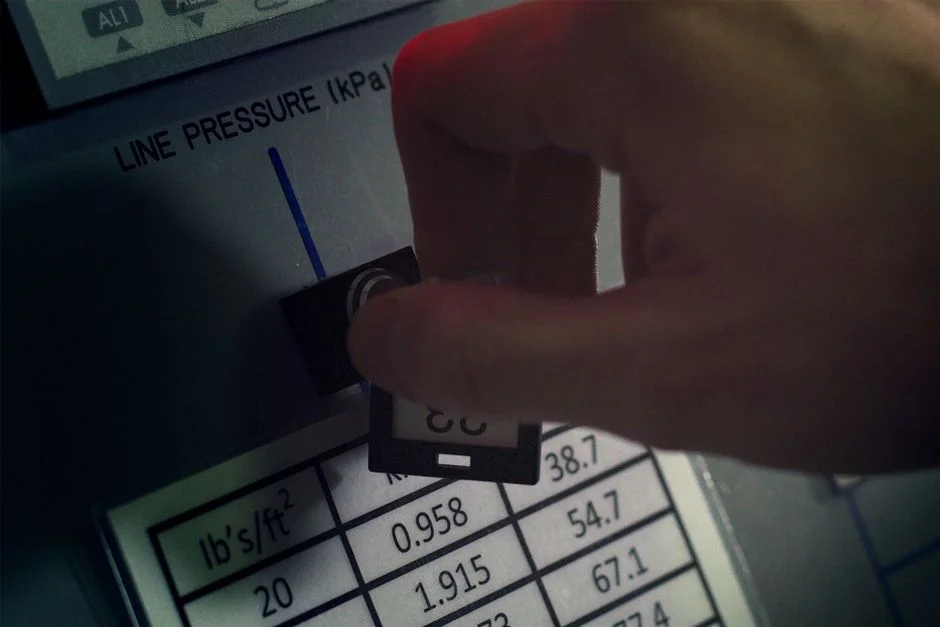
The dosing train should expose four independent acceptance points: controlled make-down, low-shear maturation, metered injection, and dose documentation. Each stage has a measurable condition that the PLC can enforce rather than relying on operator observation alone.
- Make-down: Controlled dilution water and dry polymer or liquid product enter the polymer make-down system. For dry powder, the 2026 guide specifies a wetting cone or eductor and warns that polymer should be added to water to avoid fish-eyes. Confirm the wetting geometry and water conditions with the polymer supplier.
- Maturation: Use the guide’s 0.1–0.5% make-down concentration and 30–60 minutes aging period. Bypassing maturation can increase polymer consumption and produce weaker flocs because the chains are not fully hydrated and uncoiled.
- Metering: A pump delivers the prepared solution to the treatment line. The application point, contact zone, downstream separation, and backpressure must be coordinated with the polymer performance.
- Documentation: The PLC records dose, solution condition, operating status, and relevant production identifiers. A level or maturity permissive prevents drawing under-aged solution after a fresh makeup, particularly when campaigns are shorter than the permitted solution life.
| Stage | Acceptance criterion | Failure response |
|---|---|---|
| Polymer make-down | Correct polymer form, concentration, water pressure, and supplier-approved wetting geometry | Detect loss of water pressure, incomplete wetting, or inconsistent makeup |
| Low-shear aging | Configured concentration and elapsed maturation time before release | Permit pump stop when solution is under-aged or tank level is insufficient |
| Polymer metering | Required turn-down, accuracy, pressure capability, and stable operation at calculated flow | Detect overload, high injection pressure, loss of command signal, and power failure |
| Batch record | User ID, timestamp, batch ID, calculated dose, and delivered mass | Prevent dose record completion if required fields or instruments are invalid |
Pump choice remains application-dependent. The 2026 guide identifies peristaltic and progressive-cavity pumps for shear-sensitive service, and diaphragm pumps with integrated flow monitoring for precise control. A separate 2025 HydropureWater guide notes that diaphragm pumps can also handle higher injection pressure into pressurized lines. The selection should therefore compare polymer sensitivity, required pressure, metering accuracy, leak detection, maintenance, and the validated control signal—not simply choose by pump name.
An automatic pharmaceutical flocculant dosing skid can package these stages on one frame, but the process flow, aging permissive, alarms, and document schema still need site-specific approval.
Size the Pump from Dry Solids and Active Polymer Demand
Pump capacity should be calculated from active polymer demand and expressed against dry solids, then checked against the pump’s stable operating window. This approach avoids selecting a pump from wastewater flow alone when batch chemistry and solids concentration vary.
The supplied worked example uses a sludge flow of 7 m³/h, inlet dry solids of 0.71%, conditioned dry solids of 4.83%, a target dose of 10 g/kg DS, and a 0.3% diluted polymer solution (HydropureWater, Polymer Dosing System for Pharmaceutical Wastewater: 2026 Engineering Guide, 2026).
| Calculation step | Calculation | Result |
|---|---|---|
| Convert wastewater flow | 7 m³/h × 1,000 L/m³ | 7,000 L/h |
| Determine inlet dry-solids rate | 7,000 L/h × 7.1 g/L | Approximately 49.7 kg DS/h |
| Calculate active polymer demand | 49.7 kg DS/h × 10 g/kg DS | Approximately 497 g active polymer/h |
| Calculate prepared-solution flow | 497 g/h ÷ 3 g/L | Approximately 166 L/h |
With a 10:1 turn-down ratio, the guide recommends a nominal capacity of approximately 200–250 L/h so the 166 L/h operating point falls within the cited 30–80% capacity window. This is a verification example, not a universal rating for pharmaceutical wastewater.
The g/kg DS basis is more defensible when solids measurements are available because a flow-only dose can conceal changing solids loading. It also creates a clearer control architecture: measure sludge flow and inline percent dry solids or NIR concentration, calculate active polymer demand, and command pump speed accordingly. The dose basis still must be confirmed by jar testing and reviewed against the downstream solids-separation process.
| Bidder input | Why it is required |
|---|---|
| Design and minimum wastewater flow | Establishes required pump operating range |
| Dry-solids range | Converts hydraulic load into active polymer demand |
| Jar-tested target dose | Defines grams of active polymer per kilogram of dry solids |
| Prepared-solution active concentration | Converts active mass demand into solution flow |
| Carrier-water pressure, injection backpressure, and polymer viscosity | Determines wetting performance and pump suitability |
| Pump curve and required turn-down | Confirms stable operation across the control envelope |
Do not accept a quotation that provides only “litres per hour.” Require the bidder to show the dry-solids calculation, assumed polymer concentration, duty point, minimum stable flow, and turn-down basis.
Specify Materials, Instrumentation and Validation Deliverables

A pharmaceutical-ready skid must produce both process performance and reviewable evidence. Chemical compatibility alone is not enough; the supplier must document the wetted material basis, calibration status, control logic, and validation support.
The 2026 guide calls for 316L stainless-steel wetted parts and USP Class VI elastomers for pharmaceutical service, with passivated or electropolished internal finish where the skid feeds a GMP wash area. The guide also specifies a magnetic flowmeter for dilution water, a suitable polymer-feed flow measurement method, and level, pressure, and conductivity instrumentation on the aging tank, subject to polymer and water chemistry.
| Deliverable | Required evidence |
|---|---|
| Material conformity | Material certificates for wetted parts and declarations for elastomers |
| Surface condition | Surface-finish report for the specified internal finish |
| Instrument accuracy | Calibration certificates for flow, pressure, level, conductivity, and solids instruments |
| Control system | PLC functional specification, alarm setpoints, interlock logic, and event-log schema |
| Validation support | IQ/OQ protocols, FAT, SAT, and site-specific loop-check placeholders |
| Batch traceability | User ID, timestamp, production batch ID, calculated g/kg DS, and actual mass delivered |
For solids-responsive control, the guide describes a magnetic flowmeter on the sludge line and an inline percent-DS or NIR solids sensor feeding the PLC so pump speed can track solids load. Confirm that the sensor remains representative of the actual solids stream and that its measurement range covers the expected dry-solids envelope.
The event log should link every dose to the production batch and solution makeup. The guide recommends electronic-signature support and linkage to the site’s 21 CFR Part 11 compliance program. Treat this as a site-controlled compliance requirement: the skid should provide the records and electronic-signature capability needed by the plant’s validation program, while the site remains responsible for its governed computerized-system controls.
Downstream equipment must also be included in trial review. A plate-and-frame filter press may receive conditioned solids, but its operating limits and floc-retention requirements must be tested with the selected polymer rather than assumed from nominal sludge solids.
Require suppliers to identify every open compliance dependency: calibration status, sensor location, electronic-signature workflow, audit-retention responsibility, alarm acknowledgment, and IQ/OQ ownership. That prevents the skid from arriving with functioning chemistry but an incomplete validation record.
Turn the Specification into an RFQ and Acceptance Checklist
The RFQ should require bidders to connect stream characterization to equipment selection and acceptance criteria. A price based on wastewater flow alone is not comparable because it leaves polymer chemistry, solids range, validation scope, and solution-life assumptions unresolved.
| RFQ area | Question or required deliverable | Acceptance evidence |
|---|---|---|
| Design basis | Which pharmaceutical streams are served, and what are the flow and DS envelopes? | Stream-by-stream design table with worst-case operating condition |
| Polymer | What form, grade, active concentration, and target dose are proposed? | Jar-test plan, selected grade, and dose basis |
| Preparation and aging | How is wetting achieved and how is maturation controlled? | Process flow, wetting geometry, concentration, and age-permissive logic |
| Metering | What accuracy, turn-down, pressure capability, and pump curve apply? | Certified pump data and calculated duty point |
| Controls | How are under-age, low level, overload, high pressure, power loss, and signal loss detected and recorded? | Control narrative, alarm list, interlock matrix, and event-log schema |
| Validation | Which documents and tests are included? | Document index, calibration plan, FAT/SAT protocol, and IQ/OQ support scope |
| Traceability | How are solution age, makeup batch, polymer mass, and production batch linked? | Audit-retrieval demonstration |
Each quotation should include the proposed process flow, P&ID, equipment list, instrument list, control narrative, material declarations, calibration plan, FAT/SAT scope, and IQ/OQ support. The bidder should also state which items remain site responsibilities, including utility supplies, injection-point compatibility, permit review, and loop checks.
Require jar-test support as a scoping deliverable. The 2026 guide notes that pharmaceutical streams vary in ionic strength and pH, directly affecting charge-neutralization effectiveness. The vendor should therefore identify the test matrix, controls, endpoints, and dose calculation before committing to a fixed pump or control configuration.
Do not infer equipment price or lead time from the supplied research. Require a site-specific commercial quotation after stream characterization, jar testing, and sizing inputs are agreed. If downstream separation must also be selected, compare a DAF system for pharmaceutical solids separation against a high-efficiency sedimentation tank using floc properties from the same trial—not generic suspended-solids data.
Frequently Asked Questions
What dose and sizing basis should be used for pharmaceutical wastewater?
Use the 2–20 mg/L range only as the supplied jar-testing context, not as an operating setpoint. When dry-solids measurements are available, specify active polymer in g/kg DS; the worked example in the 2026 guide converts 7,000 L/h, 0.71% inlet DS, a 10 g/kg DS target, and 0.3% solution into approximately 166 L/h of prepared polymer. Request the bidder’s full calculation and jar-test basis.
Which pump should be selected for shear-sensitive polymer?
Compare peristaltic and progressive-cavity metering for low-shear service, while also assessing required injection pressure, leakage control, minimum stable flow, and turn-down. The 2026 guide identifies both as low-shear options; diaphragm metering may suit higher-pressure applications. Select the pump only after confirming polymer viscosity, pressure, and the supplier’s shear limits.
What documentation is needed to reduce pharmaceutical validation risk?
Require the event-log schema, calibration certificates, material certificates, surface-finish report, alarm and interlock logic, PLC functional specification, FAT, SAT, and IQ/OQ protocols. Each dose record should include user ID, timestamp, production batch ID, calculated g/kg DS, and actual delivered mass. The site should assess how the records integrate with its 21 CFR Part 11 compliance program.
Are 316L materials and USP Class VI elastomers sufficient for every stream?
No. The 2026 guide identifies them as the pharmaceutical-service basis, but solvent residues, acidic or alkaline CIP rinse, surfactants, and temperature must still be checked against the selected polymer, elastomer, and surface finish. Require stream-specific compatibility declarations and surface-finish evidence before approval.
When is a solids signal necessary instead of flow-only control?
Request a solids-responsive signal when dry-solids concentration varies materially within the dosing campaign and the validated dose is expressed in g/kg DS. The 2026 guide describes combining sludge-flow measurement with inline percent-DS or NIR sensing so pump speed tracks solids load. If the stream remains effectively constant and the validated basis is flow-based, document that basis rather than adding instrumentation without a control need.