Can a UASB Reactor Treat Biodiesel Plant Wastewater?
A UASB reactor can be a candidate for biodiesel production wastewater when the stream is predominantly soluble, readily biodegradable organic matter and has been protected from excessive oil, solids, toxicity, temperature shocks, and pH excursions. The reactor retains anaerobic sludge blanket biomass, separates biogas, and separates solids from treated liquid. A 2025 review reports hydraulic retention times of 3 to 24 hours and solid residence times of 32 to 45 days. However, the supplied research establishes no biodiesel-specific UASB COD-removal rate, design loading rate, or cost benchmark. Those must be resolved through characterization, loading trials, and supplier-specific design checks.
A UASB is an anaerobic sludge blanket reactor: wastewater moves upward through a bed of methanogenic biomass, organic matter is converted mainly to methane-rich biogas, and a three-phase separator removes gas, entrained solids, and treated liquid. Its attraction is high-rate organic-load removal without maintaining the long hydraulic retention associated with conventional anaerobic digestion. The 2026 UASB reactor engineering guide for yeast wastewater explains the general reactor mechanics, but those mechanics do not establish biodiesel treatability.
Screening must begin at the stream level rather than with the combined plant effluent:
- Oils and fats: segregate vegetable-oil, animal-fat, rendered-material, and spill streams from other wastewater.
- Ester-production or process water: obtain composition and flow data because residual oils, alcohols, acids, salts, and process additives may change biodegradability and inhibition risk.
- Washing water: identify detergents, cleaning chemicals, and variable dilution rather than treating it as ordinary wash water.
- Storage-area and rainfall runoff: separate potentially contaminated runoff from process wastewater before equalization.
The only supplied UASB performance study used cattle-slaughterhouse wastewater, not biodiesel wastewater. In that 2018 study, COD removal exceeded 90% during batch testing and was approximately 90% at an organic loading rate of 0.4 g/L d−1 in continuous operation at 35 °C. That result demonstrates substrate and loading dependence; it is not a biodiesel sizing default.
Characterize Each Wastewater Stream Before Selecting a UASB
Biodiesel feasibility depends on the composition and variability of each stream, not on a bulk COD value labeled “biodiesel wastewater.” The 2025 MDPI review identifies nutrient availability and pH as factors that profoundly affect microbial communities and reactor functionality, while changes in influent salinity and organic load can disrupt microbial interactions and reduce performance. The characterization program therefore needs to connect wastewater chemistry to the biological process and downstream permit.
| Measurement | Decision supported | Minimum reporting detail |
|---|---|---|
| Flow and temporal profile | Equalization and reactor hydraulic basis | Separate streams; average and peak flow; production and clean-in-place cycles |
| Total and soluble COD | Biodegradable organic load and shock assessment | Sampling method, filtered fraction, variability, and COD/COD fractions |
| Oil and grease | Oil and grease pretreatment selection | Free, emulsified, and insoluble oil; source; recoverable oil |
| Suspended solids | Screening, solids removal, and separator protection | Concentration, settleability, grit or fibrous debris |
| pH, alkalinity, temperature | Process stability and heating basis | Influent and expected effluent values; seasonal variation |
| Salinity and nutrients | Inhibition and nutrient balance | Conductivity or salinity; nitrogen and phosphorus availability |
| Toxicity indicators | Biodegradability and pretreatment need | Specific compounds identified from production and cleaning chemicals |
| Applicable standards | Final treatment and polishing scope | Receiving route, permit, sewer-pre-treatment, reuse, or ZLD criteria |
Do not use bulk COD alone. A high COD share from slowly biodegradable material, emulsified oil, cleaning chemicals, or inhibitory compounds may not suit a high-rate UASB design. Conversely, soluble, readily biodegradable carbon may be favorable after oil and solids control.
Establish whether oil is free, emulsified, or insoluble and whether it comes from feedstock carryover, production, cleaning, or runoff. This distinction determines whether source control can remove most of the oil or whether physical separation is required. For soluble COD, request soluble COD or filtered COD in addition to total COD; without that split, the design cannot distinguish accessible substrate from particulate load.
Check alkalinity alongside pH. Acid formation and methane production can move pH if the reactor has insufficient buffering, while nutrient deficiency can restrict methanogenic biomass even when COD is abundant. Do not prescribe a reagent dose before obtaining the alkalinity and influent chemistry. If conditioning is justified, an automatic dosing system for pH and nutrient conditioning should be specified only after the required chemistry and control logic are defined.
Protect the UASB with the Right Pretreatment Train

The UASB should receive a conditioned feed, not be used as the oil-removal or solids-removal device. A defensible sequence is source control and segregation, screening, equalization, oil and solids removal, conditional pH or nutrient adjustment, anaerobic treatment, and downstream polishing. Unit selection follows characterization rather than a fixed template.
| Condition | Pretreatment decision | Reason for the UASB |
|---|---|---|
| Segregated free oil or FOG with recoverable potential | Source recovery followed by DAF where required | Removes material that can interfere with settling, separation, and biomass activity |
| Dispersed or emulsified oil and colloidal solids | Evaluate an industrial DAF system for oil and solids pretreatment | Supports recovery of oil-bearing solids before biological loading |
| Rags, plastics, fibrous debris, or grit | Mechanical screening before equalization and pumping | Protects pumps, valves, feed distribution, and the three-phase separator |
| Variable flow or load | Equalization with controlled feed | Reduces hydraulic and organic shocks |
| Insufficient alkalinity or nutrients | Conditional chemical conditioning | Supports stable pH and methanogenic activity |
| Uncertain or inhibitory wastewater | Bench or pilot trials before final reactor selection | Tests treatability under the actual wastewater and loading sequence |
Where recoverable or dispersed oil, FOG, or colloidal material is present, DAF is a credible pretreatment option. The referenced DAF system uses micro-bubble flotation and automatic skimming for industrial wastewater containing oil and grease, suspended solids, and colloidal matter. That equipment scope does not remove the need to characterize oil chemistry or verify removal performance on site wastewater.
Mechanical screening should precede biological treatment where fibrous material, plastics, or rags are present. The referenced rotary mechanical bar screen addresses gross debris; its selection still requires the expected flow, solids character, and discharge route.
Chemical dosing is not a default requirement. Specify reagent type, dose-control logic, residual management, and interlocks only after influent pH, alkalinity, nutrient balance, and mixing requirements are known. If those data are absent, a dosing-system quotation is not yet a complete design.
Size the Reactor Around Hydraulic Retention, Biomass, and Gas Separation
The 2025 MDPI review provides a literature screening envelope, not a final biodiesel reactor size. It reports UASB hydraulic retention times of 3 to 24 hours and solid residence times of 32 to 45 days. The difference matters: hydraulic residence describes liquid contact, while long biomass retention supports high-rate treatment and limits solids washout.
| Design item | Required supplier input | Why it matters |
|---|---|---|
| Design flow and peak factor | Selected stream flow; daily profile; peak-hour basis | Sets equalization and feed capacity |
| Hydraulic retention time | Selected value within the literature screening envelope and calculated effective volume | Determines liquid residence and reactor geometry |
| COD loading rate | Site-specific design load, basis, safety margin, and loading progression | No supplied biodiesel-specific default is available |
| Biomass inventory | Sludge concentration, inoculum, retention, withdrawal, and granulation approach | Controls methanogenic capacity and washout risk |
| Liquid depth and upflow conditions | Reactor height, width, feed distribution, recirculation, and short-circuit controls | Maintains contact and limits bypass |
| Three-phase separator | Gas, solids, and liquid collection design; solids drawdown | Retains biomass while releasing biogas and effluent |
| Gas system | Removal, pressure control, safety, treatment, utilization, or flaring | Controls biogas hazards and operating risk |
The same 2025 review reports development of a concentrated sludge bed at 40 to 100 gTS/L and possible granules of 1–5 mm. It attributes granule development to the seed sludge, wastewater characteristics, and operating conditions. These values therefore describe literature observations, not guaranteed properties of a new biodiesel reactor.
Require the supplier to state the assumed flow basis, peak-hour factor, temperature, hydraulic retention time, reactor geometry, liquid depth, separator design, sludge inventory, and expected loading progression. Each bid should reconcile hydraulic volume, organic loading, biomass retention, and feed distribution rather than quote only reactor volume.
Do not adopt the slaughterhouse study’s 0.4 g/L d−1 continuous operating rate as a biodiesel default. The 2018 International Journal of Environmental Research and Public Health study used an 8 L total-volume, 6 L effective-volume laboratory reactor at 35 °C with cattle-slaughterhouse wastewater. The scale and substrate differ from a biodiesel installation.
Start Up Conservatively and Prove Performance Before Full Load
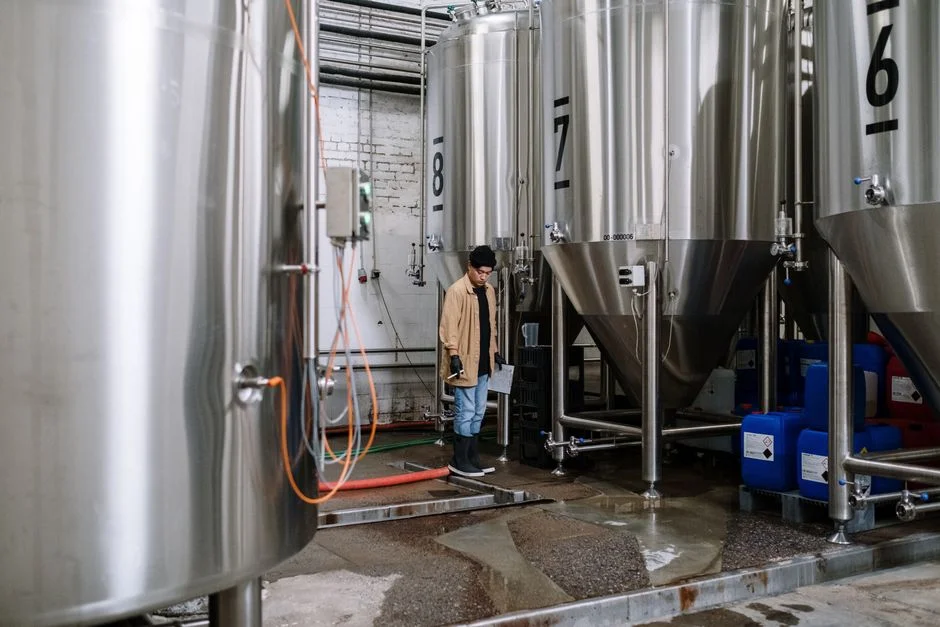
UASB start-up should establish a stable methanogenic population before the reactor is asked to absorb design load. The 2025 MDPI review describes addition of sufficient anaerobic sludge as inoculum, feeding at a low initial flow, and gradual increases based on reactor performance. During start-up, when biogas production remains low, gas or effluent recirculation may be needed to supplement mixing.
| Stage | Action | Evidence to record before advancing |
|---|---|---|
| Preparation | Confirm pretreatment performance, seed sludge, temperature control, alkalinity, feed distribution, and gas-system readiness | Stable feed characteristics and completed commissioning checks |
| Low initial loading | Begin at a conservative feed rate and avoid sudden concentration or flow increases | Stable pH, alkalinity, VFA trend, gas production, methane content, and solids separation |
| Progressive loading | Increase load in defined steps and evaluate each response | Repeatable COD removal, acceptable settling, retained biomass, and no adverse pH or VFA trend |
| Design-load demonstration | Operate at the agreed flow and load under representative conditions | Measured performance matching the agreed acceptance criteria |
Track pH, alkalinity, volatile fatty acids, gas production, methane content, COD removal, sludge inventory, settling, and indicators of granulation. Set advance, hold, and load-reduction triggers before commissioning. If pH falls, gas production weakens, volatile fatty acids accumulate, or solids separation deteriorates, hold or reduce loading while investigating.
Use the 2025 review’s mesophilic range of 30–38 °C as a thermal reference. It also states that methanogenesis at sub-optimal temperatures is 10–20 times lower than at 35 °C. Temperature is therefore a design and operating control, not merely a startup observation.
Add Polishing for Discharge, Reuse, or Regulatory Risk
The UASB must be matched to the receiving route rather than assumed to produce a discharge-ready effluent. The supplied research provides no jurisdiction-specific limits for biodiesel wastewater. Before procurement, obtain the applicable permit, sewer-pretreatment, reuse, or zero-liquid-discharge criteria and identify which parameters they cover: COD, suspended solids, oil and grease, pH, nutrients, temperature, toxicity, or reuse-specific quality.
| Treatment objective | Possible downstream unit | Decision basis |
|---|---|---|
| Bacteria, colloids, or suspended-solids removal before sensitive treatment or reuse | UF | Required quality and feed condition |
| Reduced sludge volume | Plate-and-frame filtration | Sludge characteristics and disposal route |
| Final nutrient, dissolved-solids, or trace-contaminant control | Site-defined polishing or advanced treatment | Permit or reuse specification |
| Biogas recovery | Gas treatment, utilization, or flaring | Gas composition, demand, safety, and operating strategy |
UF is relevant when the objective includes bacteria, colloids, or suspended solids ahead of sensitive treatment or reuse duties. The referenced ultrafiltration system handles flows from 2,000 to 40,000 L/h, uses 0.03 micron PVDF membranes, and accepts feed with up to 300 ppm turbidity. These equipment parameters do not establish suitability without UASB effluent quality and flow data.
When excess UASB sludge requires volume reduction, the referenced plate-and-frame filter press covers filtration areas from 1 m² to 500 m². Final polishing and sludge management should remain separate packages from UASB organic-load removal because their design duties differ.
Turn the Design Brief into a Supplier and Pilot Comparison?

Supplier comparison should test engineering completeness, site-specific assumptions, and verification—not reactor price or generic COD-removal claims. Request a process basis, sizing calculations, hydraulic profile, reactor and separator drawings, materials, guarantees, control philosophy, commissioning plan, and measurable performance criteria.
| Bid package | Question every bidder must answer | Acceptable evidence |
|---|---|---|
| Process basis | Which streams and measured wastewater data were used? | Flow, COD, soluble COD, oil, solids, pH, temperature, salinity, nutrients, and toxicity basis |
| Reactor sizing | How are HRT, organic loading, biomass retention, and peak flow reconciled? | Calculations and sensitivity cases |
| Scope boundaries | Which equalization, oil removal, heating, conditioning, gas treatment, odor control, sludge, and polishing items are included? | Explicit inclusion and exclusion schedule |
| Pilot evidence | Was the actual biodiesel wastewater tested under representative loading? | Feed characterization, operating record, analytical results, and scale-up interpretation |
| Commissioning | What acceptance variables and failure actions are defined? | Written protocol, sampling plan, hold points, and remedies |
| Commercial guarantee | Which measured conditions and outputs are guaranteed? | Defined flow, load, temperature, COD removal, gas and solids criteria |
Make pilot or bench testing a decision gate where oils, inhibitors, variable salinity, unusual temperature conditions, or biodegradable-COD uncertainty remain. The 2026 UASB reactor engineering guide for starch wastewater provides a useful adjacent reference, but starch wastewater cannot substitute for site-specific biodiesel testing.
A 2026 Frontiers in Microbiology review synthesized 15 pilot-scale studies ranging from 50 L to over 9,600 L. It found pilot-scale reactor selection and scale-up remain fragmented across wastewater types, configurations, operating conditions, and performance metrics. That finding supports matched pilot evidence and consistent commercial acceptance criteria.
Tie acceptance to the same variables requested during design. Avoid guarantees based on unrelated substrates, synthetic feed, or generic COD-removal percentages. For site comparison, the aerobic versus anaerobic wastewater treatment decision framework helps place the UASB against alternatives.
Frequently Asked Questions
How should a UASB reactor for biodiesel wastewater be sized?
Size it from measured stream flows, wastewater temperature, biodegradable-COD fraction, pretreatment performance, hydraulic retention time, biomass retention, and site-specific loading trials. The 2025 MDPI review’s 3–24 hour hydraulic retention time is a literature screening envelope, not a final biodiesel design value, and the supplied research provides no biodiesel-specific design loading rate. Ask each bidder to show the calculations and loading progression behind its selected reactor volume.
Which pretreatment should protect the UASB reactor?
Use source segregation, mechanical screening, equalization, and oil or solids removal according to wastewater characterization. Consider DAF for dispersed or emulsified oil, recoverable FOG, or colloidal solids; use chemical dosing only where influent and alkalinity data demonstrate a pH or nutrient correction is required. A general pretreatment package is not adequate until the controlling oil and solids fractions are known.
How should procurement compare cost and supplier capability?
Request separate pricing for the UASB, three-phase separator and gas system, equalization, screening, oil removal, heating, conditional dosing, commissioning, sludge removal, and downstream polishing. The supplied research contains no biodiesel UASB cost benchmark, so request quotations against the same site-specific design basis and ask which items are excluded. For supplier selection, demand the process basis, calculations, drawings, commissioning plan, guarantees, and matched reference performance; reject bids supported only by generic removal claims.
What delivery and compliance risks should be resolved before purchase?
The supplied research contains no biodiesel UASB delivery-time benchmark, so request a delivery schedule with approval gates for drawings, permits, fabrication, testing, and commissioning. For compliance, identify the receiving route and applicable site-specific permit, sewer-pretreatment, reuse, or ZLD criteria before finalizing polishing. UASB performance and biogas production alone do not establish final effluent compliance or reuse suitability.