Choose the Right Domestic Sewage Treatment System for Leon
Domestic sewage treatment in Leon depends on measured flow, site constraints, effluent reuse goals and local discharge conditions. Buried A/O package plants combine anoxic and aerobic biological contact oxidation, sedimentation and disinfection, while MBR adds membrane filtration where tighter solids separation or reuse is needed. Compost beds offer a natural alternative but require substantially more land. The supplied research does not establish Leon-specific discharge limits, soil conditions or permit rules, so a project flow survey, site investigation and regulatory review must precede selection. This guide compares the principal equipment routes and converts their differences into a procurement brief suppliers can price and guarantee consistently.
Domestic sewage treatment means treating wastewater from residential, commercial or mixed domestic uses. It is not interchangeable with industrial wastewater treatment: domestic streams contain human-derived solids, organic matter, nutrients and microbial contamination, and those characteristics determine the biological process, separation stage, disinfection and sludge-handling requirements.
Four inputs should drive the choice:
- Flow and load: establish average wastewater generation, peak periods, seasonal occupancy and expansion plans.
- Land and access: confirm the usable footprint, excavation route, burial depth, groundwater conditions, power supply and maintenance access.
- Effluent use: identify whether the objective is discharge, irrigation, toilet flushing, washing or another reuse purpose.
- Regulatory route: confirm the receiving point, sanitation requirements and applicable consent with the responsible local authority.
The principal routes are buried anoxic/aerobic package plants, MBR systems and lower-energy natural systems such as compost beds. A buried A/O sewage treatment plant may suit sites needing an integrated unit, while an MBR wastewater treatment system warrants comparison where membrane separation or reuse quality is important. Natural treatment should be screened against available land and site conditions rather than rejected solely because it is not a packaged plant.
Buried A/O, MBR and Natural Treatment Compared
The three routes differ in process architecture, and their operating consequences must be compared at the same site-specific duty. The WSZ series combines biological contact oxidation, clarification and disinfection in a buried package, the MBR route separates activated-sludge treatment from membrane filtration, and compost beds distribute treatment through an oxygen-accessible natural medium.
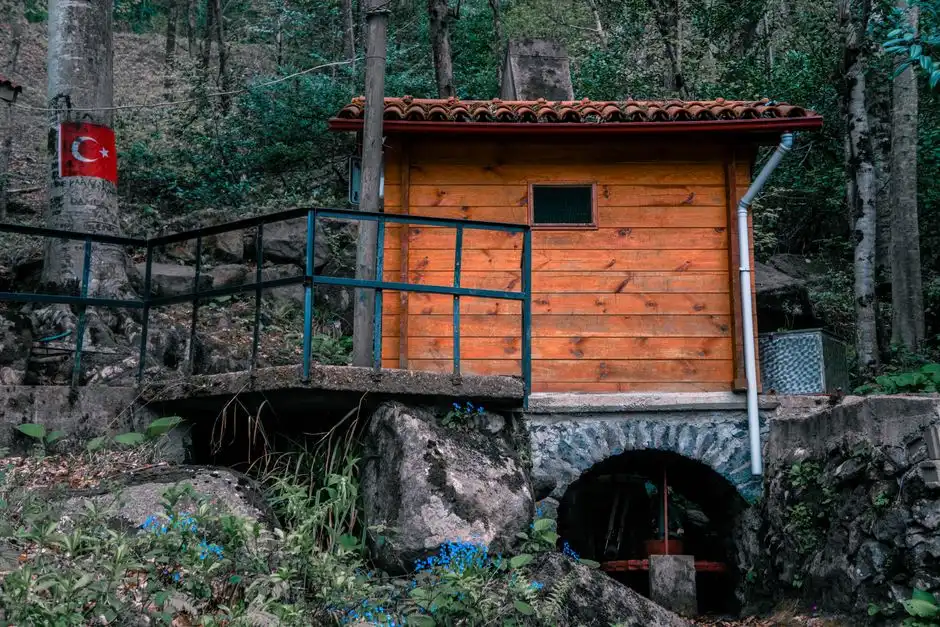
The HydropureWater verified product catalog states that the WSZ series combines anoxic/aerobic A/O biological contact oxidation, sedimentation and disinfection in a single buried package. It is fully automated, requires no operator and is stated to handle 1–80 m³/h. The unit may be installed below grade with landscaping above or mounted on a trailer for mobile deployment, according to the HydropureWater verified product catalog.
The HydropureWater verified product catalog describes the MBR product as activated-sludge treatment combined with submerged PVDF membrane filtration. Its stated capacity is 10–2,000 m³/day, with near-reuse-quality effluent and filtration below 1 μm. The catalog claims a footprint 60% smaller than conventional systems; that comparison should be tested against a defined project layout because the basis is not supplied.
The 2023 Sustainability study evaluated a compost-bed natural treatment system for domestic sewage. Its design used 1 m² of bed area per inhabitant and about 100 L/m²/day hydraulic loading. The study reported 98% BOD reduction and 99.5% ammonium-nitrogen reduction. These results belong to a pilot plant serving 3 residents and up to 5 office workers, operated over 2.5 years, with sampling from August 2019 to May 2022. They are not transferable performance guarantees for a commercial Leon installation.
| Route | Process and stated scale | Footprint tendency | Main operating concern | Information required from supplier |
|---|---|---|---|---|
| Buried A/O | Anoxic/aerobic contact oxidation, sedimentation and disinfection; WSZ catalog capacity 1–80 m³/h | Compact integrated package; below-grade installation | Loading, solids separation, disinfection, access and buried-system controls | Design flow, organic loading, process stages, controls, guarantees, commissioning and excavation requirements |
| MBR | Activated sludge with submerged PVDF membranes; catalog capacity 10–2,000 m³/day | Smaller footprint claim than conventional systems | Membrane fouling, cleaning, air or backwash services and replacement strategy | Flux, membrane configuration, cleaning cycle, spare strategy, power demand and performance test method |
| Compost-bed natural treatment | Septic tank followed by oxygen-accessible compost beds; tested at 1 m² per inhabitant and about 100 L/m²/day | Land-intensive | Hydraulic loading, oxygen transfer, media condition, bypass and seasonal operation | Site-specific hydraulic study, land area, loading basis, media replacement, bypass and effluent monitoring |
Build a Leon Project Brief Before Requesting a Quote
A comparable bid requires the same design basis, site data and performance conditions from every supplier. A request based only on “people served” or daily wastewater volume will produce quotations that cannot be compared because each supplier may have assumed a different occupancy pattern, duty or treatment standard.
- Establish flow. Use a flow survey covering average daily generation, peak periods, seasonal occupancy and planned expansion. Do not size from a population estimate alone where metered or measured data are available.
- Map the site. Record usable footprint, excavation access, soil and groundwater investigations, burial depth, landscaping, vehicle access, power availability and future maintenance routes.
- Define the receiving point or reuse objective. State whether the water will be discharged, used for irrigation, toilet flushing, washing or another purpose. This determines whether clarification and disinfection are sufficient or whether membrane filtration is required.
- Characterize the wastewater. Verify flow, COD, BOD, suspended solids, ammonium nitrogen and pH. Identify any industrial inputs entering the domestic stream because they may change the process and loading assumptions.
- Define ownership and guarantees. Require capacity basis, treatment train, hydraulic and organic loading, utilities, controls, commissioning tests, maintenance tasks, spare parts, warranty scope and signed performance criteria.
The commercial comparison should also use the packaged sewage treatment options for housing and the residential wastewater treatment design guide as structured references, not as substitutes for a Leon-specific flow survey.
| Brief item | Minimum information to obtain | Reason it affects the decision |
|---|---|---|
| Design duty | Average and peak flow; occupancy; expansion; hydraulic and organic loading | Prevents equipment being selected for the wrong treatment duty |
| Site constraints | Footprint, access, soils, groundwater, burial depth, power and maintenance route | Determines civil works, installation method and serviceability |
| Effluent objective | Receiving point, reuse purpose, applicable quality requirements and sampling points | Sets the required separation and disinfection performance |
| Scope and guarantees | Supply boundary, utilities, controls, testing, training, spares, warranty and acceptance criteria | Makes bids commercially and technically comparable |
| Authorization | Responsible authority, application requirements and applicable discharge conditions | Separates treatment capability from legal permission |
The supplied sources do not provide a Leon permit threshold or discharge schedule. Request that information from the responsible authority and incorporate the confirmed conditions into every quotation.
Verify Treatment Performance Instead of Comparing Headlines
A performance percentage is meaningful only when its influent, loading, test method and operating period are stated. The 2023 Sustainability study provides a 2.5-year operating record and sampling from August 2019 to May 2022, but its results came from one pilot installation serving 3 residents and up to 5 office workers. Those figures demonstrate the studied conditions, not a universal guarantee for an A/O package or MBR system.
For the compost-bed pilot, the study reported 98% BOD reduction, 99.5% ammonium-nitrogen reduction and effluent oxygen of 4–7 g O₂/m³. It also reported an average compost-bed hydraulic retention time of approximately 1 hour. That retention time should not be transferred directly to a WSZ or MBR unit because the process configurations and hydraulic behavior differ.
Operating conditions also affect ancillary treatment performance. The Science of the Total Environment study published 20 June 2025 tested iron-supplemented pelletised sewage-sludge compost in experimental biofilters; the pelletised material supported VOC removals above 92% at 60, 45 and 30 seconds of empty-bed residence time. This result concerns the tested biofilters and should be used to demonstrate why residence time and media conditions matter, not as a general MBR performance claim.
Ask each supplier for a signed guarantee tied to defined influent limits, design duty, test methods, sampling points and acceptance criteria. Commissioning should cover installation supervision, operator training, control-system demonstrations, initial testing and maintenance documentation. The small-plant SCADA cost guide can inform control-system questions, while the biological wastewater plant operation and maintenance guide provides context for routine maintenance review.
| Evidence item | What the supplied evidence supports | Question to put to the supplier |
|---|---|---|
| Long-term evidence | The compost pilot operated for 2.5 years; sampling ran from August 2019 to May 2022 | What comparable operating evidence supports your proposed equipment? |
| Reported treatment results | 98% BOD reduction, 99.5% ammonium-nitrogen reduction and 4–7 g O₂/m³ effluent oxygen in the specified pilot | Will you guarantee results under the project’s defined influent and duty? |
| Hydraulic behavior | Approximately 1-hour average hydraulic retention time in the studied compost beds | What hydraulic model and peak-flow checks support the proposed sizing? |
| Acceptance | Research measurements used defined analytical methods and sampling arrangements | Which test method, sampling point and acceptance criterion will appear in the contract? |
Plan Installation, Operation and Sludge Management
Reliable operation depends on the treatment vessel and the civil, utility and maintenance interfaces around it. For a buried WSZ installation, define excavation requirements, structural load rating, access covers, bypass provisions, odor control and landscaping interfaces. A fully automated package does not remove the need for site preparation or maintenance access.
For an MBR application, define membrane cleaning, air-scour or backwash requirements, fouling monitoring, spare-membrane strategy and membrane replacement responsibility. The wastewater treatment plant O&M schedule should identify which tasks require attendance, which are automated, what consumables are needed and how service response is managed.
Sludge is a routine operating stream, not a disposal detail to defer until commissioning. Assign responsibility for collection, storage, dewatering, transport and final disposal. Where project dewatering is required, HydropureWater’s catalog states filtration areas of 1–500 m² for its sludge dewatering equipment; suitability must still be confirmed against the selected plant’s solids production, operating schedule and disposal route.
The supply schedule should also distinguish supplier equipment from civil-contractor and local-operator scope. State who provides electrical power, feed pumping, bypass piping, odor control, access roads, effluent disposal and routine sludge removal. The treatment valves, filter media and related parts list can support spare-parts review, but the responsibility for maintaining those items must be explicit in the contract.
Frequently Asked Questions
How should a domestic sewage treatment system be sized for a Leon property?
Size it from measured or metered wastewater flow, not occupancy alone. Require the supplier to state its average-flow, peak-flow and organic-loading design basis and show the treatment train proposed for those conditions.
What should I check when selecting a domestic sewage treatment supplier?
Check the process definition, signed performance guarantee, commissioning evidence, O&M documentation and responsibility boundaries. Also require a practical handover test covering controls, alarms, maintenance access and operator training.