What Kind of Domestic Sewage System Does Puebla Need?
Domestic sewage treatment in Puebla depends on wastewater flow, available space, effluent destination and reuse goals. A buried WSZ package plant serves 1–80 m³/h, while a catalog MBR serves 10–2,000 m³/day and provides filtration below 1 μm. The appropriate choice depends on verified peak flow, treatment objectives, site constraints and NOM-001-SEMARNAT-2021 requirements, not equipment price alone.
For domestic sewage treatment in Puebla, first define the source: a residence, hotel, hospital, small business or decentralized residential cluster. Establish whether the sewer is separate or combined, whether industrial wastewater enters the stream, and whether the system must operate without routine on-site attendance. Average flow alone is insufficient; the design basis also needs peak flow, hydraulic profile, wastewater temperature and the final effluent destination.
The packaged systems discussed here apply to decentralized treatment, small facilities and clustered domestic service. A larger municipal procurement requires a separate civil, hydraulic and regulatory design; the Puebla municipal sewage treatment guide explains that different scale.
Regional context differentiates from package-plant design. The Global Challenges study dated 2026 modeled decentralized sewage generation and treatment at a 2,000 population-equivalent scale in the Atoyac River Basin. It found that geographically distributed water balances can limit where recovered sewage can reach irrigation demand. A domestic project must verify its own flow, permit route and reuse conditions.
Choose the Effluent Destination Before the Treatment Process
The receiving use determines the treatment target and must be fixed before comparing equipment. A discharge to a river, stream or reservoir is not equivalent to irrigation reuse or controlled sewer disposal.
| Effluent destination | Reported NOM-001-SEMARNAT-2021 limits | Decision required |
|---|---|---|
| Surface-water discharge | BOD ≤75 mg/L; TSS ≤40 mg/L; fecal coliforms ≤1,000 NMP/100 mL | Confirm receiving-body conditions, sampling and permit requirements |
| Irrigation reuse | BOD ≤150 mg/L; TSS ≤75 mg/L | Confirm applicable treatment performance, disinfection and reuse conditions |
| Controlled disposal or sewer discharge | Requirements depend on the receiving route | Confirm the authority, connection conditions and monitoring obligations |
These values are reported by HydropureWater in its 2026 Domestic Sewage Treatment in Puebla: 2026 Equipment Guide as the applicable NOM-001-SEMARNAT-2021 limits. Meeting BOD and TSS alone does not establish suitability for reuse; the complete treatment train, disinfection, monitoring and regulatory conditions apply.
The 2026 Global Challenges study obtained sewage characteristics and required treatment performance for safe irrigation from FAO and NOM-001-SEMARNAT-2021. Its Atoyac River Basin analysis demonstrates why the receiving use belongs in process selection. For a project, the 2026 discharge-limit compliance guide provides context, but the current permit, municipal sewer rules, site-specific sampling and final equipment proposal remain the controlling inputs.
WSZ or MBR: Match the Process to the Operating Objective
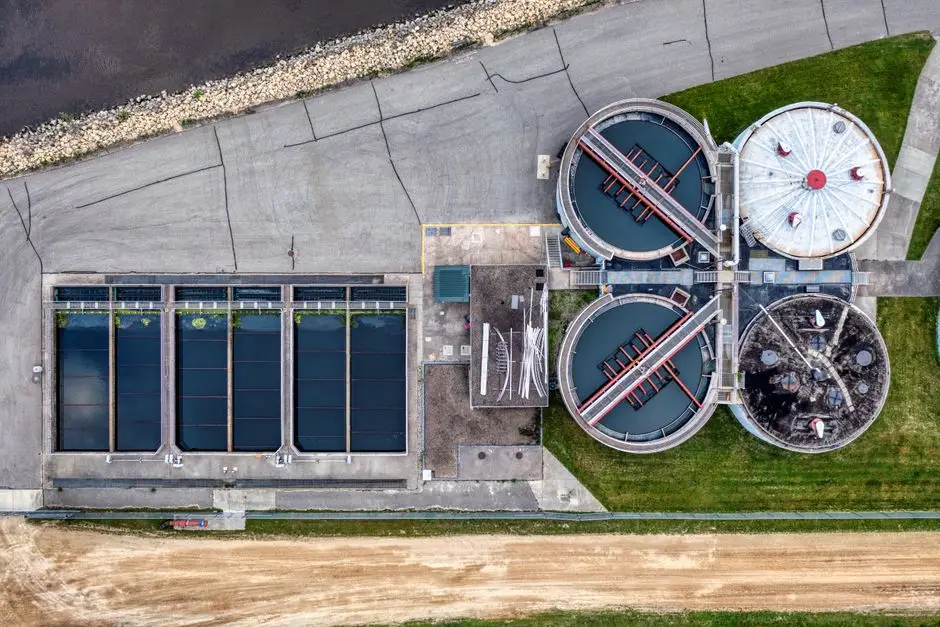
The WSZ is a compact biological package for decentralized service, whereas the MBR adds membrane separation for projects that need a tighter solids barrier or a broader packaged flow range.
| Selection factor | WSZ underground package | MBR system |
|---|---|---|
| Treatment train | Anoxic/aerobic contact oxidation, sedimentation and disinfection | Activated sludge with submerged PVDF membrane filtration |
| Catalog flow range | 1–80 m³/h | 10–2,000 m³/day |
| Installation | Buried below grade with landscaping above; trailer mounting is possible | Footprint stated as 60% smaller than conventional systems |
| Filtration | Not specified as membrane filtration | Below 1 μm |
| Operating proposition | Fully automated and stated to require no operator | Requires membrane cleaning and replacement management |
| Best fit | Compact decentralized installation and integrated treatment | Membrane separation, reuse objectives or larger packaged flows |
The catalog underground WSZ sewage treatment plant combines anoxic/aerobic biological contact oxidation, sedimentation and disinfection in one buried package. Its verified flow range is 1–80 m³/h. It is fully automated, requires no operator according to the HydropureWater verified product catalog, and can be installed below grade with landscaping above or mounted on a trailer for mobile deployment.
The integrated MBR wastewater treatment system combines activated sludge with submerged PVDF membrane filtration. Its catalog range is 10–2,000 m³/day, with filtration below 1 μm and a stated footprint 60% smaller than conventional systems.
Use WSZ when compact installation, integrated treatment and decentralized domestic service are the controlling objectives. Use MBR when membrane separation, higher-quality reuse objectives or a larger flow range justify the additional process complexity. Filtration below 1 μm is not proof of regulatory reuse compliance; the full treatment train, disinfection, monitoring and permit govern acceptance.
Build a Treatment Train That Can Handle the Real Influent
A biological package is only one part of the treatment train, and the correct sequence is headworks → equalization or flow management → biological treatment → settling or membrane separation → disinfection → sludge handling or disposal.
Suspended solids, rags, plastics and fibrous debris can interfere with pumps and biological processes. The GX rotary mechanical bar screen is designed to remove these materials before they reach the rest of the plant.
Oil, grease, suspended solids and colloidal matter require a different pretreatment decision. The DAF pretreatment system handles 4–300 m³/h and is intended for those contaminants; influent characterization must support its inclusion.
Disinfection is a separate procurement decision where on-site generation is required. The chlorine dioxide generator range extends from manual 50 g/h units to fully automated 20,000 g/h equipment, according to the supplied HydropureWater catalog information. The selected dose, contact arrangement and monitoring method must fit the final treatment and reuse requirements.
Combined sewers and premises with variable wastewater flow also require a defined hydraulic response. Equalization and bypass control should be resolved before biological capacity is fixed to ensure the package does not receive a flow or contaminant load outside the confirmed design basis.
Verify Installation, Automation and Lifecycle Requirements
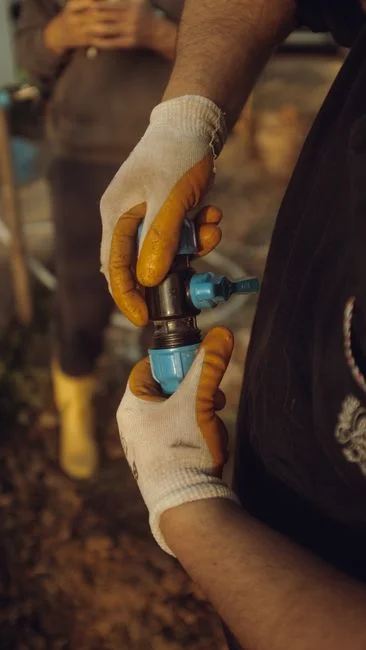
A buried treatment system remains a civil and operational project, not a container placed in an excavation.
Before ordering the buried A/O treatment plant, confirm soil conditions, groundwater, excavation access, inlet and outlet connections, odor control, bypass provisions and the space available for landscaping. These inputs affect both installation feasibility and the complete installed scope.
Specify how the controls start and stop the system, respond to high-flow conditions and handle power or equipment faults. Identify which alarms need local indication and which require remote notification. “No operator required” does not remove the need for alarm ownership, inspection and corrective response.
Request the supplier to confirm the operating range against the design horizon and explain how incoming industrial wastewater is excluded, equalized or treated separately. A domestic sewage treatment system should not accept an industrial loading assumption without characterization.
Lifecycle documentation should cover membrane cleaning or replacement where applicable, biological media maintenance, disinfection service intervals, spare parts and remote-support responsibilities. The supplied 2026 Puebla municipal benchmark reports energy at 40–55% of operating expenditure and specific consumption of 0.35–0.55 kWh/m³. These are municipal-planning benchmarks, not guarantees for a domestic package; compare them with packaged sewage treatment selection for housing and the project-specific energy demand.
Use a Seven-Step Selection and Procurement Framework
A defensible domestic wastewater package plant decision follows the same sequence as a larger procurement: establish the design basis, define the receiving route, then compare process and lifecycle scope.
- Document average and peak flows, occupancy patterns, wastewater characteristics and industrial contaminants.
- Define the discharge or reuse destination and obtain the applicable permit and sewer-discharge conditions.
- Calculate treatment capacity from the design peak rather than average daily flow alone.
- Select the treatment process, then confirm headworks, equalization, disinfection and sludge handling.
- Compare the installed scope, including civil works, installation, commissioning, controls, utilities, maintenance, consumables and sludge disposal.
- Require a performance guarantee tied to the confirmed design basis and a delivery, installation and commissioning schedule.
- Obtain lifecycle documentation and verify the named local service provider.
| Proposal item | Information to request before comparison |
|---|---|
| Capacity | Confirmed average and peak flow, design horizon and excluded loads |
| Performance | Effluent guarantees tied to the permit and reuse destination |
| Installed scope | Civil works, utilities, connections, controls, commissioning and excluded items |
| Lifecycle | Maintenance, consumables, membrane or media replacement, sludge handling and service coverage |
| Commercial | Price basis, delivery schedule, installation responsibility, warranty and local support |
Equipment price alone omits the costs that often determine project viability. The comparison should also cover installation and commissioning, utilities, maintenance, consumables and sludge disposal. For projects with unusual industrial inputs, consult the available specialized wastewater treatment in Mexico before accepting a domestic process basis.
Frequently Asked Questions
How much does domestic sewage treatment cost in Puebla?
No defensible project price can be given without peak flow, treatment objective, installation conditions and the required scope. Request an itemized quotation covering equipment, civil works, connections, commissioning, controls, utilities, maintenance, consumables and sludge disposal; then compare lifecycle obligations rather than the package price alone.
Should I choose a WSZ or an MBR for a small facility?
Choose WSZ where compact buried installation and integrated biological treatment are priorities within its 1–80 m³/h verified range. Choose MBR where membrane separation, the 10–2,000 m³/day catalog range or a more demanding reuse objective justifies added maintenance. Confirm the selection against peak flow and the permitted effluent specification.
What site information does a buried treatment plant require?
Provide soil and groundwater information, excavation access, inlet and outlet connection details, odor-control requirements, bypass arrangements and available landscaping space. For a combined sewer or variable flows, also document the proposed equalization and high-flow response.
How do I verify a wastewater equipment supplier before ordering?
Ask for the confirmed design flow range, performance guarantee, excluded industrial loads, delivery and commissioning schedule, warranty, spare-parts plan and named local service provider. Verify that the proposed guarantee addresses the actual effluent destination and permit conditions, rather than relying only on filtration performance.