
Determine Which Limits Control the Bryan Sewer Discharge
Mining and metals plants near Bryan generally meet sewer-discharge requirements through a pretreatment train designed around the discharging POTW’s rules, applicable categorical standards, and site-specific influent. EPA defines local limits as site-specific numeric or narrative discharge limits imposed at the industrial user’s point of connection; they may also be stricter than federal categorical limits. A practical train equalizes variable flows, controls pH, removes metals and solids through precipitation plus clarification or flotation, filters residual particles, and dewaterens the resulting sludge. Final equipment selection should follow representative sampling, jar tests, and confirmation of the specific POTW permit—not a generic treatment template.
The legal path begins by distinguishing a direct discharge to waters of the United States from an indirect discharge through a POTW collection system. For an indirect discharge, 40 CFR Part 403 establishes the pretreatment framework. EPA defines pretreatment standards as pollutant discharge limits applying to industrial users under 40 CFR 403.3(j), while pretreatment requirements also encompass substantive and procedural obligations. These are not merely treatment targets; they determine what must be demonstrated, monitored, reported, and authorized before discharge.
EPA states that POTW local limits are site-specific and may be numeric or narrative effluent limits, including best management practices. EPA identifies 40 CFR Part 403.5(c) as the provision under which qualifying POTWs must develop local limits. POTWs impose local limits at the end-of-pipe discharge from an industrial user—meaning the point of connection to the POTW collection system. A buyer therefore needs the current sewer-use ordinance, industrial-user pretreatment permit, discharge permit, monitoring requirements, and applicable categorical determination from the receiving POTW and the plant’s compliance records.
| Requirement or reference | Engineering meaning for the Bryan project | Status before design |
|---|---|---|
| 40 CFR Part 403 | Federal pretreatment framework for indirect industrial discharges | Confirm permit application and POTW enforcement terms |
| 40 CFR Part 403.3(j) | Definition of pretreatment standards as pollutant discharge limits for industrial users | Use as the regulatory screening framework |
| 40 CFR Part 403.5(c) | Provision identified by EPA for POTW development of local limits | Obtain the adopted POTW limits |
| 40 CFR Part 437 | Ore mining and dressing categorical standards | Use only if the receiving POTW determines the applicable subpart |
| 40 CFR Part 433 | Metal finishing categorical standards | Use only if the receiving POTW determines the applicable subpart |
| Bryan-area POTW requirements | Potentially controlling local limits, monitoring, narrative conditions, and BMPs | Must be obtained in writing; not established by this article |
Use 40 CFR Part 437 for ore mining and dressing and 40 CFR Part 433 for metal finishing as screening references only. Do not assume a Bryan-area facility falls under both standards. The relevant mining wastewater pretreatment guide for local sewer limits and metal-plant sewer pretreatment compliance guide provide sector context, but neither establishes the controlling permit for this site.
Characterize Each Waste Stream Before Setting Equipment Goals
Source-by-source characterization must precede equipment sizing because the controlling pollutant may come from a small, intermittent stream rather than the plant’s average discharge. Build a sampling plan covering process water, contact water, runoff, floor washdown, spent solutions, sludge-dewatering filtrate, and every segregated stream that will enter the sewer connection. For each stream, document flow contribution, variability, constituent concentrations, sampling frequency, and compatibility with downstream biological or chemical processes.
The analytical scope should include pH, flow, TSS, oil and grease where relevant, and the metals and chemical constituents identified by the POTW permit and categorical review. Do not rely only on a monthly composite average. Short-duration samples and recurring maxima are needed to capture batch dumps, shift changes, storm or runoff events, and slug loads that could upset the treatment train or the receiving POTW.
The OSMRE final report issued June 30, 2023, provides useful acidity context. The mine-drainage sources studied had pH values of 3.13–4.58. Batch mixtures containing 10% mine drainage had pH ranges of 7.44–8.27 two hours after mixing, while 40% mixtures ranged from 6.66–7.36. Those research values show why acidity, alkalinity, and stream blending require site testing. They do not establish Bryan influent chemistry, an acceptable blending ratio, or a treatment target.
| Characterization activity | Required record | Decision enabled |
|---|---|---|
| Stream inventory and flow measurement | Continuous and event flow by source | Equalization and peak-demand basis |
| Representative laboratory sampling | pH, flow, TSS, relevant oil and grease, permit- and category-identified analytes | Pollutant loading and treatment objectives |
| Short-duration and batch sampling | Recurring maxima, dump events, runoff, shift changes, slug loads | Operational control and fail-safe requirements |
| Alkalinity and blending study | Acidity, alkalinity, pH response, and constituent behavior after mixing | Whether equalization or neutralization must precede other treatment |
| Compatibility review | Effects on downstream biological, chemical, filtration, and sludge processes | Pretreatment boundary and permit conditions |
Use the resulting dataset to set mass and concentration objectives, not merely equipment names. If a stream contains chelants, high alkalinity, oil, or fluctuating dissolved metals, test it separately before combining it with the main flow. The treating plant should quantify each stream’s flow contribution, constituent variability, and compatibility with downstream processes before the train is finalized.
Build a Pretreatment Train Around the Failure Mode
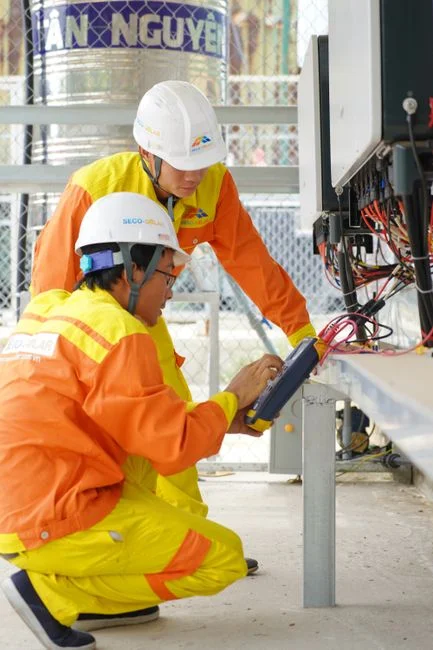
Equalization comes first because variable flow and batch spikes can overload every downstream stage. Size it from measured flow behavior, available retention time, and the consequences of a discharge exceedance; a generic basin rule does not establish compliance capacity. After equalization, control pH before metals-removal chemistry because precipitation performance depends on chemical form and pH. The PLC-controlled chemical dosing for pH and metals precipitation should be specified around the dosing sequence, interlocks, alarms, and verified reagent demand—not simply as a pump package.
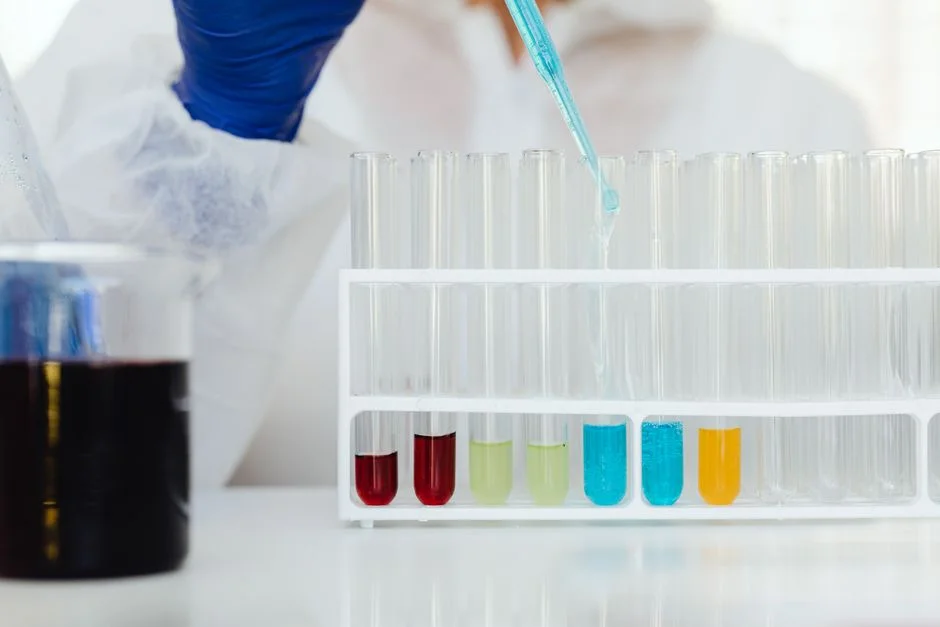
Keep two removal functions separate. Dissolved metals require precipitation chemistry, while suspended solids, oil and grease, and colloidal material require a physical separation stage. A jar test should identify the pH, reagent dose, mixing conditions, settling behavior, and residual soluble metals for the actual wastewater. The HydropureWater mining reference recommends jar testing every site because chelants such as EDTA, citric acid, and ammonia can bind metals and impair hydroxide precipitation.
For physical separation, DAF is appropriate where oil, grease, fine solids, or colloidal material must be removed. The industrial DAF system for mining wastewater solids and colloids uses skimming to separate floated material. A lamella clarifier is another option where compact equipment and sludge thickening are priorities; the high-efficiency sedimentation tank specification states surface loading rates of 20–40 m/h and reports chemical consumption reduced by up to 30% under its stated product conditions. These are product-screening values, not Bryan design criteria.
| Stage | Failure mode addressed | Design or performance basis |
|---|---|---|
| Equalization | Variable flow, batch dumps, short-duration concentration spikes | Measured flow record and event characterization |
| pH control and precipitation | Dissolved metals; unfavorable chemical species | Site jar tests, reagent demand, residual-metal results |
| DAF or lamella clarification | Suspended solids, colloids, oil and grease, precipitated solids | Representative solids loading and required effluent quality |
| Final filtration | Residual particles exceeding permit or collection-system sensitivity | Clarifier performance data and downstream risk assessment |
| Sludge dewatering | High-volume wet precipitate handling | Solids characterization and approved disposal route |
Use categorical values only with their stated scope. The HydropureWater mining reference reports Part 437 zinc limits of 1.0 mg/L daily maximum and 0.5 mg/L monthly average. It also reports Part 433 copper limits of 3.38 mg/L daily maximum and 2.07 mg/L monthly average, and total chromium limits of 2.77 mg/L daily maximum and 1.71 mg/L monthly average. These figures are screening references from a commercial mining reference, not verified Bryan permit conditions. The receiving POTW’s applicable determination and limits control the design.
Add filtration when the permit, solids profile, or sensitivity of the collection system requires more reliable separation than the selected clarifier can provide. Treat sludge handling as part of pretreatment performance: route precipitated solids to dewatering, then determine the cake’s disposal pathway from its waste characterization and applicable requirements. Dewatering reduces hauling volume but does not itself establish disposal eligibility.
Choose DAF, Lamella Clarification, or Membrane Treatment
DAF, lamella clarification, and ultrafiltration solve different failure modes, so equipment choice should follow the contaminant and required separation. DAF is the stronger candidate when the wastewater carries significant oil, grease, fine colloidal solids, or floatable material. HydropureWater describes DAF as removing suspended solids, FOG, oil and grease, and colloidal matter through automatic skimming. That makes it a screening candidate, not proof of performance on site wastewater.
Lamella clarification is relevant when compact sludge thickening and solids separation are the primary objectives. HydropureWater states a surface loading range of 20–40 m/h for its lamella product and chemical consumption reduced by up to 30% under its stated conditions. Confirm those claims against the proposed feed, solids loading, chemicals, sludge characteristics, and required effluent quality.
UF is appropriate when fine-particle removal or protection of a downstream process justifies membrane separation. HydropureWater’s hollow-fiber UF systems span 2,000–40,000 L/h, use 0.03 μm PVDF membranes, accept up to 300 ppm turbidity, and include automatic backwash and air scour. The LiqTech mining reference identifies membrane filtration as useful for suspended solids, organic compounds, and inorganic contaminants including heavy metals, but it also states that mining systems must be customized to capacity and wastewater composition. Neither reference supports assuming that UF alone resolves dissolved-metal loading.
| Equipment | Primary role | Best screening condition | Critical verification |
|---|---|---|---|
| DAF | Remove suspended solids, oil and grease, and colloidal material by flotation and skimming | Significant floatables, oil, grease, or fine solids | Representative feed performance and sludge float characteristics |
| Lamella clarifier | Separate solids in a compact clarifier and support sludge thickening | Solids separation and footprint are primary objectives | Hydraulic loading, floc chemistry, solids recovery, and sludge handling |
| UF | Fine-particle separation and downstream-process protection | Required particle barrier justifies membrane treatment | Membrane compatibility, pretreatment, cleaning, and guaranteed flux |
Ask vendors to define the guaranteed duty: flow range, influent limits, product-water or sewer-discharge quality, availability, and test protocol. Confirm feed-water chemistry, flow variability, solids loading, chemical demand, footprint, controls, utilities, and maintenance requirements against the representative dataset. A rated capacity without a defined feed envelope is not a usable guarantee.
Close the Loop with Sludge, Monitoring, and Compliance Records
Dewater precipitation sludge as a designed part of the treatment train, not an accessory purchase. HydropureWater’s plate and frame filter press line covers filtration areas from 1 m² to 500 m² and offers manual, hydraulic, or fully automatic PLC-controlled operation. The plate and frame filter press for metals-precipitation sludge should be selected against measured solids concentration, sludge chemistry, batch or continuous generation, filtrate-return implications, and the required cake condition.
Define the cake-disposal route during design using the site’s waste characterization and applicable requirements. Dewatering changes mass and volume; it does not establish that the cake is nonhazardous or approved for a particular landfill, reclamation process, or disposal contractor’s facility.
Specify continuous pH and flow monitoring where the train depends on consistent operation. Critical chemical dosing controls, interlocks, high-level alarms, power-failure provisions, and remote alarms should correspond to the failure modes identified during characterization and jar testing. The automatic chemical dosing system should generate auditable operating records rather than only automatic setpoints.
Align sampling locations, analytical methods, averaging periods, and narrative or BMP conditions with the POTW permit and industrial-user agreement. Retain influent, intermediate-stage, final-effluent, chemical-use, alarm, flow, and sludge-dewatering records. The operating file should let an engineer reconstruct how each discharge was produced and show that the treatment train remained within its verified operating envelope.
Use a Pretreatment Procurement Checklist
Attach the POTW permit, sewer-use ordinance, categorical determination, source-by-source wastewater data, and peak-flow information to the request for proposal. Require each bidder to state its treatment objective, feed-water envelope, flow range, discharge-quality guarantee, chemical assumptions, reject-management plan, controls, utilities, and required civil work. Require pilot or jar-test evidence when chemistry, flow, or scaling is uncertain; the LiqTech reference specifically states that mining filtration systems are customized to capacity and wastewater composition.
| Procurement item | Required response | Compliance risk addressed |
|---|---|---|
| Applicable requirements | Permit, ordinance, categorical determination, monitoring conditions | Designing to the wrong limit |
| Design basis | Source flows, maxima, chemistry, operating envelope | Undersized or mismatched equipment |
| Performance guarantee | Defined feed, duty, product or discharge quality, and test method | Capacity claims without operating conditions |
| Operating costs | Chemicals, energy, sludge, labor, maintenance, monitoring | Comparing purchase price with incomplete lifecycle cost |
| Site integration | Controls, utilities, civil interfaces, alarms, maintenance | Installed-system operability |
Separate purchase price from reagent use, sludge handling, energy, monitoring, operator labor, maintenance, and contingency capacity. Make final selection conditional on verification of the controlling Bryan-area permit requirements and demonstration of the proposed performance envelope. The metal-plant sewer pretreatment compliance guide can support sector review, but it cannot replace project-specific permit evidence.
Frequently Asked Questions
How much does a mining wastewater pretreatment system cost?
The supplied research does not provide a valid Bryan-area project price. Request a cost build-up based on measured peak and average flow, wastewater analysis, treatment objectives, civil work, chemicals, sludge handling, controls, monitoring, utilities, and installation conditions. Separate equipment purchase price from lifecycle operating costs so bids remain comparable.
Should a mining plant choose DAF, a lamella clarifier, or UF?
Choose according to contaminant type and required separation. DAF targets suspended solids, FOG, oil and grease, and colloidal material; lamella clarification supports solids separation and compact sludge thickening; UF provides fine-particle removal before downstream processes. Confirm the choice with representative wastewater testing and the controlling discharge requirement.
What must be confirmed before ordering a wastewater treatment skid near Bryan?
Obtain the current POTW permit, sewer-use ordinance, categorical determination, source wastewater characterization, peak-flow basis, operating envelope, performance guarantee, sludge route, and site integration details. A vendor should identify the feed conditions under which its guarantee applies and the test protocol used to demonstrate it.
Can mine drainage be sent directly to the municipal wastewater plant?
Only with POTW approval and evidence that the addition will not disrupt treatment, sludge handling, or permit compliance. The OSMRE final report issued June 30, 2023, studied mine-drainage co-treatment but identified increased effluent iron loading, lower pH, and unresolved full-scale sludge-disposal questions as potential effects.
What evidence demonstrates compliance before a sewer discharge?
Maintain a discharge-specific file linking representative influent data, treatment operating records, chemical and flow records, final-effluent analytical results, applicable averaging periods, and sludge-dewatering records. The evidence should connect the sampled discharge to the treatment train’s verified operating envelope and the controlling permit condition.
Related Equipment
- industrial DAF system for mining wastewater solids and colloids — specifications, capacity range, and technical data