When IFAS Is the Right Fit for Shopping Mall Wastewater
IFAS can treat shopping mall wastewater by combining suspended activated sludge with microorganisms attached to moving carrier media inside an aerobic reactor. The attached biofilm increases active biomass, while the mixed liquor continues handling soluble organic matter and denitrification. A 2025 ScienceDirect review reports municipal IFAS effluent COD of 12.2–36.7 mg/L, NH4+-N of 0.1–3.9 mg/L, total nitrogen of 1.4–15.2 mg/L and total phosphorus of 0.26–2.4 mg/L, but these are literature ranges rather than guarantees. For malls, successful design depends on characterizing daily flow variation, food-service FOG, suspended solids and cleaning chemicals before selecting IFAS and confirming that conventional headworks can protect the biological process.
Integrated fixed-film activated sludge is not a substitute for headworks. It is a biological process in which suspended sludge and attached biofilm operate together in the same reactor. The August 2025 ScienceDirect review identifies this biofilm–sludge synergy as a mechanism for increasing biomass, supporting denitrification and improving resistance to shock loads. It does not establish that carriers protect the process from excessive grease, solids or inhibitory chemicals.
A mall may be a suitable application when its discharge is predominantly domestic-strength sewage with some food-service wastewater and the sewer and pretreatment train can handle variable flows, FOG, screenings and cleaning practices. The decision has three paths:
- Retrofit activated sludge where reactor volume, aeration and solids separation can be upgraded.
- Build a new IFAS train where the biological stage must be compact or the project requires simultaneous attached- and suspended-growth operation.
- Compare IFAS with DAF-centered pretreatment, MBR or a packaged sewage-treatment route where physical removal, footprint or integration is decisive.
Final selection depends on measured wastewater characteristics, discharge destination, reuse objectives and applicable local requirements. The supplied research contains no universal mall effluent limit. For industrial comparison points, see IFAS design for industrial wastewater.
Build a Shopping Mall Wastewater Characterization Plan
IFAS sizing should begin with an hourly and daily pollutant mass balance, not mall floor area or visitor numbers. The design team should sample representative weekday and weekend periods, including trading peaks, operating hours and low-flow periods. The supplied research does not specify a universal sampling count, so the team should establish a statistically defensible campaign and document each sample’s time, occupancy and tenant activity.
Map food courts and food-preparation areas separately from washrooms, cleaning rooms, plant rooms, retail process drains and cooling-water connections. Record cleaning-chemical practices and prohibited-drain practices because the attached and suspended microbial populations may be exposed to substances that affect settleability, microbial activity or aerobic treatment.
| Parameter to establish | Decision use | Record with each sample |
|---|---|---|
| Flow | Reactor, equalization and pretreatment hydraulic loading | Date, time, operating condition and tenant activity |
| Temperature and pH | Process suitability and chemical-dosing controls | Sample location and analytical method |
| COD and BOD | Organic mass loading | Total and soluble fractions where relevant |
| TSS | Settling, filtration and solids handling | Coarse solids or screenings observations |
| Ammonia and total nitrogen | Nitrification and denitrification basis | Time of day and operating period |
| Total phosphorus | Biological phosphorus removal assessment | Tenant and discharge-stream context |
| Oil and grease, surfactants and conductivity | FOG and cleaning-chemical risk assessment | Source area, including food court where applicable |
Obtain the sewer discharge conditions, pretreatment requirements, permitted reuse criteria and local authority rules before selecting equipment. Do not convert the review’s municipal literature ranges into permit limits. Assess a DAF system for mall wastewater pretreatment only after measuring FOG, floatables and solids; the broader comparison in DAF versus clarifier guidance provides physical-treatment context, not a mall design basis.
How IFAS Removes Organic Matter and Nutrients

IFAS combines two active biological populations: suspended activated sludge handles soluble biodegradable material and can participate in pre-denitrification, while carrier media provide a surface for attached biofilm. According to the August 2025 ScienceDirect review, the thickness of that biofilm creates oxygen and nutrient gradients, dividing the carrier into aerobic, anoxic and anaerobic microenvironments. These zones can support diverse microbial communities and multiple nitrogen-removal pathways.
The same review reports that extracellular polymeric substances and quorum sensing support biofilm stability and regulate functional microbial communities. These are biological mechanisms, not operator-set controls. The mall design should provide conditions that preserve biofilm attachment, carrier movement and the intended microbial community rather than attempt to manipulate those mechanisms directly.
IFAS is a process family, not one fixed configuration. The World Water Works process description places specialized bio-media in parts of existing aerobic zones, retains MLSS-based nitrate removal in a Modified Ludzack-Ettinger configuration and allows optional partial nitrification. It also describes an anaerobic selector as an option for biological phosphorus removal. A proposed mall system should therefore define its reactor zones, biomass inventory and nutrient-removal route rather than rely on the generic term “IFAS.”
| Literature scope | Reported effluent COD | Reported effluent NH4+-N | Reported effluent TN | Reported effluent TP |
|---|---|---|---|---|
| Municipal wastewater, IFAS configurations | 12.2–36.7 mg/L | 0.1–3.9 mg/L | 1.4–15.2 mg/L | 0.26–2.4 mg/L |
| Industrial wastewater, IFAS configurations | 35.8–892.9 mg/L | 1.5–37.6 mg/L | Not stated in supplied excerpt | Not stated in supplied excerpt |
These values are reported by the August 2025 ScienceDirect review across different configurations and influents. They are not mall design guarantees. The IFAS treatment for variable industrial wastewater guide illustrates why industrial variability cannot be transferred directly to a retail site, while comparing MBR and conventional activated sludge helps frame the biological-retrofit alternative.
Select Carriers and Engineer the IFAS Reactor
Carrier selection is a reactor-design issue, not a catalogue choice. The August 2025 ScienceDirect review identifies large specific surface area, high mechanical strength, rich pore structure, high roughness and durability as the conventional carrier criteria. These properties must be reconciled with mixing, aeration, media retention and sludge separation in the mall’s actual reactor.
Require each bidder to document carrier density, dimensions, material, mechanical strength, effective surface area and abrasion resistance. Also require a proposed fill arrangement, mixing or aeration approach, and an explanation of how carriers remain within the intended aerobic zone without escaping into the clarifier or downstream equipment.
| Supplier submission | What the buyer must verify |
|---|---|
| Carrier technical sheet | Material, dimensions, density, effective surface area, mechanical strength and abrasion resistance |
| Reactor layout | Fill volume, zoning, retention screens, withdrawal access and carrier movement |
| Aeration and mixing calculation | Expected oxygen transfer and mixing conditions at measured peak loads |
| Hydraulic profile | Actual peak flow, equalization performance, velocity and head loss |
| Performance basis | Design influent, reactor geometry, aeration performance and applicable discharge or reuse conditions |
The review identifies mass-transfer inefficiency, difficulty achieving full fluidization and constrained enrichment of functional microorganisms as limitations of larger conventional carriers. It also describes a high-concentration powder carrier bio-fluidized bed using micron-sized powder carriers and a fully fluidized dual-sludge-age system. Treat that derivative research process as a research basis, not an assumed shopping mall standard.
Require guarantees to be tied to the mall’s design influent, reactor geometry and aeration performance. Literature results from municipal or industrial installations cannot be transferred as project guarantees. For a site-constrained alternative, evaluate the underground WSZ sewage treatment package as a separate biological route rather than treating it as an IFAS configuration.
Protect IFAS with Mall-Appropriate Pretreatment
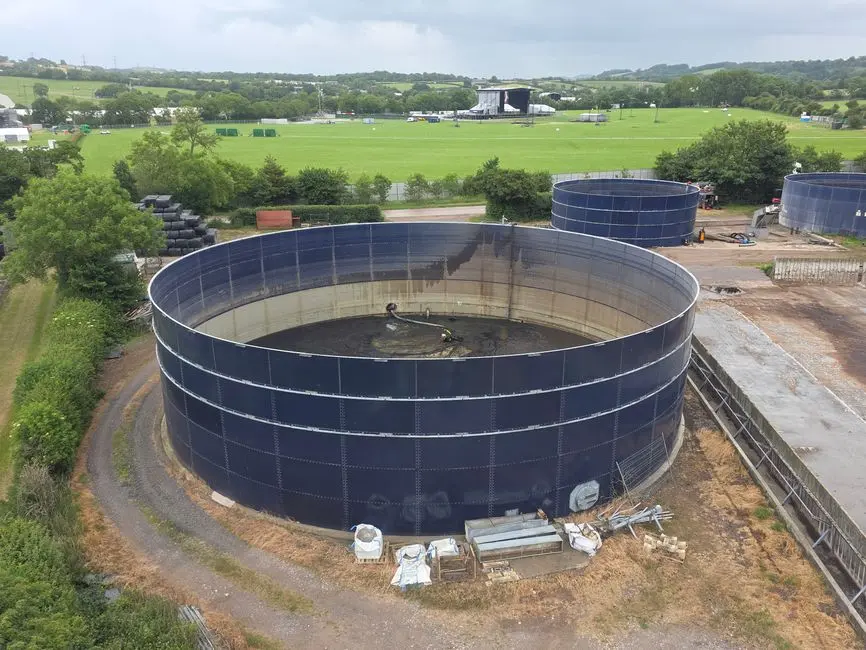
IFAS will not remove the mall’s need to control FOG, solids and chemical inputs before the biological stage. Screening, grease removal and solids capture should be specified from measured wastewater behavior and the selected reactor’s operating limitations.
The HydropureWater GX Series is described as a continuous-duty fine screen for municipal and industrial headworks that removes suspended solids, rags, plastics and fibrous debris before biological treatment. A GX Series rotary mechanical bar screen should therefore be assessed as a downstream-protection measure when the sewer survey confirms these materials are present.
The HydropureWater DAF System has a published capacity range of 4–300 m³/h and uses micro-bubble technology with automatic skimming for suspended solids, FOG, oil and grease and colloidal matter in industrial wastewater. A DAF system for mall wastewater pretreatment is a candidate only where measured FOG or floatables justify it; the product’s capacity range does not establish suitability for a particular mall.
| Protection step | Trigger for inclusion | Design evidence to request |
|---|---|---|
| Screening | Solids, plastics, rags or fibrous debris identified in the sewer survey | Peak flow, captured-material loading and screenings removal route |
| DAF or grease control | Measured FOG, floatables or colloidal load threatens biological operation | FOG mass loading, peak flow, capture performance and waste-removal frequency |
| Chemical dosing | Characterization identifies a need and the selected chemical is locally authorized | Dose basis, control logic, chemical inventory and residual handling |
| Equalization | Measured variation exceeds the selected process’s hydraulic tolerance | Peak-hour and peak-day mass balance, mixing and residence-time analysis |
The automatic chemical dosing system covers coagulants, flocculants, pH adjusters and specialty chemicals, but dosing should follow characterization rather than default practice. Size pretreatment from actual peak flow, FOG loading, solids capture and waste-removal frequency. As a compact alternative for projects needing integrated anoxic/aerobic treatment, sedimentation and disinfection, the WSZ package has a stated capacity of 1–80 m³/h and an underground installation option.
Compare IFAS With Competing Treatment Options
IFAS, DAF, MBR and packaged treatment solve different parts of the mall wastewater problem. The correct comparison begins with the required function: biological treatment, physical contaminant removal, solids separation, reuse quality, footprint or installation integration.
| Route | Primary function | Retrofit or footprint consideration | Information required for selection |
|---|---|---|---|
| IFAS | Combined suspended-growth and attached-growth biological treatment | Potential retrofit value where activated-sludge infrastructure exists; carrier, aeration and solids separation must be engineered together | Measured influent, carrier specification, reactor and aeration calculations, performance basis |
| DAF | Physical removal of suspended solids, FOG, oil and grease and colloidal matter | Often considered as pretreatment rather than a complete replacement for biological treatment | FOG and solids loading, peak flow, captured-waste handling and downstream process |
| MBR | Activated sludge combined with submerged PVDF membrane filtration | HydropureWater specifies filtration below 1 μm and a 60% smaller footprint than conventional systems; these are product specifications, not universal mall outcomes | Design influent, required effluent or reuse quality, membrane cleaning, solids handling and site constraints |
| WSZ packaged plant | Integrated anoxic/aerobic biological contact oxidation, sedimentation and disinfection | Fully automatic operation, 1–80 m³/h stated range and below-grade installation option | Verified mall influent, hydraulic profile, footprint, utilities, maintenance and discharge basis |
The MBR membrane bioreactor alternative should be evaluated where stringent solids separation or reuse requirements justify membrane operation and fouling control. Switching from lagoon to MBR treatment provides useful retrofit context, but a mall project requires its own hydraulic and reuse basis.
IFAS remains attractive where combined biomass and nutrient-removal capacity can be introduced into an activated-sludge system. DAF is stronger as a contaminant-removal pretreatment option. MBR is relevant where membrane separation is required. A packaged plant may simplify installation where its verified flow range and treatment objectives match the site. Do not calculate cost, return on investment or compliance savings without mall-specific capital, operating, site and tariff inputs.
Design Operations, Monitoring and Failure Prevention

Stable mall operation requires monitoring of both biological populations and the conditions that protect them. The August 2025 ScienceDirect review attributes IFAS performance to the joint contribution of attached and suspended microbial populations, including increased biomass and shock-load resistance. Treating carrier performance in isolation can therefore hide deterioration in settleability, mixing or suspended solids.
Monitor influent flow and mass loading, aeration performance, mixed-liquor solids, settleability, carrier condition, sludge production, nutrient results and the condition of collected FOG or screenings waste. Establish operating triggers from the plant’s measured baselines. The review’s literature ranges are not alarm settings.
- Confirm that flow, COD, ammonia, total nitrogen and total phosphorus remain inside the agreed design envelope.
- Check aeration and mixing for loss of carrier movement, excessive energy demand or uneven treatment.
- Inspect mixed-liquor settleability and solids separation before they reduce the effective reactor inventory.
- Examine carriers for wear, fouling, accumulation or loss, and record withdrawal or replacement decisions.
- Track FOG, screenings and sludge removal so waste storage does not become the operating bottleneck.
- Maintain aerators, pumps, controls and access routes under the supplier’s inspection schedule.
Reassess characterization after tenant mix changes, food-court expansion, changed cleaning chemicals or seasonal traffic shifts. A sedimentation tank can support solids separation within the selected process, but its performance must be verified against the actual solids inventory. Similarly, the membrane-fouling prevention guidance is relevant when IFAS is compared with MBR, not evidence that every IFAS train has the same fouling controls.
Keep monitoring, sampling and reporting requirements tied to the actual sewer agreement, discharge permit or reuse specification.
Use a Supplier Qualification and Procurement Checklist
A comparable bid should demonstrate the supplier’s process basis, design calculations and commercial assumptions for the mall’s wastewater. Require every proposal to state what was measured, what was assumed and what remains conditional.
| Submission | Minimum qualification check |
|---|---|
| Wastewater characterization | Representative sampling periods, tenant-stream mapping, analytical records and peak-day and peak-hour load basis |
| Process and equipment design | Flow diagram, reactor sizing calculations, carrier data, aeration calculations, hydraulic profile and solids balance |
| Pretreatment | Measured screening, FOG and solids basis; waste-removal route; chemical use and residual handling |
| Performance | Guarantee against the mall’s design influent and required discharge or reuse conditions; deviation procedure |
| Delivery and support | Commissioning tests, operator training, spare parts, maintenance support and comparable reference projects |
| Lifecycle inputs | Media replacement, aerator servicing, sludge and FOG disposal, energy, labor and chemical-use obligations |
Ask for references with similar wastewater characteristics and operating objectives. Generic residential or industrial references are not equivalent evidence. Require the supplier to identify commissioning acceptance tests, performance exclusions, start-up support and operator competency requirements.
Obtain capital and lifecycle cost inputs for media, aeration, pretreatment, civil works, waste disposal, energy, labor and maintenance before comparing commercial bids. The supplier qualification framework in the Kaohsiung supplier-selection guide with costs, compliance and checklist provides a broader procurement structure, but pricing and lead-time claims must come from a project-specific quotation.
Make final selection only after the sewer authority or relevant authority confirms applicable pretreatment and discharge requirements. A technically attractive IFAS proposal can still be unacceptable if it assumes FOG control, chemical compatibility or effluent quality that the site cannot sustain.
Frequently Asked Questions
How much does an IFAS system cost for a shopping mall?
The supplied research contains no defensible price for an IFAS installation serving a shopping mall. Request a capital breakdown covering reactor and civil works, carriers, aeration, screening, FOG or solids removal, controls, electrical works, commissioning and training. Also request operating inputs for energy, chemicals, labor, sludge or FOG disposal, media inspection, aerator servicing and eventual media replacement. Compare proposals using the same measured influent, discharge basis and site constraints; otherwise the bids may not describe equivalent systems.
What wastewater flow and quality data are needed to size IFAS for a mall?
Require representative flow and pollutant data across trading peaks, low-flow periods, weekdays and weekends, together with tenant-stream mapping. The minimum analytical set should address organic loading, solids, nitrogen, phosphorus, FOG, surfactants, conductivity, temperature and pH. Add peak-day and peak-hour mass loads, discharge or reuse criteria and operating records for tenant changes. The supplied research does not support sizing from mall floor area or visitor numbers alone.
How do I choose an IFAS supplier for a shopping mall project?
Choose only after checking a complete design basis: measured mall influent, reactor and aeration calculations, carrier data, solids balance, pretreatment limits, performance guarantees, commissioning tests, operator training and maintenance support. Request references for comparable wastewater and operating objectives rather than accepting generic references. Confirm whether the guarantee is tied to the mall’s design influent and required discharge or reuse conditions and how deviations are handled.
Is IFAS suitable for wastewater containing food-court grease and cleaning chemicals?
IFAS is suitable for the biological stage only after the FOG, solids and chemical inputs have been characterized and controlled. It does not remove the need for screening, grease management or other justified pretreatment. DAF may be considered where measured FOG or floatables justify physical removal, while chemical dosing should be introduced only where characterization demonstrates a need and local authorization permits the selected chemicals.
What are the main compliance risks when installing IFAS at a shopping mall?
The main risks are unverified influent assumptions, inadequate FOG or solids control, poor carrier fluidization, treatment outside the applicable sewer or discharge conditions, and treating published IFAS ranges as guaranteed project limits. Keep final monitoring and reporting tied to the actual permit or reuse specification. Obtain written confirmation from the relevant authority before accepting the supplier’s pretreatment and effluent assumptions.