How to Choose DAF or a Clarifier for Chemical Wastewater
Hungerford chemical factories should generally choose dissolved air flotation (DAF) when the wastewater contains significant oil, grease, FOG or fine solids that respond to chemical conditioning, especially where installation footprint matters. A clarifier is usually more economical when the main load consists of heavy, readily settling solids. The final choice must follow wastewater characterization and pilot testing: DAF floats conditioned particles with microbubbles, while a clarifier removes heavier solids by gravity sedimentation; a hybrid train can address both. Ecologix Systems’ commercial selection guide, “DAF vs. Clarifier: Industrial Wastewater Selection Guide,” concludes that wastewater analysis is necessary because selection depends on composition, treatment goals and operational constraints. For chemical manufacturing, treat that analysis as the start of a procurement screen, not as a paper exercise.
Characterize suspended solids, FOG, oil and grease, settleable solids, colloids, flow variability and chemical-conditioning needs separately. A single total-solids result does not reveal whether particles are buoyant, heavy or too small to separate reliably by either mechanism. Record average and peak production conditions, batch dumps and shutdown discharges, because those conditions determine hydraulic loading and equipment resilience.
Use a simple provisional rule: favor DAF for oily loads, FOG and conditioned fine solids; favor a clarifier for heavy, settleable solids; consider DAF followed by clarification when both fractions are significant. The decision must also satisfy the factory’s required effluent quality, available footprint, downstream treatment needs and sludge-disposal route. The broader DAF versus clarifier selection for petroleum wastewater provides another application-specific comparison.
DAF and Clarifier Performance by Wastewater Characteristic
DAF uses microbubbles to attach to oil droplets, grease, FOG and conditioned fine solids, floating them to the surface for skimming; a clarifier relies on gravity sedimentation to collect heavier solids at the bottom. This distinction should be matched to the contaminant rather than to generic equipment descriptions.
Chemical coagulation and flocculation can increase particle size and improve bubble contact before flotation. Clearwater Industries’ “Dissolved Air Flotation (DAF) Systems for Wastewater Treatment,” dated April 27, 2026, states that proper chemical conditioning is required for optimal DAF performance and explains that conditioning increases solids’ size and ability to contact microbubbles. A clarifier is more directly suited to material that settles under gravity, with settled sludge removed from the bottom.
| Wastewater characteristic | Stronger initial fit | Evidence or verification required |
|---|---|---|
| Oil, grease and FOG | DAF, with chemical conditioning where required | Measure the oil-and-grease fraction separately and verify flotation with representative samples |
| Heavy, settleable solids | Clarifier | Assess settleability, solids loading and resulting sludge volume |
| Fine solids and colloids | Conditioned DAF or a pilot-tested hybrid | Jar and pilot testing should establish conditioning, capture and residual solids |
| Emulsified oil | Neither technology can be selected from appearance alone | Test the actual emulsion and production-batch variability |
| Mixed oil and heavy-solids load | DAF followed by clarification | Verify each stage with stream analysis and pilot results |
Two application examples provide useful scale, not guarantees. In the food-processing example reported by Ecologix Systems, DAF achieved 95% removal of oils and greases on the same stream for which a clarifier achieved 70% efficiency. In its mining example, a clarifier reduced solids by 90% at lower costs where wastewater contained heavy sediment loads. Those figures apply only to the cited applications; they do not establish performance for a Hungerford chemical stream. Emulsified oil, fine colloids and batch-to-batch changes require jar or pilot verification. Where conditioning is part of the train, assess an automatic coagulant and flocculant dosing system against the chemicals actually used in production.
What Changes in Chemical Manufacturing Operations
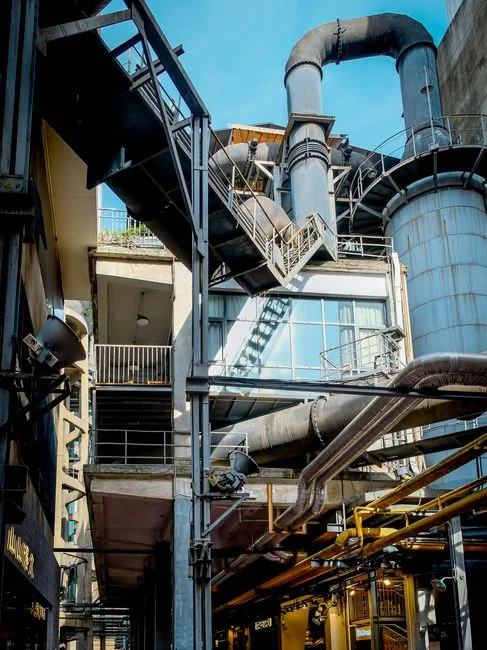
Chemical-manufacturing wastewater can change by formulation and production campaign, so the separator must be evaluated against the real hydraulic and contaminant profile rather than a single clean sample. Supply the supplier with average daily flow, peak flow, batch-dump volume, shutdown-discharge conditions and the production schedule. These inputs establish whether the unit can absorb short-duration loads or needs equalization, staged treatment or additional capacity.
Keep the analytical results separate: oil and grease, FOG, suspended solids, settleable solids and colloid behavior answer different questions. A nominal solids concentration does not distinguish a heavy mineral fraction from light process solids, and it does not establish whether the oil is free, emulsified or chemically stabilised. Sampling should cover representative operating periods rather than one discharge.
Chemical conditioning is part of the process design. Review coagulant and flocculant selection, mixing intensity, pH control, reagent storage and the properties and expected volume of the resulting sludge. Clearwater Industries’ April 27, 2026 guide states that DAF should be paired with proper chemical coagulation and flocculation for optimal performance. It also describes mixing and chemical conditioning as separate functions within the treatment train.
Plant constraints can change the result. Compare available floor area, utilities, operator availability, maintenance capability, noise, odour controls and sludge handling. A compact separator does not solve a hydraulic peak, and a clarifier does not automatically overcome chemical interference. Incompatible chemistry, variable emulsion stability and changing batch composition should be tested as variables during pilot work. The industrial DAF system for chemical wastewater and its automatic chemical dosing system should therefore be assessed as linked process equipment, not as an unsupported turnkey performance claim.
Operating Cost, Equipment Scope and Supplier Comparison
Clarifiers generally have lower operating costs, while DAF may be more cost-effective for specific contaminants such as oils, according to Ecologix Systems’ “DAF vs. Clarifier: Industrial Wastewater Selection Guide.” That is a direction-of-cost distinction, not a quotation. The research provides no verified installation price or total-cost-of-ownership figure for a Hungerford installation, so procurement should compare complete scopes without inventing a budget range.
| Procurement item | DAF comparison scope | Clarifier comparison scope |
|---|---|---|
| Core equipment | Flotation tank, microbubble generation, saturation or recycle system, skimming and sludge withdrawal | Basin, settling zone, sludge collection and withdrawal, mechanism and drive |
| Conditioning and pretreatment | Coagulation, flocculation, pH adjustment, mixing and reagent storage as required | Conditioning and any pretreatment needed for the tested solids fraction |
| Controls and site services | Instrumentation, controls, compressed air, power, utilities and installation access | Instrumentation, controls, power, utilities and installation access |
| Operating commitments | Chemical use, pump and compressor maintenance, wear parts and sludge handling | Mechanism and drive maintenance, wear parts and sludge handling |
Ask each bidder to separate vessel or skid cost, foundations and installation, electrical and compressed-air connections, chemical use, maintenance, wear parts, controls, operator training and sludge-disposal implications. A tank-only comparison will hide the cost of conditioning and solids handling. Clarifier operating cost may be lower for a heavy-solids duty, but the relevant comparison is whether DAF provides a better result for the oil or FOG fraction.
Materials must match the chemical service. Clearwater Industries’ April 27, 2026 DAF guide describes standard equipment as 304 stainless steel, with 316 stainless steel, polypropylene and other materials available on request. That is a procurement example, not a specification for every chemical stream. Require compatibility evidence for the actual wastewater and cleaning regime. A lamella clarifier for settleable solids should likewise be priced with its drive, controls and sludge system rather than as a tank alone.
A Factory Selection and Pilot-Test Workflow
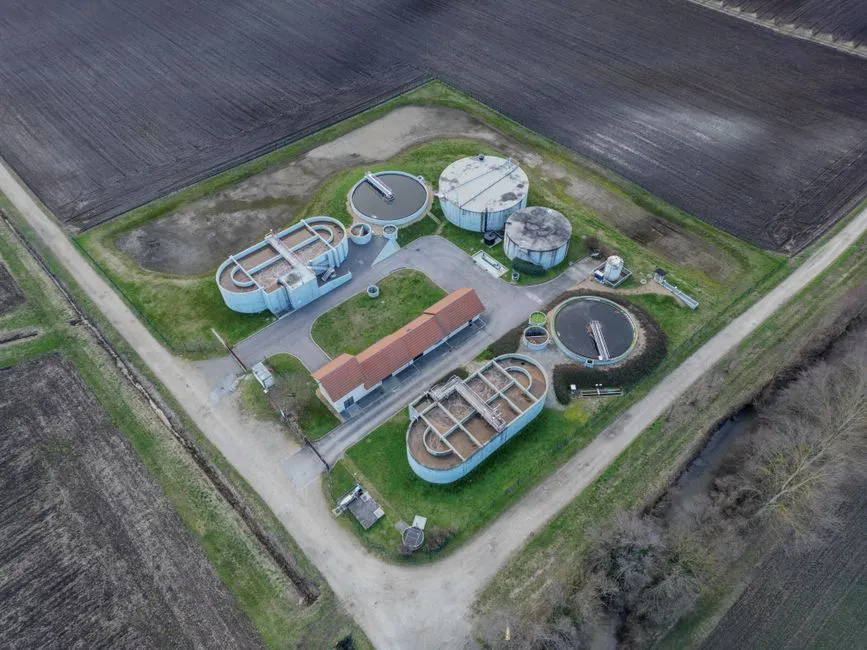
A controlled procurement sequence is more reliable than selecting from contaminant labels or a published removal percentage. Use the following path for the Hungerford site:
- Characterize the wastewater. Obtain representative samples covering normal production, peak periods, batch dumps and shutdown discharges. Include oil and grease, FOG, suspended solids, settleable solids, colloid behavior, pH and flow data. Ecologix Systems identifies wastewater analysis as the starting point for equipment selection.
- Define the treatment objective. Record the contaminant targets and the clarified-effluent quality required by the downstream treatment train or applicable consent.
- Screen both options. Compare DAF and clarification against the measured contaminants, footprint, utilities, chemical conditioning, operator availability and sludge route.
- Test the likely fit. For an oily or FOG-rich stream with fine solids, verify DAF with chemical conditioning. For heavy, readily settleable solids, evaluate clarifier removal, operating requirements and sludge production.
- Evaluate a hybrid where necessary. For a stream containing both oil that benefits from flotation and heavier solids suited to sedimentation, test DAF followed by clarification. Ecologix Systems confirms that the technologies can be used together.
- Size from verified data. Require the selected supplier to use the factory’s flow, solids, FOG and chemical-use data before final sizing. This sequence is consistent with the factory wastewater-system selection approach.
The pilot should test the actual production chemistry, not only synthetic water. Include representative concentrations and variability, candidate conditioning chemicals, mixing, expected sludge characteristics and the specified loading basis. If the results are sensitive to a production campaign, specify how the plant will adjust operation or equalize the stream. Pilot evidence establishes whether the provisional selection remains valid; it does not eliminate the need for a factory-specific treatment objective or operating plan.
HydropureWater DAF and Clarifier Options for the Selected Process
HydropureWater’s DAF system uses microbubble technology and automatic skimming to remove suspended solids, FOG, oil and grease and colloidal matter from industrial wastewater. Its published range covers 4–300 m³/h across 13 standard models, with applications listed for petrochemical, metalworking, food processing, pulp and paper and textile wastewater. These figures define the published catalog range; they do not establish suitability for a particular chemical wastewater stream or prove that one model will meet a specified target.
The industrial DAF system for chemical wastewater should be shortlisted where flotation is supported by the wastewater analysis and pilot results. Where the duty is principally heavy solids, HydropureWater’s high-efficiency sedimentation tank combines sludge recirculation, flocculation and inclined-plate separation in a compact clarifier-based arrangement. A lamella clarifier for settleable solids is therefore a candidate for the sedimentation stage, not evidence that one process fits every chemical stream.
Where the treatment train requires coagulant, flocculant, pH adjustment or other chemicals, assess an automatic coagulant and flocculant dosing system alongside the separator. Final selection and sizing depend on wastewater analysis, required performance, hydraulic conditions, available utilities, chemical compatibility, sludge handling and the outcome of application-specific testing. Catalog configurations establish what can be proposed; pilot evidence establishes what should be purchased.
Frequently Asked Questions
Which is cheaper: DAF or a clarifier for chemical wastewater?
Clarifiers generally cost less to operate, while DAF may be more cost-effective for targeted contaminants such as oils, according to Ecologix Systems’ “DAF vs. Clarifier: Industrial Wastewater Selection Guide.” No verified price or total-cost-of-ownership figure for a Hungerford installation was supplied. Ask each bidder to price equipment, installation, chemicals, utilities, maintenance, wear parts and sludge handling separately.
How should a Hungerford factory size DAF or a clarifier?
Require representative average and peak flows, production and batch-discharge schedules, oil-and-grease and FOG results, suspended-solids data, settleability information and a stated effluent objective. Then require the proposed process to be verified through jar or pilot testing using the actual stream. Final sizing should be based on those results and the specified hydraulic and contaminant loading basis.
When should DAF and clarification be used together?
Consider both when the stream contains oil or FOG that benefits from flotation alongside heavier solids suited to sedimentation. Ecologix Systems supports hybrid treatment for such complex streams. Test each stage separately so the downstream clarification duty reflects the actual residual solids leaving the DAF unit.
What information should a supplier provide before quotation and purchase?
Request representative wastewater analysis, average and peak flow, production-batch information, FOG and solids loading, chemical-conditioning requirements, utilities, footprint, materials, controls, sludge handling, maintenance scope and the application data supporting the proposed performance. Treat Ecologix Systems’ 95% versus 70% oil-and-grease comparison and 90% mining-solids result as application-specific examples, not guaranteed values for the Hungerford plant.