What IFAS Means for Commercial Laundry Wastewater
IFAS is a credible biological option for commercial laundry wastewater only after variable flows, detergents, surfactants, fats, fibers, sand, soil dust, and ammoniacal nitrogen are characterized and the wastewater is protected from biological upset. IFAS combines conventional activated sludge with specialized bio-media in aerobic zones, allowing slow-growing ammonia-oxidizing and nitrite-oxidizing bacteria to remain attached while mixed liquor handles biodegradable organics and pre-denitrification. It does not replace screening, equalization, fats and oils control, toxicity management, solids separation, or reuse polishing. The practical design sequence is equalization, source-controlled solids and FOG removal, any required chemical pretreatment, IFAS, clarification, disinfection, and optional UF or RO. The cited laundry study achieved 67.20% COD removal using B-EPS plus alum, but that result is chemical-treatment evidence—not IFAS performance.
IFAS, or integrated fixed-film activated sludge, differs from conventional activated sludge by adding media within selected aerobic zones. According to World Water Works, this supports slower-growing AOB/NOB biomass for ammonia removal, while mixed liquor suspended solids degrade BOD and nitrate in an MLE pre-denitrification step. The IFAS design guide for industrial wastewater provides general process context, but the supplied sources do not establish a universal laundry loading rate, detention time, or aeration rate.
That limitation matters because commercial laundry effluent is not a stable, soluble municipal wastewater. Fibers can foul pumps and membranes, free oil can interfere with settling and biological activity, and detergents or surfactants can inhibit microorganisms even when conventional BOD and COD measurements appear manageable. IFAS should therefore be evaluated as one barrier in a treatment train, not as a complete commercial laundry treatment system.
Why Laundry Wastewater Is a Difficult IFAS Feed
Research Square identifies surfactants, fats, detergents, sand, and soil dust as constituents of commercial laundry wastewater, while also discussing LAS and NPEO surfactants and excessive ammoniacal nitrogen. These contaminants affect different parts of the IFAS system: solids can damage equipment, surfactants can inhibit biology, oils can impair separation, and ammonia drives nitrification demand. A generic aerobic loading calculation cannot represent all of those failure modes.
The same Research Square study cites approximately 15 L of washing water per 1 kg of clothing and approximately 400 m³ of daily wastewater in the referenced commercial-laundry setting. Those figures establish the importance of water and contaminant management, but they are not design loads for another plant. Actual washing capacity, water consumption per cycle, recovery, discharge schedule, and production pattern must be measured at the site under evaluation.
The study collected 100 L of commercial laundry effluent at the laundry water outlet over 24 hours, in five 20 L buckets. That sampling approach demonstrates why a representative composite is preferable to one instantaneous grab sample. It does not mean that a 24-hour composite automatically captures every relevant operating condition. Sampling intervals should also identify wash-cycle starts, extraction or spin discharge, peak loading, downtime, and segregated dilute flows.
| Constituent or condition | Documented relevance | IFAS design implication |
|---|---|---|
| Surfactants, detergents, LAS and NPEOs | Identified in Research Square’s commercial-laundry context | Assess residual detergent, biodegradability and biological inhibition before biological sizing |
| Fats and oils | Identified as laundry wastewater contaminants | Determine whether source control and DAF are required before biology |
| Sand, soil dust, fibers and related solids | Sand and soil dust were identified by Research Square | Use measured debris characteristics to set screening and grit-control requirements |
| Excessive ammoniacal nitrogen | Highlighted as a commercial-laundry challenge | Establish the nitrogen-removal objective and oxygen demand before selecting media loading |
| Variable discharge | Wash and extraction discharges differ from an average daily flow | Design equalization around observed peaks, not an average alone |
Biodegradable BOD should not be confused with chemical compatibility. A wastewater may contain readily degradable organics while also carrying surfactant concentrations that upset a particular microbial community. Equalization reduces short-term shocks; toxicity or inhibition testing establishes whether the feed can sustain the intended biology.
Characterize the Wastewater Before Sizing IFAS
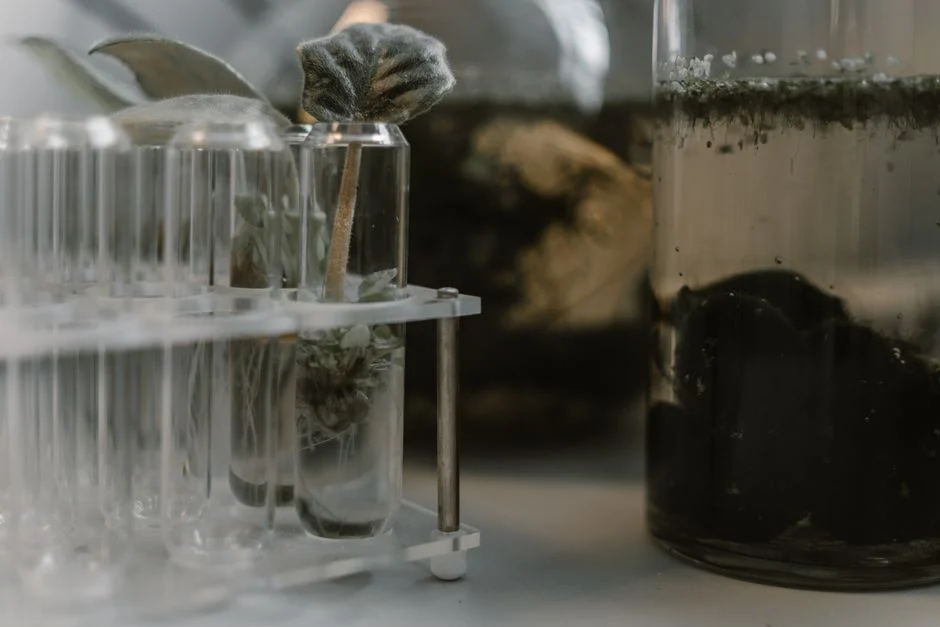
A defensible IFAS design starts with a production-representative sampling plan, not a catalog flow rate. Record total flow and operating state at suitable intervals through a representative day, then reconcile the measured discharge with laundry production, wash cycles, extraction or spin discharge, downtime, and any segregated dilute streams. The sampling frequency should be set from observed discharge behavior; the supplied research does not establish a universal interval.
Request the parameters measured in the Research Square study: pH, turbidity, conductivity, suspended solids, total solids, COD, total nitrogen, total phosphorus, and metals. Its protocol also analyzed NPEOs. For an IFAS basis, add residual detergent, LAS, toxicity or inhibition, alkalinity, and biodegradability. These additional checks are necessary because ordinary COD data may not reveal whether surfactants will impair nitrification or settling.
| Data group | Minimum buyer request | Decision supported |
|---|---|---|
| Hydraulic profile | Representative production-day flow, discharge peaks, wash states, downtime and dilute streams | Equalization volume, pretreatment peak capacity and biological feed continuity |
| Organics and solids | COD, BOD, suspended solids, total solids, oil and grease, turbidity | Biological loading, clarification, screening and chemical pretreatment |
| Nitrogen and alkalinity | Total nitrogen, ammonia, nitrification demand and alkalinity | Nitrification feasibility, oxygen demand and chemical consumption |
| Inhibitors | LAS, NPEOs, residual detergent, toxicity or inhibition and biodegradability | Compatibility of the selected biology and pretreatment requirement |
| Effluent and reuse | Discharge requirement or intended reuse quality, including heat-recovery and process constraints | Clarification, disinfection, UF, RO and acceptance criteria |
Define the destination before selecting the biological process. Discharge, process-water reuse, washing or extraction reuse, heat recovery, and near-reuse-quality water impose different requirements on residual solids, organics, salinity, surfactants, and microbial control. A generic “reuse” specification is not sufficient for equipment selection.
Request treatability or pilot evidence before accepting a budget. Chemical use, biological loading, cycle duration, and sludge production cannot be verified from flow and catalog capacity alone. Automatic chemical dosing for laundry wastewater pretreatment should follow jar testing and an assessment of chemical compatibility with the selected biological process.
Build a Laundry-Proof Treatment Train
Build the treatment train around contaminant-specific barriers. Source control and equalization come first: inspect detergent and chemical dosing, recover lint and textile waste at the laundry floor where practical, and use an equalization tank to blend wash-related peaks before biological treatment. The supplied research does not establish a universal equalization time or tank volume; both must follow the measured discharge profile.
Screening follows the measured debris. A rotary mechanical bar screen may be relevant where fibrous material is present, but aperture and hydraulic capacity must be checked against actual solids. For mechanical screening of commercial laundry wastewater, the buyer should obtain representative solids samples rather than select from screen description alone.
Use dissolved air flotation only when testing confirms that the removal barrier is justified. Measured free oil, grease, buoyant solids, or material that compromises settling may support DAF pretreatment for commercial laundry wastewater. HydropureWater’s DAF catalog covers 4–300 m³/h across 13 standard models, but that is an equipment-selection range—not a recommended laundry capacity. Actual flow, contaminant loading, and recovered-solids handling determine applicability.
Coagulation, flocculation, and chemical dosing should follow jar testing. Research Square reports optimized chemical treatment at pH 7 and a B-EPS-plus-alum combination of 0.6 g/L and 300 mg/L that removed 67.20% of COD from the sampled wastewater. The result demonstrates site-specific chemical pretreatment, not IFAS performance, and it is not a universal dosing recipe. The same study states that coagulant dose depends on wastewater properties.
Follow biology with solids separation. A clarifier must handle the selected wasting strategy and sludge characteristics; without site data, generic settling-area or loading values are not defensible. Add an UF system for laundry wastewater reuse where the application requires low suspended solids, bacteria removal, or protection of downstream reuse equipment. The supplied UF specification uses 0.03 micron PVDF membranes, accepts feed turbidity up to 300 ppm, and includes automatic backwash and air scour. Those limits must be checked against actual feed quality and the required product specification.
| Process position | Primary purpose | Design evidence required |
|---|---|---|
| Source control and equalization | Reduce batch peaks and stabilize biological feed | Production-day flow profile, batch chemistry and operating schedule |
| Screening and solids control | Remove fibers, lint, rags, plastics, sand and soil dust | Particle size, debris quantity, peak flow and recovered-waste handling |
| FOG or DAF pretreatment | Remove free oil, grease and buoyant solids where justified | Oil-and-grease testing, emulsification characteristics and solids loading |
| Chemical pretreatment | Remove or destabilize contaminants before biology | Jar tests, residual-inhibitor assessment and dose-control verification |
| IFAS and clarification | Remove biodegradable organics and, where required, nitrogen | Loading and treatability evidence, aeration design and solids inventory |
| Disinfection and polishing | Meet the specified reuse or process-water quality | Reuse destination, required water quality and membrane feed data |
Disinfection, UF, and RO depend on the reuse target and applicable health or process requirements. The supplied research does not establish universal commercial-laundry reuse limits.
Choose Between IFAS, SBR, and MBR
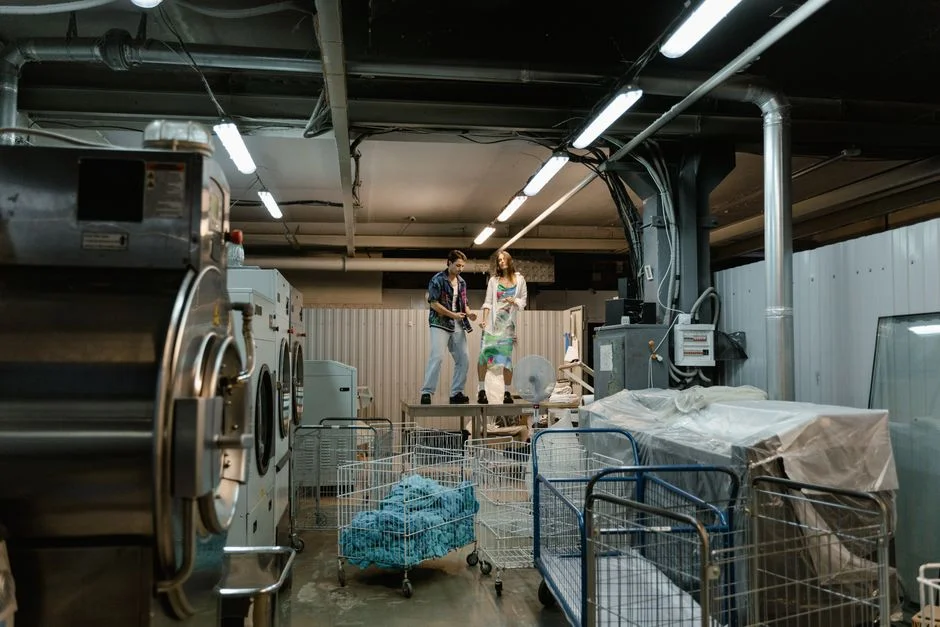
IFAS, SBR, and MBR can all provide biological treatment, but they organize the biological process differently. IFAS is generally continuous-flow and retains nitrifying biomass on media in aerobic zones while mixed liquor supports BOD removal and pre-denitrification. SBR operates in controlled fill, react, settle, and discharge cycles. MBR couples activated sludge with submerged membrane filtration, placing membrane solids separation inside the biological system.
The selection should follow the controlling constraint. IFAS may fit a continuous-flow site where ammonia control and aerobic-zone footprint are important. An SBR alternative for commercial laundry wastewater may fit intermittent discharge if pretreatment and cycle controls are properly designed. MBR may fit a project where the required effluent quality and available footprint justify membrane-based solids separation.
| Biological option | Principal strength | Principal constraint for laundry service | Best fit when |
|---|---|---|---|
| IFAS | Retains attached nitrifying biomass while mixed liquor supports organics removal and pre-denitrification | Requires a stable, compatible feed, aeration design, biofilm control and a clear solids-wasting plan | Continuous flow and ammonia-control needs justify added media |
| SBR | Controlled biological and settling phases can accommodate a designed fill-and-discharge pattern | Cycle behavior must tolerate laundry variability and meet downstream discharge or reuse demand | Batch or intermittent flow is central to the operating pattern |
| MBR | Couples activated sludge with submerged membrane filtration | Requires higher-quality feed, membrane maintenance and a defensible solids and cleaning plan | Footprint or reuse-quality requirements justify membrane solids separation |
| Clarifier plus UF or RO | Separates biological removal from reuse polishing | Requires reliable clarification, polishing pretreatment and membrane recovery systems | The objective is biological removal followed by defined reuse polishing |
HydropureWater’s MBR catalog covers 10–2,000 m³/day using submerged PVDF membranes. Those figures define catalog availability, not recommended laundry capacities. Likewise, the supplied evidence contains no direct IFAS-versus-SBR performance comparison for commercial laundry wastewater. Neither process should be presented as automatically superior.
A clarifier followed by UF or RO may be preferable when biological removal and reuse polishing are distinct objectives. The membrane then receives clarified biological effluent rather than replacing the clarification stage. This distinction should be reflected in guarantees, bypass provisions, cleaning requirements, and lifecycle cost.
Match IFAS to Aeration, Nutrient Removal, and Solids Handling
World Water Works describes an MLE configuration in which mixed liquor degrades nitrate during pre-denitrification, while media in aerobic zones support BOD removal and nitrification. An anaerobic selector can also be added to promote biological phosphorus removal. These are process options, not automatic additions to every laundry IFAS system; the required nutrient outcome and wasting strategy must justify them.
Require the supplier to define aeration demand, oxygen-transfer calculations, media fill fraction, mixing arrangement, biofilm control, solids inventory, and wasting strategy. The supplied sources provide no universal media loading, aeration rate, or laundry-specific detention time. A design based only on peak flow would omit the mass-loading and nitrification constraints that determine biological capacity.
Assess sludge generation and handling as part of the process design. Biological treatment produces residual solids, and laundry pretreatment may add captured fibers, oils, and chemical floc. The resulting waste characteristics affect clarifier performance, pumping, storage, and dewatering. A plate-frame filter press may be considered for compatible solids, while the filter-press system for laundry sludge should be evaluated against measured cake behavior rather than assumed from feed COD.
The sedimentation tank for IFAS solids separation must be reviewed as part of the biological and wasting strategy. Its surface loading, feed arrangement, sludge collection, and expected sludge properties require a project-specific basis. Without feed and pilot data, neither clarification nor dewatering capacity should be inferred from catalog information.
Verify Performance with Pilot and Acceptance Tests
Pilot the proposed treatment sequence with representative commercial laundry wastewater, not clean synthetic water. The pilot should preserve the relevant batch peaks, surfactant concentrations, solids characteristics, and discharge patterns that determine biological response. If continuous behavior cannot be represented, test multiple wastewater batches collected across the operating cycle.
Track COD removal, nitrification performance where required, suspended-solids separation, sludge production, chemical use, aeration demand, and response to wash-cycle variability. Compare the result with the stated effluent or reuse objective. For a combined clarifier–UF–RO train, verify the actual polishing sequence because membrane performance depends on upstream solids and chemistry.
Do not transfer the UF catalog limits directly into a project guarantee. The 0.03 micron PVDF configuration and 300 ppm turbidity acceptance should be validated against actual feed quality and the required product water. The UF system proposed for commercial laundry reuse should therefore be tested under site conditions before acceptance.
Before purchase, define commissioning criteria, controls scope, maintenance support, spare parts, guarantees, and performance-test methods. Compare total cost across civil works, pretreatment, aeration, chemicals, sludge handling, energy, membrane replacement or cleaning, and labor. A supplier guarantee is only meaningful if the feed basis, test method, sampling regime, and operating responsibilities are explicit.
Frequently Asked Questions
Can IFAS treat commercial laundry wastewater?
Yes, IFAS can form the biological core of a commercial laundry treatment train when the wastewater is compatible with biology and its peaks are controlled. The supplied research does not establish a universal IFAS loading rate, detention time, or aeration rate for laundry service. Characterization, equalization, screening, justified FOG removal, and any required chemical pretreatment precede biological sizing.
How should an IFAS system be sized?
Size the biological stage from representative flow and mass-loading data, not average daily flow alone. The buyer should obtain production-day hydraulics, COD and nitrogen loads, suspended solids, pH, alkalinity, surfactant and detergent data, toxicity or inhibition results, and the required effluent quality. Treatability or pilot evidence is needed to verify biological loading, chemical use, aeration demand, cycle behavior, and sludge production.
Does the project require DAF, UF, or MBR?
DAF is justified by measured free oil, grease, buoyant solids, or other material that needs flotation before biology. UF is a polishing and solids-barrier option for defined reuse or downstream-protection requirements. MBR combines activated sludge with membrane solids separation, while conventional IFAS requires a downstream clarification step. These functions are not interchangeable, and the evidence does not make any one of them mandatory for commercial laundry wastewater.
How much should an IFAS installation cost, and what should be included in supplier comparisons?
The supplied research provides no project-specific quotation, so a defensible price cannot be stated without flow, load, effluent and site data. Request itemized pricing for civil works, equalization, screening, FOG and chemical pretreatment, IFAS media and basins, aeration, clarification, controls, sludge handling, polishing where required, commissioning, and lifecycle operating costs.
What should a buyer check when selecting an IFAS supplier?
Check the process basis, reference conditions, guarantees, controls scope, aeration and media details, commissioning tests, maintenance assumptions and sludge-handling requirements. Require a total-cost comparison covering chemicals, energy, labor, membrane cleaning or replacement where applicable, and civil works. A buyer should also verify that the supplier has used site wastewater data or conducted a representative trial rather than sizing from catalog capacity alone.
Does the reported 67.20% COD removal prove IFAS performance?
No. The Research Square result came from a B-EPS-plus-alum combination of 0.6 g/L and 300 mg/L at pH 7 and was measured on sampled commercial laundry wastewater. It is site-specific evidence for chemical treatment and flocculation, not evidence that IFAS will achieve the same COD removal.