Which Rules Govern Sewer Discharge Near Pigeon?
Mining and metals plants near Pigeon meet sewer-discharge limits by identifying the receiving POTW, confirming its current sewer-use ordinance and industrial discharge permit, classifying the operation under the applicable categorical pretreatment standard, and demonstrating compliance through measured treatment and monitoring. EPA describes pretreatment limits and substantive or procedural requirements under 40 CFR Part 403 as enforceable by EPA, states, and local governments. Sewer pretreatment does not replace an NPDES permit for direct surface-water or stormwater outfalls. Because the supplied research does not identify Pigeon’s POTW or enforceable local values, no plant should size equipment until the permit documents and a measured 12-month influent characterization are obtained.
The governing document depends on where the treated water goes. A POTW with an approved pretreatment program is the control authority; where no approved program exists, the Approval Authority performs that role (EPA, “Pretreatment Standards and Requirements—Applicability,” 2026). The control authority identifies applicable standards and applies the most stringent requirement when several provisions govern the same industrial user.
EPA states that pretreatment requirements may be numeric limits, narrative prohibitions, or best management practices. A mining categorical standard may also apply. The supplied research cites 40 CFR Part 440 for metal-mining categorical standards, but the plant’s actual operation and subcategory must be confirmed rather than inferred from another site. The [mining-plant sewer pretreatment compliance guide](/blog/13756-how-mining-plants-near-sewing-sewer-pretreatment-limits.html) provides broader context, not a substitute for Pigeon-specific permits.
| Discharge route | Primary framework | What the buyer must establish |
|---|---|---|
| Indirect discharge to a POTW sewer | 40 CFR Part 403, POTW requirements, applicable categorical standard, state rules | Receiving POTW, current sewer-use ordinance, industrial discharge permit, enforceable limits, monitoring duties |
| Direct surface-water discharge | NPDES authorization and applicable state requirements | Outfall-specific permit, limits, monitoring, reporting and stormwater controls |
| Treatment residuals | Applicable hazardous-waste and disposal requirements | Residual characterization, generator status and authorized disposal path |
Build a Permit Matrix Before Defining Equipment Scope
A permit matrix separates each binding requirement before it becomes a generic equipment specification. The governing table should identify the control authority, discharge point, covered process streams, monitoring point, parameter, averaging period, reporting duty and residual-disposal path.
Compile the current NPDES permit where a direct outfall exists, the receiving POTW’s sewer-use ordinance, the industrial discharge permit, the confirmed categorical pretreatment standard, state requirements, and hazardous-waste requirements for treatment residuals. The [industrial wastewater permit and equipment-selection guide](/blog/1382-industrial-wastewater-treatment-in-delaware-usa-2025-engineering-guide-with-permits-costs-equipment-selection.html) illustrates the document-control approach, but Pigeon’s actual documents must control the final matrix.
Do not collapse daily maximums, monthly averages, instantaneous conditions, monitoring frequencies and narrative restrictions into one “sewer limit.” Each can impose a different equipment and operating obligation. Use 2025–2026 Discharge Monitoring Report data and recent sewer-discharge monitoring results, where available, to compare actual performance against each permit envelope and identify variability that may justify equalization.
Where multiple requirements apply, use the most stringent applicable requirement as the procurement baseline. EPA identifies the POTW as the control authority for a POTW with an approved pretreatment program and states that the control authority applies the most stringent requirements where multiple provisions exist (EPA, 2026).
| Matrix field | Required entry | Procurement consequence |
|---|---|---|
| Authority and source | POTW, Approval Authority, permit number, ordinance revision, categorical subcategory | Prevents use of limits copied from another municipality or site |
| Discharge boundary | Sewer manhole, direct outfall, process stream and authorized discharge point | Defines which flows enter the treatment scope |
| Compliance condition | Parameter, daily maximum, monthly average, instantaneous condition or narrative prohibition | Sets the relevant performance target and averaging requirement |
| Monitoring and reporting | Sample point, frequency, analytical method, recordkeeping and reporting deadline | Defines instruments, sampling provisions and data-handling scope |
| Residuals | Solid-generation source, characterization method and disposal authorization | Links treatment capacity to sludge handling and disposal |
Characterize Every Wastewater Stream Before Sizing
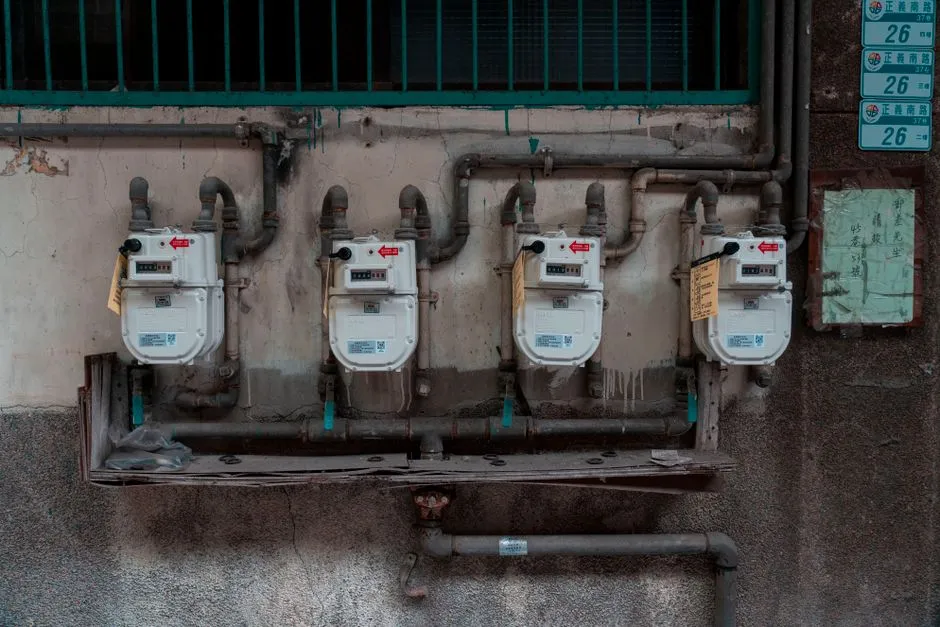
The equipment design envelope must come from measured Pigeon-area wastewater, not borrowed mining-water values. Complete a 12-month influent characterization and corroborate it with operating history, production schedules, mill campaigns, storm-runoff controls and recent discharge-monitoring records.
Characterize pH, flow, suspended solids, dissolved and total metals, arsenic and other applicable pollutants. Record whether each discharge is continuous or batch-driven, identify the peak demand used for equalization design, and separate contact water, process water, wash water, stormwater and sanitary streams so clean or separately regulated flows are not treated unnecessarily or bypassed into the sewer.
The supplied research specifically identifies iron, manganese and arsenic as dissolved metals affected by pH correction and hydroxide precipitation (HydropureWater’s Price-area guide, 2026). The [pH-adjustment engineering and selection guide](/blog/2827-what-is-a-ph-adjustment-system-engineering-specs-process-flow-industrial-selection-guide-2025.html) is useful for framing pH-control scope, but its values do not replace Pigeon permit limits or site chemistry.
Jar testing should establish chemical demand, precipitation behavior, settling or flotation performance and filtration needs before final equipment selection. Test representative batch and continuous streams, including worst credible combinations identified by the operating record. Assess metal-bearing treatment residuals through TCLP characterization rather than assuming that precipitation sludge is nonhazardous.
| Characterization item | Minimum question | Use in design |
|---|---|---|
| Flow | What are the annual average, sustained peak and batch-discharge peaks? | Equalization and treatment hydraulic basis |
| pH | How does acidity vary by ore, campaign and discharge batch? | Chemical demand and precipitation control |
| Metals | Which dissolved and total metals are present, and in what form? | Precipitation or other residual-treatment requirements |
| Solids | What are the suspended-solids load and settleability? | Coagulation, clarification, filtration and sludge mass balance |
| Stream origin | Which streams are process, contact, wash, stormwater or sanitary? | Segregation, diversion and treatment boundaries |
| Residual character | Does the sludge require TCLP or other waste determination? | Handling, storage and disposal route |
Match the Treatment Train to the Contaminants
The defensible treatment sequence is pH adjustment, coagulation and flocculation, clarification, then filtration. Each stage must perform a defined function before the next stage is credited with compliance.
Begin with PLC-controlled pH adjustment. The cited treatment sequence places pH correction first because it establishes the discharge condition and supports hydroxide precipitation of dissolved metals (HydropureWater’s Price-area guide, 2026). A [PLC-controlled chemical dosing system](/product/8-automatic-chemical-dosing-system.html) should receive the confirmed pH setpoint, chemical demand and fail-safe requirements from the site design basis.
Follow pH control with coagulation and flocculation, then clarification. The supplied research describes DAF for suspended solids, oil and grease, and colloidal material. Lamella clarification is the alternative for dense metal-hydroxide flocs where a compact, high-loading installation is preferred. Use filtration after clarification to remove residual suspended solids. The cited configuration uses a multi-media filter containing anthracite, sand and garnet.
Add ancillary chemical steps only where measured influent demonstrates a need: corrosion control, residual-metal treatment or biocide dosing for fouling-sensitive equipment. If reuse or RO-quality water is required, add UF before RO because the supplied research identifies UF as the barrier protecting downstream membranes from residual colloids.
If contact streams enter the same sewer, evaluate microbial requirements only after checking the POTW’s limits. The supplied research identifies chlorine dioxide and UV as disinfection options. For the hardware comparison behind the clarification step, see the [DAF versus clarifier selection guide](/blog/13824-daf-vs-clarifier-for-petroleum-wastewater-in-lockhart-2026.html).
| Stage | Primary function | Design input required |
|---|---|---|
| pH adjustment | Establish precipitation condition and discharge pH | Measured pH, alkalinity/acidity and batch flow profile |
| Coagulation and flocculation | Aggregate suspended and colloidal material | Jar-test dosage, settling or flotation results |
| DAF or lamella clarification | Separate metal-bearing solids and floatable material | Solids loading, floc characteristics, oil and grease, footprint |
| Multi-media filtration | Polish residual suspended solids | Measured solids carryover and required filtrate quality |
| UF, if required | Protect RO or provide reuse-quality barrier | Reuse objective, membrane feed chemistry and recovery target |
Select DAF, Lamella Clarification or a Combined Package
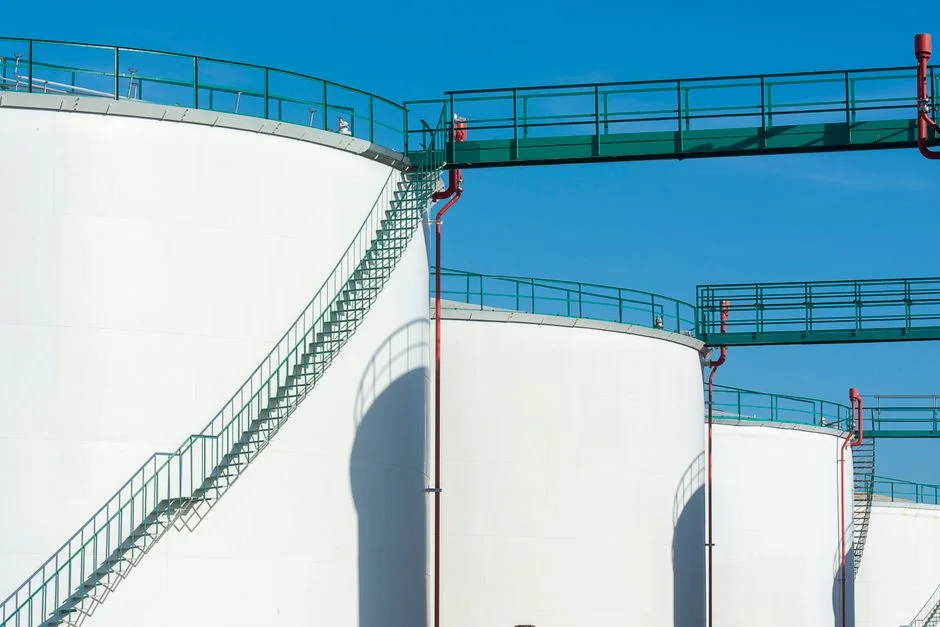
DAF is the stronger candidate when the wastewater contains oil and grease, FOG, fine colloids or flocs that require efficient flotation. The supplied commercial source describes HydropureWater’s DAF range as 4–300 m³/h and markets it for metalworking and industrial pretreatment duty (HydropureWater’s Halo-area guide, 2026). Those figures are comparison points, not a Pigeon design flow.
Lamella clarification is generally more suitable when the stream primarily forms metal-hydroxide solids and a compact, high-loading clarifier is preferred. The same source specifies the HydropureWater lamella system at 20–40 m/h surface loading (HydropureWater’s Halo-area guide, 2026). This figure must be checked against the selected configuration, wastewater chemistry and applicable engineering references during design.
Consider an integrated coagulation-sedimentation-filtration package when one PLC-controlled line and a compact skid arrangement are procurement priorities. The [DAF system for mining solids and oil removal](/product/4-dissolved-air-flotation-daf-machine.html) may be relevant where measured wastewater supports flotation. A combined package is not automatically safer: filtration still needs to be sized from measured solids carryover, and each bid needs a clear process calculation.
| Selection question | DAF | Lamella clarification |
|---|---|---|
| Does the wastewater contain oil, grease, FOG or buoyant material? | Stronger functional fit | Not the primary fit |
| Are fine colloids or slowly settling metal flocs important? | Evaluate flotation performance directly | Depends on measured settleability and loading |
| Is the main solid load dense metal-hydroxide sludge? | Possible, if jar tests support flotation | Stronger candidate |
| Is footprint a binding constraint? | Compare actual skid layout | Compare the quoted surface-loading basis |
| Has Pigeon flow been measured? | Do not use 4–300 m³/h as the design flow | Do not use 20–40 m/h without sizing the actual flow |
Control Monitoring, Sludge and Compliance Risk
Monitoring must show where performance changes before it becomes a sewer exceedance. Establish upstream of pH adjustment, after precipitation, after clarification, after filtration and at the final sewer-discharge point. The permit determines which locations are formal compliance-monitoring points; the other locations remain process-control and early-warning points.
Trend metals and TSS after each treatment stage. Review pH continuously and compare analytical results with the exact permit condition, including its averaging period. This approach is consistent with HydropureWater’s 2026 Cross-area guide, which recommends trending iron, manganese, arsenic and other applicable metals through treatment to identify approaching breakthrough.
Calculate the solids inventory before selecting dewatering equipment. Include chemical precipitates, clarification underflow or sludge, DAF float and filter backwash solids. Use a plate-and-frame filter press when batch dewatering is appropriate. The supplied catalog reports filtration areas from 1 m² to 500 m² with manual, hydraulic and fully automatic PLC-controlled operation (HydropureWater’s Halo-area guide, 2026); those catalog limits are selection boundaries, not evidence of the required Pigeon area.
Require each equipment supplier to identify bypasses, fail-safe chemical dosing, alarms, automatic backwash where applicable and the operator-response plan for an upset. Ask for a mass-balance method that closes the water and solids balances from influent through final discharge and residual handling.
Turn the Design Basis into a Vendor Request
A comparable bid starts with the same permit-defined inputs. Send every bidder the current permit set, available 2025–2026 Discharge Monitoring Report data, the measured 12-month influent characterization and the confirmed 40 CFR subcategory. Do not accept a quotation based only on an application description or another site’s limits.
Ask each bidder to list its assumed permit limits by parameter, averaging period and source document. Any unresolved assumption should remain an explicit commercial exclusion. Require a written process flow, water and solids mass balance, equipment-sizing basis, hydraulic-loading calculations, chemical-consumption estimate, controls narrative, commissioning plan and performance-test criteria.
Request evidence from mining, ore-dressing or metal-finishing projects relevant to the proposed equipment. Also require commissioning support, operator training, critical-spares availability, control-system documentation, and a committed supply route for chemicals, filter media and replacement components. The [equipment sourcing and support guide](/blog/10879-best-sourcing-partners-for-wastewater-equipment-components-in-north.html) can support supplier-question development, but the bidder must still document site-specific assumptions.
Compare bids on total installed scope, sludge handling, monitoring, controls, maintenance, commissioning and compliance risk—not headline flow capacity. Make exclusions explicit. A low equipment price that omits equalization, chemical systems, controls, residuals or performance testing is not an apples-to-apples offer.
Frequently Asked Questions
What numerical sewer limits apply to a mining plant near Pigeon?
The supplied research does not identify the Pigeon POTW, current sewer-use ordinance, industrial discharge permit or enforceable numerical values. Obtain those documents from the receiving authority and enter each parameter, averaging period and monitoring duty in the permit matrix before sizing equipment.
Do we need NPDES permits if all process water goes to the sewer?
Process water discharged to a POTW follows the pretreatment route under 40 CFR Part 403 and applicable local requirements. NPDES remains relevant to separate direct surface-water or stormwater outfalls, so the site drainage map must distinguish sewer connections from regulated outfalls.
How much should a compliant pretreatment system cost?
No defensible Pigeon-specific price can be stated without measured flow, influent chemistry, confirmed permit limits, selected unit operations and residual-handling scope. Request a total installed budget broken into equipment, civil work, chemicals, controls, monitoring, sludge handling, commissioning and exclusions.
What should we require from a wastewater equipment supplier?
Require a permit-based design basis, measured influent sizing, process and solids-balance calculations, controls and commissioning details, relevant project evidence, and after-sales support. Reject bids that substitute generic mining limits or omit the documents needed to verify the design.
When is UF needed instead of clarification and filtration alone?
Add UF when the project requires reuse or serves as RO pretreatment, or when measured solids carryover requires a finer barrier before discharge. A clarifier followed by multi-media filtration can be adequate for the verified sewer-discharge duty when jar tests and the permit matrix demonstrate sufficient solids removal.
Related equipment and engineering reading
- How Mining and Metals Plants Near Odds Meet Sewer Limits
- How Mining & Metals Plants Near Chesapeake Meet Pretreatment Limits Before Sewer Discharge (2026 Guide)
- How Mining & Metals Plants Near East Finley, PA Meet Pretreatment Limits (2026 Guide)
- How Mining & Metals Plants Near Yates Center Meet 2026 Pretreatment Limits