What Changes When Unilever Acquires the Hungarian Plant?
Wastewater requirements for a Unilever plant acquisition in Hungary are driven by the site’s existing authorizations and the post-closing operating plan—not by the change in ownership alone. The buyer should verify the Integrated Environmental Permit, any Water Use Permit, the municipal Water Quality Agreement, monitoring records, discharge route and receiving-system capacity. A permit transfer, reissue or amendment may be needed if the operator, process chemistry, flow, production mix or water-reuse arrangement changes. Unilever should obtain written determinations from the competent Hungarian authority and sewer operator, test representative streams, validate treatment performance and convert unresolved items into closing conditions or priced obligations.
The acquisition team must separate four questions before deciding whether the wastewater workstream requires capital expenditure: who owns the facility, who operates it, which entity holds each wastewater authorization, and whether permitted activity, flow, pollutants, treatment or discharge route will change. Legal ownership can change while the authorized industrial activity and operating profile remain unchanged. Conversely, a production shift, cooling-water change, chemical substitution or reuse program can alter the compliance basis even if the permits themselves remain in the seller’s name until closing.
The supplied research does not establish which Hungarian approvals attach to this acquisition. It does not identify the plant, permit number, competent authority, sewer operator, process flows, applicable limits, or proposed post-closing operating plan. Those omissions are transaction-critical findings; they cannot be resolved from a corporate profile, a generic Hungarian permit description, or an assumed treatment range.
Unilever’s public disclosure provides corporate context, not a permit condition. Its nature page, accessed in 2026, reports that 29 water-stewardship programmes had been implemented since 2021 by the end of 2025. The 2030 target covers all production sites in water-stressed areas. Neither the programme count nor the target establishes the Hungarian site’s applicable limits or operating obligations.
| Transaction question | Evidence required | Decision consequence |
|---|---|---|
| Has facility ownership changed? | Sale agreement, title and corporate records | Identify the proposed post-closing legal owner. |
| Will the operator change? | Operating agreement, staffing and responsibility matrix | Reconcile permit holder, operator and compliance owner. |
| Will permitted activity or discharge conditions change? | Before-and-after production, chemistry, flow, cooling, reuse and treatment plans | Determine whether transfer, amendment, reissue or new authorization is required. |
| Is the environmental or industrial-pretreatment pathway feasible? | Operative permits, sewer agreement, receiving-system confirmation and treatment records | Identify permit, infrastructure and capital gaps before signing or closing. |
For a broader structure covering the food-plant and industrial-acquisition questions, see the food-plant acquisition wastewater due-diligence guide and the industrial plant acquisition wastewater framework.
Which Hungarian Permissions Must the Buyer Verify?
The permit register must identify the operative Hungarian documents and their controlling parties; a list headed “environmental permit” is not enough to support a transaction decision. The supplied Hungarian framework identifies the Integrated Environmental Permit (IPPC/Egységes Környezethasználati Engedély), any Water Use Permit (Vízjogi Engedély), and the municipal Water Quality Agreement (Közüzemi Szerződés). It states that environmental permits do not transfer automatically by default: under Act LIII of 1995 on the General Rules of Environmental Protection, the new operator must formally apply to the competent County Government Office and demonstrate that it maintains the same technological standards and compliance protocols as the previous operator.
That framework is a diligence lead, not a substitute for the operative permit or a current written authority determination. Local counsel should confirm whether the proposed transaction is a transfer of the existing authorization, requires a new holder or formal amendment, and whether the permit remains valid throughout signing and closing. The authority’s answer should be tied to the actual operator, production activity, flow, chemistry, treatment and discharge point.
For each permission, record the current holder, every amendment, expiry or renewal status, discharge point, applicable conditions, monitoring duties, reporting deadlines, financial assurance, enforcement history and proposed post-closing owner. Review correspondence, inspections, deviations, corrective actions and any unresolved restrictions. If a document is missing, record the gap; do not treat continued historical operation as evidence of automatic approval after acquisition.
Sewer and direct-discharge pathways must be reviewed separately. For sewer discharge, obtain the receiving utility’s rules, permitted flow, prohibited materials, pretreatment requirements, monitoring obligations, surcharge mechanism and available treatment capacity. The industrial pretreatment agreement may impose duties different from those in the environmental permit. Existing sewer access does not prove that the receiving system can accept the proposed flow or composition. For direct discharge, obtain the site authorization, receiving-water conditions, sampling points, reporting duties and modification triggers from the competent authority.
Internal reuse is a third pathway. Define the process-water specification, where the reused water will enter production, and the lawful route for residual concentrate. Higher recovery can reduce discharge volume while concentrating contaminants; it does not remove the obligation to manage the residual stream.
| Permission or control | Key verification | Required closing deliverable |
|---|---|---|
| Integrated Environmental Permit | Holder, scope, limits, amendments, monitoring, enforcement and change triggers | Written County Government Office determination and completed transfer or amendment if required. |
| Water Use Permit | Authorised use, abstraction or discharge conditions, validity and route | Confirmation that the permission covers the post-closing operator and operating plan. |
| Közüzemi Szerződés | Industrial-user status, local limits, flow, monitoring, surcharges and capacity | Utility acceptance or reissue of the applicable sewer agreement. |
| Monitoring and enforcement record | Results, deviations, corrective actions, surcharge exposure and unresolved claims | Allocated liability and funded corrective-action plan. |
| Internal reuse and residual route | Water-quality specification, recovery, concentrate composition and lawful destination | Approved process specification and documented residual-management plan. |
Selection of pretreatment should remain subordinate to verified stream chemistry and permit conditions; the industrial wastewater pretreatment selection guide provides a useful comparison framework.
How Should the Buyer Test the Wastewater Baseline?
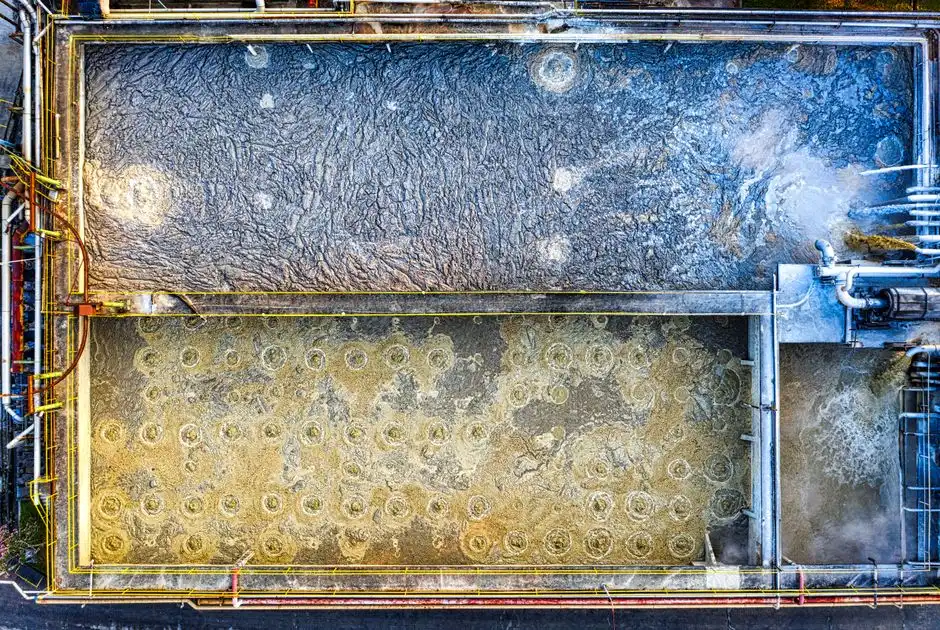
The wastewater baseline must establish historical compliance and treatment performance under representative source-specific conditions, not merely reproduce compliant outlet averages. Request at least the last 24 months of analytical monitoring reports and review self-monitoring plans, sampling records, chain-of-custody documentation, deviations, corrective actions, surcharge records and evidence concerning the final destination of treatment residuals.
The supplied Hungarian framework identifies the 27/2005. (XII. 6.) KvVM decree for monitoring review and the 28/2004. (XII. 25.) KvVM decree as technical references. Review the installed system’s hydraulic capacity, organic-load capacity and documented removal performance for relevant industrial contaminants. These records must be reconciled with laboratory results, production records, operating logs and authority correspondence.
Do not import the example COD, BOD5, AOX or heavy-metal values mentioned in the municipal Water Quality Agreement into the buyer’s model. They are not numerical limits for this acquisition unless they appear in the operative Hungarian agreement. Obtain that agreement and the applicable permits before using any concentration, load or surcharge value in a financial model.
Characterize wastewater by production source, process step, batch or continuous operation, and normal versus upset conditions. The supplied screening scope includes flow, pH, temperature, suspended solids, oil and grease, COD, fluoride, metals, acids and bases, solvents, PFAS and project-specific constituents. Tie samples to flow records and production schedules. An average outlet result cannot establish capacity for a short, source-specific batch carrying the controlling contaminant load.
Request chemical inventories, material safety data sheets, supplier declarations and planned substitutions. Proprietary chemistry and post-close changes may not appear in historical outlet data. Establish who can authorize additional sampling, who owns the analytical data, and whether a proposed chemical change triggers notice, permit review or a revised wastewater characterization.
Capacity screening must include equalization against startup, shutdown, upset and maintenance flows, not only average discharge. The broader acquisition framework identifies operation above 85% of design capacity as a high-risk threshold; that threshold is a diligence signal, not a Hungarian permit limit. If the buyer expects to exceed it, require hydraulic evidence, treatment performance testing and a funded response before closing.
The wastewater operating-limit review offers a useful structure for reconciling analytical data with operating context, but its jurisdictional assumptions must not be imported into Hungary.
Which Treatment Changes Does the Post-Close Plan Trigger?
Treatment selection should follow a fixed sequence: characterize each source, establish the final discharge or reuse specification, calculate source loads and variability, and then define source separation, equalization, pretreatment, biological treatment, membranes, polishing, disinfection, sludge handling and residual management. Equipment selection before those inputs are known creates commercial and compliance risk.
A DAF unit is a candidate pretreatment where characterization supports removal of suspended solids, FOG, oil and grease or colloidal matter. HydropureWater’s stated DAF range is 4–300 m³/h across 13 standard models; the installed duty must still be verified against verified flow, loading, upset conditions and pretreatment requirements. An industrial DAF wastewater treatment system should therefore be evaluated as a source-specific process step rather than a complete treatment train by default.
An MBR is relevant where biological treatment, solids separation or near-reuse polishing is required. HydropureWater’s stated MBR capacity is 10–2,000 m³/day and filtration is below 1 μm. Assess the MBR membrane bioreactor for wastewater reuse against verified organic loading, nutrients, temperature, footprint, sludge handling, reuse quality and the post-close flow profile.
UF is a candidate solids-removal barrier or RO pretreatment step. HydropureWater’s stated UF range is 2,000–40,000 L/h, membranes are 0.03 μm PVDF, and stated turbidity acceptance is up to 300 ppm. Confirm feed chemistry, solids loading, membrane compatibility and pretreatment need; those stated values do not establish suitability for the acquired plant.
RO may support higher-quality reuse, but the supplied research says to assess it only after suitable pretreatment and to resolve fouling, recovery, validation and concentrate disposal. A reuse target must define the required water quality before RO is selected.
Require a treatment demonstration for each controlling constituent and stream. Bidders should state the tested feed, operating conditions, analytical method, result, uncertainty and pretreatment dependency. A general claim that membranes, biological systems or activated carbon remove a contaminant is not performance evidence. Also allocate sludge, concentrate and other residuals: treatment can move pollutants into a secondary waste stream that requires classification, monitoring and an approved destination.
| Treatment option | Evidence that must precede selection | Principal diligence issue |
|---|---|---|
| DAF | Suspended-solids, FOG, oil and grease, or colloidal characterization; verified flow and load | Recovery, pretreatment dependency and upset-flow performance. |
| MBR | Biological loading, solids separation duty, reuse specification and sludge route | Membrane compatibility, footprint and verified operating envelope. |
| UF | Feed solids, turbidity, flow and required downstream quality | Whether stated acceptance conditions fit the actual feed. |
| RO | Reuse specification, pretreatment, fouling study and residual-disposal route | Recovery, validation and concentrate management. |
| Source separation or equalization | Water balance, batch and upset flows, chemical compatibility | Whether existing units provide credible control under the post-close profile. |
The research does not support a Hungarian treatment-cost quotation. A defensible estimate requires verified flow, chemistry, applicable limits, reuse targets, residual destinations, infrastructure scope and lifecycle assumptions. For deeper treatment-selection context, compare the industrial wastewater pretreatment selection guide with the engineering treatment-design reference.
How Can the Buyer Convert Findings into Closing Conditions?
Unresolved wastewater risks should become documented, funded and time-bound transaction protections rather than vague post-closing promises. Use closing conditions for unresolved permit-transfer requirements, missing approvals, unaccepted sewer agreements, or treatment systems that cannot meet the planned operating profile. If the buyer cannot close the approval pathway by signing, the condition should identify the required document—not merely state that permits will be “addressed.”
Allocate historical violations, contamination, third-party sewer claims, permit work, corrective action, equipment replacement and post-close performance separately. A seller covenant covering general compliance is too imprecise to support purchase-price allocation, insurance analysis or completion control. Prepare two schedules: obligations already attached to the site, and new requirements caused by Unilever’s proposed production, chemical, cooling or reuse plan.
Where treatment capacity is deficient, consider a purchase-price adjustment, seller-funded obligation, escrow or performance covenant. Objective evidence should include accepted permit transfers, authority correspondence, approved plans, completed baseline sampling, accepted treatment demonstrations and verified operating results. The transaction-control guide for wastewater treatment illustrates how technical milestones can be converted into enforceable responsibilities.
- Assign a named owner, evidence requirement and deadline to every open item.
- Assign a legal owner to permit transfer or amendment and an engineering owner to sampling and capacity validation.
- Prohibit production, chemical, cooling, treatment or discharge-routing changes until the designated owner documents the operating decision.
- If material history, contaminants, receiving capacity or liability cannot be established, do not rely on unverified treatment or discharge assumptions.
The closing file should contain the permit register, operative agreements, water balance, source-characterization results, receiving-system confirmation, treatment-gap list, funded action schedule and evidence of every authority or utility acceptance required before the intended operating plan begins.
Frequently Asked Questions
What documents must Unilever obtain before relying on continued Hungarian wastewater discharge?
Obtain the plant’s operative Integrated Environmental Permit, any Water Use Permit, the Közüzemi Szerződés or applicable industrial pretreatment agreement, monitoring history and written determinations from the competent authority and receiving sewer operator. General corporate sustainability information is not a substitute for site-specific permissions.
How should Unilever select wastewater treatment equipment after closing?
Begin only after the water balance, source characterization, applicable limits, reuse specifications and receiving-system capacity are known. Require source-specific testing and a treatment demonstration stating the tested feed, operating conditions, analytical method, result, uncertainty and pretreatment dependency.
What budget should the buyer reserve for Hungarian wastewater upgrades?
The supplied research supports no universal Hungarian upgrade cost or contingency because site-specific capital, remediation and residual-management estimates are absent. Request a costed scope based on verified flow and chemistry, the permit gap, treatment-capacity deficit, infrastructure requirements, reuse targets, residual destinations and lifecycle assumptions before setting an allowance.
Which supplier and closing controls reduce compliance risk?
Select bidders against verified site conditions, not generic capacity statements. Before relying on continued or expanded discharge, require authority confirmation, accepted sewer terms, source-specific testing, treatment demonstration, named owners and objective closing evidence for every unresolved obligation.