What changes when Unilever acquires a Texas plant?
Wastewater obligations for a Texas plant acquisition depend on the site’s permits, operator, discharge route and post-acquisition operations rather than the change in ownership alone. The buyer should review the current NPDES permit or POTW pretreatment requirements, confirm whether a transfer or notification is required, and assess whether manufacturing, cooling, chemical use, wastewater flow or discharge composition will change. TCEQ administers the relevant wastewater permitting process. Any revised discharge profile may also require treatment-capacity, monitoring and permit-modification review before closing.
The acquisition team should separate four questions: who owns the facility, who operates it, which entity holds the discharge authorization, and whether permitted activity will continue, expand, cease or change. Legal ownership can change while the permitted industrial activity, operator, wastewater flow and discharge point remain unchanged. A change-of-ownership label does not answer whether a permit transfer, pretreatment re-approval, discharge modification or new authorization is required.
Assign transaction counsel, environmental consultants, the plant wastewater lead and the designated post-close operator to these questions. The manufacturing plant acquisition wastewater requirements provide a useful starting structure, but the controlling evidence remains the site’s current permits and proposed operating plan.
Identify the wastewater permit and discharge pathway
The permit review must begin with the site’s physical drainage and discharge map, not the acquisition agreement. Map process drains, cooling loops, stormwater outfalls, sanitary outlets, treatment units, final discharge points and reuse destinations. Then identify which permits and approvals govern each pathway.
| Question | Direct discharge to surface water | Indirect discharge through a POTW |
|---|---|---|
| What is the governing authorization? | Site NPDES permit and modifications | POTW pretreatment permit or industrial-user agreement |
| What records should be requested? | Complete permit, transfer application, DMRs, self-monitoring records, monitoring plan, compliance schedules and TCEQ correspondence | Local limits, applicable categorical standards, surcharge calculations, denials, notices of violation and consent orders |
| What should the buyer verify? | Permit holder, responsible operator, discharge point, limits, monitoring and applicable treatment conditions | Industrial-user status, sewer restrictions, local limits, categorical standards, monitoring and surcharge exposure |
TCEQ states that electronic copies of individual wastewater permit applications may be submitted through its FTP server to [email protected]. Electronic submission does not relieve applicants of other application requirements. The buyer should obtain the complete record rather than assume that a filing receipt establishes an approved permit.
Confirm whether the permit holder, responsible operator and industrial user are the same legal entity after closing. These roles may not be identical. The Texas industrial wastewater sewer compliance analysis is useful for checking the difference between discharge authorization and day-to-day operating responsibility.
Decide whether the acquisition changes permitted operations

A wastewater transaction screen distinguishes an administrative ownership transfer from a change in permitted activity. Compare the before-and-after plans for production, cooling demand, potable-water use, chemicals, wastewater generation, flow, discharge composition, treatment and reuse. The operating plan, not the buyer’s corporate identity, determines whether treatment or permitting work is needed.
| Outcome | Decision test | Transaction response |
|---|---|---|
| Administrative transfer only | Permitted activity, flow, pollutants, treatment and discharge point do not change | Complete the required transfer or notification and reconcile responsible entities |
| Transfer plus agency review | Ownership changes and operating details require confirmation by TCEQ or the POTW | Make agency confirmation a closing deliverable or condition |
| Permit modification or reclassification | Pollutants, flow, treatment, discharge point or other permit conditions change materially | Fund or escrow the permit work and define implementation milestones |
| New permit requirement | The post-close discharge or industrial-user status requires a different authorization | Obtain the controlling agency’s written determination before relying on continued discharge |
For direct dischargers, assess whether the changes affect pollutants, flow, treatment, discharge point or permit conditions, including applicable whole-effluent-toxicity and thermal or chemical constraints. Include an anti-backsliding review, but use the controlling permit and agency record rather than inferring a site-specific limit from general rules.
For indirect dischargers, compare proposed flow and constituents with POTW local limits and categorical standards. A new sewer connection does not establish that existing discharge can continue at the proposed rate or composition. Cooling changes, chemical substitutions and production shifts should be screened for sewer restrictions, surcharges, monitoring changes and treatment impacts.
Test permit compliance and environmental history
A current permit does not establish sustained compliance. The HydropureWater acquisition article recommends a five-year review of Discharge Monitoring Reports covering BOD, TSS, heavy metals and temperature. That review should identify recurring excursions, changing operating patterns, missing data and averages that mask peaks.
Reconcile permit limits with DMRs, laboratory records, sampling schedules, maintenance logs and agency correspondence. Check for discrepancies among reported values, permit conditions and operating data. Request representative influent and effluent data for flow, pH, temperature, BOD, TSS, TDS, conductivity, oil and grease, metals, ammonia and process-specific regulated constituents. Use documented methods and chain of custody for samples collected during diligence.
The HydropureWater article reports average administrative penalties of $12,000 to $45,000 per Notice of Violation for industrial wastewater noncompliance, citing EPA ECHO 2023. It also reports that consent orders frequently require supplemental environmental projects exceeding $500,000. These figures are diligence signals; the buyer must obtain the site’s enforcement history before estimating exposure.
Commission a Phase II Environmental Site Assessment where prior industrial uses, discharge pathways, unlined lagoons, spray-irrigation areas or fire-suppression history create a plausible subsurface concern. Groundwater or sediment contamination could affect treatment construction, excavation, discharge or reuse. A food and beverage plant acquisition wastewater guide can support the request list, but the scope must follow the site’s actual history.
Match treatment and reuse options to the post-close water balance
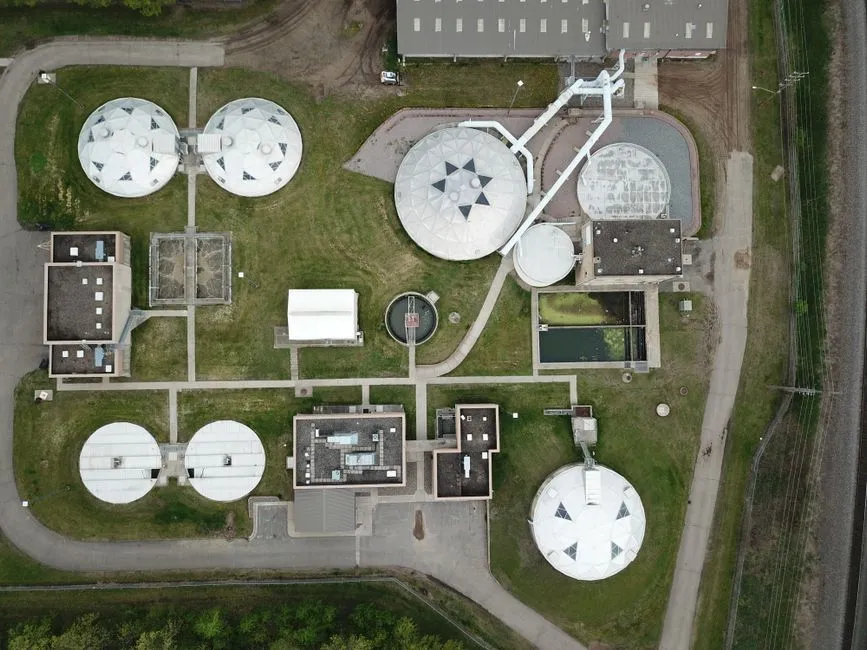
Treatment selection follows the discharge path, then the post-close water balance, then the required effluent or reuse quality. Build a balance for freshwater make-up, process usage, cooling-tower evaporation and blowdown, wastewater generation, reuse and final discharge. Include startup, shutdown, upset and maintenance flows because these conditions can concentrate pollutants or exceed equalization capacity.
| Technology | Applicable screening role | Catalogued range |
|---|---|---|
| Industrial DAF wastewater treatment system | Suspended solids, FOG, oil and grease, and colloidal matter | 4 to 300 m³/h across 13 standard models |
| MBR membrane bioreactor for industrial wastewater | Biological treatment, solids separation and compact footprint | 10 to 2,000 m³/day; filtration below 1 μm |
| UF | Bacteria, colloids and suspended solids before reuse or RO pretreatment | 2,000 to 40,000 L/h; 0.03-micron PVDF membranes; turbidity acceptance up to 300 ppm |
| RO | Dissolved-solids reduction and blowdown reuse, subject to site chemistry | Validate recovery, pretreatment and concentrate disposition |
RO recycling of cooling-tower blowdown can reduce freshwater make-up by 75% while adding $1.50 to $2.50 per cubic meter in operating cost. Treat that as a planning benchmark and validate it with site chemistry, recovery, pretreatment and concentrate disposition. Complete MBR, RO and crystallizer integration costs of $7 million to $12 million serve as general estimates rather than quotations.
Review the existing system for equalization, clarification, biological performance, sludge dewatering, controls, redundancy and monitoring. Operation above 85% of design capacity is the high-risk threshold. The buyer should also test chemical compatibility where cooling chemicals, cleaning agents or new process streams could inhibit biological treatment, damage membranes or alter sludge handling.
Allocate permit, capital and contamination risks before closing
Technical findings should be converted into enforceable transaction protections with measurable responsibility. Use closing conditions for administrative deficiencies that must be cured, including an unresolved permit transfer or missing approval required for the planned operation.
For material treatment-capacity gaps, consider a price adjustment, seller-funded capital obligation, escrow or performance covenant. Define objective evidence, such as accepted permit transfer, approved plans, completed baseline sampling and verified operating results. Do not use vague milestones such as “substantially compliant.”
Allocate responsibility separately for permit transfer and modification, corrective action, pre-closing violations, contamination, third-party sewer claims, equipment replacement and post-close performance. The HydropureWater source cites the ABA M&A Study 2023 for environmental-indemnity caps of 15% to 25% of purchase price and five-to-seven-year survival periods. Present these as negotiation context, not legal advice.
For uncertain contamination, the source estimates $1.2 million to $3.8 million for groundwater remediation on a two-acre site and recommends a 25% CAPEX contingency for subsurface conditions discovered during construction. Both are screening benchmarks requiring site-specific validation.
Complete the permit, treatment and operating-readiness checklist
Before closing, obtain the permit and compliance files, map the water balance, test legacy and proposed wastewater chemistry, verify treatment capacity and establish a representative operating baseline. Use documented sampling methods and chain of custody. Name an owner for every permit condition and unresolved technical finding.
| Timing | Required actions | Evidence of completion |
|---|---|---|
| Before closing | Permit review, five-year DMR review, enforcement review, representative sampling, Phase II scoping where warranted, water balance and treatment-capacity test | Complete file index, baseline report, agency correspondence, identified permit changes and a costed capital gap list |
| At closing | Ownership and operator notifications, permit-to-operation reconciliation, laboratory and monitoring-contract confirmation, interim compliance plan if transfer remains unresolved | Filed notices, accepted transfer or agency acknowledgment, named compliance owners and an approved interim plan |
| First 100 days | Review discharge samples and DMR trends, verify SCADA and laboratory data, test treatment under the post-close profile, train operators | Trend report, validated operating data, training records and corrective-action log |
| After stabilization | Screen production, cooling, chemical, reuse and discharge changes against NPDES conditions, POTW limits, groundwater controls and treatment capacity | Documented change-control decision before implementation |
Closing does not establish operating readiness. If treatment performance or permit status remains uncertain, prohibit unauthorized changes to production, cooling, chemicals, treatment operation or discharge routing until the named owner has documented the operating decision.
Frequently Asked Questions
Do I need a new Texas wastewater permit if Unilever acquires the plant?
Not necessarily. Separate an administrative permit transfer from a change in permitted activity, flow, pollutants, treatment, discharge point or industrial-user status. The current permit and the proposed post-close operating plan determine whether the buyer needs only a transfer, agency review, a modification, reclassification or a new authorization.
What treatment equipment should be budgeted for an acquired Unilever plant?
Do not select equipment before completing the post-close water balance and chemical assessment. Match the required effluent or reuse path to the constituent and flow duty. DAF may address suspended solids, FOG, oil and grease and colloidal material; an MBR may be appropriate where biological treatment and solids separation are required; UF and RO require validation against the reuse target, pretreatment and concentrate disposal.
How much environmental contingency should an acquisition reserve include?
No universal reserve is supported. Request the site investigation, treatment-capacity gap, corrective-action scope and remediation estimate before setting an allowance. The 25% CAPEX contingency for subsurface conditions and $1.2 million to $3.8 million groundwater-remediation estimate for a two-acre site are screening benchmarks only.
How can the buyer avoid assuming that the existing treatment plant is adequate?
Test the system against the proposed flow and chemistry, then review equalization, biological performance, sludge dewatering, controls, redundancy and monitoring records. Operation above 85% of design capacity is the high-risk threshold. Equalization must also be checked against startup, shutdown, upset and maintenance flows rather than only average discharge.