What sets the sewer-discharge limit for an Irving chemical plant?
The limit is set by the regulatory pathway and the receiving sewer authority, not by a generic Irving rulebook. A direct discharge to waters of the United States falls under the NPDES permitting pathway; an indirect discharge through a publicly owned treatment works (POTW) is governed by pretreatment requirements. EPA defines an industrial user as a nondomestic source of indirect discharge, while pretreatment requirements include both pollutant limits and procedural obligations such as monitoring, reporting, and recordkeeping. For a chemical plant, the controlling requirements may include federal prohibitions, categorical pretreatment standards, and site-specific POTW local limits.
EPA’s pretreatment guidance explains that local limits address the needs of the individual POTW, its sludge process, and its receiving waters. EPA identifies 40 CFR Part 403.5(c) as requiring certain POTWs to develop local limits, and POTWs impose those limits at the industrial user’s point of connection to the collection system. Local limits may be numeric or narrative and can include best management practices.
That distinction matters near Irving because the city name does not identify the receiving POTW. A plant must establish which sewer system receives its discharge, identify the control authority, and obtain the adopted rules for that service area. The same chemical process at a different plant may face different requirements because the POTW’s hydraulic or biological capacity, sludge practices, receiving waters, and local limits differ.
| Requirement layer | Who establishes it? | What the plant must verify |
|---|---|---|
| General and specific prohibitions | Federal pretreatment regulations | Whether the discharge can cause pass-through or interference, and whether prohibited discharges apply |
| Categorical pretreatment standards | EPA, under the applicable 40 CFR subpart | The plant’s regulated process, pollutant-specific limits, monitoring, and reporting duties |
| Local limits | The receiving POTW’s control authority | The adopted limits, best management practices, monitoring point, and conditions in the control mechanism |
This compliance hierarchy is the starting point for how chemical plants establish pretreatment limits before sewer discharge. Equipment should not be selected until the applicable layer and enforcement location are documented.
Build the compliance basis before selecting equipment
The legal limit must be converted into a site-specific compliance file before treatment equipment is priced. Begin with the receiving POTW’s current pretreatment rules, adopted local limits, industrial-user permit or equivalent control mechanism, monitoring instructions, and definition of the authorized discharge point. EPA states that POTWs impose local limits at the end-of-pipe connection to the POTW collection system, so a sample taken somewhere else does not automatically establish compliance at the regulated point.
Next, classify the plant by its actual manufacturing process, not simply its company description. The supplied research identifies 40 CFR Parts 414, 415, 417, 419, and 433 as potentially relevant to chemical-related manufacturing. These cover distinct regulated processes, so an engineer must compare the plant’s operations with the current subpart definitions before assigning categorical limits.
Determine whether the facility is a significant industrial user (SIU). The supplied research identifies three alternative triggers: categorical status; discharge averaging at least 25,000 gallons per day of process wastewater; or contribution of a process waste stream equal to at least 5% of the POTW’s average dry-weather hydraulic or organic capacity. The applicable review period for flow should be confirmed with the control authority rather than inferred.
Develop a baseline characterization before designing the train. At minimum, assess pH, metals, solids, flow, BOD, COD, oils and grease, temperature, and process-specific pollutants. Also record whether discharge is continuous or batch, whether water will be recycled, whether production changes will alter the waste profile, and whether slug-load controls are required.
| Compliance input | Information to obtain | Decision supported |
|---|---|---|
| Receiving authority | POTW identity, control authority, current rules, local limits, and enforcement contact | Which limits and procedures govern |
| Industrial-user classification | Regulated process, categorical status, flow, and POTW-capacity contribution | Applicable standard and SIU obligations |
| Wastewater profile | Batch records, flow and pollutant data, process chemistry, production changes, and recycle plan | Treatment objectives, equalization, and monitoring scope |
| Control mechanism | Permit or equivalent document, sampling point, methods, frequencies, reports, records, and compliance schedules | Equipment controls and acceptance criteria |
The control mechanism converts regulatory language into operating requirements. It should identify monitoring frequencies, sampling methods, reporting schedules, recordkeeping duties, and compliance-assessment provisions. This is also the basis for how industrial plants evaluate local sewer limits.
Match each wastewater problem to the right treatment step
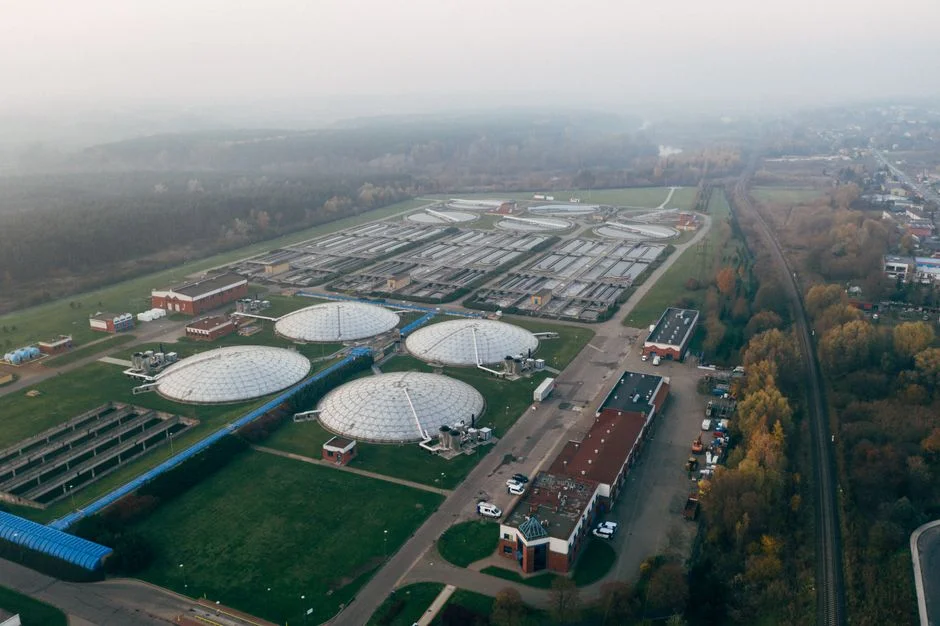
A defensible treatment train follows the pollutant profile and discharge pattern; it does not begin with a generic equipment category. Map pH swings, flow surges, and concentration variation to equalization, continuous monitoring, and PLC-controlled chemical dosing. A PLC-controlled chemical dosing system can coordinate chemical addition with measured flow and pH, but its control logic must follow the authorized monitoring and operating requirements.
For batch plants with long cycles or shared collection systems, evaluate retention over hours to days according to the actual batch schedule. The supplied research gives 4–8 hours of equalization as an engineering heuristic for continuous operations; it is not an EPA or POTW requirement. Final sizing must reflect batch cycles, peak flow, pollutant mass, influent variability, treatment residence time, and permit controls.
Map oils, fats, grease, colloids, and suspended solids to dissolved air flotation. The supplied HydropureWater research describes DAF as a high-efficiency option for removing suspended solids, FOG, oil and grease, and colloidal matter. An industrial DAF pretreatment system still requires a site-specific hydraulic and contaminant-loading design; the equipment description does not establish its compliance performance.
Map dissolved metals to chemical precipitation followed by solids separation with a clarifier. The supplied research identifies precipitation and clarification as the typical treatment logic for this contaminant group. For oils and solids, compare DAF and clarifier applications rather than assuming either is universally preferable; the decision depends on the waste characteristics and treatment objective.
Map high COD or BOD to biological polishing, including activated sludge or membrane bioreactor (MBR) where the reuse objective and available footprint support it. No single method guarantees compliance. The final train must address every pollutant subject to a categorical standard or local limit, plus operating conditions that could cause pass-through or interference.
| Wastewater condition | Primary treatment logic | Design information required |
|---|---|---|
| pH swings, flow surges, variable concentrations | Equalization, continuous monitoring, PLC-controlled dosing | Batch cycle, peak flow, variability, authorized limits, and control sequence |
| Oils, FOG, colloids, suspended solids | DAF followed by required solids handling | Hydraulic load, contaminant load, separation performance, and solids-disposal route |
| Dissolved metals | Chemical precipitation and clarification | Metal species, influent concentrations, chemicals, solids removal, and residual analysis |
| High COD or BOD | Biological polishing; activated sludge or MBR where justified | Organic loading, treatment objectives, footprint, reuse target, and residual discharge criteria |
This selection logic is consistent with the treatment-matching approach in an industrial wastewater treatment design guide, but the chemical plant’s own waste characterization remains the controlling input.
Treat batch releases as a separate compliance risk
A slug load can be a non-routine pollutant release or hydraulic surge that causes pass-through or interference at the POTW. It is therefore a distinct risk even when routine composite samples meet the applicable average concentration limit. A compliant composite does not prove that every instantaneous batch release was controlled.
The supplied research connects 40 CFR Part 403.8(f) slug-load provisions with equalization capacity, flow and pH monitoring, and written procedures for batch releases. The control mechanism should identify the applicable obligations, but the operating plan should go further by defining release criteria and the response when a batch is off specification.
Define how production personnel identify an upset batch, who authorizes discharge, how the batch is held or redirected, and what evidence is retained. Do not select a universal hold-up time without the site data needed to justify it. Required detention depends on batch volume, release rate, equalization available, treatment capacity, and the consequences of exceedance.
Record the batch identity, volume, characterization results, release decision, operator authorization, flow and pH observations, and corrective action. These records connect the production event to the treatment system and permit obligations. They also allow the plant to distinguish a controlled release from an uncontrolled slug when analyzing an upset.
Equipment selection should explicitly test startup, shutdown, upset, and off-spec conditions. A system that handles average flow but cannot contain a batch surge may still create pass-through or interference risk. The DAF versus clarifier comparison provides useful application context, but batch containment must be evaluated for the proposed chemical-plant train regardless of the separation technology selected.
Prove performance at the sewer connection
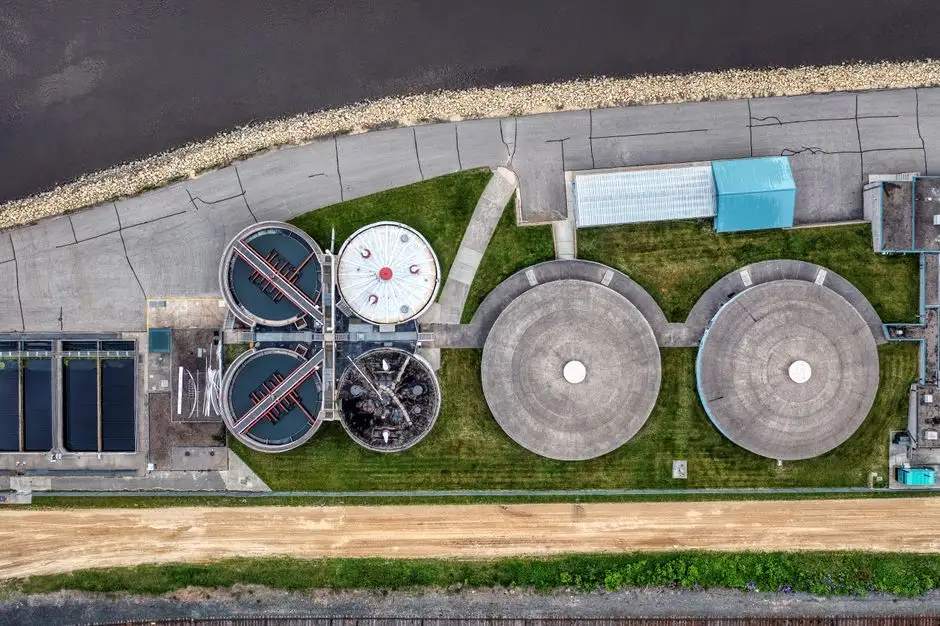
Compliance must be demonstrated at the location and under the conditions stated in the authorization. EPA describes POTW local limits as imposed at the industrial user’s end-of-pipe discharge, meaning the connection to the POTW collection system. Sampling upstream of final treatment, at an internal process point, or after dilution does not substitute for authorized end-of-pipe evidence.
Use the sampling point, method, frequency, and parameter list stated in the control mechanism. Establish operating records for chemical dosing, equalization level, flow, pH, equipment status, laboratory results, and corrective actions. Analytical results, maintenance records, and batch-release logs must be treated as one compliance system because each explains either treatment performance or the handling of a deviation.
Require laboratory and operating data to demonstrate that the treatment train consistently meets the most stringent applicable requirement. “Most stringent” matters because categorical standards, local limits, narrative prohibitions, and general no-pass-through or no-interference duties can coexist. A result below a local limit does not excuse a prohibited discharge.
| Evidence element | Record to maintain | Audit question |
|---|---|---|
| Representative sampling | Authorized point, method, date, flow condition, laboratory result, and chain of custody | Does the sample represent the regulated discharge? |
| Treatment operation | Chemical use, pH, flow, equalization level, equipment status, and alarm history | Could the recorded conditions explain the result? |
| Maintenance and calibration | Work orders, preventive maintenance, calibration results, and bypass records | Was the treatment train operating as demonstrated? |
| Batch and upset control | Batch characterization, release authorization, hold or redirect record, and corrective action | Was every planned release within the authorized controls? |
| Reporting | Submitted report, laboratory result, deviation notice, and response | Are obligations complete and traceable to source records? |
EPA’s pretreatment framework includes self-monitoring, reporting, notifications, and recordkeeping. The exact duties depend on the applicable authorization and industrial-user status. A practical closeout should reconcile each monitoring result with operating data, then show that corrective actions were completed. This same evidence chain supports how industrial plants document sewer-limit performance under a different local program.
A buyer checklist for treatment-system selection
Equipment proposals should be compared against the same compliance basis: pollutant loads, operating pattern, authorized controls, and required proof. A compliant treatment objective is not the same as a guaranteed permit result, so the proposal must explain how the system achieves and demonstrates the required performance.
Require each supplier to map its proposed equipment to the controlling pollutants, current production, planned production changes, batch or continuous discharge pattern, monitoring points, and treatment objectives. Request the sizing basis, including hydraulic and contaminant loading, assumed operating hours, batch-release strategy, detention allocation, redundancy, and startup conditions. Undefined assumptions should be identified rather than buried in a generic capacity statement.
Also request materials-of-construction information, chemical compatibility, control philosophy, power and utility requirements, maintenance access, included commissioning, operator training, and acceptance-test criteria. Ask specifically how the system protects against pass-through and interference during startup, shutdown, upset, and off-spec batch conditions.
| Buyer check | Information required | Why it affects the decision |
|---|---|---|
| Pollutant and loading basis | Characterization results, flow data, production assumptions, and future changes | Prevents selection from an unsupported average or concentration |
| Hydraulic and process sizing | Peak flow, batch cycle, detention, loading, redundancy, and bypass controls | Determines whether the system can contain real releases |
| Materials and controls | Compatibility, instrumentation, alarms, interlocks, and control narrative | Connects equipment operation to permit and safety requirements |
| Acceptance testing | Parameters, test conditions, acceptance criteria, instruments, and witnessing | Creates an objective performance baseline |
| Commissioning and records | Scope, training, calibration, operating manual, and retained documentation | Supports sustained operation and control-authority review |
| Commercial terms | Itemized scope, exclusions, schedule, delivery conditions, warranty, and lifecycle costs | Allows like-for-like comparison without assuming a generic price |
For biological options, compare MBR and conventional biological treatment using site-specific organic loading, footprint, reuse objectives, and operating requirements. Final selection remains a compliance decision, not a price-only equipment comparison. The supplied research provides no reliable generic cost, so a buyer should request a scope-based quotation and identify excluded civil work, chemical supply, disposal, utilities, controls, commissioning, and monitoring.
Frequently Asked Questions
Which authority sets pretreatment limits for a chemical plant near Irving?
The chemical plant must first confirm the POTW that receives its wastewater and the control authority administering that sewer system. EPA explains that local limits are POTW-specific and imposed at the industrial user’s point of connection. The plant should obtain the current rules, local limits, permit or equivalent control mechanism, and discharge-point definition from that authority; a generic “Irving limit” should not be assumed.
How much should pretreatment equipment cost?
The relevant budget is driven by pollutant loading, flow pattern, monitoring requirements, treatment objectives, controls, utilities, civil work, and redundancy. The supplied research provides no reliable generic price. Request an itemized quotation against the confirmed waste profile, treatment scope, acceptance criteria, delivery schedule, and exclusions so alternatives are compared on the same basis.
What equalization and treatment capacity does a batch chemical plant need?
Capacity must be based on the actual batch cycle, peak flow, pollutant mass, required detention, treatment loading, and operating redundancy. The supplied 4–8 hours of equalization is a continuous-operation design heuristic, not an EPA or POTW requirement. Batch facilities may require a different detention basis, and the control authority’s conditions must be incorporated into final sizing.
What evidence demonstrates readiness for sewer discharge?
Readiness rests on documented treatment performance, authorized monitoring and reporting, operating and maintenance records, and enforceable controls for batch releases. The plant should show that its train meets the most stringent applicable requirement at the authorized point of connection and that deviations trigger documented holding, redirecting, investigation, and corrective action. Together, these records provide an auditable demonstration rather than relying on equipment performance claims alone.