Which separation method fits the Ellijay wastewater?
For mining and metals wastewater in Ellijay, choose dissolved air flotation when the target material is floatable or can be made flocculable, such as conditioned metal-bearing solids, oils, or low-density fines. Choose conventional or lamella clarification when the primary target is heavy, readily settleable solids. The word “clarifier” is not enough for procurement: some DAF suppliers also call flotation units clarifiers. In 2026, base the decision on source-by-source characterization, peak flow and solids loading, conditioning tests, sludge handling, and applicable receiving-authority requirements—not average flow or a generic removal claim.
The mechanism follows the contaminant. A wastewater stream containing oil, FOG, colloidal material, or metal-bearing particles that can be aggregated into capturable floc points toward a HydropureWater industrial DAF system. Sand, gravel, and dense mineral particles point toward screening, grit removal, or gravity clarification. A HydropureWater lamella clarifier fits where inclined-plate separation and sludge recirculation support removal of settleable solids.
| Wastewater fraction | Initial direction | Evidence needed before selection |
|---|---|---|
| Free oil, FOG, emulsified oil | Evaluate DAF | Oil-and-grease analysis, free-oil observations, emulsion characteristics, temperature |
| Colloidal or conditioned metal-bearing solids | Evaluate DAF | Total and dissolved metals, pH range, alkalinity, conditioning and pilot evidence |
| Light mineral fines | Evaluate DAF if flocculable and floatable | Particle-size distribution, density, floatability and peak solids loading |
| Sand, gravel, heavy mineral particles | Evaluate screening, grit removal or gravity clarification | Settleability, particle-size distribution, density and grit generation rate |
| Heavily settleable solids | Evaluate conventional or lamella clarification | Hydraulic duty, sludge volume, recirculation and dewatering route |
Total metals do not select the separator. The design must distinguish dissolved metals from metals attached to settleable or floatable solids and establish whether chemical coagulation and flocculation will produce separable floc. Before combining streams, divide the site’s wastewater into process water, contact water, stormwater, washdown, and batch discharges; each source can have a different flow profile, contaminant fraction, and handling requirement.
How DAF and gravity clarification remove different fractions
Dissolved air flotation separates by buoyancy rather than particle weight. Pressurized, air-saturated recycle water releases microbubbles that attach to suspended or conditioned particles; the float is removed by a skimmer, while heavier material is withdrawn from a bottom collection zone. Clearwater Industries’ April 27, 2026 specification uses 30–50-micron microbubbles and states that DAF should be paired with coagulation and flocculation so particles become larger and more readily contacted by bubbles.
Conventional clarification relies on gravity settling. Lamella clarification retains that separation principle but introduces inclined plates; the HydropureWater lamella product combines sludge recirculation, flocculation, and inclined-plate separation. These are not identical sludge systems: DAF produces a surface float for skimming, while a lamella unit concentrates settleable solids in its sludge circuit. Storage, transfer, dewatering, and disposal interfaces therefore need separate review.
| Comparison point | Dissolved air flotation | Gravity or lamella clarification |
|---|---|---|
| Primary mechanism | Microbubble attachment and flotation | Settling, enhanced by inclined plates in lamella units |
| Target fraction | Floatable material or particles made flocculable | Heavy, readily settleable material |
| Conditioning objective | Improve particle size and bubble contact | Support aggregation and settling; dose on test evidence |
| Residual collection | Surface float plus bottom solids | Bottom sludge collection, with recirculation in the described lamella design |
| Supplier performance evidence | Industrial & Environmental Services reports typical 95% to 97% FOG and TSS removal with proper chemical pretreatment; this is conditional, not an Ellijay guarantee | Wastewater Machinery publishes individual DAF models from 3 to 120 m³/h and a claim of up to 97% TSS removal; these are examples, not universal limits |
Those supplier claims illustrate why a bid needs conditions. Industrial & Environmental Services’ FOG and TSS figures apply only with proper chemical pretreatment, while Wastewater Machinery’s capacities and TSS statement identify commercial equipment offerings rather than establishing performance for a particular mining stream. Require wastewater-specific jar tests or pilot evidence instead of converting catalog claims into guarantees.
Chemical delivery is part of the separation process. A PLC-controlled chemical dosing skid should be evaluated with the separator, not added later as an accessory. Likewise, the plate-and-frame sludge filter press must fit the expected float or settled-solids characteristics rather than merely the water-treatment package.
Characterize the wastewater before selecting a separator
Equipment selection should begin with measured stream-by-stream flow and solids data, because average flow and one averaged sample cannot represent batch events, washdown, stormwater infiltration, or changing metal and oil fractions. HydropureWater’s 2026 guide specifically advises against choosing a model from average flow alone and calls for hydraulic loading rate, peak mass loading, equalization, and batch-event information as sizing inputs.
Require source-by-source flow records for process water, contact water, stormwater, washdown, and batch discharges. Each record should identify average flow, peak flow, operating schedule, event duration, and the proportion contributed to any combined stream. For solids, require TSS, particle-size distribution, settleability, solids density where available, and grab samples across representative operating conditions.
| Required input | Procurement purpose | Do not substitute |
|---|---|---|
| Source flow, peak flow and event profile | Define hydraulic duty, equalization, feed distribution and batch strategy | Annual average flow |
| TSS, PSD, settleability, density, grab results | Identify floatable, flocculable, and settleable fractions | A single composite sample |
| FOG, free oil, emulsion and temperature | Determine whether flotation has a meaningful role | Visual oil observations alone |
| Total and dissolved metals, pH, alkalinity and variability | Set conditioning tests and materials basis | Total metals without analytical split |
| Peak mass loading and sludge properties | Size collection, storage, dewatering and disposalSeparator capacity from flow alone | |
| Current authority requirements | Define discharge or sewer pre-treatment objectives | Invented Ellijay limits |
Metals capture depends on conditioning and separation of the resulting particles, not merely the presence of metals in the water. The sampling program should therefore distinguish dissolved from particulate-bound metals and document the analytical method and sampling location. Chemical tests should examine whether coagulation and flocculation create particles that can float or settle consistently enough to meet the stated objective.
Record expected solids volume, storage time, moisture content, dewatering method, and disposal route. A rotary mechanical bar screen may be needed to protect downstream equipment from gross solids, but it does not replace source characterization. The receiving authority’s current discharge or sewer pre-treatment requirements must also be entered into the design basis; the supplied research contains no Ellijay-specific numeric limits.
Size the system around peak loads and equalization
A valid equipment proposal must state design flow, peak flow, hydraulic loading, peak solids mass loading, operating schedule, equalization assumptions, and feed distribution. Comparing tank names or nominal flow alone hides whether either proposal can remain within its design window during a batch discharge, washdown, or solids surge.
Variable flow may require equalization upstream of the separator so hydraulic and mass-loading duties remain controlled. Clearwater Industries’ April 27, 2026 product guidance demonstrates why configuration must follow the application: FPAC is described for small-to-medium flow with very high TSS and FOG loads; FPBC for low-to-medium solids loads, including low-buoyancy particles; and FPHF for high-flow duty with low-to-large solids loads.
| Sizing item | What the bidder must state | Buyer check |
|---|---|---|
| Hydraulic duty | Design flow, peak flow, hydraulic loading and feed distribution | Does the calculation reflect every source and event? |
| Solids duty | Peak mass loading and expected solids production | Is peak rather than average duty used? |
| Equalization | Working volume, mixing, controls and assumed event response | Does it damp batch and washdown surges? |
| Configuration | Separator arrangement, separation area and solids handling | Is the model matched to hydraulic and solids duty? |
| Utilities | Air, recycle water, power, drainage, and site interfaces | Are utility demands confirmed at the site? |
| Sludge route | Withdrawal, transfer, storage and dewatering connection | Does the residual route have available capacity? |
For packaged DAF proposals, Clearwater describes its COMPACT boundary as one skid at 66 GPM or less and a modular two-skid arrangement for larger flows. That is a supplier configuration boundary, not an Ellijay sizing rule. Confirm actual flow, solids duty, utilities, foundations or supports, and installation dimensions during vendor review. A mechanical bar screen can protect downstream equipment where coarse debris is present, but the screen does not define the separator’s hydraulic capacity.
Require DAF and lamella bidders to use the same wastewater characterization, chemical assumptions, hydraulic profile, performance targets, and sludge route. For mixed streams containing substantial sand and significant FOG, a defined pretreatment step may be more defensible than forcing both fractions into one separator.
Compare installed costs, operating costs and compliance risk
The defensible cost comparison is the complete installed and operating scope evaluated against one wastewater and one compliance basis. The HydropureWater 2026 page contains capital ranges, a stated project-cost comparison, and power-consumption figures, but the supplied research does not establish those values as valid for an Ellijay site. They should not be used as universal estimates.
Require separate pricing or assumptions for the separator, pretreatment, equalization, pH control, chemical dosing, controls, foundations or civil work, utilities, installation, start-up, service, maintenance, and sludge handling. The plate-and-frame sludge filter press and PLC-controlled chemical dosing skid should remain visible in that ownership boundary rather than disappearing into exclusions.
| Cost or risk element | Required comparison | Evidence to request |
|---|---|---|
| Equipment and civil scope | Separator, pretreatment, equalization, controls, foundations and installation | Itemized quotation and stated exclusions |
| Chemicals | Same wastewater, target, dose and operating schedule | Test data and consumption assumptions |
| Utilities and labor | Compressor, recycle pump, power, controls, staffing and maintenance | Utility schedule and service plan |
| Residual handling | Collection, storage, dewatering, media, transport and disposal | Sludge balance and disposal assumptions |
| Compliance risk | Defined influent, sampling point, analytical method and result | Site-specific acceptance criteria |
| Dewatering equipment | HydropureWater lists plate-and-frame filtration areas from 1 m² to 500 m² | Select from measured sludge volume, moisture and disposal requirements |
Compare chemical consumption only on the same wastewater and treatment objective. Flotation conditioning seeks bubble contact with floc; settling conditioning has a different dosing objective. Likewise, DAF compressor and recycle-pump energy should be compared with the complete gravity system’s utilities rather than with the separator tank alone.
Acceptance criteria should identify the wastewater, chemical doses, flow, temperature, analytical method, sampling point, and required effluent or sludge result. A general promise to “meet all limits” is not an acceptance test, particularly when the current Ellijay receiving requirements have not yet been inserted into the design basis.
Turn the selection into a vendor-ready equipment specification
Each bid should identify the separation mechanism, the contaminant fraction removed, and the design basis; “clarifier” is not an adequate scope description. Require the proposed tank, surface area, solids-handling arrangement, recycle system, materials, chemical-conditioning scope, controls, utilities, maintenance tasks, spare parts, installation inputs, and manufacturer service scope.
For DAF, require inclusion of the recycle system, saturation or pressure-release system, bubble-contact arrangement, skimmer, bottom solids withdrawal, and sludge-transfer route. For lamella clarification, require the inclined-plate arrangement, flocculation, sludge recirculation, collection zone, and dewatering interface. A bid that omits any of these boundaries should not be compared as equivalent to a bid with a complete process scope.
| Specification area | Required information | Acceptable evidence |
|---|---|---|
| Process basis | Mechanism, contaminant fraction, stream data, flow and peak mass loading | Design narrative and calculations |
| Mechanical scope | Tank, area, solids handling, recycle and bubble-contact components | GA drawing and equipment schedule |
| Materials | Wet-contact materials with corrosion rationale | Chemistry and temperature basis |
| Controls | Chemical dosing, pH, level, withdrawal, monitoring, alarms and data logging | PLC and instrumentation schedule |
| Sludge | Collection, transfer, storage, dewatering and disposal interfaces | Mass and moisture balance |
| Service | Utilities, maintenance, spares, installation and manufacturer support | Scope matrix |
| Performance | Comparable mining or metals references and site-specific test plan | Reference conditions and proposed protocol |
Material selection must follow the actual chemistry and temperature. Clearwater Industries’ April 27, 2026 specification lists 304SS as standard for its DAF systems, with 316SS, polypropylene, and other materials available on request. Those options are not automatic choices; require the supplier to explain the corrosion basis.
The controls schedule should cover chemical dosing, pH, level, skimmer or sludge withdrawal, monitoring, alarms, and data logging. Request comparable mining or metals references and a site-specific test plan. Treat case studies as supporting evidence, not guarantees for Ellijay wastewater.
Build a treatment train that handles the complete waste stream
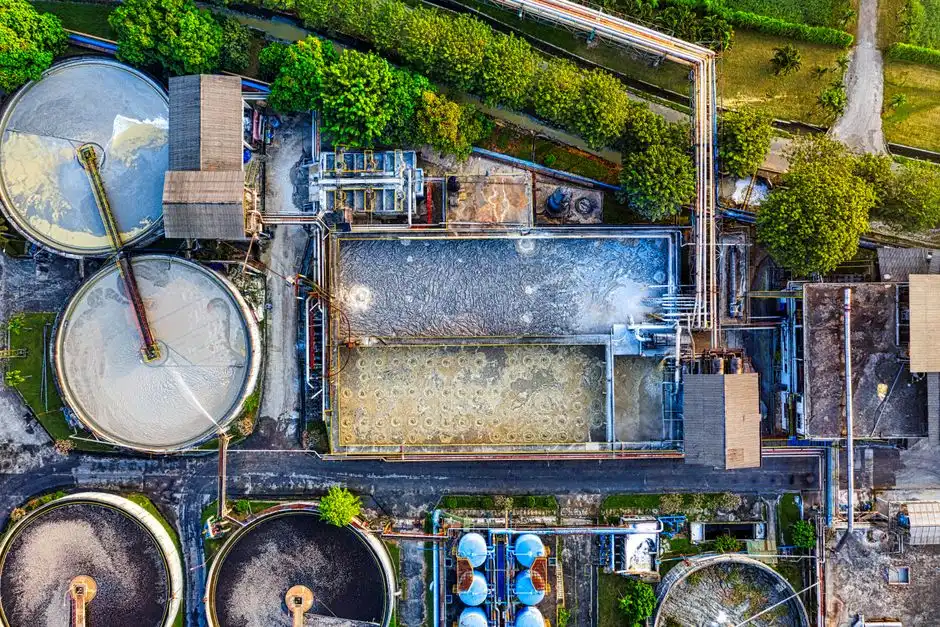
A complete mining-wastewater treatment train begins with source segregation and equalization, followed by gross-solids protection, pH and chemical conditioning, the selected separation step, sludge withdrawal, dewatering, disposal, and any required polishing or discharge. The sequence should be drawn around measured stream characteristics rather than a preferred equipment brand.
| Process stage | Primary design question | Equipment boundary to define |
|---|---|---|
| Source segregation and equalization | Which streams can be combined safely? | Segregation, storage, mixing, and event control |
| Coarse solids or grit protection | What debris could damage or overload separation? | Screen, grit removal, and extracted-solid route |
| pH and chemical conditioning | What chemistry creates capturable floc? | Dosing, instruments, mixers, and reagent storage |
| Selected separation | Which contaminant fraction is primary? | DAF or gravity/lamella duty and performance basis |
| Sludge collection and dewatering | What residual volume and moisture must be handled? | Withdrawal, storage, press, and disposal |
| Polishing or discharge | Which authority requirements remain? | Effluent quality, sampling, monitoring, and reporting |
Use a rotary mechanical bar screen ahead of equipment requiring protection from suspended solids, rags, plastics, and fibrous debris. Place the PLC-controlled chemical dosing skid before flotation or flocculation-assisted clarification so pH, coagulant, and flocculant delivery can follow the process.
Connect the selected separator to the available plate-and-frame sludge filter press, storage, and disposal capacity. A serial DAF-plus-clarifier arrangement should be justified by distinct contaminant fractions or a defined polishing duty; it should not be included automatically because the units are complementary.
Frequently Asked Questions
What is the lowest-cost DAF or clarifier for an Ellijay mining wastewater system?
There is no defensible generic lowest-cost selection from the supplied research. Compare installed scope, pretreatment, equalization, controls, utilities, chemicals, labor, sludge handling, dewatering, service, and disposal on the same wastewater basis. Ask each bidder for an itemized quotation and stated exclusions; do not turn supplier cost, footprint, or power ranges into an Ellijay estimate without site-specific pricing and design data.
How should an Ellijay factory size a DAF for variable flow?
Require source-by-source average and peak flow, batch-event profiles, hydraulic loading, peak solids mass loading, operating schedule, equalization assumptions, and feed distribution. Check that each bidder sized the separator for both transient hydraulic duty and peak solids production. A model selected only from nominal average flow has not demonstrated that it can handle washdown, stormwater, or batch discharges.
Should a mining plant use DAF or lamella clarification for heavy metals?
Decide from the metals-bearing fraction, not from the word “metals.” Require total and dissolved metals results, pH and alkalinity data, chemical coagulation and flocculation testing, and evidence that the resulting particles are floatable or settleable. If much of the metal remains dissolved, neither separator removes it without an appropriate treatment step, so the pollutant and permit basis must be addressed first.
What should a supplier include in a mining DAF proposal?
Require the separation principle, wastewater design duty, recycle and bubble-contact system, skimmer, bottom-solids withdrawal, chemical-conditioning scope, sludge route, materials rationale, utilities, PLC and instrumentation schedule, maintenance and spare parts, installation inputs, manufacturer service, and site-specific acceptance criteria. Confirm that the proposal identifies the exact contaminant fraction; a supplier reference is evidence, not a performance guarantee.
When are both DAF and clarification justified?
Both are justified when testing identifies distinct floatable and heavy settleable fractions, when one separation step cannot create a workable residual, or when a defined polishing duty remains after the primary unit. A mixed sand-and-FOG stream may also justify pretreatment before either separator. The case for a serial train must cite those measured fractions and the required effluent or sludge result—not equipment preference alone.
Related Equipment
- HydropureWater industrial DAF system — specifications, capacity range, and technical data