Which Limits Apply Before a Cleveland Sewer Discharge?
NEORSD’s Industrial Pretreatment Program monitors industrial discharges and enforces both federal pretreatment standards and locally developed limits under EPA delegation, according to the NEORSD industrial pretreatment overview. A plant must design each parameter against the stricter applicable requirement rather than relying on the federal table alone.
40 CFR Part 433 covers covered forming, finishing, forging, foundry, metal spraying, and machining wash operations co-located with plating or anodizing lines. It distinguishes PSES for existing sources from PSNS for new sources. Facility age, operating configuration, and the issued pretreatment permit determine which framework applies; a plant that only fabricates parts for an off-site finisher may have a different applicability conclusion than one operating plating or anodizing lines.
Local limits developed under 40 CFR 403.5 can add or tighten requirements for copper, nickel, zinc, lead, silver, oil and grease, TSS, and pH. Confirm the current permit table with NEORSD and verify federal applicability against the EPA Metal Finishing Effluent Guidelines.
| Requirement | What it establishes | Design decision |
|---|---|---|
| 40 CFR Part 433 PSES | Federal categorical requirements for covered existing sources | Confirm source status and category applicability |
| 40 CFR Part 433 PSNS | Federal categorical requirements for covered new sources | Determine whether new-source status affects the applicable basis |
| NEORSD local limits under 40 CFR 403.5 | Locally established pollutant limits and related discharge conditions | Compare every parameter with the applicable federal requirement |
| Issued industrial pretreatment permit | Site-specific requirements, monitoring conditions, and applicable standards | Use the current permit and characterization to establish the final design envelope |
Characterize the Wastewater Before Equipment Is Sized
A short composite can miss the batch dump that determines equalization volume and chemical demand. Require a full week of composite sampling and pair it with production records before specifying a treatment train.
Document machining and drawing compounds, stamping oils, pickling acids, plating rinsewaters, chromic-acid operations, cyanide plating, grinding swarf, casting sand, and the routing of every floor drain. The fabricated metals wastewater limits guide reports HydropureWater field observations for 2026: oils at 50–500 mg/L, total dissolved metals at 5–200 mg/L, TSS at 100–1,000 mg/L, and pH swings from 2 to 12 across batch dumps. Those values characterize the cited field conditions; they are not permit limits. The same source describes a hard-chrome rinse dump with Cr(VI) above 50 mg/L and pH below 2.
Keep metals, oil and grease, hexavalent chromium, cyanide, and TSS as separate analytical streams because they require different treatment mechanisms. A four-hour composite can miss a Friday-afternoon dump and undersize equalization, according to HydropureWater’s 2026 field guidance.
| Input to obtain | Why it affects design |
|---|---|
| Full-week composite samples with batch timing | Reveals concentration swings and the batch volume that equalization must absorb |
| Production and tank-dump schedules | Links wastewater generation to operating events |
| Floor-drain and sampling-point maps | Separates process streams from equipment or washdown drainage |
| Metals, oil and grease, TSS, pH, hexavalent chromium, and cyanide results | Defines the required unit operations and control ranges |
| Reuse requirements | May introduce polishing and tighter treatment objectives beyond ordinary sewer discharge |
Build the Treatment Train Around Failure Modes
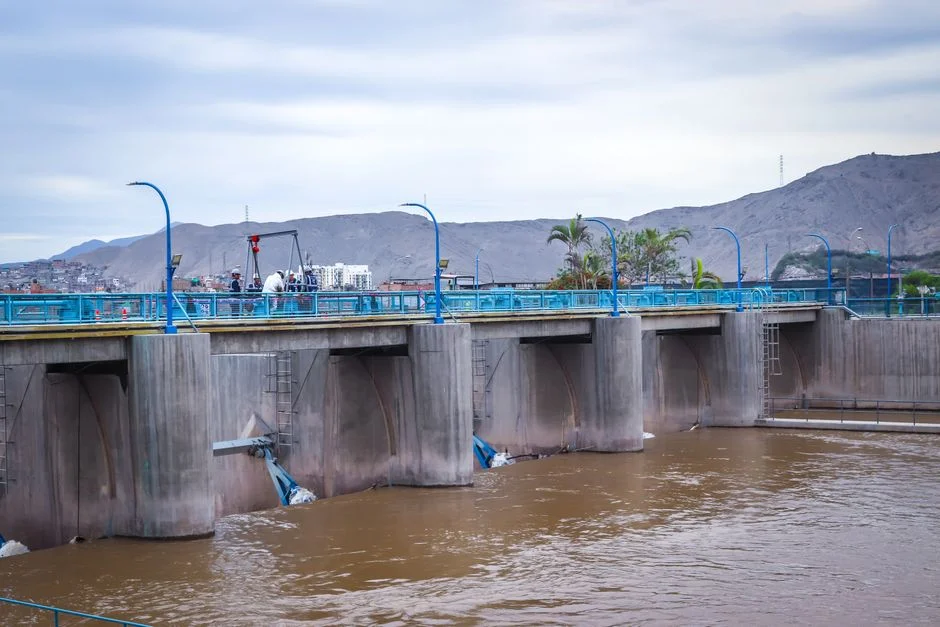
Each treatment step needs a defined purpose, outlet condition, monitoring point, and failure mode; otherwise an upstream chemistry upset can become a discharge violation.
- Screen and equalize. Remove tramp metal, wipes, and rags before they reach pumps or sludge equipment. Use equalization to smooth batch flows and protect downstream chemical and solids-removal units from hydraulic and concentration shocks.
- Remove free and emulsified oil. Physical separation or chemical break must occur before the main precipitation stage because oils can interfere with floc formation and solids capture.
- Reduce hexavalent chromium. HydropureWater’s 2026 field guidance describes sodium metabisulfite or ferrous sulfate reduction at pH 2–3, with ORP controlled at roughly 250–300 mV. Trivalent chromium can then be removed in the precipitation stage.
- Oxidize cyanide before precipitating metals. Cyanide must be destroyed before precipitation because it can resolubilize metal precipitates downstream, according to HydropureWater’s 2026 technical guidance.
- Precipitate and clarify. Adjust pH to form metal hydroxides, then remove the floc with DAF or lamella clarification. HydropureWater’s cited precipitation-stage example uses pH 8.5–9.5.
- Control and verify. Use flow-paced feedforward with pH or ORP feedback. A PLC-controlled chemical dosing skid can integrate pH adjustment, sodium metabisulfite, sodium hypochlorite, and polymer functions. Calibrate pumps, retain stroke totals, and monitor instruments so chemical feed is not applied without verification.
- Divert on upset. Route flow back to equalization and trip the train for pH excursions, ORP outside its control range, or high TSS instead of sending an upset to the sewer.
Polishing is not automatically required for ordinary discharge. HydropureWater’s 2026 guidance identifies tighter local limits, rinsewater reuse, or a future applicable requirement as reasons to add a polishing stage.
| Process step | Control point | Primary failure mode |
|---|---|---|
| Screening and equalization | Level, flow, batch-dump records | Oversized batch reaches downstream treatment |
| Oil removal | Oil and grease concentration | Interferes with floc formation and solids capture |
| Hexavalent chromium reduction | pH and ORP | Incomplete reduction or an unsafe pH excursion |
| Cyanide oxidation | ORP and pH | Cyanide persists or precipitates are resolubilized |
| Metal precipitation | pH and dose | Soluble metals remain or treatment chemistry is overdosed |
| DAF or lamella clarification | Flow, solids, float or sludge withdrawal | Floc carryover into the discharge sample |
| Final discharge control | Permit parameters and diversion interlock | Upset reaches the sewer |
Choose DAF or Lamella Clarification for the Floc Removal Step
DAF is the stronger fit when oil-bearing, colloidal, or fragile hydroxide floc requires high-rate surface separation and a skimmable float. HydropureWater identifies metalworking among the industrial applications for its metal wastewater DAF system.
Its 2026 DAF guidance lists hydraulic surface loading of 4–20 m/h, depending on model and floc density; an air-to-solids ratio of 0.005–0.060, with 0.02 identified as a typical design point; and recycle of 10–30% of forward flow. A higher air-to-solids ratio can dry the float but increases blower demand and may damage fragile floc. Higher recycle can improve TSS removal while diluting chemistry and increasing equalization demand.
Lamella clarification is a compact alternative where sludge recirculation, flocculation, and inclined-plate separation fit the process. HydropureWater reports surface loading rates of 20–40 m/h and up to 30% lower chemical consumption for its lamella system. Its DAF models cover 4–300 m/h across 13 standard models, but those are product-bound capacities, not universal plant requirements.
Size either unit from site flow, batch and equalization data, required removal, and the governing discharge limit—not from catalog capacity. A comparison of industrial treatment and DAF sizing inputs provides the broader selection framework.
| Selection criterion | DAF | Lamella clarification |
|---|---|---|
| Preferred solids behavior | Oil-bearing, colloidal, or fragile floc requiring surface float removal | Floc compatible with recirculation and inclined-plate separation |
| Hydraulic surface loading | 4–20 m/h per HydropureWater’s 2026 guidance | 20–40 m/h per HydropureWater’s 2026 guidance |
| Key operating concern | Air-to-solids ratio and recycle affect float dryness, floc integrity, and equalization demand | Sludge recirculation and solids withdrawal must be engineered for the selected floc |
| Chemical consumption | Determine from floc trials and dosing requirements | HydropureWater reports up to 30% lower consumption than its DAF basis |
| Final sizing basis | Site flow, batch data, required removal, and governing limit | Site flow, batch data, required removal, and governing limit |
Treat the Metal Sludge as a Compliance Stream

Sludge handling can become the operating bottleneck, so dewatering performance should be evaluated with the same discipline as the liquid treatment train. HydropureWater’s 2026 field guidance reports that floated metal-hydroxide sludge typically leaves DAF at 2–5% dry solids and can reach 25–35% dry solids with a plate-and-frame filter press.
A belt press is continuous and may cost less, but the same source reports that it caps out around 22% dry solids on metal hydroxide. A plate-and-frame filter press can produce a denser cake. HydropureWater offers filtration areas from 1 m² to 500 m², with manual, hydraulic, and fully automatic PLC-controlled operation.
Protect the sludge train with a rotary mechanical bar screen before equalization. HydropureWater’s 2026 guidance identifies tramp metal, wipes, and rags as a common cause of premature filter-press cloth failure.
Compare hauling economics using measured dry-solids yield and disposal acceptance. Whether a denser cake lowers total cost depends on the hauler’s charging basis and the receiving facility’s acceptance criteria; a blanket claim that one dewatering technology is always cheaper is not defensible. The sludge-thickening cost review provides additional context for reducing solids-handling costs.
Plan Verification, Controls, and a Future-Proof Discharge Route
Compliance must be demonstrated against the applicable PSES, PSNS, and NEORSD local-limit requirements before sewer discharge, using the parameter and averaging requirements stated in the plant’s permit.
Document calibration for chemical pumps, stroke-count totals, and pH and ORP instruments. HydropureWater’s 2026 guidance identifies these controls as the means for avoiding dosing without verification. Include automatic shutdown and diversion back to equalization for pH excursions, ORP outside range, and high TSS.
Define polishing triggers before procurement. The 2026 guidance identifies stricter NEORSD limits, rinsewater reuse, sub-ppm dissolved-solids targets, or a future applicable rule as reasons to add treatment. MBR, RO, anion exchange, and granular activated carbon are possible routes for those objectives; they are not mandatory for every fabricated metals discharge.
HydropureWater’s 2026 regulatory caveat states that an EPA PFAS rulemaking scoped to chrome finishing facilities was in motion, but no current numerical PFAS limit for chrome finishers was identified. Verify the EPA Metal Finishing Effluent Guidelines page before adding PFAS equipment. Preserve space, utilities, and control interfaces so a future polish stage can be added without rebuilding the core train.
| Control or future requirement | Verification | Engineering response |
|---|---|---|
| Chemical feed | Pump calibration and stroke-total records | Flow-paced feedforward with monitored chemical dosing |
| pH and ORP | Instrument calibration and alarm tests | Feedback control and automatic diversion |
| TSS carryover | Permit sampling and solids monitoring | Diversion to equalization when the trigger is reached |
| Tighter local limit or reuse | Current permit and reuse specification | Evaluate MBR, RO, ion exchange, or activated carbon as applicable |
| Future PFAS requirement | Current EPA regulatory status | Preserve installation space and interfaces; do not assume an unconfirmed numerical limit |
Turn the Design into an Executable Project
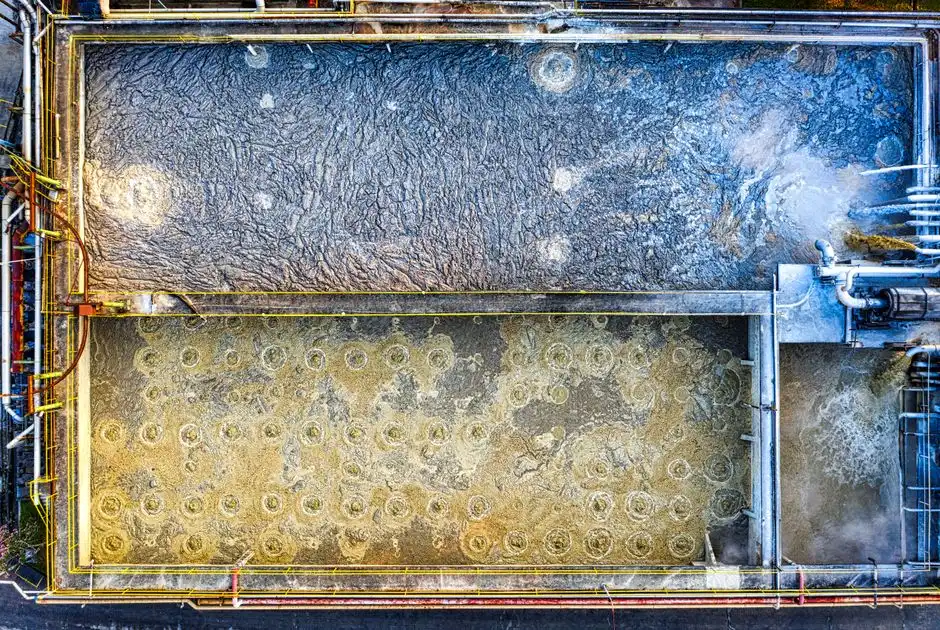
A permit-ready project should move from regulatory verification to characterized influent, guaranteed equipment performance, commissioning evidence, and only then sewer connection.
- Freeze the regulatory basis. Confirm permit applicability, obtain the current NEORSD local-limit table, and establish the applicable federal category.
- Characterize the stream. Complete the full-week wastewater study, production review, floor-drain survey, and batch-dump inventory.
- Select the treatment train. Match unit operations to the characterized contaminant profile and governing effluent parameters.
- Obtain vendor guarantees. Tie guarantees to the characterized influent, required removal, and permit-derived effluent basis rather than catalog capacity.
- Define the operating envelope. Include sampling points, interlocks, chemical handling, maintenance access, sludge-disposal route, and operator training in the proposal.
- Commission before connection. Calibrate chemical feed, test alarms and diversion, demonstrate stable hydraulic performance, and document effluent sampling.
Keep permit values, supplier guidance, and field averages in separate design tables. Confirm final values against current permits, influent testing, and the final equipment proposal. The industrial treatment procurement sequence can support the commercial review.
Frequently Asked Questions
How should equalization and treatment equipment be sized for a Cleveland fabricated metals plant?
Start with a full-week composite sampling program and a batch-dump inventory. Equalization must reflect the actual dump volume, timing, concentration swings, and downstream hydraulic response. Then size treatment units from the characterized flow and contaminant loads, required removal, and governing discharge limit—not from a general treatment-train drawing or catalog capacity.
What should a wastewater treatment supplier guarantee before equipment is purchased?
Require a guarantee tied to the characterized influent and the governing effluent parameters. The proposal should also define chemical dosing, instrumentation, alarm and diversion interlocks, maintenance access, operator training, and the sludge route. Demonstrated treatment of the actual oils, metals, hexavalent chromium, cyanide, and TSS profile is more informative than brand or catalog claims.
Does meeting 40 CFR Part 433 limits by itself prove Cleveland discharge compliance?
No. Part 433 applicability depends on the facility’s covered operations and source status, while NEORSD administers federal standards and locally developed limits under EPA delegation. Verify the current pretreatment permit and local-limit table with NEORSD, then compare every applicable parameter and use the stricter requirement for the design.
Does a Cleveland plant need PFAS polishing equipment now?
The cited 2026 regulatory caveat identifies an EPA PFAS rulemaking scoped to chrome finishing facilities but no current numerical PFAS limit for chrome finishers. Confirm current status on the EPA Metal Finishing Effluent Guidelines page. Until a present requirement or specific reuse objective justifies it, reserve space and utilities for future polishing rather than installing an unsupported unit.