What an Effluent Treatment Plant in Mexico City Must Achieve
An effluent treatment plant in Mexico City is the facility-level treatment system that removes contaminants before water is discharged to an authorized route, transferred to a sewer, or reused. Selection depends on flow, pollutant load, oil and solids content, reuse requirements and site constraints. Large municipal infrastructure demonstrates the scale of the challenge: ACCIONA reports that Atotonilco treats wastewater from 10,500,000 equivalent inhabitants, with capacity of 35 m³/s and maximum capacity of 50 m³/s. That installation is not a design benchmark for an industrial facility.
Atotonilco forms part of the Valley of Mexico Water Treatment Consortium. ACCIONA states that it designed, constructed and operated the plant for 22 years under design-and-construction and O&M contracts. Its scale reflects a metropolitan system; a factory, hotel or hospital must size its own industrial wastewater treatment plant from measured flows, composition and applicable discharge conditions.
Before requesting proposals, establish five inputs:
- Hourly and daily wastewater flow, including peaks and discharge duration.
- Wastewater composition and variability across production or operating cycles.
- The required sewer-transfer, discharge or reuse route.
- The intended reuse purpose and required effluent quality.
- Site, footprint, utilities, operator and operating constraints.
The regional context is useful for understanding infrastructure requirements, while project-specific engineering remains essential. Buyers dealing with sector-specific streams should also review pharmaceutical wastewater treatment in Mexico for the implications of a regulated industrial stream.
Characterize the Wastewater Before Selecting Equipment
Representative sampling across production cycles is necessary because a single average sample can conceal contaminant peaks and different wastewater regimes. The Global NEST Journal’s study of five textile-industry effluents illustrates why parameter-by-parameter characterization matters: color exceeded the applicable limit in every sample by about 350-fold on average, while COD, TSS, NH₃, BOD₅ and sulfide exceeded limits by 24, 13, 8, 7 and 3-fold, respectively.
That finding comes from textile operations in Kaduna, Nigeria, not Mexico City. It is evidence that industrial effluent can vary substantially by parameter; it is not a local discharge limit or a basis for sizing a Mexican facility. Each buyer must obtain the current applicable permit and sewer or discharge requirements before finalizing equipment. A supplier’s municipal or industrial permit experience does not replace that site-specific review.
| Wastewater input | Process implication | Evidence to request before selecting equipment |
|---|---|---|
| Flow and discharge timing | Determines hydraulic capacity, equalization and peak treatment duty. | Measured peak-hour flow, average daily flow, discharge duration and batch schedule. |
| Soluble organics | May require biological treatment before membrane or reuse stages. | COD and BOD₅ results across representative operating cycles. |
| Oil, grease and FOG | Can foul or interfere with downstream biological and membrane equipment. | Oil and grease measurements, free/emulsified oil observations and recovery expectations. |
| Suspended solids and colloids | Influences screening, clarification, DAF and filtration duties. | TSS, particle characteristics and settleability testing. |
| Color, nutrients, salts and industrial contaminants | Each may require a specific treatment or monitoring strategy. | Parameter-specific analyses, including compounds relevant to the industrial process. |
Keep source control, equalization and pretreatment separate from final treatment. A rotary mechanical screen can remove suspended solids, rags, plastics and fibrous debris before they reach downstream equipment. For recoverable oil, solids or colloids, an industrial DAF wastewater treatment system can form part of the pretreatment stage. The bid should define each stage’s removal duty, receiving stream and required performance rather than treating “industrial wastewater treatment” as a single equipment category.
Compare the Main Effluent Treatment Technologies
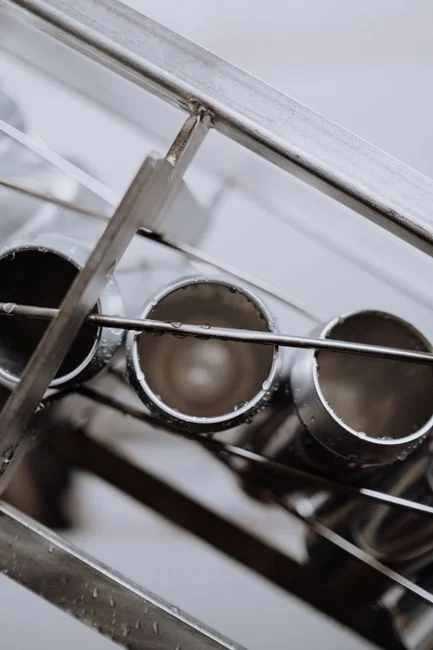
DAF, MBR, UF and packaged sewage treatment serve different roles and should not be compared as interchangeable products. DAF removes suspended solids, FOG, oil and grease and colloidal material; MBR combines biological treatment with membrane separation; UF provides a solids-retention barrier; and packaged treatment integrates several conventional process stages.
| Technology | Documented range or feature | Treatment role | Primary operating consideration |
|---|---|---|---|
| DAF | 4–300 m³/h; 13 standard models; micro-bubble technology and automatic skimming. | Removal of suspended solids, FOG, oil and grease and colloidal matter. | Requires appropriate feed conditioning and reliable solids or recovered-oil handling. |
| MBR | 10–2,000 m³/day; submerged PVDF membranes; filtration below 1 micrometre. | Combined activated sludge and membrane filtration. | HydropureWater states that its footprint is 60% smaller than conventional systems; membrane cleaning and aeration remain part of the operating scope. |
| UF | 2,000–40,000 L/h; 0.03-micron hollow-fiber PVDF membranes; automatic backwash and air scour. | Removal of bacteria, colloids and suspended solids without chemicals. | Accepts feed turbidity up to 300 ppm; upstream solids removal and the specified membrane duty remain critical. |
| Packaged sewage treatment | 1–80 m³/h; anoxic/aerobic contact oxidation, sedimentation and disinfection in a buried unit. | Combined treatment for residential communities, hotels, hospitals, factories and rural areas. | The complete train must fit the wastewater characteristics, discharge route and operating arrangement. |
The equipment ranges and performance descriptions above come from HydropureWater product information. For direct technical comparisons, see the industrial DAF wastewater treatment system and MBR wastewater treatment plant.
Advanced treatment should follow a defined reuse or discharge objective. University of Twente research investigated nanofiltration as a method for polishing wastewater-treatment-plant effluent to EU Water Framework Directive standards for agricultural or direct/indirect potable use. That research does not establish those standards as Mexico City requirements; local approval and project-specific validation remain necessary.
Wageningen University’s doctoral thesis, published on 23 September 2022, examined constructed wetlands for micropollutant removal from treatment-plant effluent. This supports constructed wetlands as a potential route for local validation—not as a mandatory standard or a substitute for the facility’s required treatment train.
Build an Integrated Treatment and Reuse Train
A defensible treatment train follows a defined sequence: screening and equalization; contaminant-specific pretreatment; biological or physical separation; required polishing; disinfection where specified; and controlled discharge or reuse. Each stage needs a stated duty, performance criterion and interface with the next stage.
Screening protects downstream pumps, valves and biological processes from suspended solids, rags, plastics and fibrous debris. Equalization should accommodate the measured flow regime and provide the operating stability required by subsequent stages.
DAF should be evaluated ahead of biological or membrane equipment when oil, grease, FOG, colloids or excessive suspended solids could interfere with the downstream process. This is a process-selection condition, not a rule that every wastewater requires DAF. The equipment supplier should demonstrate that the proposed DAF duty responds to the characterized contaminants.
Chemical addition may be required for coagulation, flocculation, pH adjustment or specialty treatment. The automatic chemical dosing system is skid-mounted, pre-wired and factory-tested. The bid should still define the chemical, dosing range, storage, control logic and operator responsibilities.
Sludge handling cannot be left outside the equipment scope. HydropureWater’s plate and frame filter presses offer filtration areas from 1 m² to 500 m² and manual, hydraulic or fully automatic PLC-controlled operation. The proposal should state how screenings, DAF sludge, chemical precipitates and biological solids will be dewatered, contained and disposed of.
For non-potable reuse, MBR or UF can provide a defined solids barrier, but the suitability of either stage must be tied to the intended reuse specification. Where disinfection is required, the UV sterilizer represents one possible stage, subject to applicable regulatory review and validation of the complete route. Higher-grade polishing should be added only where the reuse objective requires it.
Size the Plant Using Verified Project Inputs
Plant size should follow measured peak-hour flow, average daily flow, discharge duration, batch data and expected expansion—not a generic capacity rule or a municipal equivalent-population figure. Buyers should require bidders to map every equipment item to the stated wastewater parameters and receiving or reuse requirement.
| Documented equipment range | Comparison basis | What the bidder must demonstrate for this project |
|---|---|---|
| DAF: 4–300 m³/h | Equipment range, not a plant-sizing rule. | Selected model, required flow, contaminant-removal duty, recovered-solids handling and controls. |
| WSZ packaged treatment: 1–80 m³/h | Equipment range, not a treatment-performance guarantee. | Integrated process suitability, installation arrangement, effluent duty and operating support. |
| MBR: 10–2,000 m³/day | Equipment range, not an assumption that daily flow equals average treatment capacity. | Peak and equalization strategy, membrane configuration, biological loading and cleaning provisions. |
| Hollow-fiber UF: 2,000–40,000 L/h | Equipment range, not a standalone effluent-treatment design. | Upstream pretreatment, feed turbidity, membrane duty, backwash and recovery requirements. |
Atotonilco’s 35 m³/s operating capacity and 50 m³/s maximum capacity belong to a major municipal installation serving 10,500,000 equivalent inhabitants, according to ACCIONA. They must not be used as default design benchmarks for an industrial facility.
Each bid should define the design basis, hydraulic loading, treatment train, duty or standby configuration, controls, utilities, installation boundaries, commissioning tests, O&M assumptions and exclusions. Require the proposed MBR wastewater treatment plant or alternative to identify which flow and water-quality values it was designed to handle; do not accept catalog ranges alone.
Specify how performance will be demonstrated: analytical parameters, sampling points, test conditions, acceptance thresholds and responsibility for resolving failures. This is more useful than a broad statement that the plant will “meet regulations.”
Compare Quotes and Qualify the Supplier
Supplier discovery data can indicate market depth but not engineering capability. RevenueBase reported 142 effluent-treatment-company matches in Mexico and 11 in Mexico City as of September 2026; its “exact match” badges identify records associated with the search term rather than quality ratings.
Ask each bidder for comparable projects, drawings, commissioning records, measurable acceptance criteria, local installation capability, commissioning support, spare-parts access and a clear O&M responsibility split. Verify whether the proposed reference treated the same contaminants and discharge route rather than merely serving the same industrial sector.
| Commercial or technical item | Question to include in every request for quotation | Evidence required for comparison |
|---|---|---|
| Guaranteed process duty | Which characterized flow and contaminant values does the offer cover? | Guarantees, test method, sampling point, acceptance threshold and remedy. |
| Scope and exclusions | What is supplied, and what remains with the owner? | Equipment list, process diagram, battery limits, civil works and utility connections. |
| Installation and commissioning | Who performs site work, training and performance testing? | Work breakdown, schedule dependency, commissioning plan and training deliverables. |
| Operations and maintenance | Which tasks, consumables and spares are included? | O&M manual, maintenance schedule, consumable list, parts support and price assumptions. |
| Compliance basis | Which permit, sewer or reuse criteria were used? | Current permit references, design basis and clear allocation of approval responsibilities. |
| Lifecycle support | What warranty, spares and technical support are offered? | Warranty terms, spare-parts pathway and documented support arrangements. |
Compare total delivered scope rather than purchase price alone: equipment, footprint, utilities, controls, installation, civil work, consumables, maintenance, warranty and lifecycle support. A low equipment quotation can be incomplete if it omits pretreatment, sludge handling, chemical systems, commissioning or permit support.
Use DAF and MBR quotations as direct comparisons when the wastewater contains recoverable oil or solids and reuse-quality filtration is required. Use UF as a polishing quotation only where its specified membrane role matches the treatment objective. Additional decision support is available in the comparison of DAF and clarifier selection for petroleum wastewater and MBR and conventional activated-sludge treatment for mining wastewater.
Make the Treatment Decision with a Clear Selection Path
The procurement decision follows six steps, beginning with the receiving route rather than a preferred machine. The industrial ETP and DAF selection guide provides a related decision framework.
- Define the destination. Establish the authorized sewer or discharge route, reuse objective and current permit basis.
- Characterize the wastewater. Establish flow, COD, BOD, TSS, oil and grease, color, nutrients, pH and industrial contaminants across representative cycles.
- Remove source-specific obstacles. Select screening, oil and grease removal, DAF, chemical conditioning or other pretreatment where the characterization requires it.
- Select the core treatment. Choose biological or physical separation according to contaminant behavior, land availability and operating requirements.
- Add justified polishing. Use MBR, UF or another barrier only where the discharge or reuse specification requires it.
- Compare delivered performance. Assess controls, utilities, sludge handling, commissioning, O&M support, guarantees, exclusions and lifecycle commitments.
This sequence keeps equipment selection subordinate to wastewater behavior and legal use. It also gives bidders a common basis for comparison and leaves the owner with measurable technical questions rather than a catalogue-only decision.
Frequently Asked Questions
How much does an effluent treatment plant in Mexico City cost?
The supplied research contains no Mexico City project quotation, so a defensible total-cost figure cannot be stated. Request itemized pricing for the selected treatment train, pretreatment, controls, utilities, installation, civil work, commissioning, sludge handling, consumables, maintenance and warranty. Compare bids on the same scope and ask suppliers to identify exclusions. For ownership-change or acquisition screening, the Mexico plant wastewater due diligence process helps identify the obligations that must enter the cost basis.
How should a buyer select and qualify an industrial wastewater treatment supplier?
Require comparable references, a wastewater-specific design basis, measurable commissioning criteria and a clear O&M responsibility split. Ask each bidder to identify the permit, sewer or reuse criteria used, provide relevant drawings and project references, and explain who owns testing, training, consumables and maintenance. A company-discovery listing is not proof of engineering capability.
What flow capacity should an industrial wastewater treatment plant have?
Size the plant from measured peak-hour flow, average daily flow, discharge duration and future expansion. Catalog comparison ranges are DAF at 4–300 m³/h, WSZ packaged treatment at 1–80 m³/h, MBR at 10–2,000 m³/day and hollow-fiber UF at 2,000–40,000 L/h. These are equipment ranges, not universal design rules. Atotonilco’s municipal capacity must not be used as an industrial default.
Does treatment performance alone establish wastewater discharge compliance?
No. Equipment performance is only one part of authorization. The buyer must obtain the current applicable permit and sewer or discharge requirements, define the required receiving route and identify which party is responsible for approvals. The final bid should map treatment guarantees to those legal requirements rather than relying on general statements of compliance.
What information determines the delivery and approval schedule?
The schedule depends on the approved process route, final equipment selection, permit or reuse review, site information, installation boundaries and commissioning acceptance criteria. The supplied sources do not provide a standard delivery period. Request a dated delivery schedule from each bidder and make it conditional on site data, drawing approval, regulatory inputs and agreed performance tests.