What Changes When Heineken Acquires a Malaysian Plant?
The acquisition does not itself establish new wastewater limits or prove that an existing permit transfers automatically. The buyer must verify the plant’s current approval, legal permit holder, discharge point, applicable Malaysian standard and outstanding compliance matters with the Department of Environment Malaysia and the relevant receiving authority. HEINEKEN Malaysia states that Sungei Way treats all generated wastewater and complies with the Environmental Quality Act 1974 and Fifth Schedule Standard B of the Environmental Quality (Industrial Effluent) Regulations 2009. That is a useful operating benchmark, but it is not evidence about the acquired site’s consent. Diligence must establish site-specific conditions, measured flows, effluent performance, monitoring history and remediation liabilities before treatment equipment is selected.
No supplied research establishes an automatic transfer of a Malaysian wastewater approval when ownership changes. The change of control therefore creates a verification obligation rather than a basis for assuming continuity. Before closing, the buyer should establish whether the approval remains valid, whether it must be amended or reissued, and whether the receiving authority requires notification.
The operating responsibility remains continuous. Site personnel must continue sampling, maintaining the existing ETP, retaining records and reporting results while the transaction is completed and after closing. This continuity should be reflected in the responsibility matrix, operating procedures and handover plan.
HEINEKEN Malaysia’s disclosure for the Sungei Way Brewery provides a known benchmark: the company says all wastewater is treated before release into Sungai Way under the Environmental Quality Act 1974 and Fifth Schedule Standard B of the Environmental Quality (Industrial Effluent) Regulations 2009. It does not establish the position of an unidentified acquisition target.
The target may have a different written consent, receiving-water classification, discharge point, treatment train, monitoring schedule or inherited liability. Corporate ownership resolves none of those questions. The approach set out in Malaysian brewery acquisition wastewater due diligence therefore separates the verified site record from assumptions based on the buyer’s broader operating footprint.
Establish the Permit and Regulatory Position
The plant’s written approval must be treated as the controlling commercial and regulatory document until Malaysia’s Department of Environment confirms otherwise. The Environmental Quality Act 1974 is the cornerstone of Malaysia’s environmental framework, while the Environmental Quality (Industrial Effluent) Regulations 2009 provide the industrial-effluent reference described by Totalmas in its 2026 industrial compliance guide. Current legislation, DOE guidance, the site consent and receiving-authority requirements still need to be checked for the acquired site; a commercial guide cannot replace them.
- Request the current environmental approval or licence and verify its legal holder, validity period, covered activity and site address.
- Extract every discharge limit, prohibited condition, monitoring obligation, reporting format, record-retention requirement and corrective-action commitment.
- Confirm the approved effluent route and receiving authority, including any sewer, drainage, river or other discharge consent.
- Obtain written confirmation from Malaysia’s DOE and the relevant receiving authority regarding change-of-control wastewater consent, notification, amendment or reapplication requirements.
- Assemble the compliance chronology: DOE correspondence, inspection reports, breach notices, audit findings, consent conditions, outstanding remediation actions and submissions to receiving authorities.
The table below separates the document from the finding it must support.
| Diligence item | Evidence to obtain | Finding supported |
|---|---|---|
| Environmental approval or licence | Current signed document and amendments | Legal holder, validity, covered activity and conditions |
| Change of control | Written DOE and receiving-authority response | Whether notification, consent or amendment is required |
| Discharge authorisation | Approved flow diagram, site plan and sewer, drainage or river agreements | Authorized destination and additional operating obligations |
| Enforcement history | Notices, inspections, audits, breach records and remediation correspondence | Inherited compliance findings and outstanding actions |
| Monitoring compliance | Laboratory reports, submission receipts, calibration files and chain-of-custody records | Whether reported performance is complete and defensible |
Written regulatory confirmation should be a closing input, not an action left to the integration team after ownership has changed. If the authorities do not provide an automatic determination, the transaction documents should address who must submit the filing and what happens if approval is delayed, conditioned or refused.
Confirm the Discharge Point and Applicable Standard
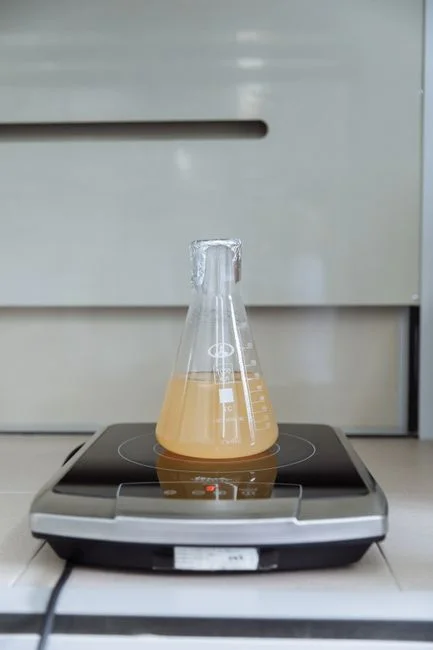
The applicable discharge standard must be established from the receiving-water context and the site’s written consent, not inferred from an address, brewery description or another company’s disclosure. Obtain the approved process-flow diagram, site plan, discharge coordinates and receiving-water identification. Map upstream and downstream water-supply intakes and seek confirmation from the relevant authorities.
According to Totalmas in its 2026 industrial compliance guide, Standard A is associated with factories upstream of water-supply intakes, while Standard B is associated with factories downstream. This is a classification principle, not a substitute for confirming the acquired plant’s actual receiving-water context and permit conditions.
HEINEKEN Malaysia states that wastewater at Sungei Way is treated to meet DOE’s applicable discharge standards before release into Sungai Way and identifies Fifth Schedule Standard B. That position is useful context for the buyer’s technical expectations, but it cannot be transferred to another brewery until the target’s discharge point, intake relationship and consent are verified.
| Evidence | What it establishes | Limitation |
|---|---|---|
| Approved process-flow diagram and discharge coordinates | Physical discharge route and treatment sequence | Must be reconciled with the legal approval |
| Upstream and downstream intake map | Receiving-water context relevant to Standard A or Standard B classification | Requires authority confirmation |
| Current written consent | Site-specific limits, sampling points, methods, frequency and reporting format | No plant-specific schedule was supplied in the research |
| BOD values reported by Totalmas in 2026 | 20 mg/L for Standard A and 50 mg/L for Standard B | Not the complete parameter schedule and not an equipment-sizing basis |
The two BOD values are the only quantified limits in the supplied research. They do not cover the full site specification and cannot by themselves demonstrate compliance. Require the complete approved parameter list, sampling points, analytical methods, monitoring frequency and reporting format from the consent and current regulator guidance.
Also reconcile the legal and physical routes. A discharge drawn in a process diagram is not sufficient if the approved document identifies a different outlet, or if an intermediate sewer or drainage authority imposes additional conditions.
Audit the Brewery ETP, Flows and Effluent Performance
Brewery wastewater must be characterized stream by stream because brewing, cleaning and other process streams can contain organic materials and cleaning agents with different flow and contaminant profiles. A single average flow or laboratory result can conceal the stream that drives peak loading, chemical demand, solids production or permit risk.
Build a wastewater balance from calibrated flow records. It should trace process generation, on-site reuse, treatment, final discharge, sludge and other waste destinations, and reconcile daily discharge totals in cubic metres and kilogram conversions where mass reporting is used. Verify meter identity, installation, units, calibration status and readings against discharge records.
| Evidence package | Required content | Decision enabled |
|---|---|---|
| Stream characterization | Source, variability, flow, contaminants, treatment objective and operator for each stream | Identify the controlling wastewater stream |
| Calibrated flow record | Meter identity, installation, units, calibration and reconciled discharge totals | Establish hydraulic and mass-loading basis |
| Operating record | ETP performance, downtime, bypasses, controls, chemicals and maintenance | Assess capacity, reliability and compliance history |
| Laboratory evidence | Current analyses, parameter-specific results, methods, sampling points and chain of custody | Compare demonstrated effluent with consent conditions |
| Forward plan | Production changes, reuse expansion and anticipated wastewater characteristics | Set design envelope |
Nominal ETP capacity and equipment nameplates are not evidence of compliance. Request the existing process drawings, controls narrative, operating data, downtime logs, bypass records, laboratory results and future production plans. Compare the installed treatment train with the measured treatment objective and permit requirements.
An industrial DAF system for brewery wastewater pretreatment can be screened where the measured feed contains suspended solids, oil and grease or colloidal material. An MBR system for brewery wastewater reuse can be screened where biological solids separation or reuse-grade polishing is required. Neither application is automatic: feed characteristics, flow, membrane compatibility, operating envelope and required effluent quality must support the selection.
Require demonstrated performance linking equipment, controls and operating practices to measured effluent. Define a monitoring and reporting role for every applicable parameter so that the plant can show how each consent condition is controlled.
Resolve Monitoring, Sludge and Environmental Liability
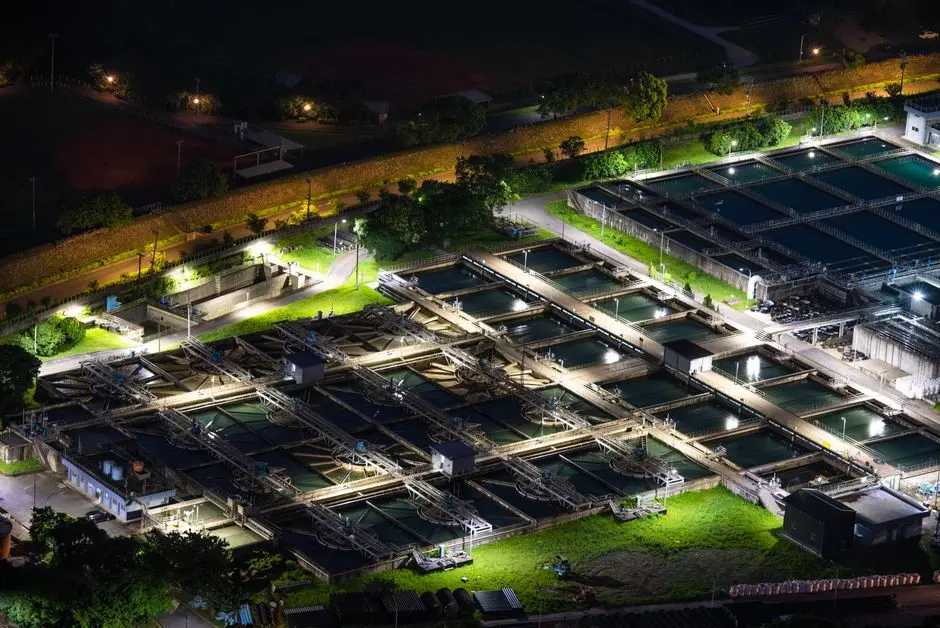
The inherited monitoring programme must be reconciled against every permit parameter, sampling frequency, reporting format, calibration requirement and chain-of-custody rule. Retain laboratory accreditation, calibration records, sample submissions and delivery receipts. A missing result or invalid sample is a control finding because it prevents the site from demonstrating compliance.
Totalmas warns in 2026 that calibration drift can create false readings or conceal a genuine exceedance. Preserve calibration, inspection and maintenance files linked to each device, date, technician and recorded variance. Define escalation rules for missing data, invalid samples, instrument failure and suspected exceedance, including who can authorize resampling and corrective action.
Trace sludge generation, characteristics, storage, dewatering and final disposal. Reconcile sludge records with the site-wide mass balance so that separated solids are not omitted from the environmental account. Where plate-and-frame filter presses are being evaluated, link equipment selection to measured solids characteristics, operating cycle, filtrate quality and the verified disposal route.
- Permit-critical: an unresolved condition affecting authorization, limits or mandatory reporting.
- Compliance-critical: a potential exceedance, monitoring failure, enforcement issue or unremediated historical breach.
- Operational: a maintenance, reliability, capacity or data-control issue requiring funded correction.
- Improvement-only: an optimization that does not establish or remediate a legal breach.
Permit-critical and compliance-critical findings should become closing conditions or be governed by an approved remediation plan with milestones, accountable owners and completion evidence. The transaction documents should allocate pre-closing exceedances, penalties, remediation costs, sludge liabilities and third-party claims.
Totalmas reports that the Environmental Quality (Amendment) Act 2024 provides mandatory imprisonment of up to five years and fines from RM50,000 to RM10 million for pollution of inland waters. Treat this as a risk signal only; obtain current Malaysian legal advice and regulatory confirmation on whether and how those provisions apply to the site.
HEINEKEN Malaysia reports zero waste to landfill since 2017. Use that achievement as a corporate sustainability benchmark, not evidence of the acquired site’s waste controls. Require its actual sludge and waste-disposal records.
Translate Due Diligence into a Treatment and Procurement Plan
The treatment objective must be fixed before equipment is selected. The verified design basis should contain measured flow, stream-specific wastewater characteristics, reuse or discharge objectives, permit conditions, existing drawings, site constraints and the future production plan. Nameplate throughput is not a compliance solution.
| Decision condition | Supplier evidence required | Buyer check |
|---|---|---|
| Measured flow and wastewater characteristics are available | Documented sizing inputs, load calculations and operating envelope | Inputs match site data and the future production plan |
| Treatment objective is established | Parameter-by-parameter performance basis and monitoring role | Each performance claim is tied to a consent or reuse requirement |
| Existing ETP is integrated | Installation boundary, interfaces, controls and site constraints | Supplier states civil, electrical and operational exclusions |
| Performance must be demonstrated | Commissioning, validation and acceptance methodology | Acceptance criteria reference verified feed and effluent conditions |
| Long-term operation is required | O&M assumptions, consumables, chemical demand and support scope | Costs and responsibilities are included in the priced offer |
Issue the supplier request with current drawings, wastewater analyses, operating data, consent conditions, downtime logs and future production plans. Require each supplier to state its sizing inputs, performance basis, compliance role, installation boundary, commissioning evidence, O&M assumptions and support for monitoring records. A broader approach is set out in the brewer acquisition wastewater equipment and integration guide.
The supplied research does not support a reliable acquisition-specific equipment price. Request a priced bill of quantities that separates equipment, civil works, controls, commissioning, validation, O&M and exclusions. Pricing without a verified design basis would conceal the assumptions that later drive change orders or compliance failure.
Use a Risk-Based Closing and Integration Checklist
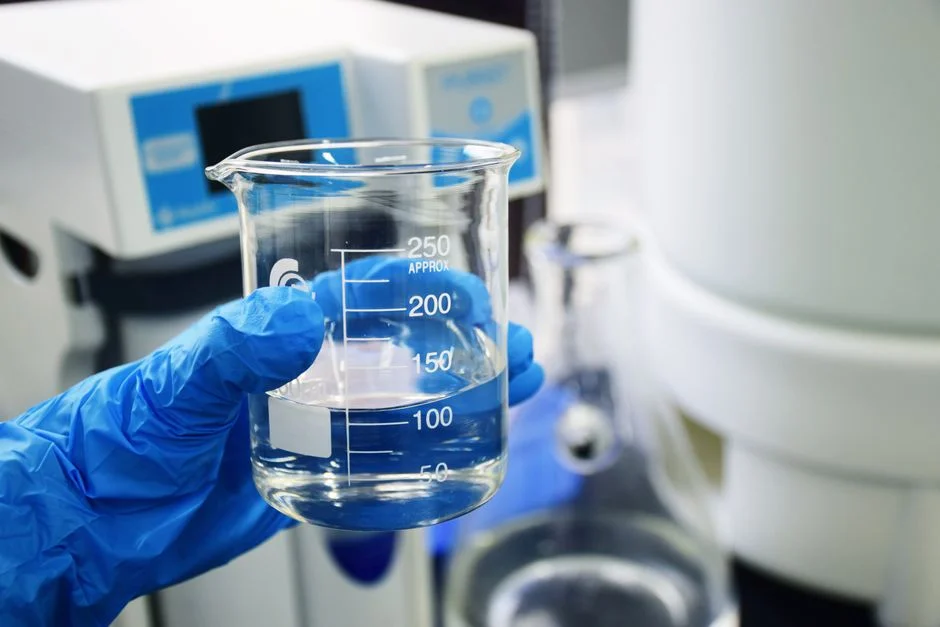
Environmental risk should be disclosed by event and chronology, not summarized as a general statement of compliance. Include every environmental notice, inspection finding, exceedance, monitoring gap, permit breach and pending agency or receiving-authority matter. A non-compliance that did not result in a fine remains relevant historical risk and should not disappear because enforcement was absent.
- Establish the closing-date baseline using laboratory results, flow records, calibration files, bypass logs, notices, correspondence and waste-disposal documents.
- Classify each finding as permit-critical, compliance-critical, operational or improvement-only, then assign its treatment.
- Allocate pre-closing contamination, exceedances, penalties, remediation costs, sludge liabilities and third-party claims to identified parties.
- Include specific warranties covering inherited permit status, disclosed exceedances, untreated or bypassed discharge, monitoring gaps, outstanding remediation and sludge disposal.
- Require post-closing cooperation for regulator access, document preservation, information requests, audits, consent-transfer analysis and any required change-of-control filing.
The integration plan should assign continuing ownership of sampling, ETP operation, calibration, laboratory submissions, exceedance escalation, sludge management and record retention. If consent status is unresolved, closing should not proceed without a documented legal and technical position that protects the buyer and clearly allocates the risk.
The key transaction principle is simple: corporate ownership does not prove regulatory equivalence. HEINEKEN Malaysia’s Sungei Way disclosure can inform the diligence questions and treatment expectations, but the acquired plant’s own consent, discharge route, measured performance and historical liabilities determine the remediation and investment decision.
Frequently Asked Questions
Does Heineken’s acquisition automatically transfer the Malaysian plant’s wastewater permit?
No automatic transfer rule is established by the supplied evidence. Before closing, obtain the current approval and written confirmation from Malaysia’s DOE and the relevant receiving authority on notification, consent, amendment, reapplication and continuing operating obligations.
Does HEINEKEN Malaysia’s Standard B disclosure apply to every acquired brewery?
No. Sungei Way’s stated position is a company-specific benchmark. Confirm the target’s written consent, discharge point, receiving-water context and upstream or downstream intake relationship before assigning a standard.
What information is needed to size a wastewater treatment system for the acquired plant?
Provide measured flow, stream-specific wastewater analyses, permit conditions, reuse or discharge objectives, existing drawings, operating and downtime data, and future production plans. The equipment proposal must show how its sizing inputs and performance claims derive from those data.
How much should wastewater equipment cost for the acquisition?
The supplied research does not support an acquisition-specific price. Request a scoped and priced bill of quantities covering equipment, civil works, controls, commissioning, validation, O&M and exclusions, with each commercial item tied to the verified design basis.
Which treatment equipment should the buyer prioritize?
Select only after characterization. DAF can be evaluated for measured solids, oil and grease or colloidal loads, while MBR can be evaluated for biological solids separation or reuse-grade polishing when feed characteristics, flow, membrane compatibility and system integration support the application.