What Changes When CATL Acquires a Hungarian Plant?
Hungarian wastewater requirements following a CATL plant acquisition are determined by the acquired site’s existing environmental permits, waste-management obligations, wastewater profile, discharge route and CATL’s post-close operating plan—not by CATL’s ownership alone. Before closing, obtain written confirmation from the issuing authority on permit continuity, transfer, modification or reissuance; map every wastewater and waste stream; review monitoring, waste logs and enforcement history; test treatment capacity against anticipated flows and chemistry; and address unresolved risks through closing conditions, covenants or escrows. No Hungarian numerical effluent limit should be assumed without the site-specific permit.
The transaction team must separate four roles that may not belong to the same legal entity after closing: the legal owner, permit holder, plant operator, and party responsible for waste or discharge obligations. A change in equity ownership does not by itself resolve which entity must submit transfer filings, conduct monitoring, manage hazardous waste or operate the treatment system.
The decisive changes are operational. CATL could alter production volume, process chemistry, cooling demand, freshwater use, wastewater generation, treatment operation, reuse or final discharge routing. Each change must be tested against the permitted activity and the treatment system’s hydraulic and contaminant capacity.
The recommended pre-closing step is a written request to the issuing authority asking whether the authorization will continue, must be transferred, requires modification or must be reissued. This should be supported by the site permit and a comparison with CATL’s operating plan, rather than by a generic assumption that change-of-ownership language is sufficient.
The CATL Hungary enforcement context also shows why the file must extend beyond discharge chemistry. The Budapest Business Journal report on the CATL Hungary HUF 10 million fine describes deficiencies involving waste labeling, collection-point identification, hazardous-waste identification, facility security and operations logs lacking deposit and removal dates. The same report states that CATL Debrecen said the fine would be paid and that a repeat inspection on July 9 found the previously identified deficiencies corrected.
That case is relevant to CATL Debrecen environmental compliance as a commercial warning, not as proof that every acquired site has the same violations. The practical lesson is narrower: wastewater diligence must also test the plant’s hazardous-waste identification and records.
Build the Hungarian Environmental Due-Diligence File
The acquisition file should establish the legal authorization, actual operating history and physical treatment baseline in one auditable record. A current permit alone does not prove sustained compliance, while historical averages do not establish capacity for CATL’s operating plan.
- Request the current environmental permit and every modification, annex, reporting condition, compliance schedule and authority correspondence, together with the permit holder’s legal identity.
- Obtain monitoring reports, self-monitoring records, laboratory data, sampling methods and chain-of-custody records.
- Request the waste-transfer file, inspection and enforcement records, site water balance and treatment-asset documentation.
- Reconcile the permit, measured wastewater, waste records and proposed post-close operations.
For characterization, request representative data covering flow, pH, temperature, BOD, TSS, TDS, conductivity, oil and grease, metals, ammonia and process-specific constituents. The HydropureWater CATL acquisition source recommends reviewing five years of Discharge Monitoring Reports for BOD, TSS, heavy metals and temperature. That is a comparable diligence practice, not a Hungarian reporting rule; the actual Hungarian permit and applicable retention requirements must be confirmed.
The waste file should include transfer notes, collection-point inventories, labels and signage, hazardous-waste records, storage security arrangements and an operations log showing when waste was deposited and removed. Review inspection reports, fines, complaints, violation notices, remediation records and closure obligations. The HUF 10 million CATL Hungary enforcement example makes record review a transaction priority, but it does not establish a benchmark for site-specific liability.
Also request the site water balance, freshwater sources, process flows, cooling-tower evaporation and blowdown, stormwater and sanitary outlets, reuse destinations, treatment-asset condition and residual-disposal route. The supplied research contains no site-specific Hungarian flow, concentration or discharge limit. Each missing value must come from the permit and representative sampling rather than be estimated from another plant.
| Due-diligence file | Evidence to obtain | Decision supported |
|---|---|---|
| Authorization | Permit, modifications, annexes, schedules, correspondence and permit-holder identity | Continuity, transfer, modification or reissuance |
| Monitoring | Monitoring reports, laboratory data, sampling methods and chain of custody | Compliance history and treatment baseline |
| Waste | Transfer notes, labels, signage, hazardous-waste records, security and operations log | Residual waste liability and record adequacy |
| Site operations | Water balance, process and cooling flows, outlets, reuse and residual route | Applicability to CATL’s operating plan |
| Enforcement | Inspections, fines, complaints, notices and remediation records | Indemnity, escrow or closing protection |
Map Every Wastewater and Waste Pathway
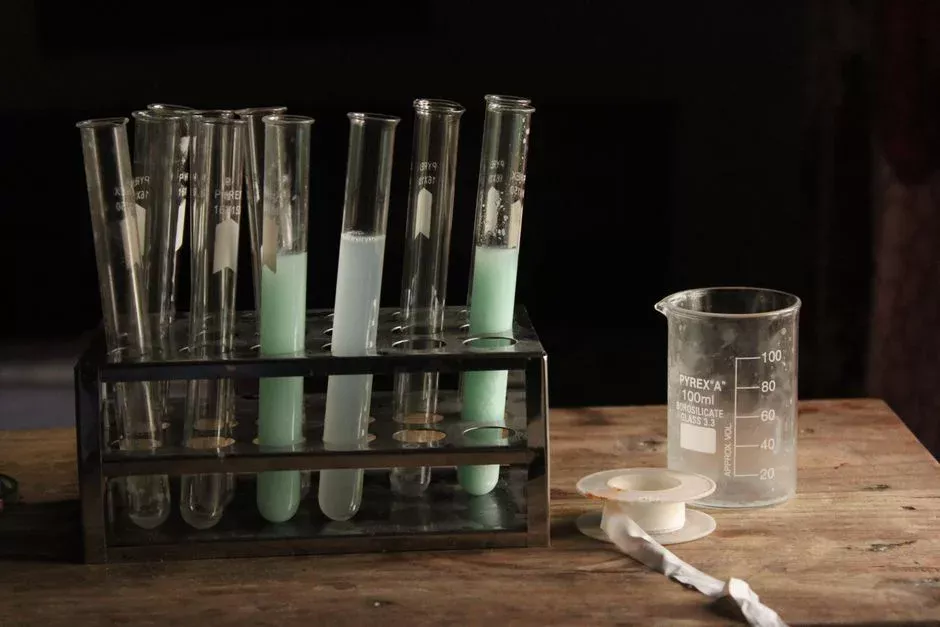
Each wastewater stream must be connected to its governing authorization, destination and post-close operating condition before treatment equipment is selected. A facility-wide average can conceal the concentrated stream that controls treatment performance.
Create a before-and-after diagram covering process drains, rinse or cleaning streams, cooling loops, chemical-recovery flows, stormwater outfalls, sanitary outlets, treatment units, reuse points and final discharge points. This is also the core of the semiconductor organic wastewater treatment design: characterization is process-specific, not an average across the facility.
Separate legacy process contamination from cooling-blowdown characteristics. Process streams may contain constituents absent from cooling systems, while cooling blowdown may carry elevated temperature, dissolved solids and residual treatment chemicals. Suspended solids, oil and grease should be included where present. Segregation may reduce treatment scope only if piping, controls and operating procedures actually support it.
Identify continuous base flow separately from startup, shutdown, upset and maintenance discharges. Those events can exceed average-flow assumptions or concentrate pollutants, so they require explicit equalization and treatment checks. Assess reuse destinations carefully: reuse does not itself authorize bypassing discharge, sewer or waste-management obligations.
For hazardous waste, document classification, labels, storage security and an operations log recording deposit and removal. The stream map should also identify who controls the stream, who samples it and which approval would be affected by a routing or chemistry change.
| Stream or pathway | Fields to document | Principal risk |
|---|---|---|
| Process, rinse and cleaning | Origin, flow, chemistry, destination and treatment unit | Concentrated contaminants and permit mismatch |
| Cooling loop | Evaporation, blowdown, temperature, dissolved solids, chemicals and reuse route | Hydraulic and thermal load |
| Stormwater and sanitary | Source, outfall, authorization and monitoring requirement | Uncontrolled or unauthorized outlet |
| Startup, shutdown and upset | Trigger, peak flow, composition and response route | Treatment overrun or noncompliance |
| Solid and liquid waste | Classification, label, storage, transfer record and final destination | Waste documentation and residual liability |
Determine Whether the Permit Can Continue
A Hungarian environmental permit can continue only if the issuing authority confirms the transition and the permitted activity and discharge basis remain suitable for CATL’s actual operating plan. A change-of-ownership clause does not answer the technical question.
Use the permitted activity, discharge point, pollutants, flow, treatment process and waste-management arrangements as the primary tests. For direct discharge, compare the permit conditions with CATL’s proposed flow, chemistry, temperature, monitoring frequency and outfall. Any conflict becomes an approval dependency rather than an assumed administrative transfer.
For indirect discharge, obtain the municipal sewer or industrial-user requirements. Ask the sewer authority whether CATL becomes the industrial user, whether flow acceptance remains valid, and whether local limits, pretreatment conditions, monitoring or surcharges change. The research notes that a sewer connection approval does not itself establish that the existing discharge can continue at the proposed flow or composition.
An administrative transfer is appropriate only where the authorized activity and discharge basis remain materially unchanged and the authority confirms the transition. Additional cooling can change flow, temperature and dissolved solids; a new process can introduce constituents absent from the legacy profile; chemical changes can affect pH, toxicity or residual biocides. Revised routing or treatment may also require review even where total flow is unchanged.
Record each unresolved question with the named authority, required evidence, transaction owner, decision deadline and consequence if approval is refused.
| Permit pathway | Trigger | Required evidence |
|---|---|---|
| Continuity or administrative transfer | No material change to the permitted basis, confirmed by the authority | Written authority confirmation and completed ownership or notification filings |
| Modification | CATL changes flow, chemistry, treatment, discharge point or other authorized conditions | Change description, supporting characterization and agency-approved decision |
| Reissuance | Authority determines the existing authorization is unsuitable for the proposed operation | Authority’s written direction and effective replacement authorization |
| Indirect-discharge confirmation | Industrial-user status, flow acceptance or pretreatment conditions change | Municipal or sewer-authority decision, limits and monitoring obligations |
Test Treatment Capacity Against CATL’s Operating Plan
The acquired treatment system should be classified as a usable asset or a post-close capital liability by testing it against CATL’s water balance and proposed chemistry, not against the seller’s historical averages.
Construct a forward-looking water balance using CATL’s production schedule, freshwater make-up, process use, cooling evaporation and blowdown, wastewater generation, reuse and final discharge. Test hydraulic and treatment performance against average and peak loads, temperature, TDS, solids, chemicals and process-specific contaminants.
Review equalization, solids removal, biological treatment, filtration, disinfection, sludge handling, controls, redundancy, maintenance records and instrument calibration. Record the physical condition and the design basis; neither can be inferred from the presence of the equipment.
The HydropureWater source identifies operation above 85% of design capacity as a high-risk condition for data-center integration. Use that only as a screening reference for similar integrations; it is not a finding, legal threshold or safe-operating limit for a Hungarian CATL site.
Match equipment to verified treatment objectives. A DAF industrial wastewater treatment system is relevant where suspended solids, oil and grease, FOG or colloidal material controls the requirement. An MBR wastewater treatment system is relevant where biological treatment and solids separation are required in a compact installation.
Commission representative influent and effluent testing with documented methods, chain of custody and operating conditions. Include normal and peak production, startup, shutdown and upset conditions. Test equalization and treatment under the identified loads, and verify controls, alarms, bypass prevention and the consequences of treatment outage.
Do not use the Texas comparison’s USD 7 million to USD 12 million MBR, RO and crystallizer integration range or USD 1.50 to USD 2.50 per cubic metre RO-blowdown operating-cost range as Hungarian estimates. The HydropureWater source presents those figures as planning benchmarks for the compared context, not quotations for this acquisition.
| Assessment area | Required evidence | Commercial implication |
|---|---|---|
| Hydraulic capacity | Forward water balance, peak-flow cases and equalization assessment | Potential expansion or production restriction |
| Treatment performance | Representative influent and effluent testing under defined conditions | Potential seller-funded capital obligation |
| Asset condition | Maintenance, calibration, controls, redundancy and condition records | Replacement cost and escrow allocation |
| Residual route | Authorized destination, capacity and operating responsibility | Permit dependency or operating covenant |
Convert Environmental Findings Into Closing Protections
Every material wastewater finding should have an accountable transaction owner, a verification test and an explicit legal or commercial disposition. Closing should not transfer unresolved regulatory or capacity risk to CATL without protection.
An unresolved permit transfer or modification should be a closing condition supported by an accepted filing, effective authorization or written agency confirmation. A treatment-capacity gap may justify a purchase-price adjustment, seller-funded capital obligation, escrow or covenant tied to an approved design, installation and verified performance.
Allocate responsibility expressly for pre-closing violations, contamination, corrective action, third-party sewer claims, permit-transfer cooperation, equipment replacement and post-close performance. Contamination of uncertain extent should be addressed through a scoped investigation, agreed remedy estimate, remediation escrow, defined access rights and completion milestones rather than an unsupported lump sum.
Before closing, appoint a wastewater lead, preserve historical records, establish water and energy balances, reconcile each permit condition with actual operations, confirm laboratory and monitoring contracts, and restrict unauthorized changes to production, cooling, chemicals, treatment or routing. After closing, assign an owner, evidence record and corrective-action threshold to each permit condition, then review monitoring trends under CATL’s actual operating profile.
| Finding | Preferred protection | Completion evidence |
|---|---|---|
| Permit transfer or modification unresolved | Closing condition and seller-cooperation covenant | Accepted filing, effective permit or written authority confirmation |
| Treatment capacity insufficient | Price adjustment, seller-funded capex, escrow or measurable covenant | Approved design, installed equipment and verified performance |
| Historical violations or corrective action | Pre-closing indemnity or reserved claim | Compliance evidence and completion records |
| Contamination of uncertain extent | Scoped investigation and remediation escrow | Agreed remedy, access rights and completion milestones |
| Post-close performance uncertainty | Operating covenant with corrective-action threshold | Stable monitoring results, treatment records and operator sign-off |
Frequently Asked Questions
Does CATL’s acquisition automatically change the Hungarian wastewater permit?
No. The current permit, discharge route and proposed operating changes determine the permit path. Obtain the complete permit file and written direction from the issuing authority before assuming continuity, transfer, modification or reissuance.
What should a buyer request when pricing wastewater treatment for the acquisition?
Request verified flow and wastewater composition, average and peak conditions, permit limits, treatment objectives, residual route and site water balance. No defensible treatment budget can be calculated from the supplied research because those site inputs and the required Hungarian permit terms are missing; request a site-specific scope and quotation rather than applying the Texas cost benchmarks.
How should an equipment supplier be selected?
Require suppliers to size against the verified wastewater characterization, average and peak flow, treatment objective, controls, operating evidence and authorized residual route. Catalog capacity alone is not a selection basis, and treatment and equipment options must remain conditional on representative testing.
When can the existing permit continue, and when is modification or reissuance needed?
The permit may continue if the authority confirms continuity and the permitted activity, discharge point, flow, pollutants, treatment and waste arrangements remain suitable for CATL’s operations. A material operating change can require modification or reissuance; the authority’s written decision controls.
Which environmental issues should become closing conditions, indemnities, covenants or escrows?
Make unresolved permit authorization a closing condition; allocate historical violations and contamination through indemnities or targeted escrows; address treatment gaps through seller-funded capital obligations or measurable covenants; and use operating covenants for post-close performance. Before closing, preserve records, confirm monitoring arrangements and reconcile each permit condition with actual operations.