

Which rules control a Romeo-area sewer discharge?
The enforceable requirement chain for a plastics or rubber plant discharging near Romeo begins with 40 CFR Part 403 pretreatment rules, continues through the applicable categorical standards in 40 CFR Part 414 or 40 CFR Part 463 rubber manufacturing, and ends with site-specific conditions in the Control Authority industrial user permit. The controlling authority is the POTW with an EPA-approved pretreatment program or, where no approved POTW program exists, the Approval Authority.
EPA identifies the Control Authority as the POTW with an approved pretreatment program, or the Approval Authority when the POTW lacks one, and states that the authority applies the most stringent applicable requirement where several provisions apply (U.S. EPA, Pretreatment Standards and Requirements—Applicability). A categorical standard therefore does not displace a stricter local condition. Pass-through and interference prohibitions also apply to whether the discharge would impair POTW operation or sludge quality; the industrial wastewater pretreatment compliance workflow provides a useful document-control reference, but it is not a Romeo permit.
No numeric Romeo-area limit can be assigned without a named permit. The plant should obtain the current individual permit, receiving POTW pretreatment ordinance, approved-program documents, and written confirmation of the designated sampling point. The permit determines the applicable parameters, concentrations, monitoring conditions, reporting deadlines, and any local conditions. An oily industrial wastewater pretreatment case approach can support the evidence review, but local terms must still be verified with the receiving authority.
| Document or authority | Role in the compliance decision | Required plant action |
|---|---|---|
| 40 CFR Part 403 | General pretreatment framework, definitions, prohibitions, and local-program authority | Confirm applicable prohibitions and program requirements |
| 40 CFR Part 414 or Part 463 | Categorical requirements for the facility’s manufacturing subcategory | Verify the correct subcategory from production facts |
| Control Authority industrial user permit | Enforceable site-specific limits, monitoring, reporting, and sampling conditions | Obtain the current signed permit and all attachments |
| POTW pretreatment ordinance | Local discharge and enforcement authority | Check applicability and conflicts with the individual permit |
| Approved pretreatment program documents | Local implementation rules, procedures, and local limits | Request current program rules and written interpretations |
Classify the plant and map every waste stream
Part 414 and Part 463 classifications are production-based decisions, not choices based on the product names used in a sales catalog. The HydropureWater U.S. pretreatment article, dated 2026, identifies Part 414 contact cooling and process water under 40 CFR 414.11 and emulsion process wastewater under 40 CFR 414.21. It also identifies Part 463 rubber categories covering tire production, latex-based processes, and general rubber products, including mechanical, molded, and extruded goods. Each classification must be checked against the current regulation and the plant’s actual operations.
Build a stream-by-stream process map before drawing the P&ID. Separate process wastewater, contact cooling water, polymer-kettle cleaning, latex finishing, mold-release residues, floor and equipment washing, and batch discharges. The DAF versus clarifier comparison for plastics wastewater is useful for evaluating whether a stream contains separable oil and solids, but it cannot substitute for source segregation.
Ask the production, environmental, and maintenance teams for the production method, product mix, raw-material and additive inventory, recycle and zero-discharge returns, wastewater flow diagram, batch schedule, and discharge point. These facts determine both categorical subcategory and which streams are continuous, batch-driven, or reusable without treatment.
For fluoropolymer processing or PFAS-treated feedstocks, include PFAS and 1,4-dioxane in the investigation. The HydropureWater article reports no federal categorical PFAS limit under Parts 414 or 463 as of 2026, while stating that Michigan monitoring requests may appear during permit renewals. That absence of a federal categorical limit does not establish that a local or state condition is inapplicable.
| Manufacturing category or stream | Classification evidence | Preliminary treatment implication |
|---|---|---|
| 40 CFR Part 414 contact cooling and process water under 414.11 | Documented process and cooling-water use under the current subcategory definition | Separate cooling water where permitted; characterize reusable and contaminated portions |
| 40 CFR Part 414 emulsion process wastewater under 414.21 | Documented emulsion-polymer production operations | Evaluate emulsion breaking, DAF, solids separation, and biological treatment |
| 40 CFR Part 463 rubber categories | Identify tire, latex-based, or general rubber production and whether products are mechanical, molded, or extruded | Map molding, curing, cleaning, and batch discharges separately |
| Fluoropolymer or PFAS-treated feedstock operations | Material inventory, supplier declarations, and process descriptions | Add PFAS and 1,4-dioxane to the investigation and request current Michigan requirements |
Characterize the pollutants and load spikes

Representative wastewater testing must cover the pollutants named in the permit and the chemical families that can pass through or interfere with POTW treatment. The HydropureWater article dated 2026 identifies six parameter families for plastics and rubber monitoring: TSS, oil and grease, BOD/COD, pH, polymer-priority pollutants, and PFAS. These are investigation priorities, not a substitute for the parameters and test methods written into the individual permit.
For polymer-related priority pollutants, the same source identifies styrene, acrylonitrile, vinyl chloride, benzene, and ethylbenzene. It also recommends investigating anthracene, phenanthrene, and relevant catalyst or stabilizer metals, including zinc, chromium, and lead. Select analytes from the actual formulation and process chemistry rather than ordering an unchanged list for every facility.
Polymer-coagulant emulsions, mold-release agents, and latex finishing residues may contain droplets below 100 μm that remain dispersed because of surfactants. The HydropureWater article therefore states that conventional gravity separation will not remove them reliably. This distinction matters when comparing DAF with a clarifier: dispersed oil may require chemical destabilization and flotation rather than settling alone.
Sampling must cover production and cleaning cycles. Where the permit requires it, collect a flow-proportional composite at the designated sampling point. A routine composite collected only during stable production can miss a kettle-cleaning or molding discharge. Request laboratory reports, concentration and mass-load calculations, batch volumes, water consumption, and production-normalized data before final equipment sizing. The missing inputs are the measured flow and pollutant envelope; a nominal production rate alone is not a defensible design basis.
| Parameter family | Relevant sources or risks | Information needed before sizing |
|---|---|---|
| TSS | Polymer solids, latex residue, fillers, and batch carryover | Flow-weighted concentrations, peak solids, settleability, and solids destination |
| Oil and grease | Mold-release agents, coagulant residuals, and emulsified process oils | Emulsion characteristics, free versus emulsified oil, and treatability data |
| BOD/COD | Biodegradable organics and process residues | Load versus time, batch duration, toxicity indicators, and biological treatability |
| pH | Cleaning chemicals and treatment-chemical dosing | Continuous range, excursion frequency, and neutralization demand |
| Priority pollutants | Polymer chemistry, solvents, and catalyst metals | Process-specific analytes, detection limits, and mass loads |
| PFAS and 1,4-dioxane | Fluoropolymers, treated feedstocks, or associated breakdown products | Material declarations, current local requirements, and representative analytical results |
Build a treatment train that controls the whole discharge
The P&ID should begin with segregation and equalization, then place unit operations according to pollutant form and concentration—not a generic plastics-and-rubber sequence. Route continuous and batch streams separately into an equalization system designed to absorb intermittent rubber-molding and polymer-kettle-cleaning discharges. The HydropureWater article dated 2026 identifies these batch discharges as a source of load spikes and an important operational issue for equalization.
Use DAF when emulsified oil, polymer-bearing solids, or latex residues dominate. The same commercial source reports 60–90% oil-and-grease removal and 50–80% TSS removal on polymer-bearing streams for a single DAF stage; these are reported performance ranges, not universal guarantees. A DAF system for emulsified oil and polymer-bearing solids should therefore be evaluated against representative influent and the applicable guarantee point.
Use biological treatment for biodegradable BOD/COD loads. Where tighter solids separation or reuse is required, evaluate an MBR bioreactor for biological treatment and solids separation. HydropureWater’s 2026 article reports 85–95% activated-sludge removal and 95–98% MBR removal for its referenced high-strength application; neither figure transfers to a different waste without confirmatory testing.
Add pH adjustment, metals removal, stripping or adsorption, and advanced PFAS treatment only when the characterization, categorical rules, POTW permit, or applicable Michigan requirements call for them. HydropureWater reports a 1.2–1.5× safety factor for hydraulic and load spikes. Apply that factor only after checking variability, redundancy, permit limits, unit-process constraints, and the final equipment proposal.
Equipment selection must use the stated product scope without presenting it as site performance evidence. HydropureWater identifies its DAF system for oil, FOG, suspended solids, and colloidal matter at 4–300 m³/h across 13 standard models, and its MBR system at 10–2,000 m³/day. The buyer still needs design flow, batch profile, pollutant basis, operating redundancy, and utility requirements to select a model or determine whether the envelope is appropriate.
| Decision condition | Treatment step | Design evidence required |
|---|---|---|
| Batch or intermittent high-strength discharge | Segregation followed by equalization | Batch volumes, durations, peak flow, load profile, and available basin volume |
| Emulsified oil, polymer solids, or latex residue | DAF with chemical conditioning | Emulsion test, representative loads, flotation results, and sludge handling |
| Biodegradable BOD/COD | Activated sludge or MBR | Influent biodegradability, toxicity screening, load range, and required effluent quality |
| Tighter solids separation or reuse | MBR with downstream polishing where needed | Filtration target, reuse acceptance, membrane design inputs, and operations requirements |
| Specific prohibited or locally limited pollutant | Targeted metals removal, stripping, adsorption, or advanced treatment | Analytical confirmation, applicable limit, treatment test, and residual-waste route |
Prove compliance at the designated sampling point
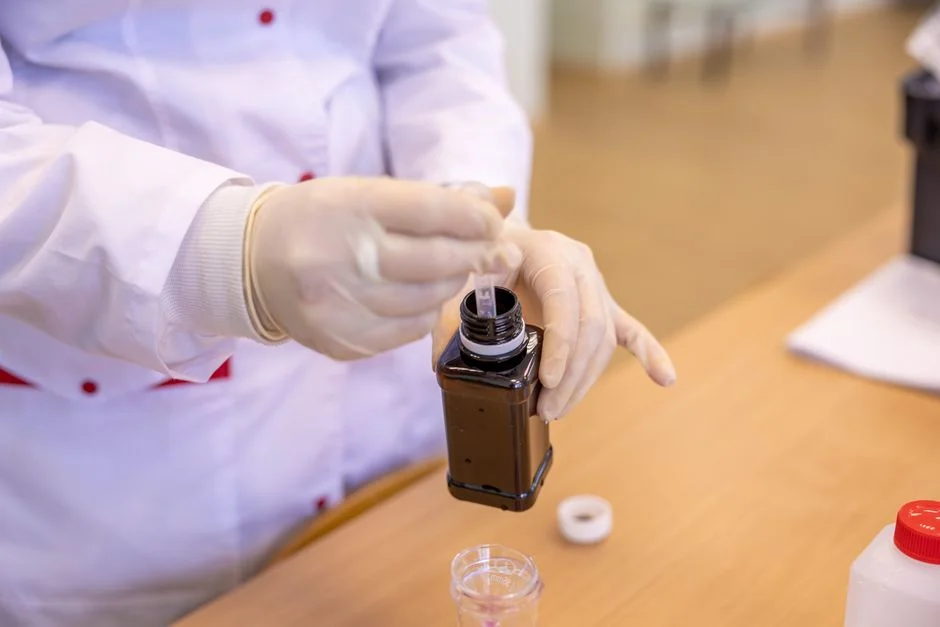
Compliance must be demonstrated at the location authorized in the individual permit. HydropureWater’s 2026 commercial article describes the designated sampling point for most categorical industrial users as downstream of in-plant treatment but upstream of recycle or zero-discharge returns. Obtain written confirmation of the physical location and sampling method; do not assume that the final treatment tank or the sewer connection is automatically the designated point.
The same source identifies 24-hour flow-proportional composite sampling as typical and says routine sampling commonly occurs at least twice per year, with monthly monitoring common during permit-renewal periods. These are general references, not substitutes for the permit. The permit controls parameters, frequencies, reporting deadlines, sampling conditions, and any split-sample or inspection provisions.
Supplement compliance sampling with continuous TSS, pH, and conductivity trends linked to plant SCADA. These measurements can expose an upset or batch release before the next formal composite, but they do not replace permit-required analysis. Use an appropriately accredited laboratory and retain chain-of-custody records.
Review DMR excursions by parameter family. Retain production records, cleaning schedules, bypass alarms, flow data, laboratory results, and corrective-action records so the plant can explain changes in both concentration and mass loading. The missing element at many plants is not a list of limits; it is a traceable record connecting production events, treatment response, sampling, and corrective action.
| Compliance control | Engineering or operational requirement | Record to retain |
|---|---|---|
| Representative sampling | Use the permit-designated point and required composite method | Sample log, flow record, chain of custody, laboratory report, and split-sample record if applicable |
| Operational trend | Capture TSS, pH, and conductivity continuously where practicable | SCADA trend, calibration record, alarm log, and operator response |
| Batch accountability | Link cleaning and production events to flow and loads | Batch log, production record, deviation, and corrective-action closeout |
| DMR review | Investigate excursions by pollutant family and magnitude | DMR, laboratory validation, root-cause analysis, and adjustment or maintenance record |
Choose equipment without comparing only purchase price
Compare treatment alternatives on installed cost per cubic meter of treated flow and on lifecycle operating obligations: chemical use, sludge handling, energy, membrane replacement, labor, downtime, monitoring, and residuals. A lower purchase price can be offset by fouling, membrane replacement, chemical consumption, or loss of operating margin around batch discharges.
HydropureWater’s 2026 article reports that an MBR plus UF train can carry 20–40% higher capital cost than activated sludge plus multi-media filtration but 15–25% lower annual operating cost. It also reports a 50–80% effective water-cost reduction and an approximately 2–4-year payback for a membrane upgrade on its stated 50 m³/h example where the receiving utility accepts reclaimed water. Neither the reduction nor the payback should be transferred to Romeo without current utility acceptance and a site-specific cost model.
Require bidders to define the design flow, pollutant basis, guarantee point, sampling protocol, redundancy, startup scope, SCADA integration, sludge route, and allocation of permit-compliance responsibility. A performance guarantee should expressly depend on representative influent and the specified operating envelope. Require the bidder to explain what happens outside those conditions rather than presenting a universal performance claim.
| Procurement item | Required bidder response | Buyer check |
|---|---|---|
| Installed cost | Define the treatment scope, capacity basis, civil works, controls, chemicals, commissioning, and exclusions | Normalize bids to the same design flow and treatment duty |
| Lifecycle cost | Estimate energy, chemicals, sludge, membranes, labor, monitoring, and replacement | Use site energy prices, waste routes, labor, and confirmed operating hours |
| Performance guarantee | State guarantee point, influent envelope, test method, and remedy | Confirm that test influent is representative and limits the guarantee’s conditions |
| Compliance responsibility | Identify permit submittals, sampling support, records, and corrective actions included in scope | Allocate duties explicitly in the purchase documents |
| Reuse economics | Provide water-balance and cost comparison based on accepted reuse | Obtain current utility acceptance before assigning a payback |
Frequently Asked Questions
What pretreatment limits apply to a plastics or rubber plant near Romeo?
The controlling requirements are 40 CFR Part 403, the applicable categorical standard in Part 414 or Part 463, and the current individual permit issued by the Control Authority, with the most stringent applicable requirement controlling. U.S. EPA identifies that authority as the POTW with an EPA-approved pretreatment program or the Approval Authority where no such POTW program exists. A Romeo-area numeric limit must be read from the named plant’s enforceable permit; generic industry tables cannot establish it.
Which treatment technology is best for plastics and rubber wastewater?
DAF is the stronger first-stage candidate where emulsified oil, polymer-bearing solids, or latex residues dominate; biological treatment is needed for biodegradable BOD/COD, and MBR should be evaluated where tighter solids separation or reuse warrants its additional scope. The decision must follow representative characterization and batch variability. HydropureWater’s reported 60–90% oil-and-grease and 50–80% TSS removal on polymer-bearing streams are application-specific performance ranges, not a blanket guarantee for every plant.
How should a buyer estimate the cost of pretreatment equipment?
Request an installed cost per cubic meter of treated flow and a lifecycle cost covering chemicals, sludge, energy, membrane replacement, labor, downtime, and monitoring. HydropureWater’s 2026 article reports 20–40% higher capital cost for MBR plus UF versus activated sludge plus multi-media, but 15–25% lower annual operating cost. Ask each bidder for the same design flow, pollutant basis, guarantee point, startup scope, and excluded costs; no equipment price or payback should be accepted without those inputs.
What should be checked before selecting a supplier and sizing the system?
Check whether the supplier’s proposed envelope covers the measured flow and batch-load range, then require an explicit guarantee tied to representative influent and defined operating conditions. For reuse, obtain current written acceptance from the receiving utility before crediting water savings or a payback period. The quotation should also identify redundancy, controls integration, sludge route, sampling support, and who remains responsible for permit-compliance documentation.