
What changes when UMC acquires an Arizona plant?
When UMC acquires a plant in Arizona, wastewater requirements are determined by the acquired facility—not automatically by UMC’s corporate treatment practices. The buyer must verify applicable ADEQ industrial wastewater, discharge, pretreatment, groundwater and aquifer-protection authorizations; confirm whether each permit requires transfer, notice, modification or a new permit; and test the plant’s actual streams against permit limits and reuse specifications. Arizona reclaimed-water rules under Ariz. Admin. Code § 18-11 apply where centralized non-potable reuse occurs, while applicable Clean Water Act and state water-quality requirements must also be met. No defensible treatment cost or equipment size can be stated without the target’s flow, chemistry, permits and operating history.
The acquisition changes the party evaluating risk, but it does not create a single universal wastewater standard. Arizona counsel and the responsible ADEQ program must determine whether ownership or operator changes trigger notice, permit modification, replacement authorization, or continued use of an existing permit.
Establish three separate evidence layers:
- Governing law: applicable federal and Arizona wastewater, reuse, groundwater and water-quality requirements.
- Target-site facts: permits, physical piping, outfalls, streams, analytical history, equipment condition and operating records.
- UMC corporate benchmarks: operating practices that may inform evaluation but do not establish the target’s legal requirements or design basis.
UMC’s published guide to how UMC treats wastewater at its fab plants reports 84.3% recycling and segregation of 27 streams. Those are corporate operating benchmarks, not evidence that the acquired plant has the same treatment configuration, compliance history or reuse quality.
Closing test: UMC should not assume it may continue every wastewater discharge after closing until the permit file, physical piping and outfalls establish continued authority and compliance.
Which Arizona authorizations define the compliance baseline?
The compliance baseline must be reconstructed from original permits and site records before equipment scope is defined. A seller’s statement that the plant is “permitted,” “zero discharge,” or operating under “ADEQ approval” is not enough to identify enforceable obligations.
Build a permit register covering every applicable industrial wastewater, discharge, pretreatment, groundwater and aquifer-protection authorization. Include amendments, renewals, monitoring reports, notices of violation, consent orders, financial assurance and agency correspondence. Then extract authorized outfalls, pollutant limits, monitoring points, laboratory conditions, reporting deadlines, corrective-action deadlines and responsible parties. Reconcile that register against the plant’s physical piping, tanks, sumps and outfalls.
| Evidence layer | Source | Question the buyer must answer |
|---|---|---|
| Governing Arizona requirements | ADEQ authorizations, current statutes and regulations | What discharge, monitoring, reporting, financial-assurance and closure duties apply? |
| Verified target-site facts | Original permits, field mapping, sampling and operating records | Does the plant operate as authorized, and can each permit support continued operation after the transaction? |
| UMC corporate benchmarks | Corporate treatment practices and operating data | Which practices are relevant comparators without being assumed to transfer? |
For each authorization, ask the responsible ADEQ program and Arizona counsel whether it remains usable, requires notice or modification, or must be replaced. The relevant facts include a changed permittee, operator, facility description, discharge source or ownership. That answer must be authorization-specific.
EPA’s April 30, 2025 Morenci order is a useful warning against permit confusion: it identifies ADEQ Permit No. 99245 issued to Freeport-McMoRan Morenci Inc. for copper ore mining and processing operations in Greenlee County. That evidence applies to Morenci, not to an unrelated acquisition target. The same order discusses Arizona’s Title V air-quality monitoring, recordkeeping and reporting requirements; those are not proof of wastewater obligations.
This legal review remains distinct from design engineering. Regulatory classification establishes the duty; site data establishes whether the installed system can meet it.
Map each wastewater stream before choosing treatment equipment
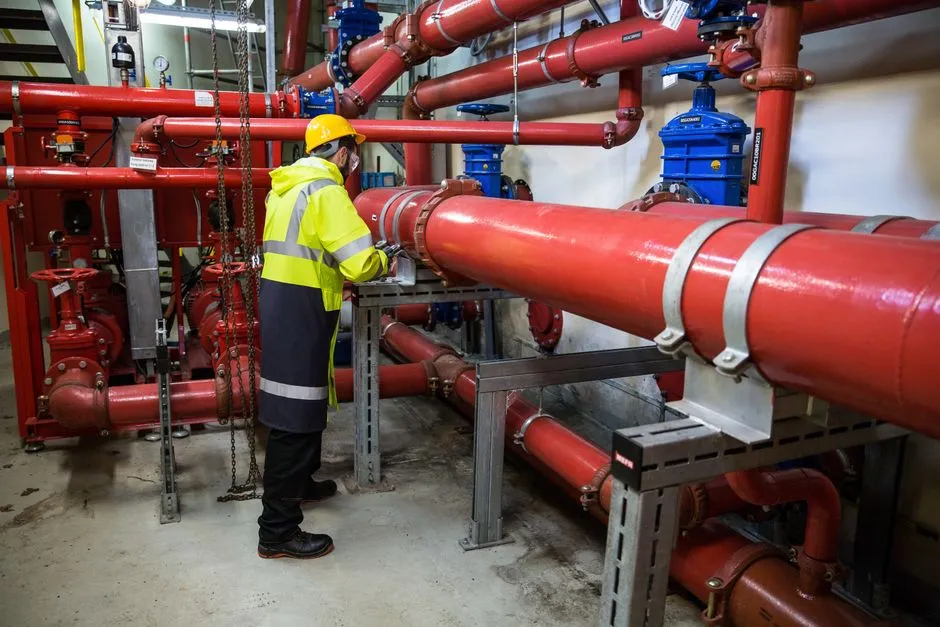
Each target stream needs a defined origin, destination and regulatory status before the team compares treatment alternatives. A plant-level average flow cannot reveal where contamination enters, which streams can be segregated, or whether storage can absorb a production upset.
| Stream | Diligence questions | Decision supported |
|---|---|---|
| Process water | What process creates it; what are the flow and chemistry; where does it go? | Recovery, segregation, treatment and discharge scope |
| Contact water | What contaminants enter through equipment or product contact; can it be reused? | Treatment train and reuse specification |
| Stormwater and contaminated runoff | Which precipitation events produce contamination; where is each discharge point? | Containment, segregation and authorized discharge scope |
| Sewage | Who provides treatment and what discharge or reuse conditions apply? | Contract, permit and pretreatment obligations |
| Imported reclaimed water | Who authorizes supply; what quality is delivered; does the contract survive closing? | Supply continuity and end-use compliance |
Distinguish a true zero-discharge facility—one that manages water without an authorized outfall—from a permitted discharger. Verify that status through permits, physical outfalls and operating records rather than a corporate description.
Ask whether the plant purchases reclaimed water, who authorizes that supply, what quality is supplied, and whether the supply agreement survives the transaction. Imported wastewater can create both an input dependency and a compliance condition.
Request at least one year of influent and effluent analytical data, operating-flow records, storm-event records, bypass and spill logs, pond-level data and sampling chain-of-custody records. Characterize constituents supported by the process, potentially including suspended solids, pH, oil and grease, metals, acidity or alkalinity, nutrients and process-specific chemicals. Do not assign target limits without the site’s applicable authorization.
UMC’s 27-stream segregation approach is a diligence prompt, not a retrofit instruction. The target’s required number of streams must follow actual source and contamination characteristics.
Confirm Arizona reuse requirements for the intended end use
The correct Arizona reclaimed-water class depends on the intended end use and the source water, not on the treatment-equipment label selected by procurement. EPA’s Arizona summary identifies Ariz. Admin. Code § 18-11 as the governing state provision for centralized non-potable reuse and defines reclaimed water as “water that has been treated or processed by a wastewater treatment plant.”
That source is treated municipal wastewater. EPA’s summary lists centralized non-potable uses including toilet and urinal flushing, fire protection, commercial air conditioning, car washing, snowmaking, dust control, soil compaction, concrete and cement mixing, materials washing and sieving, and street cleaning.
| Parameter | Class A+ and Class A | Class B+ and Class B |
|---|---|---|
| Approved uses summarized by EPA | Toilet and urinal flushing; fire protection systems; commercial closed-loop air conditioning; vehicle and equipment washing; snowmaking | Dust control; soil compaction and similar construction activities; concrete and cement mixing; materials washing and sieving; street cleaning |
| Turbidity | ≤2 NTU as a 24-hour average and ≤5 NTU at any time point, measured after filtration and immediately before disinfection | Not stated in the supplied summary |
| Microbial monitoring | 0 organisms/100 mL in four of the last seven daily samples and ≤23 organisms/100 mL as a single-sample maximum | <200 organisms/100 mL in four of the last seven daily samples and <800 organisms/100 mL as a single-sample maximum |
| Additional listed criteria | Class A+ includes <10 mg/L as a five-sample geometric mean and no detectable enteric virus in four of the last seven monthly samples | Class B+ includes <10 mg/L as a five-sample geometric mean |
EPA’s summary states that applicable Clean Water Act requirements, 33 U.S.C. §§ 1251 et seq., and state water-quality standards must also be met. It also cautions that its summary is informational and that state law governs if there is a conflict. Accordingly, procurement should use the table as a screening reference, while ADEQ and Arizona counsel confirm current legally binding requirements, monitoring locations and methods.
The acquisition question is whether the acquired plant’s supply contract, current treatment train and proposed end uses fit one permitted reuse pathway. Changing a reuse destination can change the applicable treatment and monitoring requirements.
Test whether the installed treatment system fits the acquired plant
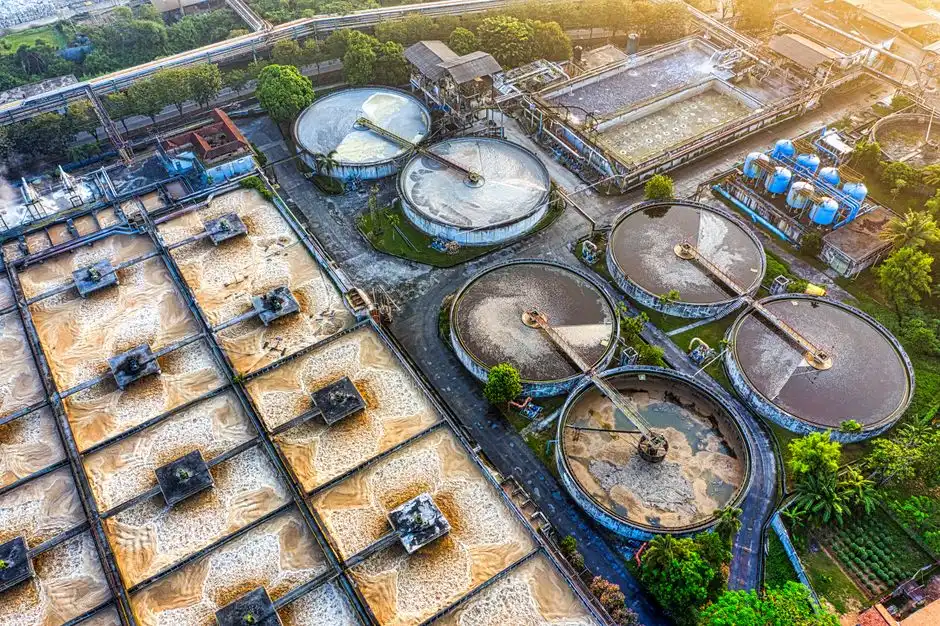
Installed capacity must be tested against the acquired plant’s permitted and contracted operating envelope, not against corporate recycling data or an equipment catalogue range.
Review peak, average and storm flows, production rates, downtime and planned expansion. Check redundancy, chemical supply, controls, alarms, sludge handling, residual disposal, monitoring, operator competency and maintenance history. Determine whether bypasses, storage constraints or manual interventions conceal inadequate capacity during power loss, equipment failure, contamination, production changes or loss of a reuse destination.
Match technology to the documented contaminant load. Depending on site evidence, alternatives may include clarification, an industrial dissolved air flotation system, biological treatment, an MBR membrane bioreactor wastewater treatment system, filtration, disinfection, dewatering or chemical dosing.
UMC’s reported 84.3% recycling rate is not a design basis for the target. Before considering MBR, compare the acquired stream chemistry and required effluent or reuse quality against the process. For industrial streams requiring suspended-solids, FOG, oil-and-grease or colloidal removal, compare DAF with actual flow and contaminant profile rather than treating the wastewater as a generic category.
Document the consequences of losing reuse, recycling or zero-discharge operation. A contamination event, treatment failure, power interruption or production increase can shift water to another destination, consume storage or create a discharge that would not occur under steady-state conditions.
The engineering conclusion should state three things: whether the installed system has adequate demonstrated capacity, whether compliance depends on prohibited bypasses or unsustainable operating practices, and what capital or operating changes are required.
Convert permit findings into closing and capital decisions
Each environmental finding must become a defined transaction decision, owner and funded action. A permit that cannot support continued operation is materially different from a monitoring-reporting correction or an efficiency improvement.
| Finding | Potential transaction treatment | Required supporting evidence |
|---|---|---|
| Permit-transfer uncertainty or permit-modification requirement | Closing condition, regulator commitment, price adjustment or post-closing covenant | ADEQ pathway, application requirements and schedule |
| Compliance blocker or historical violation | Condition precedent, cure, escrow, seller credit or specifically drafted indemnity | Violation record, agency correspondence, baseline sampling and proposed correction |
| Near-term capital or operating-cost need | Funding allocation, price adjustment, reserve or post-closing covenant | Site-specific engineering estimate and vendor proposal |
| Routine improvement | Post-closing capital plan | Operating impact and lifecycle assessment |
Use permit-transfer uncertainty, exceedances, unremediated contamination, inadequate capacity and missing monitoring records as closing-condition or indemnity subjects only where the site record supports them. Generic boilerplate does not replace a technically defined risk allocation.
Require baseline sampling and an equipment inspection before closing. The baseline helps distinguish acquisition-date conditions from later performance changes and tests seller representations. Preserve chain-of-custody records and document the sampling plan and laboratory requirements.
Quantify gaps using the buyer’s measured flow, chemistry, labor, utility and consumable data, plus a site-specific engineering estimate and vendor proposal. The supplied research contains no defensible Arizona plant-specific wastewater cost, so neither a treatment-cost estimate nor a purchase-price adjustment can be stated reliably without those inputs.
Equipment comparisons must also address delivery, installation, commissioning and operational readiness. A technically suitable system that cannot fit the site’s actual operating envelope is not a complete capital solution. This framework extends the principles in Arizona plant-acquisition wastewater due diligence.
Follow a wastewater due-diligence sequence through closing
Close the wastewater workstream through a controlled sequence, with legal, environmental and engineering findings reconciled before UMC accepts operational and compliance risk.
- Request the permit file and compliance history. Obtain original permits, attachments, amendments, renewals, monitoring reports, violations, orders and agency correspondence rather than relying on the seller’s summary.
- Build and sample the stream inventory. Record each source, destination, flow variability and sampling point. Compare analytical results with permit conditions and the physical sampling program.
- Inspect the treatment train. Review operating and maintenance records, verify actual performance and test whether the system supports the permitted and contracted operating envelope.
- Confirm the regulatory path. Obtain ADEQ and Arizona counsel confirmation for each permit, notice, modification or new-authorization requirement.
- Reconcile the evidence. Resolve disagreements among the permit file, seller representations and field conditions through a closing condition, permit commitment, price adjustment, escrow, seller credit, post-closing covenant or specifically drafted indemnity.
The legal review, baseline record and physical inspection should converge before closing. If they do not, UMC has an unresolved risk—not a completed environmental workstream.
Frequently Asked Questions
Does UMC need a new Arizona wastewater permit after buying a plant?
Not necessarily. The answer depends on the affected ADEQ authorization and whether the permittee, operator, facility description, discharge source or ownership changed. Arizona counsel and the responsible ADEQ program should confirm whether continued use, notice, modification or a new permit is required for each authorization.
What does the acquisition cost?
A defensible cost requires the target’s flow, chemistry, permit limits, installed capacity, equipment condition, residuals and operating requirements. The supplied research contains no site-specific Arizona figure. Request a site-specific engineering estimate and vendor proposal, supported by flow, chemistry, labor, utility and consumable data; do not accept a corporate recycling rate as a cost or capacity basis.
Which treatment system should UMC select?
Select the process after reconciling measured flows, chemistry, required effluent or reuse performance, storage and redundancy needs. DAF may address site-specific floatable or solids loads; an MBR may fit documented biological and solids-removal requirements. Neither should be selected from a generic wastewater label or from UMC’s corporate operating model.
How can a buyer estimate lead time and compliance risk?
Request a site-specific engineering scope and vendor proposal, verify the permit-transfer pathway with ADEQ and Arizona counsel, and reserve time for permit action, monitoring, installation and commissioning. Include power loss, equipment failure, contamination and loss of a reuse destination in operational-readiness testing.