

Why UMC Segregates Wastewater at the Drain
UMC's first move in fab wastewater design is keeping incompatible streams apart at the drain rather than relying on end-of-pipe treatment. The company's published engineering disclosures describe "new fab areas" routing wastewater into as many as 27 segregated categories, a level of granularity that lets each stream be treated to its own spec rather than blended into a single homogenized flow (per Semiconductor Engineering, 2026-01). For a 28 nm or 14 nm wafer process, the dominant waste streams are chemically and physically different: copper-bearing chemical mechanical polishing (CMP) slurry waste, fluoride-bearing etchant waste (often >1,000 mg/L F⁻ at the source), solvent-bearing photoresist developer waste, and general process rinse water that may be near-potable. Blending them forces operators to remove everything from everything, leading to oversized reagent doses, larger sludge volumes, and a finished effluent that no longer meets any reuse spec.
The segregation logic also protects downstream assets. Copper, fluoride, and TMAH (tetramethylammonium hydroxide) damage biological treatment if they enter an activated-sludge tank at concentration spikes. Routing them to dedicated physical-chemical lines first keeps the biological stage viable and keeps the local municipal wastewater works within its discharge permit. As Ovivo's global sustainability lead noted, UMC "utilizes intelligent control in wastewater treatment to reduce chemical consumption" — that philosophy only works if the upstream segregation is clean (per Semiconductor Engineering, 2026-01). In practical terms, a new fab pipe rack carries separate drains for acid/alkali, fluoride, copper CMP, solvent, scrubber blowdown, and general rinse, each color-coded and tied back to its own equalization tank before any chemistry is applied.
Inside the UMC Fab Wastewater Treatment Train
Unit operations follow a standard physical-chemical-to-biological-to-polishing cascade, with a separate train per stream category. Equalization is the first shared step: flow and pH are damped in dedicated holding tanks so downstream chemistry sees a steady feed. After equalization, each stream enters a tailored physical-chemical stage. For copper CMP waste and general suspended-solids loads, coagulation with ferric chloride or polyaluminum chloride (PACl) followed by flocculation and either sedimentation or a dissolved air flotation system removes colloidal silica, slurry residues, and FOG. Typical DAF hydraulics for fab waste run at 15–25 m³/m²·h with saturator recycle of 20–30% at 4–6 bar; air-to-solids ratios land in the 0.02–0.05 range.
Biodegradable streams — usually general process water and some scrubber blowdown — go to activated sludge or to an MBR membrane bioreactor. Submerged PVDF MBR membranes with nominal pore size <1 μm deliver an effluent low enough in TSS and turbidity to feed directly into polishing, which shortens the reuse train and reduces footprint. Polishing then closes the loop: multimedia filtration knocks down residual turbidity to <1 NTU, activated carbon strips organics that survived biological oxidation, and reverse osmosis lifts the stream to a reuse spec that can be blended back into UPW feed or cooling-tower makeup. For CMP streams specifically, RO is the workhorse — our deep dive on CMP wastewater treatment by reverse osmosis shows why 99% silica rejection matters when slurry residue reaches the membranes.
The industry has validated what targeted reuse can do at scale. Lam Research reports 80.6 million gallons of cumulative water savings since 2019 across its own manufacturing and labs (per Semiconductor Engineering, 2026-01), confirming that disciplined reuse recovers real volume. The caveat for any buyer: zero liquid discharge (ZLD) maximizes reuse opportunity but adds carbon footprint and operational risk, because a portion of treated effluent must be re-polished to UPW, requiring extra energy, extra membranes, and tighter chemistry control throughout (per Semiconductor Engineering, 2026-01).
UMC Fab-by-Fab Water and Reuse Numbers
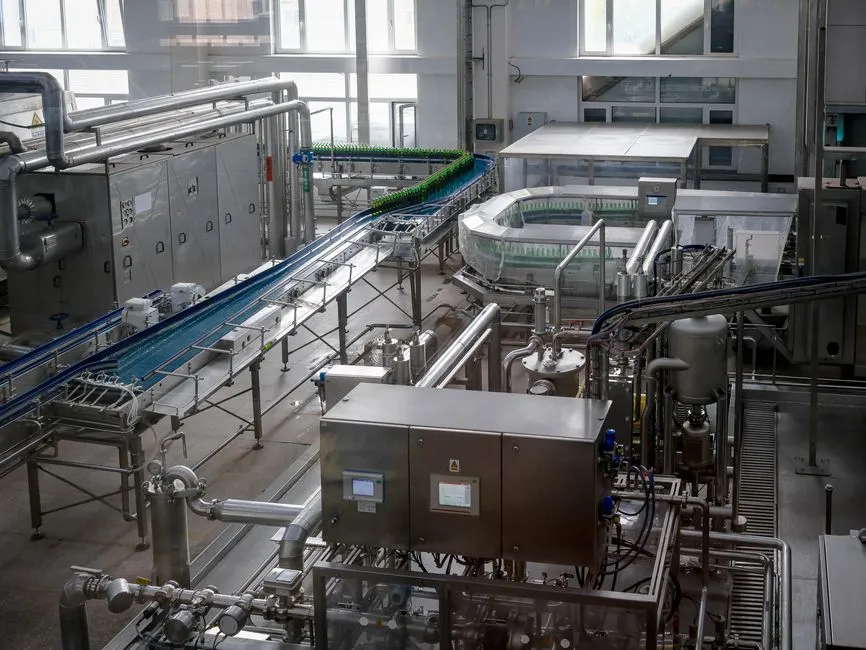
UMC publishes per-fab data that allows for benchmarking against other foundries. Fab 12i in Singapore used approximately 4.0 million tons of reclaimed water in 2024, covering 97.6% of that fab's total withdrawal (per Semiconductor Engineering, 2026-01). Fab 12A in Taiwan added about 0.58 million tons of reclaimed supply after bringing its system online in late 2022. Combined, 12i plus 12A accounted for 4.58 million tons of reclaimed use in 2024, a 16.9% year-over-year increase. Companywide, UMC's process-water recycling rate sits at 84.3%, and new fab areas segregate wastewater into up to 27 categories at the drain (per Semiconductor Engineering, 2026-01).
Leading-edge fabs in hot, dry climates consume a larger share of their withdrawals than the same fab in a cooler, more humid climate, as evaporative loss scales with ambient temperature and dry-bulb (per Semiconductor Engineering, 2026-01). A 97.6% reclaimed fraction in Singapore is not directly comparable to a 97.6% fraction in Arizona. Use UMC's 84.3% companywide number as the internal-loop intensity metric, and use the per-fab reclaimed share to read the external supply mix.
| Metric | Fab 12i (Singapore) | Fab 12A (Taiwan) | New-fab design point |
|---|---|---|---|
| Reclaimed water use (2024) | ~4.0 million tons | ~0.58 million tons | Designed for high reclaimed fraction |
| Reclaimed share of withdrawal | 97.6% | Added late 2022; combined 12i+12A up 16.9% YoY | Forward target: 18% by 2025, 32% by 2030 (companywide) |
| Segregation categories at drain | Operating configuration | Operating configuration | Up to 27 categories |
| Process-water recycling (companywide) | 84.3% | 84.3% | 84.3% baseline; ZLD trade-off raises energy per m³ |
Intelligent Control and Chemical Optimization at UMC Fabs
UMC's intelligent-control layer turns segregation into measurable chemical savings. Per Ovivo's commentary, UMC "utilizes intelligent control in wastewater treatment to reduce chemical consumption, and applies smart management to chiller systems to increase energy efficiency" (per Semiconductor Engineering, 2026-01). The chiller tie-in is significant because chilled-water demand is directly coupled to UPW production and wastewater volume; a smart chiller schedule shifts thermal load off-peak and cuts both kWh and the volume of cooling-tower blowdown that becomes waste.
For a buyer translating this into equipment specs, the practical target is an automatic chemical dosing system that is PLC-controlled and tied to flow plus online analyzers (pH, ORP, fluoride, copper, TOC), rather than fixed-rate pumps paced only by timer. Feedback loops let the skid trim caustic or polymer dose to actual loading, which typically cuts reagent consumption 15–30% versus constant-rate dosing. Treat purity as a plant-wide constraint. TOC-treating UV lamps produce H₂O₂ that is detrimental to production tools, so reagent choice and dose control upstream of the polishing loop are yield protection (per Semiconductor Engineering, 2026-01). Our guide on AI in wastewater treatment trends covers this control philosophy from a buyer's perspective.
Where UMC's Program Is Heading: 2025 and 2030 Targets
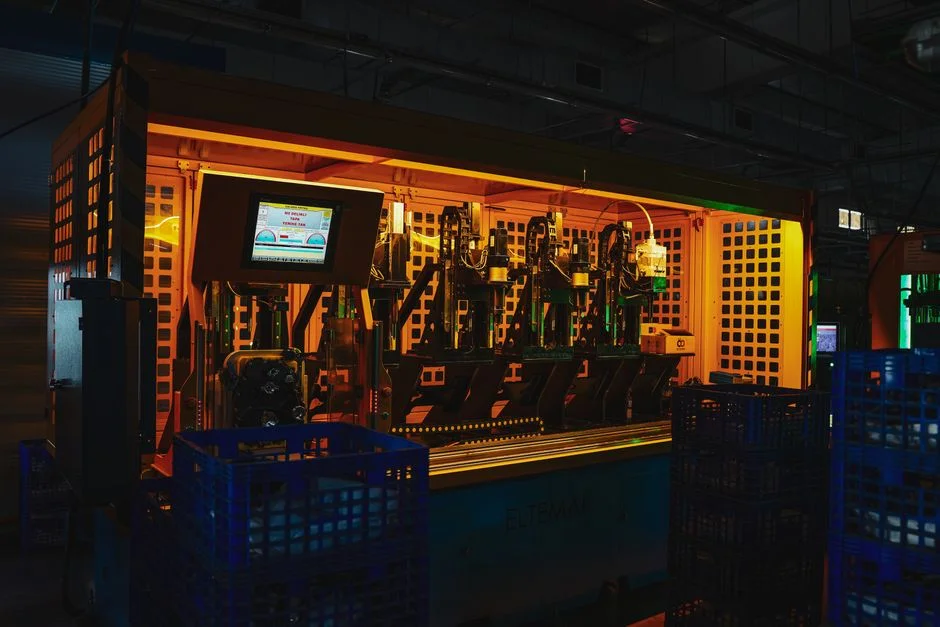
UMC's forward targets formalize the supply-mix shift already visible in the 12i and 12A numbers. The company plans for reclaimed plus desalinated water to reach 18% of companywide withdrawal by 2025 and 32% by 2030 (per Semiconductor Engineering, 2026-01). Against the 84.3% companywide recycling rate, the two metrics cover different scopes: 84.3% measures internal loop intensity (reused water inside the fence), while the 18%/32% target measures the external supply mix (the portion of non-potable intake).
The trade-off buyers should price in is the ZLD penalty. Increased reuse usually requires more energy per cubic meter treated, because a portion of the polished effluent must be re-polished to UPW spec, adding RO duty, extra pumping, and tighter chemistry control (per Semiconductor Engineering, 2026-01). For context on how aggressive that pivot looks at another major fab operator, our writeup of Samsung's 330,000 t/day reuse plan shows a similar direction at larger absolute volumes. The engineering follow-up questions below isolate the UMC-specific numbers an analyst will need.
Frequently Asked Questions
What is UMC's companywide process-water recycling rate?
UMC reports a companywide process-water recycling rate of 84.3% (per Semiconductor Engineering, 2026-01). This metric measures internal loop intensity — how much water inside the fab fence is reused across multiple duty cycles before discharge.
How many wastewater categories does UMC segregate at the drain?
UMC's new fab areas route wastewater into as many as 27 segregated categories, keeping copper-bearing CMP, fluoride-bearing etchant, solvent-bearing photoresist, and general process streams on separate pipe runs before any chemistry is applied (per Semiconductor Engineering, 2026-01).
What share of Fab 12i's 2024 withdrawal came from reclaimed water?
Fab 12i in Singapore used approximately 4.0 million tons of reclaimed water in 2024, covering 97.6% of that fab's total withdrawal (per Semiconductor Engineering, 2026-01). Fab 12A in Taiwan added about 0.58 million tons of reclaimed supply.
How much did combined 12i plus 12A reclaimed use grow year-over-year?
Combined reclaimed use at Fab 12i and Fab 12A reached 4.58 million tons in 2024, up 16.9% year-over-year (per Semiconductor Engineering, 2026-01). Fab 12A brought its reclaimed system online in late 2022, accelerating the combined figure into 2024.
What are UMC's reclaimed and desalinated water targets for 2025 and 2030?
UMC plans for reclaimed plus desalinated water to reach 18% of companywide withdrawal by 2025 and 32% by 2030 (per Semiconductor Engineering, 2026-01). These targets measure the external supply mix, separate from the 84.3% internal recycling rate.