What changes when Nestlé acquires a Malaysian plant?
No universal Malaysia-specific wastewater rule is triggered simply because Nestlé acquires a plant. The buyer must identify the approval holder, licensed operator, wastewater streams, discharge destinations, flow and chemistry, then ask the Department of Environment and the applicable sewer authority whether existing approvals may continue, require transfer or amendment, or must be replaced. The Environmental Quality Act 1974 and its 2009 regulations are central, while SPAN and IWK or another sewer authority govern relevant sewerage matters. Nestlé must also map dairy, beverage, cleaning, laboratory, cooling and domestic streams before selecting treatment equipment or allocating liabilities in the acquisition agreement.
The result depends on facts that the transaction documents alone will not establish: the legal approval holder, responsible corporate entity, licensed operator, production configuration, average and peak wastewater flows, chemistry, discharge point, sewer-agreement status and reuse arrangements. The buyer should also determine whether the transaction changes who controls the discharge, who performs monitoring, and whether the planned operating profile differs from the permitted one.
Historical operating decisions provide context, not a regulatory conclusion. Just Food reported in 2019 that Lactalis acquired certain Nestlé Malaysia operations in a deal worth US$37.3m, effective from 1 January 2019. The same report said Nestlé was moving existing Milo operations from Petaling Jaya to Chembong and investing more than MYR100m in the Chembong factory. That movement and investment do not establish the wastewater approvals applicable to an acquired food-and-beverage operation.
The acquisition team should begin with a site-specific approval register and a proposed post-closing process map. The broader plant-acquisition wastewater due-diligence framework applies as a method for separating legal authorization from commercial liability, but the answer for an acquired plant must come from its instruments, correspondence and receiving authorities. This Malaysian context is summarized in the available Malaysia wastewater guidance.
Determine which wastewater route applies
Each wastewater stream must be classified by its lawful destination before the buyer chooses an authority, consent or treatment process. The physical outlet is only the starting point: a connected pipe does not prove permission to discharge the stream at the proposed flow and chemistry.
| Route | Documents to obtain | Key transaction question |
|---|---|---|
| Direct discharge to surface water | Department of Environment consent, approved flow, effluent conditions, outfall details, monitoring points and compliance records | Does the existing consent survive the ownership or operating change, and does it cover the post-closing production plan? |
| Municipal or centralized industrial sewer | Trade-waste consent, local limits, pretreatment agreement, connection approval, monitoring duties, surcharge triggers and reserved-capacity evidence | Is every non-domestic stream authorized at the proposed flow and chemistry? |
| On-site treatment followed by reuse | Source definition, end use, water-quality specification, treatment basis, risk assessment, alternative disposal route, authorized location and receiving-party approval | Is the proposed reuse lawful for the stated purpose without displacing other discharge controls? |
For direct discharge, obtain the full consent and compliance history, then test its flow basis, effluent conditions, outfall and monitoring obligations against the proposed operation. For sewer discharge, obtain the applicable sewer schedule and trade-waste documents, including any surcharge or capacity conditions. For reuse, define the source and end use before selecting treatment; reuse is not a presumption of exemption.
The January 2023 paper Wastewater Production, Treatment, and Use in Malaysia described IWK reuse at 13 regional plants for internal housekeeping, non-potable uses and selected operational applications. These are examples of possible uses, not evidence that an acquired Nestlé site has reuse approval.
Map process rinse and wash water, equipment-cleaning wastewater, laboratory drains, cooling-tower blowdown, non-contact cooling water, domestic sewage and stormwater separately. Do not combine them into one assumed discharge merely because they currently share a collection system.
Build a food-plant wastewater stream inventory
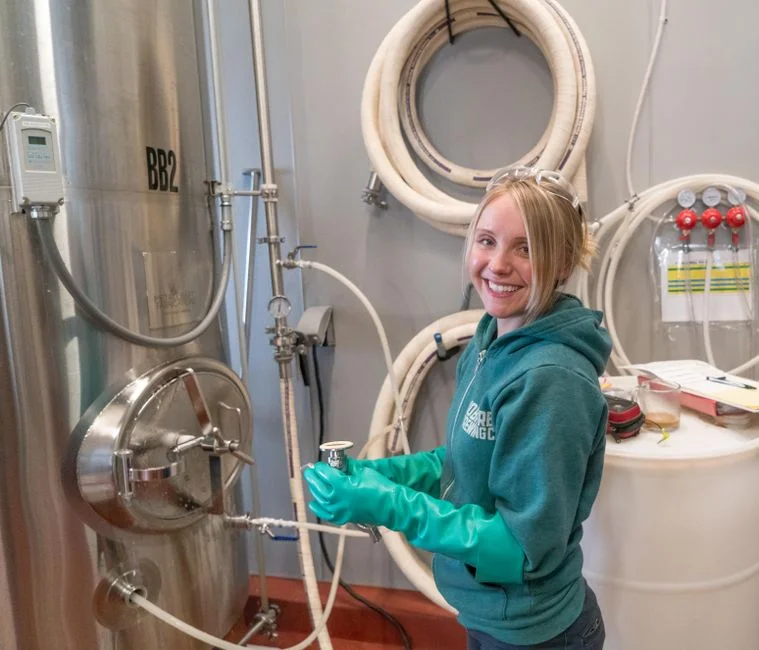
A food-plant design basis must preserve the segregation and timing of each stream. Dairy and beverage production water, product-contact wash water, floor and equipment cleaning, laboratory drains, cooling-water blowdown, domestic sewage and stormwater should remain traceable through collection, treatment, monitoring and disposal.
| Inventory field | Diligence requirement | Why it matters |
|---|---|---|
| Stream identity and origin | Process area, product or activity, segregation point and collection route | Prevents incompatible or intermittent flows from being hidden in a plant-wide average |
| Flow | Average, peak, discharge timing and relevant production configuration | Supports hydraulic loading, equalization and treatment-capacity decisions |
| Chemistry | Representative analytical results with sampling records | Supports treatment selection and acceptance criteria |
| Destination and controls | Outlet, treatment train, monitoring point, consent and responsible operator | Connects technical findings to legal and operational accountability |
For each stream, record its origin, segregation, average and peak flow, destination, treatment train, monitoring point, approval holder, responsible operator and current consent. The supplied Malaysia acquisition reference identifies pH, temperature, suspended solids, chemical oxygen demand, total organic carbon, fluoride, arsenic, copper, lead, zinc, silica, oils and greases, toxicity indicators and process-specific pollutants as relevant characterization data. Only parameters justified by the actual food-process activities should be added to the sampling program.
Request at least one representative sampling campaign for each segregated stream, supported by historical flow and analytical records, sampling methods, laboratory details and chain-of-custody information. A plant-wide average cannot size treatment when a concentrated stream discharges intermittently. No Nestlé-site values appear in the supplied research, so flow, concentration, permit-limit and capacity fields must remain open until verified.
The January 2023 Malaysia paper also observed that oil and grease, inadequately maintained grease traps, soaps, detergents and other cleaning agents can contribute to treatment-system non-compliance. That is a diligence prompt, not evidence of a defect at the acquired site. The relevant technical precedents for filter-press design for food-processing sludge and food-processing sludge dewatering should be applied only after the acquired plant’s solids characteristics and destination are known.
Confirm the Malaysian approvals and controlling authority
Malaysia’s wastewater review must separate environmental authorization, sewerage requirements and site-specific operating conditions. The January 2023 paper identifies the Environmental Quality Act 1974 as the central wastewater law and the Environmental Quality (Sewage) Regulations 2009 and Environmental Quality (Industrial Effluent) Regulations 2009 as relevant regulations.
| Authority or document set | Evidence to request | Decision to establish |
|---|---|---|
| Department of Environment | Complete environmental approval register, consents, DOE correspondence, monitoring reports, deviations, enforcement notices and pending applications | Whether notification, transfer, amendment or replacement is required |
| SPAN | Applicable sewerage rules, service requirements and regulator correspondence under the Water Services Industry Act 2006, Act 655 | Which national sewerage requirements apply |
| IWK or another receiving sewer authority | Sewer schedule, trade-waste consent, local-limit rules, pretreatment agreement, connection approval, surcharge triggers and capacity correspondence | Whether the actual streams, flow and chemistry are authorized |
| Centralized industrial pretreatment plant | Connection agreement, downstream acceptance conditions, performance criteria and acceptance-test protocol | Whether connection requires specific pretreatment performance |
SPAN is identified in the January 2023 paper as the water and sewerage-services regulator under the Water Services Industry Act 2006, Act 655. The same source identifies IWK as Malaysia’s national sewerage company, but the actual receiving authority must be confirmed for the acquired site. The January 2023 paper’s estimate of 2.97 billion cubic metres per year for municipal and industrial wastewater generation is historical national context only; it is not a Nestlé requirement.
Request each instrument’s approval holder, effective date, conditions, monitoring point, capital obligation and proposed transaction consequence. DOE correspondence should establish whether the transaction requires notification, transfer, amendment or replacement. Sewer documents should establish whether each non-domestic stream is authorized under the proposed operating plan.
A physical outlet or sewer connection is not proof of legal authorization. Obtain the authorities’ written position before assigning a signing consequence, closing condition or production restriction to the transaction.
Select treatment only after the design basis is defined
Equipment should be quoted only after the discharge route, representative flow and chemistry, treatment objective, monitoring duties, site constraints, acceptance tests and unresolved authority conditions are defined. A technology name is not a design basis.
| Treatment need | Potentially relevant option | Precondition |
|---|---|---|
| Suspended solids, fats, oils or colloidal matter | DAF pretreatment | Representative influent testing and applicable receiving-authority limits |
| Defined industrial reuse quality | MBR or another membrane process | An established end-use water-quality specification and verified process design |
| Domestic sewage at the acquired factory | Integrated sewage treatment package | Verified flow, treatment objective, site constraints and discharge authorization |
A DAF system for food-processing wastewater pretreatment may be relevant where influent testing confirms suspended solids, oil and grease or colloidal characteristics. It should not be selected from a generic “food plant” label. The equipment supplier must receive the stream characterization, production scenario, receiving-authority limits and performance requirements.
An MBR integrated wastewater treatment system may be relevant where reuse has a defined quality target, but the treatment basis and membrane application must follow that specification. An integrated sewage treatment package for acquired-factory domestic wastewater should be considered for the domestic-sewage duty or a verified integrated treatment duty—not automatically for all process wastewater.
The supplied sources provide no defensible Malaysia project cost for this transaction and no Nestlé plant concentrations, flows, permit limits or treatment-capacity data. Those omissions prevent a defensible equipment price or guaranteed performance claim at the current diligence stage.
Protect the transaction against approval and treatment risk
Each required action should be classified as a signing condition, closing condition, post-closing milestone or condition to operating at the planned production level. The classification depends on whether the issue threatens legal authorization, physical capacity, production continuity or the purchase price.
Approval risk may require an approval-transfer covenant, a closing condition, a deferred consideration mechanism, a holdback, an interim disposal route or a restriction on the production ramp. Treatment-capital risk may instead be handled through a purchase-price adjustment, seller covenant or capital-allocation schedule. These mechanisms should reflect the actual approval path rather than apply automatically to every issue.
Allocate separately:
- the cost of new approval conditions;
- treatment capital and installation;
- monitoring, sampling and operating costs;
- legacy contamination, closure and waste liabilities;
- deviations, enforcement and non-compliance; and
- delay or restricted-production consequences.
Keep unresolved site-specific limits, flows, permit status, capital requirements and costs in a diligence register. Do not close those gaps with generic food-processing assumptions. Also distinguish application status from authorization: filing an application does not establish that approval will be issued.
The final transaction record should reconcile every approval, sewer agreement, characterization dataset, treatment commitment and operating covenant. Use a plant-acquisition wastewater due-diligence framework to test consistency, but ensure that each conclusion is supported by the acquired site’s documents and written authority positions.
Frequently Asked Questions
How can a buyer obtain a defensible project cost for the acquired plant?
First define the discharge route, representative average and peak flows, chemistry, treatment objective, monitoring duties, site constraints and unresolved authority conditions. The supplied research provides no defensible Malaysia price for this transaction. A defensible estimate therefore requires site-specific inputs and, where treatment scope is relevant, documented equipment sizing and acceptance criteria rather than a generic plant-capacity assumption.
What information should a wastewater-equipment supplier receive before sizing DAF, MBR or another treatment train?
Provide the stream inventory, representative sampling results, production scenario, selected discharge or
Frequently Asked Questions
Does Nestlé need a new wastewater permit when it acquires a plant in Malaysia?
Yes, under the Environmental Quality (Industrial Effluent) Regulations 2009, a change in ownership requires the notification of the Department of Environment (DOE). While the existing license may remain valid, the new owner must ensure the plant complies with the specific Standard A or Standard B discharge limits as stipulated in the site’s existing approval letter.
If the acquisition involves expanding production capacity or altering the wastewater treatment plant (WWTP) process, a new Written Permission and subsequent License to Operate are mandatory under Section 19 and Section 20 of the Environmental Quality Act 1974.
How much should we budget for wastewater treatment at an acquired Nestlé Malaysia plant?
Capital expenditure for upgrading or retrofitting an existing WWTP to meet current DOE standards typically ranges from RM 1.5 million to RM 5 million, depending on flow rates and contaminant loads. Operational expenditure should be budgeted at RM 2.00 to RM 4.50 per cubic meter of treated effluent, inclusive of chemical dosing, electricity, sludge disposal fees, and environmental monitoring costs.
It is recommended to allocate a 15% contingency fund specifically for unforeseen compliance upgrades, such as the installation of advanced tertiary treatment or additional equalization tank capacity to manage peak hydraulic loads.
What data should I give a wastewater equipment supplier before requesting a DAF or MBR proposal?
You must provide the current daily average and peak hydraulic flow rates (m³/day), along with a comprehensive characterization of the raw influent. This should include BOD5 (mg/L), COD (mg/L), TSS (mg/L), Oil & Grease levels, and the Nitrogen/Phosphorus ratios, ideally based on at least six months of historical lab analysis reports.
Additionally, specify the required effluent quality targets, the available footprint for equipment installation in square meters, and any existing site constraints such as power availability (voltage/phase) and the current sludge management disposal method.
When should a wastewater approval delay become a condition to close the acquisition?
A wastewater approval delay should be a condition precedent if the acquisition involves a change in discharge point, a breach of current DOE discharge standards, or if the plant lacks a valid, up-to-date License to Operate. If the facility is currently under a "Notice of Non-Compliance" or has outstanding compound payments, the acquisition should be contingent upon the seller resolving these liabilities.
Furthermore, if the plant requires a major WWTP overhaul to meet ESG targets or production increases, the closing should be deferred until the Department of Environment has issued a formal acknowledgement of the proposed modification plans to mitigate legal and operational risk.
Can treated wastewater from the acquired plant be reused without a new Malaysian approval?
No, the reuse of treated wastewater for non-potable applications, such as cooling towers or facility irrigation, requires a formal application for approval from the National Water Services Commission (SPAN) and the Department of Environment. The proposed reuse system must demonstrate that the treated effluent meets the specific quality parameters required for the intended application to prevent cross-contamination.
Even if the water meets Standard A discharge limits, it is not automatically classified as "reclaimed water." You must submit a technical proposal detailing the treatment process, storage measures, and pipeline segregation to ensure no cross-connection exists with the potable water supply, as per the Water Services Industry Act 2006.