
Why Shell’s Acquisition Does Not Create a New Wastewater Rule
Shell’s acquisition of an Indian plant does not create a special Shell-specific wastewater rule. The buyer must verify the target’s existing pollution-control-board consent, effluent and sewer conditions, monitoring records, outstanding compliance issues, and treatment-system condition, then determine whether ownership or operational changes require consent amendment or transfer. The due-diligence review should test five matters: legal authority, actual wastewater flow, demonstrated performance, physical treatment capacity, and post-closing change. A reconciled water balance and site-specific treatment assessment are essential. No India-specific transaction cost can be stated from the supplied research; an estimate must be built from the site’s water balance, asset condition, treatment design basis, and implementation schedule.
The transaction documents are not the governing requirements. They establish what the seller represents, warrants, or must deliver under the sale agreement, but the plant remains subject to the permissions, conditions, and liabilities identified by the applicable Indian authorities. Every environmental conclusion should therefore be tied to the target’s documents, operating plan, site evidence, and stated post-acquisition scenario. The same approach is used in the broader Shell plant acquisition wastewater due-diligence guide.
Before deciding what approvals or technical work are required, identify the plant’s state, industry, receiving sewer or other final destination, and consent conditions. A change in corporate control does not, by itself, establish that a new wastewater rule applies; the decisive question is whether the relevant ownership or operational change triggers amendment, transfer, clarification, or another action under the target’s actual permissions. The supplied HydropureWater research, published in 2026, identifies this consent-transfer question as a transaction-specific determination rather than a universal approval process.
The Five Gates for Shell’s India Wastewater Due Diligence
The five gates separate current compliance, physical adequacy, and future operating risk so that a failed gate cannot disappear into a generic post-closing remediation promise. The sequence is legal authority, actual flow, demonstrated performance, physical treatment capacity, and post-closing change.
| Gate | Evidence to obtain | Transaction action if unresolved |
|---|---|---|
| 1. Legal authority | Current consent and amendments; validity; approved effluent and discharge conditions; sewer or destination requirements; monitoring obligations; correspondence and acquisition-related conditions. | Seek authority clarification, consent amendment or transfer; assign responsibility and timing in the transaction agreement. |
| 2. Actual flow | Metered wastewater generation, process data, source-water supply, recycle, losses, treatment flow, reuse, and final discharge. | Correct metering and reconcile the water balance before accepting the treatment design basis. |
| 3. Demonstrated performance | Monitoring and laboratory records, exceedances, reporting gaps, deviations, and treatment operating history. | Require monitoring correction, root-cause analysis, or a funded remediation condition. |
| 4. Physical treatment capacity | Equipment condition, hydraulic capacity, redundancy, power, controls, automation, maintainability, and site-layout constraints. | Fund an upgrade, replacement, or added redundancy where the existing train cannot meet the required duty. |
| 5. Post-closing change | Production growth, raw-material changes, dry-season constraints, stricter reuse conditions, and a verified zero-discharge case. | Condition closing on an executable post-closing capital plan or retain a specific indemnity. |
Do not use installed nameplate capacity as a substitute for actual flow or demonstrated performance. At the first gate, confirm whether the existing permissions cover the intended post-acquisition operation. At the second, reconcile metered generation with production and the site water balance. At the third, identify unresolved exceedances, reporting failures, and deviations rather than accepting a general compliance statement. At the fourth, inspect hydraulic, power, controls, automation, and maintainability constraints. At the fifth, test the plant against credible future operating scenarios.
Each failed gate should produce a defined action: consent clarification, monitoring correction, remediation requirement, capacity upgrade, or funded post-closing capital condition. This is the structure used in the supplied HydropureWater research, published in 2026, for converting environmental findings into transaction protections.
Consent, Discharge, Monitoring, and Reuse Due-Diligence Checklist
The legal file must be tied to the identified plant’s existing consent and operating destinations; the research provides no universal consent category, validity period, effluent limit, or approval fee for an Indian acquisition. Assemble the current pollution-control-board consent, amendments, correspondence, renewal applications, enforcement notices, compliance plans, and any sewer-connection or final-disposal conditions. A useful starting framework is the India wastewater treatment plant compliance and supplier checklist, but its applicability must be confirmed against the target’s state and consent conditions.
| Diligence item | Evidence to request | Test applied by the deal team |
|---|---|---|
| Consent and authority | Consent, amendments, validity status, correspondence, renewal applications, and enforcement notices. | Is the plant authorized for its present discharge route and proposed post-closing operation? Does the acquisition require amendment, transfer, or clarification? |
| Discharge and sewer conditions | Approved effluent limits, sewer or receiving-body conditions, final-disposal route, and relevant correspondence. | Are the treatment and monitoring obligations in the consent aligned with the actual receiving system and operating plan? |
| Monitoring records | Sampling records, laboratory results, reports, exceedances, deviations, gaps, and unresolved reporting failures. | Does the performance record support the seller’s compliance representations? |
| Reuse | Reuse commitments, end-use specifications, quality records, and the destination of treated water. | Can the acquired train meet the required reuse quality under current and future conditions? |
| Residual handling | Documentation of sludge and hazardous-waste handling. | Are handling, storage, transfer, and disposal responsibilities documented within the transaction scope? |
Review effluent characteristics against the consent, sewer or receiving-body conditions, and any reuse commitment. Check monitoring frequency, laboratory results, exceedances, reporting gaps, unresolved deviations, and outstanding reporting failures. Do not treat historical non-compliance and acquisition-related liability as equivalent: for each historic issue, establish the cause, current status, remediation completed, and any continuing operating commitment. The supplied 2026 HydropureWater research supports this evidence-led approach but does not supply a universal statutory checklist for an unspecified Indian plant, so the applicable authority must confirm the final consent position.
Build a Water Balance That Can Survive Due Diligence
A credible water balance is the transaction’s control document for both treatment sizing and cost estimation. It connects source-water supply, process withdrawals, recycle loops, evaporation, product or concentrate losses, wastewater generation, treatment, reuse, and final discharge. The supplied HydropureWater research, published in 2026, defines this reconciliation as the basis for testing current operations, future production, reuse, dry-season constraints, and zero-discharge claims.
| Balance element | Diligence evidence | Decision supported |
|---|---|---|
| Water inputs and process use | Metered source-water supply, process withdrawals, production records, and credible production growth. | Establishes the operating scenario and prevents historical average flow from being used automatically as the future design flow. |
| Recycle, loss, and generation | Recycle-loop records, evaporation, product or concentrate losses, and wastewater metering. | Identifies double counting and explains the difference between production change and wastewater generation. |
| Treatment, reuse, and discharge | Treatment inlet and outlet metering, reuse records, final-disposal data, and route-specific conditions. | Links installed treatment capacity to the actual permitted and operational discharge duty. |
| Future constraints | Dry-season source-water constraints, stricter reuse conditions, raw-material changes, and a verified zero-discharge case. | Tests whether more treatment and reuse are feasible or whether the operating plan is unsupported. |
Compare the reconciled balance with current production and credible post-closing growth. Test dry-season water constraints rather than assuming additional source supply will remain available, and examine raw-material changes because they may alter wastewater characteristics and flow even when production volume does not change. For a zero-discharge proposition, require a verified mass balance and treatment train; do not accept a zero-liquid-discharge label without evidence.
Use the reconciled balance as the design-flow source for the treatment assessment and as the basis for any transaction-specific cost estimate. If meters, production records, and destination records cannot be reconciled, the second gate remains open even if the treatment drawings show a larger nominal flow.
Assess Treatment Assets Against the Shell Post-Acquisition Plan
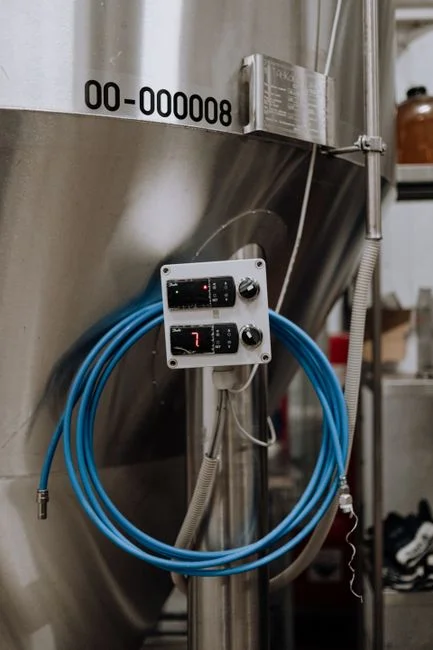
Treatment selection must follow four filters: effluent characterization, discharge obligations, reuse requirements, and the condition of the acquired assets. These filters determine whether the existing train should be retained, upgraded, supplemented, or replaced. Catalog capacity provides a selection reference, not proof that an equipment train is adequate for the acquired plant.
| Assessment | Relevant equipment and evidence | Key acquisition test |
|---|---|---|
| DAF | An industrial DAF system for oily wastewater is relevant where characterized effluent contains suspended solids, FOG, oil and grease, or colloidal matter. The supplied HydropureWater product information, accessed in 2026, lists 4–300 m³/h across 13 standard models. | Request the characterized contaminant duty and demonstrated operating envelope. Confirm final selection against site flow and effluent, not the catalog range. |
| MBR | An MBR wastewater treatment system for industrial reuse is relevant where the required outcome is industrial reuse or near-reuse-quality separation. The supplied HydropureWater product information, accessed in 2026, lists 10–2,000 m³/day and submerged PVDF membrane filtration below 1 μm. | Request membrane design conditions, cleaning requirements, and redundancy. Confirm that the specified quality and site duty support that selection. |
| Installed assets | Equipment condition, hydraulic bottlenecks, power availability, automation, site constraints, sludge handling, and maintainability. | Determine whether the acquired train can operate reliably under current and future scenarios without unplanned shutdown or constraint. |
DAF and MBR are different process propositions, not interchangeable capacity claims. A DAF proposal should be tied to the characterized oily-wastewater contaminant duty and a demonstrated operating envelope. An MBR proposal should state the membrane design conditions, cleaning regime, redundancy, and reuse-quality requirement. The filtration figure associated with the MBR catalog does not by itself establish compliance or reuse suitability.
Assess these process issues alongside the physical plant. Inspect power availability, controls, automation, maintainability, sludge handling, and layout constraints. A treatment train that meets current flow may still fail the fourth gate if it lacks redundancy, reliable utilities, or route to the required discharge and reuse destinations.
Translate Environmental Findings into Deal Conditions and Capital Plans
Environmental diligence is transaction-ready only when each finding has an owner, a defined obligation, completion evidence, and an acceptance criterion. Monitoring gaps, unresolved exceedances, reporting failures, remediation requirements, and under-capacity assets should not remain as open-ended post-closing statements of intent.
| Finding or decision | Pre-closing treatment | Post-closing treatment |
|---|---|---|
| Consent clarification, amendment, or transfer | Define the responsible party, approval milestone, and evidence required before closing. | Retain a specific obligation only if the authority confirms it can be completed after closing. |
| Monitoring gap, exceedance, or reporting failure | Require correction, root-cause analysis, proof of remediation, and confirmation of continuing compliance. | Use an indemnity for identified pre-closing liability where remediation cannot be completed before closing. |
| Treatment under-capacity or asset-condition deficit | Protect the transaction through a price adjustment, specific indemnity, or closing condition. | Approve a funded capital plan with design basis, schedule, acceptance criteria, and evidence of completion. |
| Post-closing production, material, reuse, or water-constraint change | Test the scenario before signing and disclose any dependency. | Attach capital to a defined operating milestone rather than a general post-closing undertaking. |
Each capital request should state design flow, wastewater characteristics, required treatment objectives, reuse destination, site constraints, power availability, automation requirements, and acceptance criteria. The supplied 2026 HydropureWater research contains no India-specific cost figure for this acquisition. Request a site-specific estimate built from the reconciled water balance, condition assessment, treatment design basis, and implementation schedule; do not substitute a catalog price or generic plant rate. The broader plant-acquisition wastewater compliance framework shows how environmental findings can be translated into conditions, indemnities, and funded capital plans.
The five-gate review should support one of three decisions: close, close with defined conditions, or defer closing until a failed gate has an acceptable remedy. This preserves a clear distinction between current compliance, pre-closing liability, and Shell’s funded post-closing investment.
Frequently Asked Questions
Does Shell’s acquisition of an Indian plant create a new wastewater approval requirement?
No special Shell-specific wastewater rule is created by the acquisition. Shell must verify the target’s existing pollution-control-board consent, discharge and sewer conditions, monitoring records, unresolved compliance issues, and treatment condition, then determine whether amendment or transfer is required. The decisive issue is the effect of the ownership or operational change on the target’s actual permissions, as identified in the supplied HydropureWater research, published in 2026.
What cost should the buyer budget for wastewater remediation or treatment at the acquired plant?
No defensible India-specific transaction cost can be stated from the supplied research. The buyer should request a site-specific estimate built from the reconciled water balance, asset-condition assessment, treatment design basis, and implementation schedule. For comparison, ask each bidder to price the same design flow, wastewater characteristics, treatment objective, reuse destination, site constraints, power requirement, automation requirement, and acceptance criteria. This creates comparable proposals without inventing a rupee estimate.
What information should a treatment supplier provide before Shell selects equipment?
Require a treatment design basis containing design flow, wastewater characteristics, treatment objectives, reuse destination, site constraints, power availability, automation requirements, and acceptance criteria. For MBR, also request membrane design conditions, cleaning requirements, and redundancy. For DAF, request the characterized contaminant duty and demonstrated operating envelope. A supplier should also identify how the proposed system fits the acquired site and the post-closing operating plan.
How should the five-gate review affect the acquisition decision?
Use the five gates to screen the plant in sequence: legal authority, actual flow, demonstrated performance, physical treatment capacity, and post-closing change. A failed gate should become a consent action, monitoring correction, remediation condition, capacity upgrade, or funded capital plan. Use the review to determine whether the transaction can close without conditions, should close with defined protections, or must be deferred.
When should DAF or MBR be considered for the acquired plant?
DAF is relevant to characterized oily industrial wastewater containing suspended solids, FOG, oil and grease, or colloidal matter. MBR is relevant where the required outcome is industrial reuse or near-reuse-quality separation. Neither should be selected from catalog capacity alone. The decision must follow effluent characterization, discharge obligations, reuse requirements, and the condition of the assets being acquired.