
What Changes When MBR Treats Wood-Processing Wastewater
An MBR can treat wood-processing wastewater when the design includes reliable solids removal before the membranes, biological treatment for biodegradable organics, equalization for variable flows, and fouling control based on site-specific wastewater testing. EPA notes that MBR screens immediately upstream of the membranes commonly use a 1- to 3-mm cutoff, while peak design flows should generally be no more than 1.5 to 2 times average flow. Membrane fouling remains the principal MBR limitation because it lowers performance and membrane life. For sawmills, pulp mills, and engineered-wood plants, the correct solution is therefore a complete treatment train, not a stand-alone membrane unit.
Wood-processing facilities do not necessarily discharge one consistent wastewater stream. A site may combine pulp-and-paper process water, sawmill wash water, veneer debarking water, coating or adhesive washdown, cooling-water blowdown, and contaminated site runoff. Each stream needs to be identified rather than assumed to be present. A plant that laminates panels, for example, may have a different treatment problem from a sawmill dominated by bark and wood debris.
The distinction between retained and dissolved pollution governs the MBR design. The EPA states that an MBR combines suspended-growth biological treatment with membrane solids separation. Membranes retain solids and microorganisms, but removal of dissolved wastewater components requires additional treatment steps. Biological degradation can address biodegradable organics; it does not automatically remove dissolved salts, certain persistent compounds, or other contaminants that may require a separate process.
That means an MBR evaluation should end in one of three defined outcomes: regulatory effluent compliance, reuse or process-water recovery, or protection of downstream biological and membrane equipment. The 2026 MBR cost per m³ guide provides a useful commercial reference, but the engineering basis must come from the plant’s wastewater.
Characterize the Wastewater Before Selecting an MBR
A defensible MBR design starts with a representative characterization, not with production capacity or a generic wood-industry profile. The investigation should establish flow, peak-to-average behavior, COD, BOD, suspended solids, pH, and temperature, together with oil and grease where relevant and contaminants associated with coatings, adhesives, preservatives, or cleaning chemicals. EPA identifies influent characteristics, effluent requirements, and flow data as the basic information required for MBR design in its Membrane Bioreactors—Wastewater Management Fact Sheet, published in 2021.
Sampling must capture the operating states that create the highest risk: normal production, cleanup cycles, downtime, and shock loads. The supplied research does not specify a universal sampling frequency, so the project engineer should establish the monitoring plan from production behavior and treatment risks. Composite and event samples should be used to distinguish sustained load changes from short-duration releases rather than relying on one grab sample.
| Design input | What the buyer must establish | Why it changes MBR selection |
|---|---|---|
| Hydraulic profile | Average flow, peak flow, peak duration, and variable operating states | Determines equalization, membrane area, pumping, and redundancy |
| Organic loading | COD, BOD, biodegradability, and cleanup or shock conditions | Sets biological loading and treatment objectives |
| Solids inventory | Suspended solids plus bark, chips, fibers, sand, grit, and their size distribution | Defines screening, settling, and membrane-protection requirements |
| Chemical compatibility | pH, temperature, oils, coatings, adhesives, cleaners, and process-specific contaminants | Identifies biological inhibition and membrane compatibility risks |
| Discharge or reuse target | Permit limits or the receiving process’s quality requirements | Defines whether disinfection or additional polishing is necessary |
The solids inventory deserves particular attention. Bark, chips, fibers, sand, and grit can be physically damaging if they reach the membrane, while variable flow can repeatedly upset biological treatment and screening. The GX-series mechanical bar screen should be evaluated against the actual debris and rejectable-material list, not selected from a nominal opening size alone.
Compatibility information should come from the equipment supplier after reviewing the complete proposed train. Streams that may inhibit biology or attack membrane materials require specific evaluation. The final treatment objective also sets the boundary of the MBR package: direct discharge, reuse, process-water recovery, or a defined need for advanced polishing.
Build the Pretreatment Train That Protects the Membrane
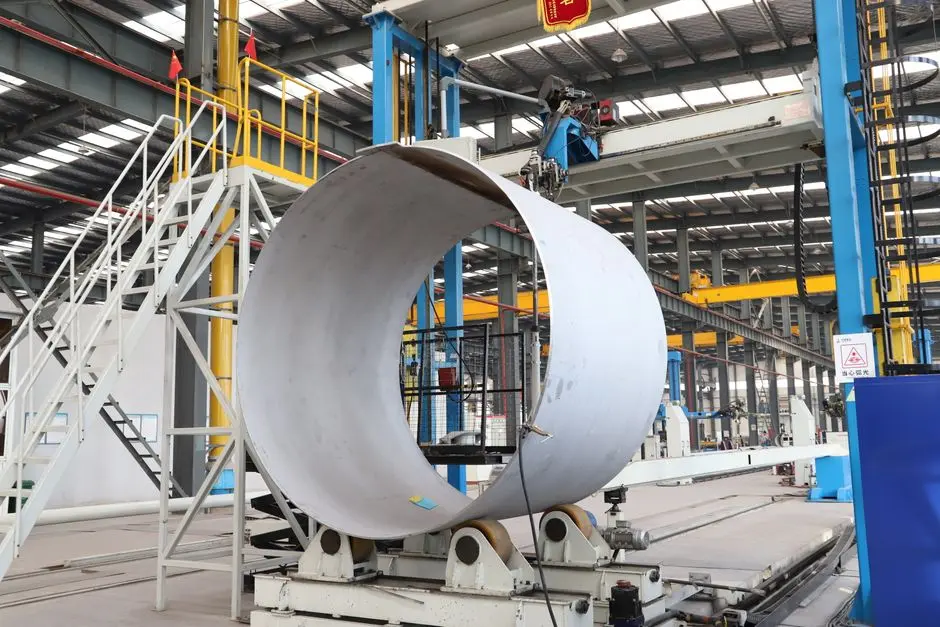
The practical treatment sequence is segregation and equalization, coarse debris removal, fine screening, biological treatment, MBR separation, optional disinfection or polishing, and sludge handling. Every stage should have a defined purpose. Equalization dampens hydraulic and organic shocks; coarse removal protects downstream equipment; fine screening satisfies the membrane manufacturer’s requirement; biological treatment removes biodegradable material; and sludge handling addresses the solids retained in the system.
EPA’s 2021 fact sheet states that all MBR systems require 1- to 3-mm-cutoff fine screens immediately before the membranes, depending on the manufacturer. Hollow-fiber systems typically require 1- to 2-mm screening, while plate systems require 2- to 3-mm screening. These values are manufacturer-dependent design requirements, not a general permission to accept untreated wood debris.
| Process stage | Required design question | Decision output |
|---|---|---|
| Stream segregation and equalization | Which streams vary independently, and what flow or load must be dampened? | Equalization objective and mixing arrangement |
| Coarse debris removal | What bark, chips, and fibrous material must be removed before pumps and fine screens? | Mechanical screen selection and reject handling |
| Fine screening | What cutoff does the membrane manufacturer require? | Manufacturer-confirmed screen specification |
| Primary settling or staged screening | Will these steps materially reduce the fine-screen and membrane load? | Site-specific pretreatment sequence |
| DAF, where justified | Are recoverable oils, coatings, adhesives, or floatables present? | DAF pretreatment decision |
| Biological treatment and MBR | What must be removed biologically, and what must the membrane separate? | Treatment objectives and downstream polishing needs |
EPA notes that fine screens require frequent cleaning. Two-stage screening or locating the fine screen after primary settling can reduce the material reaching it, but neither is automatically required. The decision should reflect screen loading, maintenance access, available space, and waste handling. A mechanical bar screen can address coarse debris, while a separate manufacturer-confirmed fine screen protects the membrane.
Fibrous wood debris, bark, chips, and grit should be removed upstream rather than treated as routine membrane-cleaning work. Where recoverable oils, coatings, adhesives, or other floatables are present, evaluate DAF pretreatment for industrial wastewater before biological treatment and membrane separation.
EPA establishes screening requirements but does not provide a universal wood-processing acceptance limit. The buyer should therefore obtain written feed limits, rejectable-material definitions, and maximum particle conditions for the proposed MBR. Those limits belong in the guarantee rather than in a general design narrative.
Configure the Biological and Membrane Treatment Stages
MBR membranes are either immersed directly in the biological reactor or installed in a separate vessel that receives circulated mixed liquor. The choice affects footprint, pumping, maintenance access, hydraulics, and the supplier’s operating philosophy. Membrane formats also affect service requirements: hollow-fiber bundles and flat-plate units are arranged for removal or replacement, but their screening requirements differ under EPA’s 2021 guidance.
| Design choice | Confirmed technical basis | Evaluation point |
|---|---|---|
| Immersed MBR | Membranes operate in the biological reactor | Assess available vessel depth, aeration arrangement, and module access |
| External MBR | Mixed liquor is circulated to a separate membrane vessel | Assess pumping, pipework, space, and maintenance arrangements |
| Hollow-fiber configuration | EPA: typically 1- to 2-mm screening | Confirm the actual manufacturer requirement and screen loading |
| Flat-plate configuration | EPA: typically 2- to 3-mm screening | Confirm module replaceability and access |
| PVDF integrated MBR | HydropureWater’s verified catalog claims filtration below 1 μm and a footprint 60% smaller than conventional systems | Validate the product-specific claim against site constraints and required treatment |
| DF-series modules | HydropureWater’s verified catalog specifies 0.1 μm flat-sheet PVDF modules, integrated aeration, individually replaceable elements, and 10–20× lower energy use than external cross-flow systems | Confirm applicability and energy basis in the project guarantee |
EPA distinguishes the functions clearly: membranes retain solids, while dissolved wastewater components must be addressed through additional treatment. Biological loading, sludge age, aeration, membrane area, and permeate quality therefore need separate design bases. For a constrained site, the integrated MBR wastewater treatment system provides a product-specific submerged-PVDF reference, while DF-series flat-sheet MBR membrane modules provide another configuration to evaluate. Catalog specifications do not replace project-specific guarantees.
Reuse suitability must not be inferred from low suspended solids alone. Confirm the final receiving process, permit conditions, dissolved-contaminant requirements, disinfection needs, and any nutrient or polishing requirements before defining the MBR effluent specification.
Control Fouling Rather Than Treat It as an Afterthought
Membrane fouling is the major drawback impeding wider MBR application because it reduces membrane performance and lifespan, increasing maintenance and operating costs, according to the academic review Membrane Bioreactor Technology for Wastewater Treatment and Reclamation: Membrane Fouling published in Membranes in 2016. For a wood-processing plant, fouling control starts with keeping physically damaging material away from the membrane and ends with disciplined operating and maintenance practices.
Preventive controls should be matched to the risk source. Effective screening addresses bark, chips, fibers, grit, and other debris. Controlled throughput limits the rate at which material reaches the membrane. Air scour reduces deposited material, while manufacturer-approved cleaning removes accumulated foulants. Excessive or shock loading should be avoided through equalization and biological capacity. EPA identifies air scour as a feature of all principal MBR systems, and some systems also use timed back-pulsing; the EPA’s cited example performs back-pulsing for 1–5% of total operating time.
| Control or metric | Engineering role | Information to trend |
|---|---|---|
| Fine screening and debris control | Reduces physical damage and membrane loading | Screen condition, cleaning frequency, and rejected material |
| Equalization and throughput control | Limits shock loading and excessive membrane demand | Influent flow, equalization level, and applied flux or loading |
| Air scour and back-pulsing | Controls material buildup on the membrane | Operating time, air-scour operation, and system alarms |
| Chemical cleaning | Removes persistent deposits under the manufacturer’s protocol | Chemical used, condition, performance recovery, and cleaning frequency |
| Performance indicators | Shows whether fouling or operation is degrading performance | Normalized permeate flow, transmembrane pressure, and cleaning frequency |
EPA recommends regular mild cleaning, with solutions most often including sodium bleach and citric acid, under the membrane manufacturer’s maintenance protocols. Routine chemical cleaning should not be treated as permission to continue operating with an adverse process condition. If performance loss continues, investigate screen fouling, solids inventory, load changes, cleaning execution, and transmembrane pressure before increasing chemical intensity.
Lifecycle cost should include membrane cleaning chemicals, eventual replacement, screen maintenance, air-scour energy, and the labor required to diagnose and recover performance. The 2026 MBR cost per m³ guide is useful for developing a commercial budget, but the supplier should state which energy, consumable, and replacement assumptions support its offer.
Size the MBR for Variable Wood-Plant Flows
Size the MBR from a measured wastewater design basis, not from production capacity alone. The supplied research provides no universal hydraulic loading, flux, or membrane-area value for wood-processing wastewater. The supplier must document the design flow, organic and solids loading, peak-flow treatment method, membrane area, aeration basis, cleaning strategy, and redundancy assumptions.
EPA’s 2021 design guidance states that peak design flows should generally be no more than 1.5 to 2 times average design flow. If peak flows exceed that range, the design must provide either additional membrane capacity or equalization. Equalization may use a separate basin or additional operating depth in the aeration and membrane tanks, which EPA describes as internal equalization.
| Sizing check | Required basis | Decision required |
|---|---|---|
| Average and peak flow | Measured wastewater flow profile | Confirm that peak treatment remains within the selected design envelope |
| Hydraulic variability | Equalization volume and operating response | Select external or internal equalization, or additional membranes |
| Bioreactor volume | Organic loading and required sludge age | Check whether oxygen transfer, rather than SRT, controls bioreactor sizing |
| Membrane capacity | Design flow and manufacturer loading limits | Document membrane area and operating controls |
| Redundancy | EPA’s N plus 1 recommendation for full-treatment applications | Confirm one additional membrane tank or unit beyond nominal design |
| Equipment-selection range | HydropureWater catalog range of 10–2,000 m³/day | Use only as a supplier range, not a universal plant-sizing rule |
EPA also notes that bioreactor sizing can be limited by oxygen-transfer requirements rather than the volume needed to achieve the required solids retention time. A supplier calculation that addresses only reactor volume or membrane area is incomplete.
Maintainability affects installed sizing as well. The N plus 1 approach recommended by EPA provides an additional membrane tank or unit beyond nominal design for full-treatment applications, supporting maintenance and continued treatment capacity. The integrated submerged-PVDF MBR and DF-series flat-sheet modules can be evaluated within that framework, but the final configuration should reflect site hydraulics, operator access, and the treatment objective.
Compare Capital Cost, Operating Cost, and Reuse Value
MBR project cost must be compared as a complete treatment system rather than as membrane equipment alone. The 2026 MBR cost per m³ guide provides the current commercial framework, while the plant budget should separately identify pretreatment, equalization, biological treatment, membrane area, aeration, controls, sludge handling, civil works, buildings, and installed utilities.
EPA’s 2021 fact sheet states that MBR capital and operating costs are typically higher than conventional systems for the same throughput. The principal operating and lifecycle drivers are aeration and pumping energy, cleaning chemicals, membrane replacement, screen maintenance, sludge handling, operator labor, and downtime. These costs should be tied to the proposed control philosophy and membrane guarantee rather than left as general allowances.
| Cost category | Items the buyer should request separately | Commercial treatment |
|---|---|---|
| Equipment | MBR, screens, aeration, pumps, controls, and optional DAF | State price, delivery scope, exclusions, and alternatives |
| Installed system | Civil works, building, utilities, connections, installation, and commissioning | Use a common deliverable boundary for every bid |
| Operations | Energy, chemicals, screens, sludge handling, labor, and maintenance | Provide assumptions and unit-price sensitivity |
| Lifecycle risk | Membrane replacement, downtime, and guarantee exclusions | Document life assumptions and prorated replacement terms |
| Reuse value | Water made available for a defined process or discharge route | Value only after confirming quality and demand |
Reuse is a potential value driver, not a guaranteed financial return. EPA notes that high-quality MBR effluent is suitable for reuse and surface-water-discharge applications, but the receiving use and any required additional treatment must be defined during design. A water balance, quality specification, and credible demand for the recovered water are necessary inputs.
The supplied research does not provide a wood-processing project price, reuse-water value, or payback period. A buyer should not infer return on investment from a generic MBR range. Instead, require a transparent project quotation and document any savings assumptions separately from equipment cost.
Use a Supplier Qualification and Acceptance Checklist
A defensible procurement requires each supplier to connect its equipment offer to the site’s actual wastewater and treatment objective. The bid should begin with the characterized wood-processing streams, identified contaminants, variable-flow profile, required effluent quality, and proposed pretreatment train. A catalog sheet or generic MBR performance statement is not a substitute for a project-specific compatibility review.
| Qualification area | Written information required | Acceptance evidence |
|---|---|---|
| Feed compatibility | Confirmed feed limits, rejectable materials, and wastewater constituents of concern | Supplier-signed review of the actual wastewater data |
| Process design | Membrane type, pore size, configuration, area, design flow, peak-flow method, aeration, controls, and cleaning strategy | Issued design basis and calculation package |
| Redundancy | N plus 1 arrangement and maintenance operating plan | Documented configuration and access for testing or replacement |
| Performance guarantee | Effluent commitments, membrane life, operating conditions, and remedy | Clear exclusions, prorating terms, and acceptance test method |
| Maintainability | Module access, replaceable elements, cleaning access, spare parts, and control visibility | Factory and site demonstration |
| Delivery | Scope, schedule, commissioning, training, documentation, and support | Contract schedule and handover deliverables |
Ask how the guarantee is linked to feed limits, screen size, throughput, cleaning compliance, and actual operating conditions. EPA notes that membrane guarantees may be tied to screening arrangements, so the buyer should read the exclusions rather than relying on the headline warranty period. The supplied research does not state universal performance-test thresholds; project acceptance criteria must therefore be defined in the contract and verified through factory acceptance testing, site acceptance, performance testing, operator training, and documentation handover.
Catalog claims for the integrated MBR wastewater treatment system and DF-series flat-sheet modules are useful screening criteria. They should be reconciled with the selected configuration, project feed, guarantees, and delivered scope before award.
Frequently Asked Questions
How much does an MBR cost for wood-processing wastewater?
The supplied research does not support a universal price for MBR treatment of wood-processing wastewater. A buyer should request separate prices for the MBR equipment, screens or DAF pretreatment, equalization, aeration and pumping, controls, civil works, utilities, commissioning, training, cleaning chemicals, sludge handling, and membrane replacement assumptions. Use the 2026 MBR cost per m³ guide to structure that comparison, but require a project quotation based on the measured wastewater and common delivery scope.
What pretreatment is required before an MBR at a sawmill or pulp plant?
EPA’s 2021 fact sheet states that all MBR systems require a 1- to 3-mm-cutoff fine screen immediately before the membranes, depending on the manufacturer; hollow-fiber systems typically use 1- to 2-mm screening and plate systems 2- to 3-mm screening. The buyer should also evaluate removal of bark, chips, fibers, grit, oils, coatings, and adhesives through site-specific testing, equalization, mechanical screening, primary treatment, or DAF where justified.
How should an MBR system be sized when wood-processing wastewater flow varies?
Use measured average and peak flows, then apply EPA’s guidance that peak design flows should generally be no more than 1.5 to 2 times average design flow. If the peak exceeds that range, add membrane capacity or equalization. The sizing package should also document biological and solids loading, oxygen transfer, membrane area, and N plus 1 redundancy rather than relying on production rate alone.
Can MBR effluent be reused in a wood-processing plant?
Reuse is possible only after the receiving process, permit requirements, dissolved contaminants, and required polishing are defined. MBR membranes provide effective solids separation, but they do not automatically remove every dissolved component. Confirm whether disinfection, nutrient removal, filtration, or another polishing step is needed before specifying the effluent as process-water recovery.
How do I compare MBR suppliers for wood-processing wastewater?
Compare site-specific feed compatibility, pretreatment, average and peak design flow, membrane area, aeration basis, cleaning protocol, N plus 1 configuration, maintainability, replacement terms, and lifecycle support. Require written guarantees with defined operating conditions and acceptance procedures. Product-specific catalog claims are useful for initial screening, but they should not substitute for a guarantee tied to the plant’s wastewater and operating envelope.
Related Equipment
- DAF pretreatment for industrial wastewater — specifications, capacity range, and technical data