Determine Which Sewer Limits Apply to the Mill
A pulp and paper mill discharging to a POTW must comply with 40 CFR Part 430 categorical effluent guidelines and any site-specific local limits issued under 40 CFR Part 403. The applicable Part 430 subpart depends on the mill’s process and products, while the POTW may impose tighter numeric limits, narrative best management practices, monitoring, and discharge-control requirements. The equipment train must satisfy both layers without relying on generic industry values. For a practical industrial pretreatment compliance workflow, begin with the mill’s permitted operation, applicable subpart, receiving POTW requirements, and intended discharge route.
The U.S. EPA identifies separate subparts for dissolving kraft pulp, bleached papergrade kraft and soda mills, unbleached kraft mills, dissolving sulfite mills, papergrade sulfite mills, semi-chemical mills, groundwood mills, and other defined pulp-and-paper operations. The regulatory pollutant set varies by subcategory, so a mill cannot select a treatment train from its broad industry description alone.
For an indirect discharger, the categorical standards are only one layer. The POTW’s industrial user local limits are authorized by 40 CFR 403.5(c) and may be numeric or narrative. They can address pollutants that pass through the POTW, interfere with biological treatment or sludge processing, or require best management practices and self-monitoring. The pass-through prohibition under 40 CFR 403.3(p) applies when the industrial discharge causes the POTW to violate its NPDES permit; the interference prohibition applies when the discharge disrupts POTW treatment, sludge processing, or disposal.
Request the current POTW pretreatment permit, local limits, self-monitoring protocol, approved sampling point, sewer-use ordinance, and discharge authorization. Also confirm whether the project is an indirect sewer discharge or a direct surface-water discharge. Direct dischargers operate under a different permit and treatment scope. An site-specific sewer-limit assessment can help structure the document review, but the mill’s own permits remain controlling.
| Compliance item | Engineering question | Document or evidence required |
|---|---|---|
| Categorical scope | Which Part 430 subpart matches the permitted mill operation? | Permitted operation description, process description, and applicable subpart |
| Local limits | Which local limits, BMPs, and prohibitions apply at the permitted point? | Current POTW pretreatment permit and local limits |
| Enforcement test | Could the discharge cause pass-through or interference? | POTW treatment and sludge-capacity basis |
| Compliance evidence | Where, when, and how must compliance be demonstrated? | Self-monitoring protocol, approved sampling point, and sewer-use ordinance |
Characterize the Wastewater Before Fixing the Treatment Train
Wastewater characterization must cover both the mill’s operating variability and the pollutant-specific duties of the proposed treatment steps. The academic review “A review of pulp and paper industry practices and opportunities” reports that pulp-and-paper mills can generate up to 70 m³ of wastewater per metric ton of paper, with actual generation depending on raw material, finished product, and water reuse. That figure is a scale indicator, not a design flow. The engineer still needs site-specific flow and load data.
Map streams from wood preparation, pulping, pulp washing, screening, paper-machine operations, coating, and bleaching. The review notes that each process stage produces a different wastewater profile, influenced by the process, raw material, recirculation, and water use. Bleaching is especially important because effluent may contain AOX and color, while paper-machine and coating streams can contribute solids, fillers, ink, FOG, and organic loading.
Develop a sampling program that covers production, shutdown, startup, cleaning, and recycling cycles. A single grab sample cannot establish the hydraulic and pollutant envelope needed for DAF, biological treatment, chemical dosing, or polishing. Include the mill’s water-reuse plan because internal recirculation changes both flow concentration and the required treatment performance.
The same review reports that chemical pulping can produce more than 40% poorly biodegradable organics within total effluent organic matter and that AOX content is generally proportional to chlorine consumption in bleaching. A high BOD-to-COD ratio, for example, indicates the fraction more readily biodegradable, but it does not establish AOX or color removability.
| Design input | Why it matters | Representative characterization |
|---|---|---|
| Hydraulic profile | Determines equalization and solids-separation loading | Flow by production, cleaning, startup, and shutdown condition |
| Solids and FOG | Defines screening, fiber recovery, clarification, or DAF duty | Suspended solids, settleable solids, FOG, fillers, and ink where relevant |
| Organic loading | Sets biological capacity and equalization requirements | BOD, COD, and biodegradability indicators |
| Bleaching pollutants | Determines whether AOX and color control is required | AOX, color, chlorinated organics, and chlorine-use information |
| Process compatibility | Protects biological and chemical treatment | pH, temperature, metals, sulfides, and constituents named by the POTW |
Build a Pretreatment Train That Protects the POTW
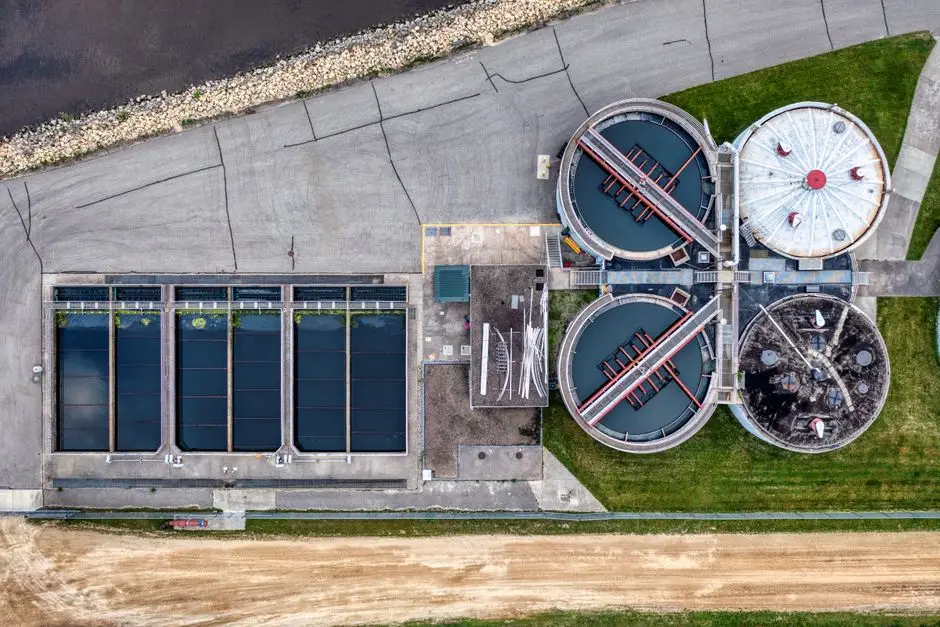
Each pretreatment stage should have a defined pollutant duty, and no stage should be retained merely because it appears in a generic treatment diagram. The sequence begins with source control and mechanical protection, moves through solids and colloid removal, then addresses biological loading and any permit-driven polishing.
- Screen and recover fiber. Mechanical screening, save-alls, and fiber recovery remove rags, free fiber, and suspended material that could foul pumps or overload downstream equipment. The academic review identifies filtration save-alls and other upstream process changes as ways to reduce pollutant load and the volume sent to end-of-pipe treatment.
- Remove settleable solids, FOG, and colloids. Primary clarification or DAF provides the solids-separation duty. The review identifies DAF as an upstream option for reducing pollutant load and wastewater volume. Colloidal and fine-fiber fractions may be poorly suited to gravity settling alone, so the choice should follow waste characteristics rather than a preference for one technology.
- Equalize and control pH. Equalization buffers production, washing, and cleaning cycles before biological treatment. pH control protects biological processes and chemical-dosing performance. Temperature variability must also be included in the biological design basis.
- Apply biological treatment. The review describes primary clarification followed by activated sludge as a widely implemented conventional sequence. Anaerobic treatment can be considered for high-strength, readily biodegradable streams, while an MBR membrane bioreactor for pulp and paper wastewater combines biological treatment with membrane solids separation where footprint or polishing requirements justify it.
- Add only justified polishing. Advanced oxidation, membrane filtration, or other advanced treatment should be added where the categorical subpart, POTW local limit, or reuse objective requires it. AOX and color control may warrant dedicated assessment, but the required removal basis must come from the permit and site data.
- Control residuals and sludge. Coagulation, flocculation, and pH adjustment require defined chemical doses tied to wastewater variability. Separated solids must be conditioned, dewatered, and routed according to the POTW’s acceptance requirements or another approved disposal route.
This sequence is a process framework, not a final plant specification. The review emphasizes that treatment must remain stable while supporting mill production. Equipment selection should therefore include the operating envelope and the consequences of chemical, sludge, maintenance, and power requirements.
| Process stage | Primary duty | Design evidence |
|---|---|---|
| Screening and fiber recovery | Remove rags, fiber, and coarse solids | Source mapping, solids characteristics, and recovery targets |
| Clarification or DAF | Remove settleable solids, FOG, and colloidal material | Flow, mass load, settling or flotation data, and chemical demand |
| Equalization and pH control | Stabilize flow, temperature, and pH | Diurnal and production-cycle data |
| Activated sludge, anaerobic, or MBR | Remove biodegradable organics and residual solids | BOD/COD characterization, biodegradability, loading variability, and footprint |
| Advanced polishing | Address permit- or reuse-driven constituent | Written limit and constituent-specific performance data |
| Sludge conditioning and dewatering | Produce a manageable residual stream | Solids yield, chemistry, destination, and acceptance criteria |
Choose DAF, Clarification, and MBR by Process Duty
DAF, clarification, and MBR are not interchangeable equipment choices. DAF and clarification perform physical solids-separation duties; an MBR couples biological treatment with membrane solids separation. Selection should begin with the pollutants that must be removed and then test the choice against flow, load, site, and operating constraints.
Choose pulp-and-paper DAF system when the design problem emphasizes suspended solids, FOG, oil and grease, or colloidal material that may not be removed reliably by gravity settling alone. The equipment catalog includes 13 DAF models from 4 to 300 m³/h for industrial and pulp-and-paper duties. This is a catalog range, not evidence that a particular unit will meet a permit limit.
Choose clarification when gravity-settling performance, basin configuration, and the mill’s solids properties support that route. The physical separation objective remains the same: capture solids before they enter biological treatment or the sewer. A technically simple train can be appropriate, but only if its solids recovery and operating reliability are supported by site data.
Choose an MBR when biological treatment must be integrated with membrane solids separation, or when the footprint constraint makes conventional clarification and settling less attractive. The MBR catalog covers 10 to 2,000 m³/day. That range cannot substitute for documented wastewater flow, mass loading, operating variability, and required effluent quality.
Evaluate the full operating case: chemical consumption, recovered-solids yield, membrane maintenance, power demand, operator capability, installation constraints, and reuse economics. An automatic chemical dosing system should be defined from actual dose-response and control requirements, not added as a catalog item. Chemical feed capacity, storage, containment, and fail-safe operation must match the treatment design.
| Selection criterion | DAF | Clarification | MBR |
|---|---|---|---|
| Primary role | Physical separation of solids, FOG, and colloids | Physical separation of settleable solids | Biological treatment with membrane solids separation |
| Best fit when | Fine or colloidal solids are a material duty | Settling behavior and basin arrangement support gravity separation | Footprint or solids separation requires membrane separation |
| Key design inputs | Flow, solids and FOG load, flotation data, chemicals | Flow, settleable solids, settling rates, basin configuration | Flow, BOD/COD, biodegradability, membrane flux and cleaning assumptions |
| Permit warning | Catalog capacity does not establish compliance | Catalog capacity does not establish compliance | Catalog capacity does not establish compliance |
Prove Ongoing Compliance Through Monitoring and Sludge Controls
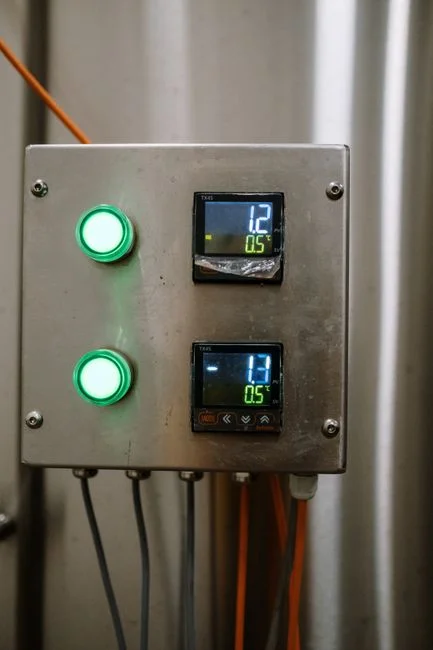
Compliance evidence must come from the approved monitoring point, methods, parameters, and frequency specified by the applicable POTW requirements. The self-monitoring program should measure what the permit requires while preserving enough process data to explain any excursion and corrective action.
Track hydraulic and organic loading, solids capture, biological performance, pH, and chemical use. These operating trends can reveal deterioration before a sampling result becomes a permit violation. Records should connect changes in production, wastewater composition, dosing, equipment operation, and treatment settings to the corresponding analytical results.
Condition and dewater separated sludge before POTW acceptance or disposal. The plate-and-frame press catalog includes options from 1 to 500 m² filtration areas with manual, hydraulic, or automatic PLC control. Press selection should follow the upstream train because sludge chemistry, solids yield, conditioning requirements, and destination determine the practical duty.
Do not use coliform results as a standalone performance or health-risk metric without checking the mill’s permit and validated methods. The McGill study “Study of coliform bacteria in Canadian pulp and paper mill water systems: their ecology and utility as health hazard indicators” examined seven Canadian mills and found that coliforms can grow in mill water and effluent systems, particularly in primary clarifiers. The study concluded that coliforms and fecal coliforms cannot serve as fecal-contamination indicators in those systems.
The compliance record should therefore connect permit-required sampling to process conditions, laboratory results, noncompliance reviews, and corrective actions. The record also needs to demonstrate that sludge was managed through the approved route and that changes to the treatment train were evaluated against both Part 430 and the POTW’s current requirements.
Use a Decision Checklist Before Purchasing Equipment
Equipment should be purchased only after the mill has established a permit-backed design basis. The procurement sequence below separates confirmed requirements from assumptions that still need investigation.
- Confirm legal scope. Record the applicable Part 430 subpart, POTW local limits, discharge point, self-monitoring requirements, prohibited discharges, and narrative BMPs.
- Establish the wastewater basis. Complete representative characterization and document flow, pollutant loads, production cycles, cleaning events, temperature, pH, and water-reuse assumptions.
- Define the required outcome. State whether the controlling basis is categorical, local-limit, reuse, or direct-discharge based, and identify the constituent-specific performance required for each.
- Fix the process duty. Assign each treatment stage a pollutant duty and include chemical, sludge, control, maintenance, and installation requirements in the proposal.
- Verify before ordering. Reconcile the final equipment train against current permits, wastewater testing, and the supplier’s stated design assumptions.
| Procurement gate | Required input | Acceptance question |
|---|---|---|
| Permit scope | Part 430 subpart and current POTW documents | Does the proposal address every confirmed limit, prohibition, BMP, and monitoring requirement? |
| Wastewater basis | Representative analytical and operating data | Are design flow and loads supported across production and cleaning conditions? |
| Process selection | Unit-by-unit pollutant duty | Is each stage necessary, and does each stage have measurable performance criteria? |
| Vendor proposal | Design assumptions, guarantees, controls, and maintenance plan | Can the stated performance be traced to the permit and wastewater data? |
| Final release | Reconciled drawings, data, and permit review | Have assumptions been closed or explicitly accepted by the responsible engineer? |
Frequently Asked Questions
How much does it cost to meet pretreatment limits at a pulp and paper mill?
There is no defensible generic price without the applicable Part 430 subpart, current POTW local limits, wastewater flow and loads, selected process train, site constraints, and sludge route. Request a quotation with itemized equipment, civil and installation work, controls, chemical consumption, power demand, sludge handling, maintenance, commissioning, and monitoring. The absence of those inputs is a quotation risk, not evidence of a lower total installed cost.
Should a mill choose DAF or MBR for pulp and paper wastewater?
DAF is principally a physical treatment step for suspended solids, FOG, and colloidal material, while an MBR combines biological treatment with membrane solids separation. Choose DAF when the primary duty is solids and colloid removal; evaluate MBR when biological treatment, footprint, and required solids separation justify the additional membrane and operating requirements. The permit duty and site data must decide the application.
Can a generic DAF or MBR capacity range demonstrate compliance?
No. A catalog flow range only describes available equipment. The selected train must be sized and verified against documented flow, mass loading, variability, categorical requirements, POTW local limits, and the proposed operating controls. Compliance is demonstrated through the applicable monitoring program, not a product sheet.
Which documents should be requested from a treatment supplier?
Request the process design basis, stated or guaranteed performance criteria, wastewater assumptions, chemical and sludge assumptions, controls scope, installation requirements, commissioning plan, and maintenance schedule. Also request the permit and local-limit inputs used in the design. This makes it possible to identify unsupported assumptions before ordering.
How often should pretreatment performance be reviewed?
Set analytical monitoring frequency from the POTW permit and self-monitoring program. In addition, review operating trends for hydraulic and organic loading, solids capture, biological performance, pH, chemical use, and excursions. The frequency of that internal review should match the variability and consequence of the mill’s production cycles rather than relying only on scheduled compliance samples.
Related Equipment
- pulp-and-paper DAF system — specifications, capacity range, and technical data