Choose the treatment route from the wastewater profile
A factory in Delhi generally needs a DAF system when its wastewater contains floatable or emulsified oil, grease, suspended solids, fibres or colloidal material; it needs a full ETP when biodegradable organics and broader pollution loads also require biological treatment, polishing or reuse. DAF is often the pretreatment stage before biological treatment. Selection depends on representative wastewater tests, peak flow, required effluent quality, discharge or reuse destination, space and operating constraints—not a generic model number. DAF sizing should reflect flow rate, contaminant load and treatment objectives.
DAF is a solid–liquid separation process: fine gas bubbles attach to particles and suspended oil or grease droplets, carrying them to the surface for mechanical skimming. It is particularly relevant where factory wastewater contains oil, grease, FOG, suspended solids, fibrous material or colloidal contaminants. The 2026 DAF unit decision framework is useful for narrowing the configuration once the wastewater data are available.
Use the following route decision:
| Wastewater and objective | Indicative treatment route | Reason |
|---|---|---|
| Oil, grease, FOG, fibres or floatable solids dominate; required outcome is physical separation | DAF-only, subject to the final effluent objective | DAF captures floatable material and suspended solids; the supplier must confirm whether additional treatment is required. |
| Emulsified oil, suspended solids or colloidal material would interfere with biological treatment | DAF pretreatment followed by biological treatment | DAF provides a clarification barrier before the biological stage. |
| Biodegradable organics require treatment, with possible filtration, disinfection or reuse preparation | Full industrial effluent treatment plant | The ETP can combine physical, biological and polishing duties rather than relying on clarification alone. |
A DAF supplier should evaluate flow rate, contaminant load and required effluent quality before recommending a configuration, rather than relying on a one-size-fits-all unit. Give the bidder representative laboratory results, average and peak flow, operating hours, batch-discharge details, intended reuse or discharge route, available footprint, power availability and operating-staff capability. These inputs determine whether a standalone industrial DAF system is technically sufficient or whether an ETP train is required.
Understand what the DAF stage actually removes
DAF separates by flotation rather than settling, so its duty should be defined in terms of the pollutants that can be carried to the surface. A portion of clarified water is pressurized and saturated with air, then released into the flotation tank as fine bubbles. Krofta Engineering gives typical recycle-water pressure of 40–70 psi and typical bubble diameter of 10–100 microns; these are operating figures from Krofta Engineering’s DAF guide, not universal design values.
The bubbles attach to suspended particles, oil droplets and grease. The resulting float is removed mechanically, and clarified water leaves the flotation stage for further treatment, reuse or discharge. Krofta Engineering describes the mechanical skimmer as continuously removing the floated sludge layer while clarified water exits from the bottom or middle of the tank.
Richa Environmental identifies petrochemical and chemical plants, paper mills, food processing, industrial laundries, metal finishing and oily process wastewater as relevant applications. It also lists rectangular, circular, cross-flow and inclined parallel-plate DAF designs. These examples should be treated as application evidence, not as proof that one configuration will suit a Delhi factory.
Richa Environmental reports suspended-solids and oil-and-grease removal as high as 99%+, oil and grease down to 2 mg/l in certain wash-water applications, and clarification rates as high as 97% or more. Actual performance depends on wastewater characteristics, conditioning, equipment design and operating control. DAF should not automatically be credited for dissolved salts, persistent refractory organics or every microbiological requirement without additional treatment.
This distinction is central to evaluating DAF advantages and limitations. A flotation unit is not a substitute for biological degradation, dissolved-solids removal or a defined reuse treatment train.
Compare DAF, lamella clarification, MBR and a full ETP
DAF, lamella clarification, MBR and a full ETP perform different duties and should not be compared as equivalent products. Understanding these distinct functions ensures the correct technology is selected for the specific effluent stream. DAF is strongest for floatable oil, grease, FOG, fibres and fine suspended material. A lamella clarifier is suited to sedimentable-solids capture after coagulation or flocculation. An MBR combines biological treatment with very fine solids separation in an integrated package, while a full ETP is a multi-stage treatment train for wastewater with several treatment demands.
| Option | Primary duty | Best fit | Key limitation or check |
|---|---|---|---|
| DAF | Flotation of oil, grease, FOG, fibres and suspended solids | Physical clarification, especially where emulsified contaminants must be removed before biological treatment | Does not by itself address dissolved salts, refractory organics or all microbiological requirements. |
| Lamella clarifier | Clarification of coagulated or flocculated solids | Suspended-solids capture where a settling-based barrier is appropriate | HydropureWater’s catalog lists surface loading rates of 20–40 m/h and chemical consumption reduced by up to 30%; ask the bidder to apply those figures to the actual wastewater and design basis. |
| MBR | Biological treatment integrated with membrane solids separation | Factories requiring biological treatment and fine solids separation in one package | HydropureWater lists filtration below 1 μm, a footprint 60% smaller than conventional systems, and a capacity range of 10–2,000 m³/day. Confirm the quoted configuration and influent basis. |
| Full ETP | Physical removal, biological degradation, clarification and any required filtration, disinfection or reuse preparation | Multiple pollution loads and a defined final discharge or reuse objective | Requires a complete process design, civil interfaces, sludge route, utilities and acceptance criteria. |
Richa Environmental lists rectangular, circular, cross-flow and inclined parallel-plate DAF configurations, so discuss the geometry rather than accepting a model name. In a DAF-ETP combination, the practical train is usually equalization and chemical conditioning, followed by DAF, then biological treatment where required. That is a different comparison from placing a standalone DAF against an entire multi-stage ETP. For a more specific comparison of DAF and oil-water-separator duties, see the linked DAF versus oil-water-separator guide; for MBR selection, review the MBR versus conventional activated-sludge guide.
Size the system around peak flow and contaminant loading
Industrial wastewater sizing must use the design flow and contaminant load, not average flow alone. The sizing request should identify average flow, peak flow, duration of batch discharges, operating hours, TSS, oil and grease, COD, pH and process-specific contaminants. A factory with intermittent high-volume washing, dyeing or production discharges should have those batch conditions explicitly included in the hydraulic review.
The manufacturer’s DAF range of 4–300 m³/h across 13 standard models is a selection boundary, not a substitute for hydraulic and contaminant-load calculations. The buyer should ask how the proposed tank area, recycle system, skimming capacity and chemical dosing are derived from the factory’s flow profile and wastewater tests.
| Sizing input | What the supplier must state | Buyer check |
|---|---|---|
| Average and peak flow | Design flow basis, operating hours and any batch-discharge assumptions | Does the quoted capacity remain credible during the highest discharge period? |
| TSS, oil and grease, COD and pH | Treatment objective and expected performance at the stated influent | Are the values from representative factory samples rather than generic examples? |
| Conditioning chemicals | Coagulant, flocculant and pH-control basis, including the complete DAF scope | Richa Environmental describes a complete DAF system as including chemical treatment; Krofta Engineering also states that sizing depends on flow, contaminant load and required effluent quality. |
| Downstream treatment | DAF effluent expectations and solids-capture duty before biological treatment | Emulsified oil entering the biological stage can compromise downstream treatment, so verify capture rather than assume it. |
Chemical conditioning is a design input, not an accessory to be added after quotation. The DAF sizing guide for reactive dyeing-bath discharge illustrates why batch conditions and contaminant load must be considered together, while the DAF design for ceramic tile wastewater shows how route selection must follow the actual stream.
Plan installation, sludge handling and operating control in Delhi
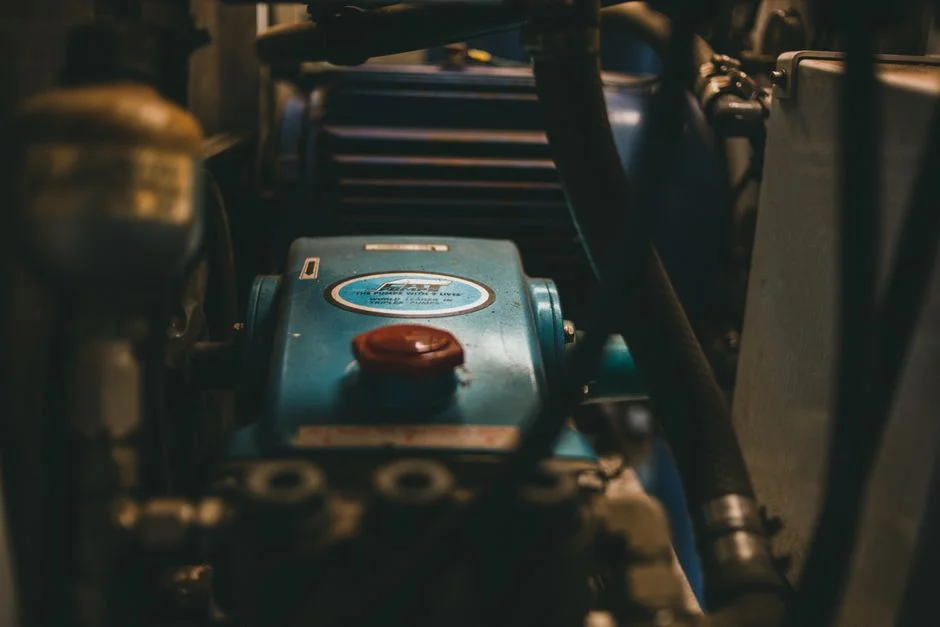
Installation feasibility can decide whether a technically suitable treatment route is practical for a Delhi factory. Confirm the factory layout, civil-work requirements, maintenance access, drainage, power, compressed air and a suitable location for generated sludge before finalising the equipment quotation. A system that fits the process but cannot be drained, maintained or operated should not be accepted.
Automatic chemical dosing should be included where accurate coagulant, flocculant or pH control is required. A PLC-controlled chemical dosing system should be assessed against the chemical inventory, dosing points, control philosophy and operator capability, not just by its inclusion in the supplier’s equipment list.
DAF produces a float that must be removed and handled. HydropureWater’s plate-and-frame filter press range is 1–500 m², so expected sludge volume and desired cake dryness belong in the project scope. Ask the supplier to define the sludge collection route, dewatering method, residual-sludge storage, disposal route and cleaning arrangements. If the train includes biological treatment, also establish how waste sludge is removed from clarifiers and whether the DAF float is compatible with the selected dewatering equipment.
Operating control includes automatic skimming, chemical preparation, inspection of recycle equipment and routine float and sludge handling. These activities affect labour, chemical consumption, power use and plant availability. Confirm local consent, trade-effluent capacity, sewer-discharge conditions and reuse requirements with the relevant authority and a qualified local consultant. The applicable requirement depends on the receiving route and the consent conditions.
Compare supplier proposals using a consistent quotation checklist
Equipment price alone is not a comparable quotation. Require each bidder to submit a common technical and commercial schedule so omissions can be identified before the commercial comparison. The DAF and oil-water-separator cost guidance provides a useful starting point for separating capital cost from operating inputs.
| Bid item | Required information | Acceptance check |
|---|---|---|
| Design basis | Guaranteed design flow, peak-flow basis, representative wastewater parameters, treatment objective and expected performance basis | Is the offer tied to the factory’s actual influent and final discharge or reuse criteria? |
| Process and equipment | Process description, drawings, equipment dimensions, materials, power and compressed-air requirements, civil interfaces, pre-treatment and post-treatment scope | Can the proposed train be installed and operated at the site? |
| Operations and handover | Chemical consumption, sludge yield, commissioning tests, operator training, control philosophy, spare parts, maintenance schedule and warranty | Are responsibilities, exclusions and test methods stated clearly? |
| Total cost of ownership | Equipment price, chemicals, power, aeration where applicable, sludge handling, operator attendance, replacement parts and downtime impacts | Are operating assumptions documented and comparable between bidders? |
Reject a performance guarantee that is not mapped to a defined influent and required effluent quality. The guarantee should identify the wastewater characteristics, sampling conditions, operating duties and test method used to demonstrate performance. Include commissioning and operator training in the schedule, and record what is excluded from the supplier’s scope so that civil work, sludge disposal, utilities and downstream treatment are not lost between packages.
Frequently Asked Questions
How much does an industrial ETP or DAF system cost for a factory in Delhi?
No defensible price can be given without a wastewater-specific quotation. Ask each bidder for the design flow, peak-flow basis, wastewater analysis, treatment duty, chemical consumption, power demand, civil works and sludge-handling scope. Compare total operating cost as well as equipment price; request the assumptions behind each cost line. A price based only on average flow is incomplete.
Which treatment route should I specify when comparing supplier proposals?
Specify the route after reviewing representative wastewater tests and the final discharge or reuse objective. Use D
Frequently Asked Questions
How much does an industrial DAF or ETP system cost for a factory in Delhi?
The cost for a turnkey industrial ETP or DAF system in Delhi typically ranges from INR 15 lakhs to over INR 1 crore, depending on the daily treatment capacity (KLD), influent pollutant load (BOD/COD levels), and required automation. Small-scale modular DAF units for low-flow applications may start at approximately INR 8 to 12 lakhs, while complex, high-capacity integrated ETPs involving tertiary treatment or Zero Liquid Discharge (ZLD) configurations require significantly higher capital investment.
Factors influencing final pricing include the choice of construction material (SS304 vs. SS316 vs. FRP), the inclusion of PLC/SCADA control systems, and the specific footprint constraints of the factory site. It is advisable to factor in an additional 10-15% of the capital cost for annual operational expenses, including electricity, chemical dosing, and sludge management.
Which industrial wastewater treatment equipment should I compare in a Delhi supplier quotation?
When comparing quotations, verify the technical specifications of the primary mechanical components, specifically the DAF saturation pump, air compressor, and the scraper mechanism motor. Ensure the quotation lists the make and model of dosing pumps, the specific type of filter media (e.g., Activated Carbon or Multimedia Filters), and the technical rating of the aeration blowers if biological treatment is included.
Additionally, compare the instrumentation package, such as online pH, TSS, and COD/BOD monitoring sensors, which are increasingly mandated by the Delhi Pollution Control Committee (DPCC). Ensure that the pump efficiencies and the material grades (e.g., SS304 thickness) are explicitly stated to avoid "like-for-like" comparison errors during the procurement process.
How do I size a DAF unit for a factory with variable daily effluent flow?
To size a DAF unit for variable flow, you must design for the peak hourly flow rate rather than the average daily flow, typically incorporating a buffer or equalization tank (EQ) upstream. The EQ tank should be sized to hold at least 1.5 to 2 times the maximum expected hourly flow to dampen fluctuations in hydraulic load and chemical concentration.
The DAF unit itself should be selected based on the surface overflow rate (SOR), generally ranging between 5 to 10 m³/m²/h for industrial applications. By using an equalization tank with level sensors linked to the DAF feed pump, you can maintain a constant, optimal hydraulic loading rate, ensuring consistent bubble-to-particle collision efficiency regardless of incoming flow variations.
Is DAF enough on its own, or does my factory wastewater need biological treatment?
DAF is primarily a physical-chemical separation process designed to remove suspended solids, fats, oils, and grease (FOG). While it can achieve a significant reduction in Chemical Oxygen Demand (COD) associated with insoluble particles, it is generally insufficient if your effluent contains high levels of dissolved organic matter or if the DPCC-mandated discharge standards for BOD (Biochemical Oxygen Demand) are stringent.
If your wastewater has a high ratio of soluble COD to total COD, or if the BOD/COD ratio exceeds 0.3, a biological treatment stage—such as an Activated Sludge Process (ASP), Moving Bed Biofilm Reactor (MBBR), or Membrane Bioreactor (MBR)—is necessary to degrade dissolved contaminants. DAF often serves as a critical pretreatment step to protect these downstream biological processes from oil and grease fouling.
What compliance information should I confirm before ordering an ETP in Delhi?
Before ordering, obtain a copy of your factory's "Consent to Operate" (CTO) issued by the Delhi Pollution Control Committee (DPCC), which specifies the exact discharge standards (mg/L) for parameters like pH, TSS, BOD, COD, and Oil & Grease. Confirm that the proposed ETP design guarantees treated effluent quality that meets or exceeds these specific regulatory thresholds.
Furthermore, ensure the supplier provides a detailed "Design Basis Report" (DBR) that includes projected sludge generation rates and power consumption data, as these must align with your factory’s environmental audit requirements. Verify that the system includes provisions for mandatory online monitoring (OCEMS) connectivity to the Central Pollution Control Board (CPCB) server if your industrial category falls under the "highly polluting" list.