How a Decanter Centrifuge Separates Starch Wastewater
A decanter centrifuge is a continuous solid-liquid separator used to thicken starch-rich sludge or recover starch-bearing solids from process wastewater. Centrifugal force moves denser solids to the bowl wall, while an internal screw transports them toward the discharge; clarified liquid leaves through a separate outlet. Flottweg describes the separation force as equivalent to 1,000 times Earth's gravity, while Alfa Laval states that its decanters can generate up to 4,000 times gravitational force. For starch wastewater, the correct configuration depends on solids concentration, particle size, abrasiveness, temperature, pH, required cake dryness, and downstream treatment. A decanter is strongest as a bulk-solids separation step; DAF, biological treatment, or polishing equipment may still be required.
Feed enters the rotating cylindrical-conical bowl. Denser particles migrate outward to the bowl wall, while the less-dense liquid forms an inner layer and overflows through a separate discharge route. The screw conveyor rotates at a different speed from the bowl and transports separated solids along the conical beach toward the solids outlet. Alfa Laval describes this controlled speed difference as the mechanism that moves solids out of the pond and expels surplus liquid to form a dewatered cake.
Flottweg states that its decanter separation occurs at a force equivalent to 1,000 times Earth's gravitational pull. Alfa Laval says centrifugal force in its decanters can be up to 4,000 times gravitational force. These statements describe the cited suppliers' equipment; they are not universal performance values for every decanter model.
Flottweg distinguishes continuous decanters from separators intended mainly for liquid clarification or liquid-liquid separation. Decanters are primarily suited to solid-liquid separation involving high solids content, making them a natural fit for starch sludge dewatering and centrifugal sludge thickening. They can capture starch-bearing particles that form a concentrated cake, but residual fine or colloidal starch may not report to the bowl wall efficiently. Depending on the required centrate quality, that residual may need flotation, biological treatment, or filtration. A DAF system for starch wastewater pretreatment can therefore serve a different role: removing suspended, oily, or floatable material before clarification or biological treatment.
Starch Wastewater Variables That Change Equipment Selection
A decanter centrifuge for starch wastewater must be selected from feed characterization and solids loading, not from clean-water flow alone. The starch stream may contain recoverable granules or flocs, but it can also carry starch-bearing process water, fibrous material, grit, oil, and grease. Those constituents affect separation, wear, pumping, and the required downstream treatment.
Flottweg explains that pond depth affects liquid retention time and the lengths of the clarification and drying zones. Alfa Laval links pond-level adjustment to separation performance, cleanability, and start-up conditions. Pond depth is therefore an application setting, not a cosmetic adjustment after the machine is installed. Differential speed also matters: Flottweg states that it determines solids residence time and compaction and influences total dry solids. When product characteristics change, the operating point may need to be retuned rather than treating the initial test result as permanent.
Abrasive solids require a wear strategy matched to the application. Alfa Laval identifies FlightGuard tiles welded to the conveyor as protection for highly abrasive duties, while Flottweg describes replaceable wear parts and application-specific protective technologies. A supplier should identify where wear protection is required, how it is secured, and which components can be replaced without dismantling unrelated parts of the train.
The table below separates required design inputs from the configuration decisions they should influence. It does not assign unverified starch-removal efficiencies, cake-dryness values, or throughput guarantees.
| Starch-stream input | Information to obtain | Selection consequence |
|---|---|---|
| Solids concentration and profile | Suspended-solids concentration, hourly solids mass, and variability | Sets solids-loading duty and required machine size |
| Particle characteristics | Particle-size distribution, starch type, and whether material is granular, flocculated, fine, or colloidal | Defines the bulk-separation target and need for polishing |
| Contaminants | Fibrous material, grit, oil, and grease content | Determines feed protection, pretreatment, and wear components |
| Process conditions | Temperature, pH, and required operating range | Sets materials, sealing, and operating constraints |
| Capacity and variability | Design flow, peak flow, batch or continuous operation, and start-up demand | Determines feed handling and operating strategy |
| Disposal objective | Recovered-solids destination and required clarified-water quality | Determines downstream biological, flotation, or filtration requirements |
Do not specify a universal stainless grade, g-factor, cake-dryness result, or starch-removal percentage without a selected machine and representative test data. The buyer's sample should represent the duty the decanter will actually handle.
How to Size and Test the Decanter Centrifuge
Start sizing with solids loading. Feed flow alone can leave the centrifuge undersized when suspended-solids concentration or batch variability is high. The design basis should identify feed flow, solids concentration, hourly dry-solids mass, peak and minimum loading, and the required clarified-water quality. The supplied research does not provide a universal starch-sludge throughput or solids-loading range, so the vendor must derive the selected capacity from the actual duty.
Flottweg states that bowl length, diameter, and taper angle are customized to optimize the clarification zone and solids transport. Its guidance also identifies differential speed and pond depth as adjustable application parameters. The quotation should therefore explain how each setting will be configured rather than simply list a bowl diameter and nominal flow rate.
Alfa Laval describes a VFD and torque-control arrangement that automatically adjusts screw differential speed as solids loading changes. Under increasing load, the control objective is to prevent torque overload while maintaining stable cake dryness; under lighter loading, the speed can be reduced to limit wear and energy use. Flottweg's Simp-Drive description similarly states that it automatically matches differential speed to conveyor torque as feed fluctuates. Ask the bidder to identify which control method it is offering and how it responds to the expected starch-feed profile.
- Issue a feed-data request covering flow, solids, particle characteristics, contaminants, temperature, pH, variability, and the required output.
- Request a written solids-loading and mass-balance calculation for the selected machine.
- Require the supplier to state how bowl geometry, pond depth, feed point, scroll design, wear protection, torque control, and differential-speed range address that duty.
- Make representative testing a pre-order condition, with the sample properties, test duration, feed rate, operating conditions, recovered-solids result, and clarified-water result recorded.
- Include agreed acceptance measurements and a protocol for resolving results that fall outside the proposal.
| Procurement stage | Required written output | Decision enabled |
|---|---|---|
| Duty definition | Feed analysis, design flow, solids loading, variability, temperature, pH, and output requirements | Confirms the application and design basis |
| Equipment selection | Bowl geometry, pond depth, scroll, feed point, wear protection, controls, and differential-speed range | Shows that the machine is matched to the starch stream |
| Representative test | Sample origin and properties, test duration, feed rate, operating settings, solids result, and centrate result | Provides an auditable basis for acceptance |
| Commercial offer | Guarantees tied to defined test conditions, with exclusions and remedies stated | Allows technically equivalent bids to be compared |
Do not insert unverified throughput, recovery, centrate-quality, or dry-solids targets. Require the supplier to commit to performance against the stated starch duty and test method.
Decanter, DAF, Filter Press, or Screw Press
The four technologies occupy different positions in a starch-wastewater treatment train, so they should not be compared as interchangeable solids-dewatering machines. A decanter provides continuous bulk separation; DAF removes floatable and suspended material; a filter press produces a cake through batch filtration; and a screw press performs solids dewatering through a different mechanical arrangement.
| Technology | Best-supported role | Selection considerations | Key downstream question |
|---|---|---|---|
| Decanter centrifuge | Continuous bulk thickening or dewatering of starch sludge | Requires solids-loading design, application test, pond-depth and differential-speed settings, and wear planning | Is clarified liquid acceptable for biological treatment, reuse, or further polishing? |
| DAF | Upstream removal of suspended solids, FOG, oil, grease, and colloidal material | HydropureWater's catalog states a 4–300 m³/h range across 13 standard models | Does the feed need mass removal before dewatering or clarification? |
| Plate-and-frame filter press | Batch solid-liquid separation with cake discharge | HydropureWater's catalog states a 1–500 m² filtration-area range, with manual, hydraulic, and fully automatic PLC-controlled options | Is batch operation acceptable, and what is the required cake-handling sequence? |
| Screw press | Related solids-dewatering option | Compare mechanical configuration and solids balance; use the screw-press solids-balance design method for a structured comparison | Which option provides the required solids consistency without exceeding the available solids-handling capacity? |
Flottweg describes decanters as continuous equipment for solid-liquid mixtures with a high proportion of solids and notes that they avoid filter media. That makes a decanter a credible bulk-solids option where continuous operation and recovered starch-bearing solids are priorities. The catalogued plate-and-frame filter press for starch sludge dewatering remains relevant where batch filtration and cake discharge are specifically required.
DAF is a preparation step rather than a substitute for bulk dewatering. A DAF working principle and selection guide can help frame that pretreatment role. The broader industrial wastewater sludge treatment process guide provides useful train-level context, although its coking-wastewater application is not evidence for starch performance.
Process logic—not a universal treatment train—usually starts with removal of free oil, FOG, or floatable material where necessary; followed by bulk thickening or dewatering of starch solids; biological treatment of soluble organics; and polishing of fine residuals where required. Confirm the actual sequence against the starch stream and reuse or discharge objective.
Materials, Controls, and Maintenance for Abrasive Starch Streams
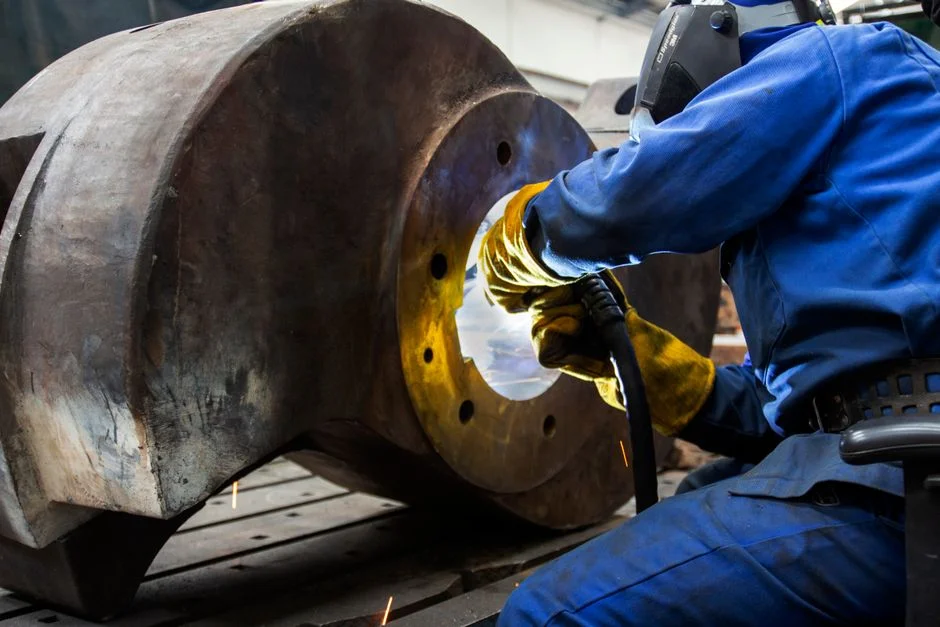
Wear protection and serviceability must be specified for the actual starch application, including the expected presence of grit, fibrous material, and retained starch solids. Alfa Laval identifies the feed zone, solids-discharge zone, bowl, and scroll as wear-prone areas and states that it uses high-grade stainless steel for parts contacting the separation process. Flottweg also identifies corrosion-resistant stainless steels, replaceable wear parts, and application-specific protective technologies.
Require the proposal to identify the material basis for all wetted parts and the protection fitted at the feed zone, solids discharge, bowl, and conveyor. Do not accept a general “stainless construction” statement as a complete durability specification. Ask for replaceable-part drawings or schedules, replacement criteria, and access arrangements for inspection.
Control scope should be equally explicit. Ask whether differential speed is manually adjustable, automatically adjusted by VFD and torque control, or supported by a supplier's automatic torque-matching system. Alfa Laval describes automatic differential-speed adjustment through VFD and torque control as feed loading changes. Flottweg says its Simp-Drive automatically matches differential speed to conveyor torque. These are different supplier arrangements, so compare the control response, operating limits, instrumentation, and failure behavior rather than treating “automatic” as an equivalent feature.
The equipment schedule should also identify lubrication, bearing inspection points, instrumentation, electrical requirements, guards, and local service access. For an abrasive stream, ask what inspection interval the supplier recommends and what indications are monitored between planned maintenance stops. These requests do not establish service life by themselves; they define the supplier's maintenance assumptions and support scope.
Do not accept unsupported lifecycle-cost, uptime, or decades-of-operation claims. Evaluate supporting warranty terms, local spares, service response, and reference installations. Require the same information from every bidder so that differences in scope are visible rather than hidden inside generic performance statements.
Procurement Checklist for Starch Wastewater Equipment
A comparable quotation must define the starch application, feed condition, design duty, equipment configuration, test basis, and supply boundaries. The following checklist converts that information into a written tender request.
| Procurement item | Information required from the bidder | Acceptance point |
|---|---|---|
| Application and feed basis | Starch process, feed analysis, design flow, solids load, particle profile, temperature, pH, variability, and required discharge or reuse outcome | Bid matches the stated plant duty |
| Mass balance | Feed, separated liquid, and recovered-solids quantities on a defined basis | Quantities reconcile and measurement definitions are stated |
| Machine configuration | Effect of the duty on bowl geometry, pond depth, scroll design, wear protection, and torque-control settings | Configuration is explained, not just listed |
| Performance evidence | FAT or representative-sample test plan with acceptance measurements and operating conditions | Generic removal claims are excluded |
| Compliance route | Project-specific pretreatment, biological, and polishing requirements confirmed by the applicable authority or design engineer | No unsupported discharge limit is assumed |
| Supply scope | Feed pumping, tanks, controls, piping, installation, commissioning, spares, and long-term service support | Exclusions and inclusions are identical across bids |
For the mass balance, require the bidder to define whether solids results are reported on wet or dry basis and which measurements establish the recovered-solids and centrate results. A test result without sample properties, test duration, feed rate, and operating settings cannot be transferred to the plant duty.
For treated-water reuse or discharge, the project-specific pretreatment, biological, and polishing requirements must be confirmed by the applicable authority or design engineer. The supplied research does not provide starch-wastewater discharge limits, so neither the supplier nor the buyer should infer them from general centrifuge literature.
Finally, separate mechanical equipment from the complete operating train. State whether feed pumps, feed tanks, piping, controls, instrumentation, installation, commissioning, operator training, initial spares, and long-term service support are included. This prevents a low mechanical price from concealing major downstream scope and gives the project engineer a defensible basis for comparison.
Frequently Asked Questions
How much starch sludge can a decanter centrifuge treat?
Capacity must be calculated from feed flow, suspended-solids concentration, hourly solids mass, variability, and the required clarified-water quality. No universal throughput or starch-removal figure can be applied without representative testing. Ask the supplier to provide a written solids-loading calculation and identify the feed rate, recovered-solids result, and centrate result demonstrated on the submitted sample.
What cost inputs are needed to compare decanter centrifuge prices?
Request a quotation that separates the centrifuge, feed pumping, tanks, controls, piping, wear parts, installation, commissioning, initial spares, and long-term service support. Also request the operating-control proposal and representative-test acceptance conditions. The supplied research contains no starch-equipment quotation, so a defensible budget comparison requires project-specific vendor pricing rather than a generic price estimate.
How do pond depth and differential speed affect starch sludge dewatering?
Pond depth affects liquid retention time and the lengths of the clarification and drying zones, according to Flottweg; Alfa Laval links pond-level adjustment to separation performance, cleanability, and start-up conditions. Differential speed determines solids residence time and compaction and therefore influences dry-solids performance. Both settings should be included in the representative test and adjusted for the actual starch stream.
When is a decanter insufficient for starch wastewater?
A decanter may be insufficient when the required result depends on separating very fine or colloidal starch, or when the clarified stream must meet a reuse or discharge standard that the tested centrate cannot achieve. In that case, DAF, biological treatment, or filtration may be needed downstream. Have the project engineer define the required centrate quality and confirm the applicable compliance route before final selection.
How should a centrifuge supplier be qualified for an abrasive starch stream?
Check application evidence, corrosion-resistant wetted-part proposals, application-matched wear protection, replaceable wear-part schedules, control strategy, service scope, and representative-test data. Alfa Laval and Flottweg both identify wear-prone zones and application-specific protection as important. Require the bidder to show how its proposed materials and controls address the submitted starch characteristics rather than claiming a universal service life.