Start with the development’s wastewater design basis
A packaged sewage treatment plant for an Accra housing development requires more than just the number of homes to select correctly. Begin with the expected daily and peak wastewater flows, then define the required treatment outcome, available footprint, installation depth, soil and groundwater conditions, sludge-handling route, power reliability and approved discharge or reuse destination. Compare those inputs against the capacity and process offered by an underground WSZ sewage treatment plant and an MBR membrane bioreactor before requesting comparable proposals. Selection should follow the verified design basis, not the number of packaged units proposed.
The project brief should identify the development’s occupied phases, future phases, expected flow growth, peak-flow method, wastewater-quality characteristics and any proposed treated effluent reuse. Domestic sewage must be separated from stormwater, landscaping irrigation, car-wash runoff and commercial or industrial inflows unless the selected plant is expressly designed and permitted for those additional duties. A generic allowance for “sewage” can conceal both hydraulic overloads and contaminants that the proposed process is not equipped to treat.
The supplied research does not establish a universal Accra residential wastewater-flow rate, so a per-home factor should not be inserted into the tender documents without a defensible project-specific basis. Record whether the design flow represents an average day, a peak day or another hydraulic condition, and state the method used to calculate peak demand. A municipal network connection, on-site soakaway, controlled discharge or reuse scheme will also impose different hydraulic and water-quality requirements.
Compliance must remain project-specific. The University of Bonn’s 2016 Agbogbloshie dissertation documents environmental contamination and health risks from informal e-waste recycling in Accra; it shows that local discharges can attract significant scrutiny, but it is not a sewage-treatment design or effluent-compliance source. Obtain current approval and receiving-environment requirements directly from the relevant authority.
| Design-basis item | Information the buyer must obtain | Why it changes selection |
|---|---|---|
| Wastewater flow | Average and peak flow, peak-flow basis, occupied and future phases | Determines hydraulic capacity, storage and process loading |
| Wastewater quality | Domestic sewage characteristics and separately identified non-domestic inflows | Defines pretreatment, biological and sludge-treatment requirements |
| Effluent destination | Discharge point, controlled-discharge route or intended reuse application | Sets the required treatment and disinfection objectives |
| Site and installation | Footprint, burial depth, soil, groundwater, flood risk and access | May make a below-grade package impractical |
| Utilities and operations | Power, standby provision, sludge removal, access and maintenance responsibility | Determines operability after handover |
Match the treatment process to the required outcome
The WSZ process sequence combines anoxic/aerobic biological contact oxidation, sedimentation and disinfection in one buried package, making it a practical baseline for decentralized treatment of residential sewage when the project needs conventional biological treatment. Its suitability depends on matching the verified hydraulic and organic load to the available capacity and demonstrating performance against the project’s treatment objectives.
Define the intended result before selecting equipment. General environmental compliance, controlled discharge, landscape irrigation and reuse applications are not interchangeable. The buyer should provide the receiving-water or drainage information, any applicable reuse constraints and the required sampling and monitoring basis. The supplied research does not contain a verified Ghanaian effluent-limit schedule for this housing development, so no generic claim of Accra compliance should be accepted in a proposal.
An MBR becomes relevant when the project specifically requires membrane separation, near-reuse-quality effluent or a more compact installation than the WSZ option can provide. The supplied product catalog states that the MBR uses submerged membrane filtration, produces near-reuse-quality effluent and occupies 60% less space than conventional systems. These are catalog attributes, not a project performance guarantee; the supplier should substantiate them against the design wastewater and proposed operating conditions.
The Elsevier study on pharmaceutical-product removal at Sewerage Systems Ghana Limited in Accra is a useful research lead, but its supplied link was inaccessible. It should be obtained from the publisher if pharmaceutical or other trace-organic concerns form part of the influent assessment. No treatment conclusion or numerical result should be attributed to the inaccessible extract.
Compare the two packaged architectures for a housing site

The two architectures fit different project constraints: the WSZ combines a buried treatment train with capacities from 1–80 m³/h, while the MBR uses submerged membrane filtration at 10–2,000 m³/day. The comparison should begin with process duty, verified flow, land availability and the intended effluent use.
The underground WSZ sewage treatment plant is suited to a relatively compact residential footprint where a below-grade package and conventional biological treatment meet the design duty. The product information describes it as fully automated, although that statement does not remove the need to assign inspection, testing, maintenance and sludge-management responsibilities.
The MBR membrane bioreactor becomes more attractive where the reuse target, footprint constraint or membrane requirement justifies its more process-intensive configuration. The catalog’s stated 60% footprint reduction is relative to conventional systems; it is not an independently verified Accra site saving and should not be multiplied by an assumed conventional-plant area in the tender.
Neither architecture is automatically compliant in Accra. Approval and discharge design depend on the project-specific route, receiving environment and current requirements confirmed with the relevant authority. The supplied sources do not provide comparable capital or operating costs, so neither option can be selected on an unsupported price advantage.
| Decision factor | WSZ architecture | MBR architecture | Selection test |
|---|---|---|---|
| Catalog capacity | 1–80 m³/h | 10–2,000 m³/day | Does the verified design duty fit the stated range? |
| Treatment configuration | Anoxic/aerobic biological contact oxidation, sedimentation and disinfection in one package | Submerged membrane filtration | Does the process meet the specified effluent duty? |
| Installation | Designed for below-grade installation | Assess the supplier’s proposed arrangement | Can it be constructed and maintained within the site constraints? |
| Space | Buried-package option | Catalog states 60% smaller footprint than conventional systems | Confirm the actual layout and maintenance access |
| Operational implication | Described as fully automated | Requires project-specific O&M review | Who will inspect, test, maintain and remove residuals? |
| Cost and approval | No comparative cost supplied | No comparative cost supplied | Obtain installed-scope pricing and confirm the approval route |
Check whether the unit can be built and maintained on site
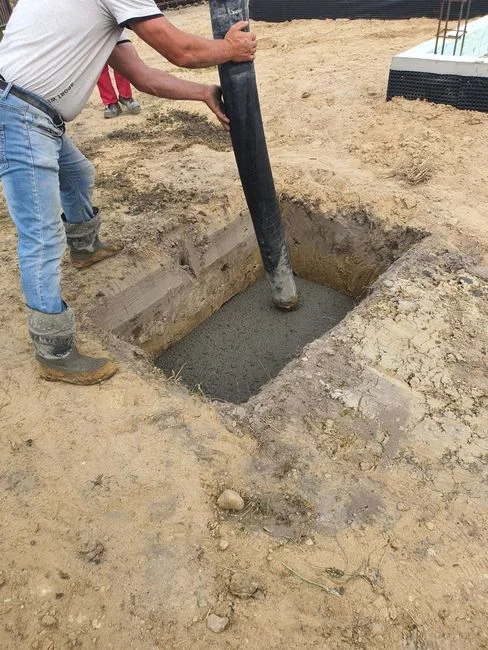
A treatment package that meets the flow duty can still be unsuitable if it cannot be excavated, installed, drained, maintained or removed at the development. Before accepting a below-grade WSZ arrangement, obtain project-specific information on groundwater, flood risk, soil conditions, excavation access, lifting routes and available burial depth.
For a WSZ installation, the product information allows for buried installation with landscaping above or trailer mounting for mobile deployment. Trailer mounting is a deployment arrangement, not a substitute for civil design. Whichever method is proposed, the contractor must reconcile the package geometry with excavation, backfill, access covers, inlet and outlet works, and the development’s landscaping and traffic loading.
Provide a safe route for sludge removal, routine inspection, media or membrane access, odour control, standby power and equipment replacement. If the package is buried, access covers and lifting arrangements must correspond to the maintenance method. The buyer should also require clear sampling points and physical connections to the selected discharge, drainage or reuse system.
Electrical and control information must include the available supply, control-system requirements, local spare-parts strategy and an agreed maintenance response. Grid availability should not be treated as an assurance of uninterrupted operation. The treatment supplier and civil contractor should jointly confirm chamber dimensions, access roads, incoming works, outgoing works and commissioning boundaries before equipment manufacture proceeds.
Build a pre-quotation and supplier-selection checklist
A comparable tender starts with one controlled design basis, not separate supplier interpretations of the development. Issue the same design flow, peak-flow basis, wastewater characterization, required effluent use, discharge point, site constraints, installation method, power conditions and commissioning boundaries to every bidder. State clearly which inputs are verified, which remain provisional and which must be confirmed by the supplier.
Each proposal should identify process capacity, treatment stages, physical dimensions, installed equipment, controls, utilities, maintenance access, sludge-removal method, testing scope and warranty. Suppliers should also state the performance criteria, applicable standards and permit assumptions supporting their submission. Because the supplied research does not establish the exact Accra compliance standard for this development, the approval basis must be confirmed with the relevant authority rather than inferred from general catalog language.
Compare the total installed scope, not the packaged-equipment price alone. The commercial schedule should distinguish equipment, civil works, power, commissioning, chemicals or consumables, sludge handling, monitoring, training, maintenance and replacement obligations. No defensible Ghanaian packaged-sewage price can be given from this research set because it contains no supported equipment, installation or operating-cost figure.
| Check before award | Required supplier response | Buyer verification |
|---|---|---|
| Capacity basis | Design and peak flow, capacity and load assumptions | Trace to the issued design basis |
| Process and performance | Stages, performance criteria, standards and permit assumptions | Require evidence and authority confirmation |
| Physical installation | Dimensions, burial depth, civil interfaces and access arrangement | Mark up against the site plan |
| Operations | Utilities, controls, maintenance, sludge removal and training | Assign responsibilities and response times |
| Commercial scope | Itemized supply, civil work, commissioning and lifecycle items | Normalize quotations for equivalent scope |
Frequently Asked Questions
What is the best packaged sewage treatment plant for an Accra housing development?
The leading candidate is the WSZ underground package when its stated 1–80 m³/h range, integrated biological treatment, sedimentation and disinfection suit the verified design flow, footprint and site conditions. A burial study remains necessary before approval.
How much does a packaged sewage treatment plant cost in Ghana?
No defensible price can be given from the supplied research. Request a project-specific quotation that separates equipment, civil works, installation, power, controls, commissioning, testing, consumables and sludge handling, then compare equivalent scopes.
When should an MBR system be selected instead of a buried WSZ plant?
Select the MBR membrane bioreactor when the project specifically requires membrane separation, near-reuse-quality effluent or the space saving represented by its catalog-stated 60% smaller footprint. Ask for a site layout and performance basis rather than relying on the general comparison.
What information is needed before ordering a plant for a housing development?
Provide design and peak flows, wastewater characteristics, effluent destination or reuse target, site and excavation constraints, utilities, installation boundary, sludge route and the required approval basis. Also identify construction phases, future growth and who will operate and maintain the installation.
Does a packaged sewage treatment plant need a full-time operator?
The WSZ is described as fully automated, but routine inspection, maintenance, testing, sludge management and site access must still be assigned. The O&M proposal should name the responsible party and define the service response.