
Which Treatment Is Better for Port Angeles Mining and Metals Wastewater?
For mining and metals wastewater in Port Angeles, MBR is usually preferable when the site needs compact equipment, consistent solids separation, higher biological solids concentrations, and effluent suitable for reuse or stringent surface-water discharge. Conventional activated sludge may cost less when land is available, flow and influent quality are stable, and solids separation requirements are moderate. Neither system independently removes dissolved metals: MBR membranes primarily retain biomass and solids, so chemical treatment may still be required. Final selection should follow site characterization, pilot work, peak-flow and redundancy analysis, and life-cycle cost review.
The decision rule is conditional. Favor MBR when footprint, effluent consistency, reuse value, or retrofit constraints outweigh membrane cleaning, energy, replacement, and specialist maintenance. Favor a conventional activated sludge system when land is available, flow and loading are stable, and the required solids-removal performance does not justify membrane costs. The EPA’s Wastewater Management Fact Sheet: Membrane Bioreactors, published June 25, 2021, identifies better effluent quality, smaller space requirements, and easier automation as MBR advantages, but also states that capital and operating costs are typically higher than conventional systems at the same throughput.
For a mine or metals facility, flow rate alone is not a sufficient basis for selection. Wastewater chemistry, contaminant objectives, toxicity, variability, and the required downstream metals-removal step determine the viable train. A biological system can treat biodegradable organics; it does not substitute for precipitation, filtration, ion exchange, or another validated dissolved-metals process.
Product claims require separate treatment. The integrated submerged-PVDF MBR treatment system lists a capacity range of 10–2,000 m³/day and a claimed 60% smaller footprint than conventional systems. These are examples in the verified product catalog, not universal performance guarantees for every Port Angeles mining or metals plant. A defensible comparison should use the 2026 MBR cost-per-m³ guide as a procurement framework, not as a substitute for a site-specific quotation.
Characterize the Wastewater Before Choosing a Bioreactor
Wastewater characterization determines whether either biological platform is technically appropriate because mining and metals streams can combine biodegradable organics with variable solids, toxic constituents, and dissolved metals that require different treatment mechanisms.
Request a representative characterization covering average and peak flow, diurnal and seasonal variation, pH, suspended and settleable solids, BOD/COD, nutrients, dissolved metals, toxicity, salinity, and industrial cleaning or upset events. Sampling should distinguish routine operation from episodic discharges, because a composite sample can conceal short-duration loading spikes that destabilize biology or foul membranes.
Map the required endpoint before selecting equipment. Direct surface-water discharge, sanitary sewer discharge, process-water reuse, and zero-liquid-discharge objectives create different treatment and documentation requirements. For Port Angeles, obtain the applicable permit, sewer-authority requirements, stormwater controls, and receiving-water conditions for the actual facility; do not substitute a generic mining limit.
| Input or objective | Information required | Why it affects the biological decision |
|---|---|---|
| Flow and loading | Average, peak, recurring slug, and seasonal flows; BOD/COD and toxicity | Defines biological loading, equalization, peak-capacity, and redundancy requirements. |
| Solids and debris | TSS, settleable solids, grit, fibers, oil, and cleaning residues | Sets pretreatment, screening, membrane-fouling controls, and solids-handling scope. |
| Dissolved metals | Species-specific analyses and required final concentrations | Determines whether precipitation, filtration, ion exchange, or another chemical step is needed. |
| Endpoint | Discharge route, reuse specification, and reporting requirements | Defines effluent targets, disinfection, monitoring, and treatment-train scope. |
Document debris, grit, fibrous material, high-solids events, and slug loads of oil or metals-bearing process water. These conditions influence the choice of fine screening, solids equalization, pH adjustment, chemical dosing, and downstream treatment. For chemical additions, evaluate PLC-controlled chemical dosing for mining wastewater as a possible process element, but define reagent type, dose, storage, and control logic from site chemistry. This comparison for mining wastewater treatment reinforces why chemistry and endpoint precede equipment selection.
How MBR and Conventional Activated Sludge Differ
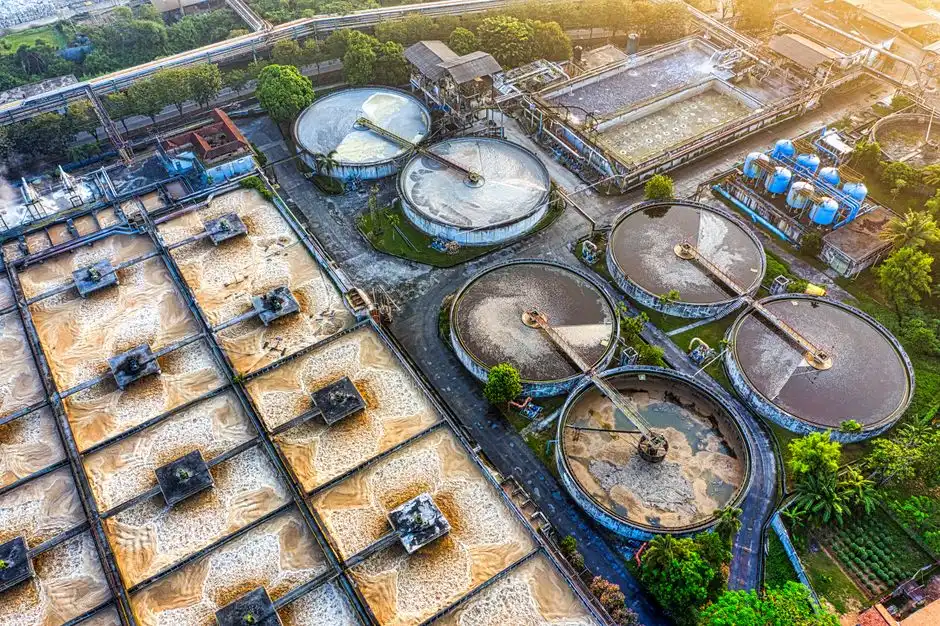
The fundamental distinction is solids separation: conventional activated sludge separates biomass by gravity, whereas an MBR separates it through membrane filtration, which changes tankage, loading behavior, and maintenance requirements.
Conventional activated sludge is a suspended-growth biological process followed by gravity clarification. An MBR combines a biological reactor with membrane separation; according to the EPA fact sheet dated June 25, 2021, the membrane system can replace the secondary clarifier and sand filters in a conventional train.
Because membranes retain biomass, an MBR can maintain a higher biomass concentration. The EPA identifies higher volumetric loading rates, lower hydraulic retention times, and smaller bioreactors as resulting operating advantages. This compactness is valuable where Port Angeles site space is constrained, although the selected train must still include equalization, pretreatment, pumping, aeration, controls, and downstream treatment.
| Selection criterion | Membrane bioreactor | Conventional activated sludge system |
|---|---|---|
| Biological separation | Biomass retained by membrane filtration | Biomass settled in a gravity clarifier |
| Typical space implication | More compact reactor and solids-retention arrangement | Requires larger bioreactor and clarifier footprint |
| Solids carryover risk | Controlled by membrane integrity, flux, and pretreatment | Affected by settling, sludge blanket, and clarifier loading |
| Dissolved-metal treatment | Not independently provided by the membrane | Not independently provided by the clarifier |
| Principal operating concern | Fouling, cleaning, membrane availability, and replacement | Culture condition, settling, sludge wasting, and clarifier performance |
The central limitation applies to both systems: membranes remove solids effectively but do not independently remove dissolved contaminants. The EPA states that dissolved wastewater components require additional treatment. Biological treatment can reduce biodegradable organics, while dissolved metals need a validated chemical or physical separation step.
CAS performance depends on sludge separation. Bulking, filamentous growth, washout, and variable clarifier loading can produce solids carryover. MBR eliminates the gravity-clarifier separation step, but transfers performance risk to membrane condition, hydraulic control, and pretreatment.
MBRs use hollow-fiber or flat-plate configurations. Hollow-fiber bundles are commonly connected to manifolds for servicing, while flat-plate units are also designed around replaceable modules. The EPA gives screening requirements of 1–2 mm for hollow-fiber systems and 2–3 mm for plate systems, published June 25, 2021. Configuration therefore affects the DF Series flat-sheet MBR modules, screening specification, maintenance method, and fouling-control strategy.
Compare Effluent Quality, Footprint, and Hydraulic Flexibility
MBR generally provides more consistent solids separation, but its hydraulic flexibility is limited by membrane throughput, wetting requirements, biology, and equalization rather than by nominal tank volume alone.
The EPA fact sheet, published June 25, 2021, states that MBR effluent contains low concentrations of bacteria, TSS, and BOD, facilitating high-level disinfection. This quality supports reuse or surface-water-discharge applications when the complete train also satisfies the applicable nutrient, dissolved-metal, and other permit requirements. It does not eliminate downstream treatment.
Product-specific references should remain clearly identified. The integrated submerged-PVDF MBR treatment system is described as providing filtration below 1 μm and a claimed 60% smaller footprint than conventional systems. The DF Series flat-sheet MBR modules are listed with 0.1 μm filtration and an integrated aeration box. These are catalog specifications, not proof that every application will meet a specified reuse endpoint.
For hydraulic design, the EPA recommends peak design flows generally no more than 1.5 to 2 times average design flow unless additional membranes or equalization are provided, according to its June 25, 2021 fact sheet. A variable mine inflow can therefore justify equalization before the biological and membrane stages. Equalization reduces short-duration loading shocks, protects the culture, and limits membrane demand more effectively than increasing membrane capacity for every short peak.
| Design issue | MBR selection question | CAS selection question |
|---|---|---|
| Peak flow | Can membrane area, permeate production, and equalization pass the peak without exceeding design conditions? | Can aeration, clarifier loading, return sludge, and wasting accommodate the peak? |
| Flow variability | Will equalization prevent biological upset and excessive membrane flux? | Is the basin and clarifier system robust to recurring hydraulic and loading variation? |
| Space | Can the required screens, tanks, aeration, equalization, and maintenance clearances fit the site? | Are basin, clarifier, and future expansion areas available? |
| Redundancy | Is membrane availability maintained during cleaning or module service? | Can a clarifier remain in service while solids separation continues? |
The EPA recommends an “N plus 1” membrane concept for full-treatment installations, published June 25, 2021. The extra unit supports maintenance and operating flexibility, but the actual number of membrane units should reflect required availability, module servicing, equalization, and site constraints rather than a universal unit count.
Maintenance, Fouling, and Biosolids Risks

MBR operating risk concentrates at the membrane: preventive screening, controlled flux, and disciplined cleaning are prerequisites for keeping the biological process available.
The EPA identifies membrane cleaning, fouling control, eventual membrane replacement, and energy for air scouring as MBR operating and maintenance burdens. MBR waste sludge may also settle less readily because of colloidal particles and filamentous bacteria, potentially requiring conditioning chemicals, although conventional biosolids processing can still be applied, according to the same June 25, 2021 fact sheet.
All MBR systems require fine screening immediately before the membranes. The EPA specifies 1–2 mm for hollow-fiber systems and 2–3 mm for plate systems, and notes that these screens require frequent cleaning, published June 25, 2021. The site’s debris and solids characteristics should determine whether one stage is sufficient or whether primary settling, additional screening, grit control, or oil removal is also needed. A mechanical bar screen may form part of a solids-removal train, but the final selection must match the actual particle loading and required screen aperture.
The EPA identifies regular bleach and sodium hypochlorite cleaning, plus citric acid, as common MBR cleaning solutions, published June 25, 2021. The research does not provide mining-site dose or frequency. Require manufacturer-specific protocols covering reagent concentration, temperature, duration, compatibility, and recovery testing rather than prescribing a generic cleaning recipe.
CAS offers a more familiar gravity-separation recovery path, although clarifier performance and sludge wasting still require operator attention. MBR service planning must address membrane availability, permeate production, equalization, and treatment continuity while modules are cleaned or replaced.
Biosolids remain a downstream obligation. A plate-and-frame filter press may be considered for dewatering, but the solids-conditioning, dewatering, transport, and disposal route should be included in the lifecycle comparison.
Build a 2026 Cost and Compliance Decision
A defensible 2026 procurement comparison uses the same wastewater, endpoint, peak-flow basis, redundancy, and disposal scope for both alternatives; without that basis, vendor prices are not comparable.
Compare capital scope as a complete treatment train. MBR estimates should include biology, equalization, membrane modules, fine screens, pumping, aeration, controls, pretreatment, downstream polishing, electrical and civil works, installation, and disposal infrastructure. Conventional activated sludge estimates should add clarifiers, return-sludge pumping, sludge wasting, and any capacity needed for flow variation.
Compare operating costs as categories rather than as a generalized cost-per-m³ claim: membrane cleaning, cleaning chemicals, air-scour energy, preventive maintenance, labor, replacement, sludge dewatering, disposal, and downtime. For CAS, include aeration, return activated sludge, wasting, settleable-solids testing, clarifier maintenance, and energy for mixers and pumps.
| Cost category | MBR | Conventional activated sludge |
|---|---|---|
| Installed equipment | Membranes, modules, fine screens, permeate and recycle pumping, aeration, controls, equalization | Bioreactor, secondary clarifiers, return-sludge pumping, aeration, controls, equalization |
| Recurring operation | Cleaning, chemicals, air scour, membrane inspection, replacement reserve, specialist labor | Sludge wasting, settling checks, clarifier operation, pump and blower energy |
| Residual handling | Conditioning as required, dewatering, transport, and disposal | Conditioning as required, dewatering, transport, and disposal |
| Availability | Cost of maintaining membrane and equalization capacity during service | Cost of maintaining clarifier and process capacity during service |
| Compliance exposure | Effluent deterioration from fouling, cleaning outages, or loss of redundancy | Effluent deterioration from culture upset, carryover, or clarifier failure |
The EPA’s June 25, 2021 fact sheet supports only the qualitative conclusion that MBR capital and operating costs are typically higher at the same throughput. It does not support a Port Angeles price. A buyer should request a scoped quotation covering flow, wastewater analyses, endpoint, equalization, pretreatment, polishing, electrical works, civil works, controls, membrane guarantees, installation, training, and performance testing.
Evaluate compliance risk separately. Test whether the selected train can meet the actual discharge or reuse specification during peak flow, upset conditions, fouling, maintenance, and seasonal temperature changes. Pilot testing or a guaranteed performance test should compare effluent, transmembrane-pressure behavior, cleaning frequency, chemical demand, and operability using site wastewater.
Port Angeles Selection Checklist and Recommended Process Train
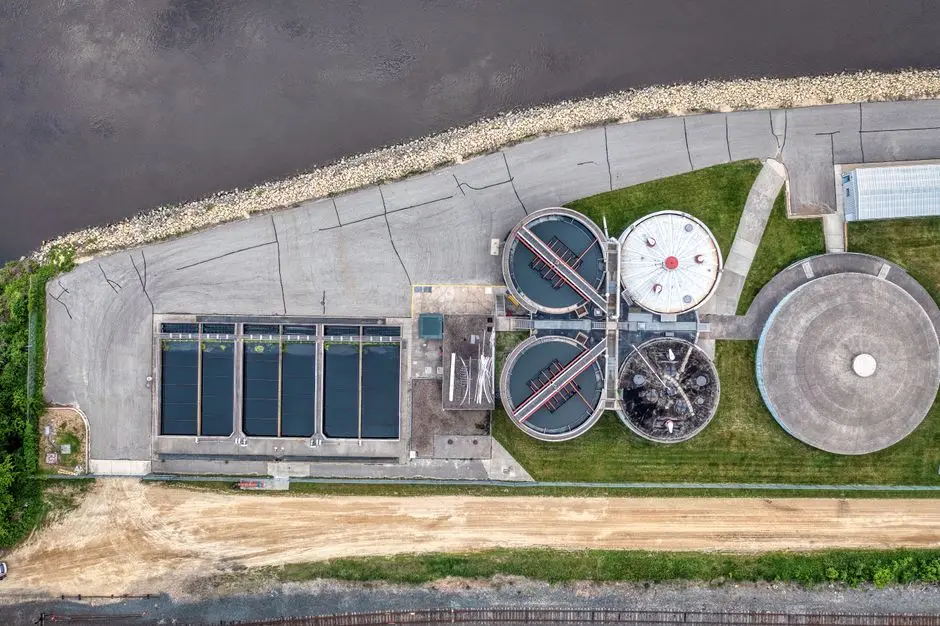
A defensible Port Angeles selection starts with contaminant characterization, permit mapping, reuse assessment, peak-flow analysis, and available footprint—not membrane area alone.
- Obtain representative wastewater analyses and document average, peak, upset, and seasonal conditions.
- Confirm the receiving water, sewer authority, stormwater requirements, discharge route, and reuse specification.
- Establish the available footprint, electrical service, staffing, sludge-disposal route, and required availability.
- Evaluate solids removal or screening, equalization, pH control, biological treatment, MBR or clarification, dissolved-metals removal, filtration as required, and disinfection where required.
- Match pretreatment to the membrane format, including fine screening and any required grit, debris, oil, or solids control.
- Compare lifecycle cost and obtain pilot or performance-test evidence before award.
For a modular MBR, the integrated submerged-PVDF MBR treatment system capacity of 10–2,000 m³/day and the DF Series flat-sheet MBR modules output of 32–135 m³/day are procurement references, not final sizing calculations. Final capacity must reflect peak flow, biological loading, equalization, redundancy, and the endpoint.
Issue the supplier request with average and peak flow, complete wastewater analyses, target endpoint, footprint, electrical constraints, staffing, redundancy, sludge route, warranty terms, membrane guarantees, and required testing. This approach makes the selection auditable and prevents an equipment price from concealing downstream treatment or site-infrastructure costs.
Frequently Asked Questions
What will an MBR cost compared with conventional activated sludge for a Port Angeles metals facility?
No defensible local price can be calculated without a scoped wastewater characterization, average and peak flow, endpoint, equalization and pretreatment requirements, redundancy, and disposal route. The supplied EPA evidence supports the qualitative finding that MBR capital and operating costs are typically higher at the same throughput. Request like-for-like quotations covering equipment, civil and electrical work, aeration, cleaning, chemicals, membrane replacement, labor, sludge handling, and downtime.
How should a treatment system be sized when mine drainage or process flow varies?
Size around the combined limits of biology, membrane throughput, pretreatment, and equalization. The EPA, in its June 25, 2021 fact sheet, recommends that peak design flows generally be no more than 1.5 to 2 times average design flow unless additional membranes or equalization are provided. A buyer should request the average, recurring peak, and worst credible slug, then ask the supplier to demonstrate how each condition is handled.
Which qualifications should a mining wastewater MBR supplier provide?
Require evidence from a comparable wastewater matrix, membrane guarantees, cleaning protocols, control narratives, spare-parts support, and local service capability. The technical proposal should identify the selected membrane format, screening requirement, expected cleaning demand, equalization strategy, redundancy, and performance-test method. The 2026 MBR cost-per-m³ guide can support the commercial review, but comparable operating data remain essential.
Does membrane separation make an MBR sufficient for dissolved-metals compliance?
No. The EPA fact sheet, published June 25, 2021, states that MBRs are effective for removing solid material but that dissolved wastewater components require additional treatment. Require the complete train to demonstrate compliance under peak, upset, fouling, and maintenance conditions, with a validated metals-removal step and appropriate monitoring.
Is a packaged MBR easier to retrofit than a conventional activated sludge system?
A packaged MBR can reduce biological and solids-separation footprint, but it does not eliminate civil, electrical, equalization, pretreatment, downstream polishing, or sludge-handling work. A retrofit buyer should ask for an interface plan covering utilities, access, controls, waste streams, bypass or outage strategy, and the foundation and electrical requirements for each proposed train.