What a Bogor data center must treat before designing a plant
A Bogor data center generally needs treatment sized around two distinct problems: cooling tower blowdown and sanitary or process wastewater. Cooling blowdown contains concentrated dissolved salts, suspended matter, residual treatment chemicals and microbes, so it needs source verification, physical separation and contaminant-specific treatment before discharge or reuse. Domestic sewage requires biological treatment; cooling blowdown is not automatically a sewage-treatment application. The practical first step is to measure makeup water, evaporation, blowdown, conductivity, pH, suspended solids, temperature and residual chemicals, then identify the receiving sewer or drainage system and applicable Indonesian permit conditions. A modular treatment train can reuse treated blowdown for lower-risk services or, after further treatment, for cooling make-up.
The plant boundary should follow the water streams rather than a generic “data-center wastewater” category. The University of Georgia Extension publication Understanding How Data Centers Impact Surface and Ground Waters notes that cooling-system blowdown may contain chemicals and may require permits or wastewater treatment before discharge. That is a technical warning, not a Bogor permit requirement. Obtain the sewer survey and acceptance criteria from the receiving utility and confirm applicable requirements with the relevant Bogor authority before selecting equipment.
| Stream | Minimum characterization | Treatment decision |
|---|---|---|
| Cooling tower blowdown | Flow, temperature, pH, conductivity, TDS, suspended solids, hardness, silica, residual biocide and corrosion inhibitor | Physical separation, targeted treatment and filtration; further polishing if reuse requires it |
| Domestic sewage | Flow, loadings, organic content, nutrients and site discharge destination | Biological treatment; keep separate from the cooling-blowdown train |
| Process wastewater and equipment washdown | Source chemicals, detergents, oil and grease, solids and batch frequency | Segregate by contaminant and use targeted chemical or biological treatment |
| Stormwater | Runoff source, rainfall exposure, solids and contamination controls | Segregate clean runoff from contaminated drainage; assess reuse or discharge separately |
| Condensate | Flow, temperature, pH, conductivity and any contamination | Reuse only after stream-specific quality verification; otherwise route as a defined discharge |
| Once-through cooling discharge | Flow, temperature, chemistry and drift control | First consider eliminating unnecessary once-through cooling |
Do not assume that closed-loop cooling eliminates water consumption. The University of Georgia Extension explains that recirculated water is still removed from the system through evaporation and blowdown, while minerals and chemicals concentrate in the circulating water. Design principle: segregate first, characterize second, select the destination third. A comparable data center cooling-blowdown treatment guide provides a useful reference for stream logic, but it does not establish Bogor-specific limits or reuse acceptance values.
Build the cooling-water balance around measured blowdown
A data center water balance should be built from metered operating data, because a design based only on tower geometry can mis-size the treatment plant. Install or verify meters for cooling tower makeup water, blowdown, evaporation and product water. Define water usage effectiveness as annual site water usage divided by IT equipment energy, as explained by Genesis Water Technologies in Why Cooling Tower Blowdown Is Your Hidden Opportunity. Keep consumption and return-to-source use separate: evaporation is consumed water, while blowdown is a discharge stream that may be recoverable.
For a simplified steady calculation, the blowdown ratio is 1/(CoC − 1), where CoC is cooling tower cycles of concentration. Genesis Water Technologies gives 25% blowdown at 4 CoC and 20% at 6 CoC. The correct interpretation is that moving from 4 to 6 CoC reduces theoretical blowdown by five percentage points of makeup-water volume, or 20% relative to the original blowdown—not 50%. Actual blowdown can exceed theoretical calculations by 15–30% because of unmeasured losses and emergency dumps, according to the same source. That range is an operating caution from Genesis Water Technologies, not a Bogor design allowance.
| Balance input or output | How to establish it | Why it matters |
|---|---|---|
| Cooling tower makeup water | Verified meter and documented operating periods | Baseline for water demand, CoC and treatment sizing |
| Blowdown | Continuous or campaign metering at the actual discharge point | Sets the minimum hydraulic feed to treatment |
| Evaporation | Reconcile the water balance rather than infer it from one instrument | Distinguishes consumptive loss from recoverable discharge |
| Product water | Meter reclaimed or reused water delivered to each destination | Verifies the claimed reduction in freshwater demand |
| Emergency dumps | Operational log, high-level event alarm and event-flow review | Tests whether equalization and storage can absorb abnormal releases |
| Seasonal and load variation | Trend data across cooling demand and operating conditions | Separates average treatment flow from the design peak |
Include variable-speed drives, makeup control, drift, carry-over, seasonal cooling demand and unexpected dumps in the peak-flow assessment. Raising CoC can reduce blowdown, but Genesis Water Technologies warns that biological, scaling and corrosion risks increase above 5–6 CoC without adequate treatment. Higher CoC therefore changes both the water balance and the required pretreatment chemistry. The published 10 MW and 15 MW examples are illustrations, not Bogor estimates; the PLC control architecture for automated treatment can support metering, interlocks, trends and alarms, but it cannot replace site data.
Select a treatment train for each discharge route
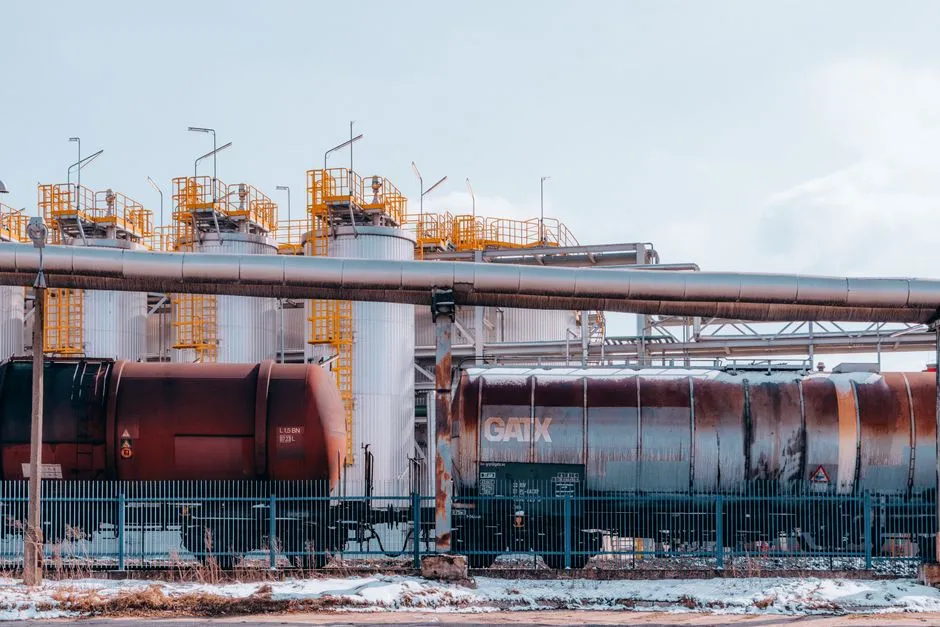
The treatment sequence should be matched to the stream and receiving application: source segregation; equalization and flow control; physical separation; targeted chemical or biological treatment; filtration; optional membrane desalination; disinfection; storage and reuse. A single train should not be assumed to handle sewage, washdown and cooling blowdown together without equalization and contaminant checks, because incompatible chemical residues can undermine treatment performance.
For cooling blowdown, dissolved air flotation is relevant where suspended solids, oil and grease or colloidal material must be removed. A DAF system for cooling-blowdown solids separation should be assessed against the measured solids and chemistry, not selected from nominal flow alone. Ultrafiltration is another pretreatment option: the supplied research describes UF as providing 0.03-micron solids separation with automatic backwash and air scour without chemicals. A ultrafiltration pretreatment for blowdown reuse should follow a solids and chemical assessment, because residual oil, biocides, scaling species and other foulants can affect membrane performance.
Membrane desalination should follow reliable pretreatment when high-quality reuse is justified. IDE reports that conventional brackish-water reverse osmosis is typically constrained to 75–80% recovery as scale risk rises, because silica, calcium carbonate and calcium sulfate concentrate in cooling tower blowdown. IDE’s specific industrial application reports around 95% recovery and permeate silica of about 1 mg/L; these values describe that application and must not be transferred to Bogor without a site-specific pilot and concentrate-disposal assessment. The relevant reverse-osmosis treatment option must therefore be evaluated together with brine handling and recovery.
| Treatment step | Primary purpose | Design condition |
|---|---|---|
| Equalization and flow control | Buffer variable or emergency discharge | Use measured flow history and documented dump events |
| DAF or media filtration | Remove suspended or colloidal material | Match solids loading, oil and grease, and chemical residuals |
| Targeted chemical treatment | Control pH, scale, corrosion or specific contaminants | Use dosing studies and verify interaction with residuals |
| UF pretreatment | Provide reliable solids separation before membranes | Confirm flux, backwash, air scour and fouling response |
| Brackish-water RO | Desalinate for high-quality reuse | Assess silica, calcium carbonate, calcium sulfate, recovery and concentrate disposal |
| Disinfection | Control microbiological risk | Validate the residual and contact conditions for the receiving application |
| Storage and reuse | Deliver water without disturbing continuous treatment | Separate potable and non-potable systems and provide backflow prevention |
Domestic sewage requires biological treatment and should not be placed in the cooling-blowdown train. Use automatic chemical dosing with defined interlocks only where pH correction or another targeted treatment is required. For a mission-critical facility, specify duty-standby equipment, fail-safe reagent handling, remote alarms, clean-in-place capability and a controlled response to high-conductivity or high-solids events.
Match reuse quality to the receiving application
Reuse decisions should be made application by application, because the same treated water can be unacceptable for one service and unnecessary for another. A non-contact application, such as selected washdown or toilet flushing, still requires fit-for-purpose verification. Cooling make-up is more demanding: it needs control of hardness, alkalinity, conductivity, silica, residual treatment chemicals and microbiological risk, together with compatibility with the cooling system and its chemical program.
Genesis Water Technologies reports that modular treatment of blowdown for non-critical process uses can reduce makeup-water demand by 15–25% in that application. This is a reported application result, not a guaranteed Bogor saving. Treated sewage or cooling blowdown should not be routed to boiler feed, chiller makeup, humidification or cooling-tower makeup without application-specific chemistry review, equipment warranties and validation.
| Route | Water-quality requirement | Capital and operating implication | Residual management |
|---|---|---|---|
| Direct discharge | Must satisfy the confirmed receiving-utility and Indonesian requirements | Lowest treatment complexity, but disposal and permit risk remain | Normal sludges and chemical residues |
| Non-critical reuse | Fit for the receiving service, including microbiological and chemical checks | Usually simpler than make-up reuse; may reduce freshwater demand | Sludge and concentrated reject from treatment |
| Cooling make-up reuse | Application-specific limits for hardness, alkalinity, silica, conductivity, residuals and microbiology | Higher treatment, storage, monitoring and control complexity | Concentrate or brine must have a defined route |
| Closed-loop make-up-to-cooling integration | Validated chemistry and operating agreement with the cooling-water team | Highest integration complexity; potentially greater water-use benefit | Residuals, membrane cleaning and brine disposal require ownership |
Provide storage, dedicated pumps, backflow prevention, residual disinfectant control and clear segregation of potable and non-potable lines. A treatment-parts specification covering valves, filters and media must reflect the selected reuse route and the materials compatibility of the actual chemistry. Record the owner for each stream, permit obligation, residual and reuse risk. The regional data center blowdown treatment engineering guide can support concept development, but local hydraulic, climate, utility and regulatory data remain necessary for Bogor.
Size, pilot and procure the Bogor treatment plant
Plant capacity should be based on the greater of measured peak blowdown and the design peak established by the water balance, with a documented allowance for unmeasured losses and emergency dump events. The supplied research does not provide a universal safety factor, so the allowance should be justified by operating history and the equalization assessment rather than inserted as a generic percentage. If flow metering is absent, temporary measurement should precede final sizing.
Request a 30-day or campaign-based characterization covering flow, temperature, pH, conductivity, TDS, suspended solids, hardness, silica, calcium, alkalinity, residual biocides and corrosion inhibitors. Jar tests, membrane pilots or temporary DAF and UF trials should verify solids capture, membrane flux, scaling tendency, chemical demand and reuse quality before a permanent train is ordered. The membrane and filter-element package should then be specified from validated duty, not catalogue capacity.
| RFQ package | Minimum information | Bid evaluation |
|---|---|---|
| Flow and water chemistry | Measured peak and average flows, campaign analyses, seasonal variation and dump history | Verify that the proposed duty covers the measured and reconciled design peak |
| Treatment objective | Discharge route, required recovery, reuse target and receiving-utility criteria | Compare guaranteed performance against the stated application |
| Site and controls | Power, space, drains, access, preferred control protocol and utility requirements | Assess installation, duty-standby provision and operator workload |
| Service and warranty | Local service capability, response arrangements, controls scope and warranty terms | Check demonstrated treatment of the actual chemistry, not only nominal flow |
| Residuals and economics | Sludge, membrane waste and concentrate route | Compare total cost of water, energy, chemicals, membranes, labor, downtime and disposal |
Evaluate bids on total cost of ownership, not purchase price alone. A selection checklist should include demonstrated experience with the actual blowdown chemistry, local service capability, controls integration, membrane or media guarantees, spare-parts availability, operator training, warranty exclusions and the cost of residual disposal. The equipment-distributor selection framework provides a useful procurement structure, while the pilot and water balance remain the controlling design evidence.
Frequently Asked Questions
How much does cooling blowdown treatment cost for a data center in Bogor?
No defensible price can be assigned from Bogor alone. Request a quotation using measured peak and average flow, complete water chemistry, required recovery, reuse target, site utilities, controls requirements and residual-disposal route. Compare bids on total cost of water, energy, chemicals, membranes, labor, downtime and disposal—not equipment price alone.
How do I select and size a treatment supplier for a Bogor data center?
Require evidence from treatment of the actual blowdown chemistry, a temporary trial where the duty is uncertain, local service capability, defined controls integration and clear warranties. Size the plant on the greater of measured peak blowdown and the reconciled design peak, with a documented allowance for unmeasured loss and emergency dumps. No universal plant capacity or safety factor is established by the supplied research.
What Indonesian compliance information is needed before selecting discharge equipment?
Obtain written confirmation from the relevant Bogor authority and receiving utility regarding the discharge point, applicable permit or approval route, sewer acceptance criteria and any water-quality, temperature or monitoring conditions. The supplied research does not provide Bogor-specific limits, so a general cooling-blowdown treatment guide cannot substitute for site-specific confirmation.
Can treated cooling blowdown be reused as cooling-tower make-up?
Only after application-specific validation. Non-critical reuse may require less treatment than cooling make-up, while make-up reuse requires control of hardness, alkalinity, conductivity, silica, residual chemicals and microbiological risk, plus compatibility with the cooling system. RO may be justified for high-quality reuse, but only after pretreatment, scaling assessment, recovery testing and a defined concentrate route.