What DAF and Clarifiers Actually Do in a Mining/Metals Train
Particle-population mismatch is the most common reason a primary clarifier underperforms in a mining or metal-finishing plant. Dissolved air flotation (DAF) generates a cloud of fine bubbles in the 10–100 µm range; those bubbles attach to suspended particles and lift them to the surface as a float that a mechanical skimmer removes (Wang & Wang, 2022, Lenox Institute/Krofta Engineering). The mechanism is buoyant separation, and it works regardless of whether the target particle is light (oils, fats, plastics), coated with air (fiber), or simply very small (fine silica, metal-hydroxide floc after pH adjustment).
A gravity/lamella clarifier relies on the opposite physics: settleable solids fall to a sludge hopper, while a stack of inclined plates shortens the effective settling path and multiplies the equivalent surface area. The standard product data for a high-rate lamella clarifier cites 20–40 m/h surface loading, which makes the technology attractive for high-volume, low-oil, settleable streams. In a mining context, the relevant populations are ore fines, silica and clay suspensions, metal-hydroxide flocs from pH adjustment, and lubricant/cutting-oil emulsions from fabrication shops. Buoyant and oil-coated particles respond poorly to gravity alone, so when those fractions are significant, a DAF system for mining and metals wastewater is the more robust primary step; settleable mineral solids can be handled by a clarifier at much higher hydraulic loading per unit area. Mechanism dictates the choice before vendor brand ever enters the discussion.
Side-by-Side Parameters: DAF vs Lamella Clarifier
The Supracell high-rate DAF reference design runs at approximately 3 minutes of hydraulic retention, 4–5 GPM/sqft clarification capacity (≈24–30 m/h equivalent), and produces effluent TSS in the 20–30 mg/L band with a thickened float of 2–3% solids (Wang & Wang, 2022). A lamella clarifier is rated at 20–40 m/h surface loading in the supplier's product data, but the residence time needed to hit a given TSS is design- and influent-dependent and should be confirmed with the vendor against your actual stream. The table below puts the documented numbers in one place for an internal evaluation memo.
| Parameter | High-rate DAF (Supracell reference, Wang & Wang 2022) | Lamella/Inclined-Plate Clarifier (supplier product data) |
|---|---|---|
| Retention time | ~3 minutes | Vendor to confirm against stream; design-dependent |
| Hydraulic loading / clarification capacity | 4–5 GPM/sqft (≈24–30 m/h equivalent) | 20–40 m/h |
| Effluent TSS | 20–30 mg/L | Design-dependent; request with same influent profile |
| Sludge consistency | 2–3% float, no further thickening required | Thinner underflow; usually sent to a plate-and-frame filter press for sludge dewatering (1–500 m² range) |
| Footprint and foundation | Above-grade; <150 lb/sqft when filled with water | Plate packs retrofit into existing concrete basins; minimal civil works |
| Chemical demand | Set by jar-tested coagulant/flocculant dose | Up to 30% chemical reduction vs. conventional clarifiers (supplier claim) |
Two design points deserve emphasis. The 20–30 mg/L DAF effluent band and the 2–3% float consistency are stated for paper-mill whitewater in the source study, not for mining streams; for a quarry, ore-processing, or plating rinse matrix, jar tests and on-site pilot data are the only defensible basis for these figures. The "<150 lb/sqft" foundation figure allows a DAF to be set on an existing pad or mezzanine, which is the structural argument that often makes DAF the right answer in a retrofit even when the influent alone would not require it.
Crystal Springs Operating Context: What 2026 Plants Are Discharging
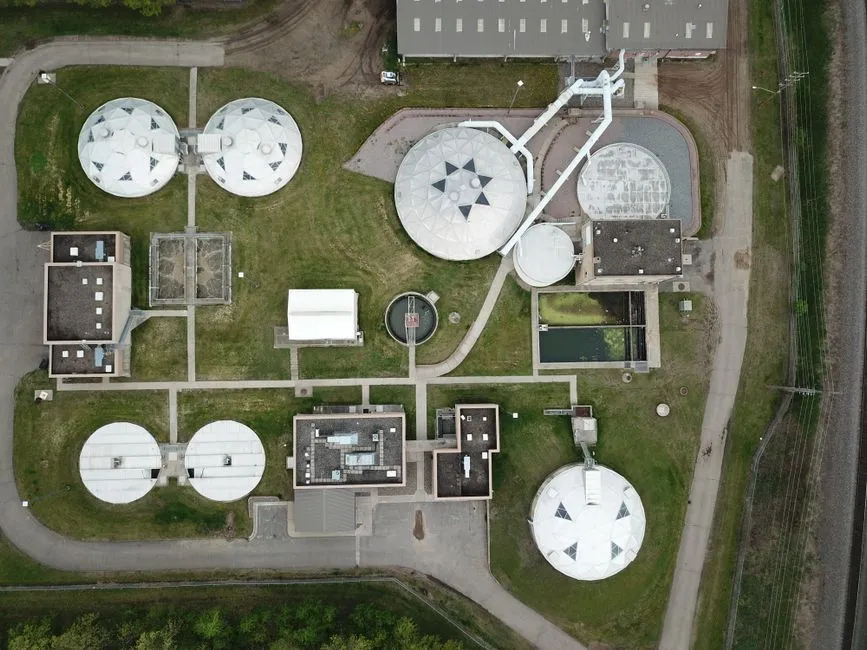
Site-specific effluent limits must be confirmed against the operator's active NPDES/MSDIS documents, as the article does not cite numeric MDEQ limits. What is consistent across the area is the influent pattern: aggregate wash water with high settleable TSS, metal-finishing rinse waters with metal-hydroxide flocs and occasional emulsified oils from cutting and machining, and intermittent storm-driven flow spikes that can double the design flow for an hour. The design must accommodate the worst credible influent, not the average. Three 2026 trends make the primary unit choice more important than it was five years ago: tighter water-reuse targets for process loops, rising polymer costs, and higher hauled-off sludge disposal costs per dry ton. A primary step that produces a drier, smaller sludge mass at higher surface loading pays back faster against those three pressures than a primary step that simply meets the discharge line. Before issuing any RFQ, collect a 24-hour composite of TSS, oil and grease, pH swing, peak instantaneous flow, and the target effluent TSS for both the discharge permit and any reuse loop; that data package turns this framework into a defensible specification.
Three Crystal Springs Scenarios That Decide the Equipment
Scenario A — aggregate or mineral processing with high settleable TSS and trace oil: a lamella retrofit into an existing concrete basin is typically the lowest-capex path and handles the hydraulic load efficiently; a DAF is not justified unless oil/grease or reagent carryover forces a tighter removal that the lamella cannot reach. Confirm with jar tests on the actual wash slurry before sizing the plate pack. Scenario B — metal-finishing rinse with metal-hydroxide floc and emulsified oils from cutting or machining: DAF is the more robust primary step because the hydroxide floc is light, the oil fraction is buoyant, and both respond to bubble attachment far better than to gravity; a lamella alone tends to underperform on the oil fraction and produces a wetter sludge that must be thickened downstream. Scenario C — legacy concrete basin with limited footprint and a target of <30 mg/L TSS: a DAF unit can be set above grade on a pad rated for <150 lb/sqft (Wang & Wang, 2022), preserving the basin for equalization or polishing. The same product line can also be paired as polishing downstream of a lamella roughing step if a reuse loop requires TSS tighter than either unit alone can deliver. In all scenarios, the final tie-breaker is on-site pilot data, not catalog ratings; use catalog numbers for screening and require a pilot run before signing the PO.
2026 Cost, Footprint, and Retrofit Reality Check
Procurement reviews for a primary step in 2026 must be framed in the same four buckets to ensure an apples-to-apples comparison. The table below maps each bucket to the line items a vendor should be quoting, and the document each buyer should request.
| Bucket | DAF (high-rate, Supracell-class) | Lamella/Clarifier |
|---|---|---|
| Major capex line items | Tank, skimmer, air-saturation/recycle system, control panel | Plate pack, inlet diffuser, sludge hopper, often a downstream plate-and-frame filter press for sludge dewatering (1–500 m² range) |
| Sludge handling | Float at 2–3% — often eliminates a thickener from scope (Wang & Wang 2022) | Underflow typically thinner; needs a thickener or filter press |
| Opex drivers | Polymer dose, recycle-pump and skimmer energy, sludge hauling per dry ton | Polymer dose, pump energy, sludge hauling per dry ton |
| Retrofit feasibility inputs to request | Pad load rating, hydraulic profile check, saturated-water supply, level pad survey | Existing basin dimensions, inlet/outlet hydraulic grade, plate-pack access for future maintenance |
Because DAF float leaves the unit at 2–3% solids, the downstream thickener that a lamella underflow usually requires can often be removed from the scope, providing a clear capex advantage. Conversely, an existing concrete basin favors a lamella retrofit, as the plate pack installs inside the basin and minimizes civil-works costs. Polymer demand is a shared opex; an automatic chemical dosing for coagulation and flocculation skid is a sensible add-on for either technology and should be quoted alongside the primary unit to secure the polymer budget.
Decision Framework: Choosing DAF or Clarifier in 2026
Default to DAF when any of the following are true of your stream: oil and grease above trace levels; a target effluent TSS under roughly 30 mg/L; light metal-hydroxide floc; or footprint is constrained and you have a pad that can carry <150 lb/sqft (Wang & Wang 2022). Default to a high-rate lamella clarifier when the stream is high-volume, settleable, low in oil, and the site already has a concrete basin that can accept a plate pack. Use both in series only when neither alone meets the reuse or discharge target—typically a lamella as roughing followed by a DAF system for mining and metals wastewater as polishing for very tight TSS, oil, or reuse loops. Final selection must be confirmed with jar tests, an on-site pilot, and a written influent characterization package, all of which should be contractually required of the vendor. Our sibling DAF-vs-clarifier guide for Deane, US, and our Luttrell, TN mining/metals DAF-vs-clarifier guide provide similar comparisons for other basin contexts.
Frequently Asked Questions
What influent data do I need before I can size either unit?
At minimum: 24-hour composite TSS, oil and grease, pH range, peak instantaneous flow, and your target effluent TSS for both the discharge permit and any reuse loop. Without that package, vendor quotes are guesses and the pilot results will not transfer to full-scale operation.
How do I decide between DAF and a lamella retrofit on a 2026 budget?
If oil/grease is above trace, the effluent target is tighter than 30 mg/L, or footprint is the binding constraint, price the DAF including the eliminated thickener line item. If the stream is settleable, low in oil, and you already have a concrete basin, price the lamella plate pack retrofit. Compare the two on capex + 5-year opex + sludge hauling per dry ton, not on sticker price.
What lead time and compliance risks should I expect in 2026?
Lead time is set by tank fabrication, plate-pack supply, and any long-lead skimmer or recycle-pump items; request a written schedule with each vendor and a penalty/relief clause for delays. Compliance risk is set by your active state-issued industrial discharge permit, not by the equipment; before specifying, confirm that the chosen unit's guaranteed effluent against your stream will meet the site-specific limits in that document.
Can I thicken the sludge from either unit with the same downstream press?
Yes, a plate-and-frame filter press in the 1–500 m² range handles both DAF float and clarifier underflow, but the press sizing, cycle time, and polymer demand vary based on feed consistency (2–3% DAF float vs. thinner clarifier underflow). Require the press vendor to size against the actual feed consistency you will produce. For broader pretreatment context, the Connersville