Who regulates petroleum discharges near South Boston in 2026
The Massachusetts Water Resources Authority's Toxic Reduction and Control (TRAC) department runs the Industrial Pretreatment Program for the metropolitan sewer system under Section 402(b) of the Clean Water Act, and TRAC issues Discharge Permits to approximately 2,000 industrial users discharging process wastewater to the sewer (MWRA, TRAC program page, accessed 2026). State authority sits in 360 CMR 10.00 (Sewer Use and Discharge Regulations); the specific numeric ceilings a petroleum plant must clear live in 360 CMR 10.021–10.025 (MWRA, TRAC program page, accessed 2026).
Part 403 provides the general industrial pretreatment framework. Petroleum Refining is Part 419, subject to actual refining operations, subcategory and direct/indirect provisions; Part 437 is Centralized Waste Treatment of covered off-site wastes. A terminal or lubricant operation is not automatically a refinery or CWT. Parts 122/123/124 concern NPDES program and permitting provisions, not a petroleum categorical pretreatment table. Confirm the actual federal category and the site’s MWRA control mechanism.
Pollutants of concern in petroleum plant wastewater
Conventional pollutants that anchor most petroleum pretreatment designs are oil and grease (O&G), biochemical oxygen demand (BOD), total suspended solids (TSS), and pH (EPA, Local Limits Development Guidance, 2021-06-25). Beyond those, petroleum operations can contribute trace metals, petroleum hydrocarbons, and sulfides that local limits can capture on a site-specific basis (MWRA, TRAC program page, accessed 2026; EPA, Local Limits Development Guidance, 2021-06-25). EPA's MAHL methodology explicitly flags BOD/TSS, ammonia, and oil and grease as the conventional and non-conventional pollutants that require explicit allowable headworks loading (AHL) calculation (EPA, Local Limits Development Guidance, 2021-06-25). For the receiving waters, MWRA's pollution-prevention plans concentrate on persistent pollutants like PCBs and mercury, and EPA has estimated that 85% of PCB loading to Massachusetts Bay comes from atmospheric deposition, which is why local limits and source control both matter (MWRA, TRAC program page, accessed 2026). Source-control BMPs — spill containment, drip pans, segregated stormwater — are recognized under both EPA and MWRA frameworks as the first line of defense before any treatment equipment is selected (EPA, Local Limits Development Guidance, 2021-06-25; Widefield Water and Sanitation District, Pretreatment Program, accessed 2026).
Pretreatment limits and the permit envelope a South Boston plant must clear
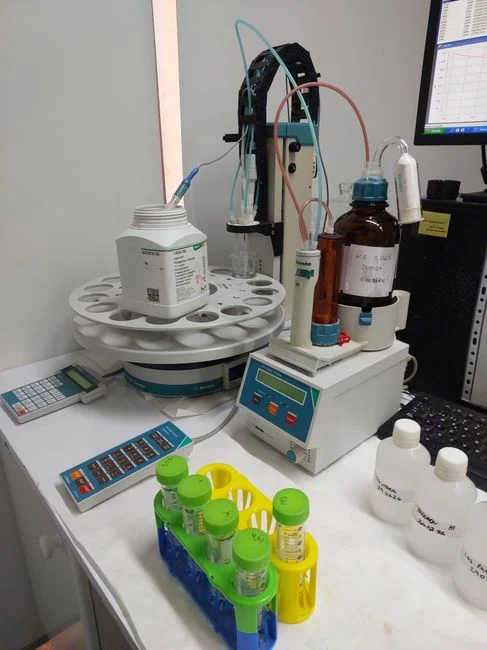
For South Boston sewer discharge, obtain the current applicable MWRA regulations, permit and parameter-specific conditions. EPA’s MAHL/MAIL framework is guidance for evaluating local limits, not proof that this site has a particular allocation or that all limits are recalculated automatically every five years. An applicable 419 pretreatment provision and local requirements must each be met; direct 419 values must not be copied into the sewer table. Verify actual adopted updates rather than assuming a 2026 change.
Treatment train that clears pretreatment limits in 2026
A working 2026 train sequences unit operations in the order wastewater actually sees them, and each step is tied to a specific parameter the permit envelope cares about. Equalization smooths slug loads from batch tank drainage, truck offloading, and stormwater ingress before downstream chemistry is dosed (EPA, Local Limits Development Guidance, 2021-06-25). Oil/water separation — corrugated plate interceptors or API separators — removes free oil ahead of the flotation step and is a prerequisite for stable DAF performance (EPA, Local Limits Development Guidance, 2021-06-25; Widefield Water and Sanitation District, Pretreatment Program, accessed 2026). A dissolved air flotation system is the workhorse for emulsified oil, FOG, and colloidal matter and is the proven pretreatment step for floatables. Chemical dosing on a PLC-controlled automatic chemical dosing skid is required to break oil-in-water emulsions and to keep pH inside the permit envelope, with coagulant, flocculant, and pH-adjustment stages typical. A lamella clarifier after DAF polishes TSS before the effluent reaches the sampling point, and final pH adjustment protects the receiving sewer from excursions (EPA, Local Limits Development Guidance, 2021-06-25). Sludge from DAF and clarifiers is dewatered on a plate and frame filter press to cut hauling volume and meet any biosolids-related local limit considerations. Sanitary and process streams should be kept segregated; cross-connection of process wastewater to the sanitary line without a permit is a typical enforcement trigger under 360 CMR 10.00 (MWRA, TRAC program page, accessed 2026; Widefield Water and Sanitation District, Pretreatment Program, accessed 2026). For a side-by-side look at how flotation and sedimentation compare on a related industrial flow, see this DAF vs clarifier selection for industrial wastewater write-up.
| Unit operation | Primary parameter(s) addressed | Role in 2026 train |
|---|---|---|
| Equalization basin | Flow/load variability, pH damping | Smooths slug loads ahead of chemistry and flotation |
| Oil/water separator (CPI or API) | Free oil and grease | Removes free-phase oil before emulsified-oil treatment |
| Dissolved air flotation (DAF) | Emulsified O&G, FOG, colloids | Workhorse step for floatables and dispersed oil |
| Chemical dosing (coagulant, flocculant, pH) | Emulsion stability, pH envelope | Conditions feed for DAF/clarifier and protects sewer |
| Lamella clarifier | Total suspended solids | Polishes TSS before the compliance sample point |
| Plate and frame filter press | Sludge volume, biosolids handling | Reduces hauled waste and supports biosolids-side limits |
Sampling, self-monitoring, and the 2026 reporting loop
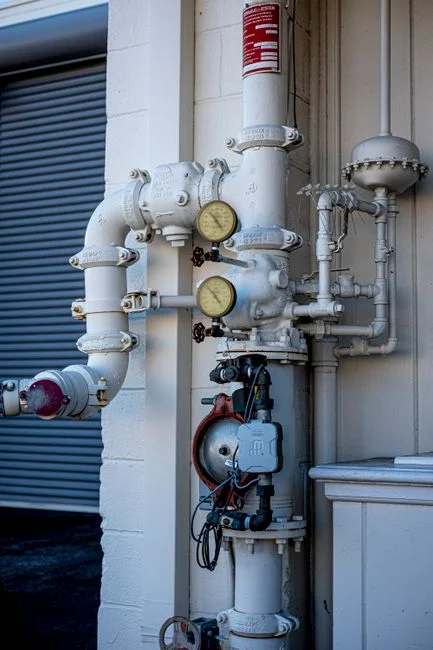
Set self-monitoring from the current control mechanism: parameters, methods, sampling points, frequency, report dates and retention. Preserve chain of custody, calibration and corrective-action records. Where the authority reevaluates local limits, request the actual adopted results or proposed changes and effective dates. That process does not itself prove an automatic five-year MAHL recalculation or a 2026 new-limit trigger for this discharger.
Frequently Asked Questions
What does a 2026 pretreatment treatment train for a South Boston petroleum discharger actually look like?
The train sequences equalization, oil/water separation, dissolved air flotation, chemical dosing, lamella clarification, and final pH adjustment, with sludge handled on a plate and frame filter press (EPA, Local Limits Development Guidance, 2021-06-25; MWRA, TRAC program page, accessed 2026). Confirm the exact unit-operation sizing by submitting your process flow to TRAC as part of the Sewer Use Discharge Permit application and asking which parameters the inspector will sample at the compliance point.
How should a buyer budget for a petroleum pretreatment upgrade in 2026?
Equipment pricing varies with flow rate, influent concentrations, and the level of instrumentation, and no published price for a turnkey petroleum train exists in the public record for 2026. Request firm quotations from vendors with the operating flow range, influent O&G/BOD/TSS envelopes, target effluent values, and the target pH range specified; that lets vendors quote comparable skids rather than assumed ranges.
How is a pretreatment supplier qualified for a petroleum facility near South Boston?
Ask suppliers to demonstrate comparable petroleum/FOG treatment under the actual inlet envelope and verified MWRA outlet conditions. If 419 refining or 437 CWT standards apply, document the specific process and pretreatment provision; do not use 437 as a general refinery category. Match sampling, reporting, sludge duties and guarantees to the actual control mechanism.
Why is 2026 a defensible year to revisit the local-limit basis for an existing permit?
EPA identifies local-limit evaluation following each POTW NPDES permit issuance or reissuance. Evaluation is not proof that every numerical limit changes, that MAHL is automatically recalculated every five years, or that 2026 triggers a specific new requirement. Check the actual MWRA documents, site control mechanism and effective dates before changing the train or reporting schedule.