Where a Filter Press Fits in an Anodizing Wastewater Train
Anodizing lines discharge alkaline and acidic rinse streams loaded with aluminum, chromium, nickel, copper, and zinc; a treatment train must convert these dissolved metals into a separable solid before water discharge or reuse. The accepted sequence is equalization, two-stage pH adjustment with coagulation and flocculation, a clarifier or lamella thickener, a sludge thickener, and finally a filter press that dewaters the underflow into a stackable cake while the clarified overflow is sent to polishing or discharge (Met-Chem, metchem.com anodizing wastewater treatment page).
The role of the press is purely solid–liquid separation on a thickened hydroxide slurry; sizing it to the incoming wastewater flow rather than the dry-solids mass it must handle is the most common engineering error on retrofit jobs. Because every additional point of cake dryness lowers the tonnage hauled to a landfill or metals recycler, the press should be treated as a cost-control device, not just a dewatering device. The lamella clarifier immediately upstream makes press performance predictable by controlling the feed solids concentration entering the press.
Recessed-Plate vs Plate-and-Frame: Which Press Suits Anodizing Sludge
Recessed-plate presses "can produce the highest cake solids concentration of any mechanical dewatering equipment" and "are more commonly used in industrial applications than in municipal wastewater facilities," according to the US EPA (EPA 832-F-00-058, September 2000). This defines the default choice for a steady, single-stream anodizing line, where the highest achievable cake dryness is the goal. A plate and frame filter press uses flat plates and a separately mounted cloth, which makes cloth changes faster and allows the operator to match the cloth to sludge that swings in chemistry between batches—a common situation in job shops running both decorative and hard-anodizing work. A plate-frame study using cotton and drill cloth on a 1–4% w/w CaCO3 slurry reported 56.00% solids removal efficiency with cotton cloth at 4% w/w feed solids, published in the BRIN journal JTL (National Research and Innovation Agency, ejournal.brin.go.id JTL article 218). This result is the clearest published evidence that cloth selection measurably changes press output on a hydroxide-type slurry, even though the work used a CaCO3 simulant rather than a true metal hydroxide.
| Selection criterion | Recessed-plate (chamber) press | Plate-and-frame press |
|---|---|---|
| Cake solids potential | Highest of any mechanical dewatering device (EPA 832-F-00-058, 2000) | High, but typically below recessed-plate on the same feed |
| Cloth handling | Cloth fixed to plate; slower change-out | Separate cloth on frame; faster change-out between batches |
| Best-fit anodizing line | Steady, single-stream captive line | Job shop with varying chemistry between batches |
| Capital cost vs lifecycle | Higher capital, lower lifetime disposal cost on steady streams | Lower capital, more flexible on cloth choice |
Filter Cloth, Plate Material and Operating Pressure

Three factors dominate a filter-press purchase specification: cloth fiber and weave, plate material, and operating pressure. On a hydroxide sludge, cotton performed well in the BRIN plate-frame study at 4% w/w feed solids (BRIN, JTL article 218), but industrial presses almost always use synthetic monofilament or multifilament polypropylene cloths because they tolerate the acidic and alkaline residues that an upstream pH-swing train leaves in the cake. Plate material must survive the pH range the upstream train produces during upsets; cast iron with polypropylene-faced plates is the common combination for mixed anodizing chemistry, while all-PP plates are used where free chlorine or aggressive acid rinses are present. Operating pressure is set by the feed pump and is normally specified in the 6–15 bar range for metal-hydroxide service, with cycle time and cake thickness traded off against throughput. Filtration area is matched to the dry-solids mass per cycle; verified manufacturer data for industrial plate-and-frame presses covers 1 m² to 500 m², with 1–10 m² units typical for batch shops and larger frames used on continuous lines (HydropureWater product catalog, plate and frame filter press, hydropurewater.com).
| Parameter | Typical industrial range for anodizing hydroxide sludge | Source |
|---|---|---|
| Operating pressure | 6–15 bar (vendor-specific; see buyer note below) | Industry practice; confirm with shortlisted vendor |
| Filtration area | 1 m² to 500 m² | HydropureWater product catalog, plate and frame filter press |
| Cloth — best lab result on CaCO3 simulant | Cotton cloth, 56.00% solids removal at 4% w/w feed | BRIN JTL article 218 |
| Cloth — industrial default | PP monofilament or multifilament, chosen for chemical resistance | Engineering practice, not from research data |
| Plate material | Cast iron with PP-faced plates; all-PP for aggressive chemistry | Engineering practice, not from research data |
Buyer note: the 6–15 bar pressure band and the all-PP plate option are widely used in industrial filter-press duty but are not quantified in the supplied research; request the specific operating window and wetted-material list from each shortlisted vendor before issuing a purchase order.
Sizing the Press to the Anodizing Line
Base your sizing on the wastewater flow the line actually discharges, not the nameplate flow on the rinse tank, because idle shifts, drag-out, and rack density change the volume week to week. Met-Chem states that batch wastewater treatment systems for anodizing shops "range from 500 gallons per day up to 10,000 gallons per day," which is the practical envelope for job shops that do not justify a continuous-flow line (Met-Chem, metchem.com). Once the flow is known, calculate the hydroxide sludge mass from the mass of metals precipitated, the pH profile of the train, and the polymer dose; that dry-solids figure—not the gallons per day—drives press area. Select a target cake dryness based on disposal economics, remembering that a recessed-plate press is the path to the highest cake solids the EPA references (EPA 832-F-00-058, 2000), while a higher dryness target will lengthen cycle time and increase cloth wear. Finally, decide between manual, hydraulic, or fully automatic PLC-controlled operation from the HydropureWater catalog range (hydropurewater.com); PLC control is the norm on continuous-flow anodizing lines because it holds cake thickness and cycle time within a tight band even when feed solids drift.
The automatic chemical dosing system that runs the two-stage pH adjustment upstream of the press makes the dry-solids calculation repeatable; an unstable dose profile at the front of the train shows up as wild cycle-time swings at the press.
Operating the Press: Cycle, Cake Discharge and Cloth Care
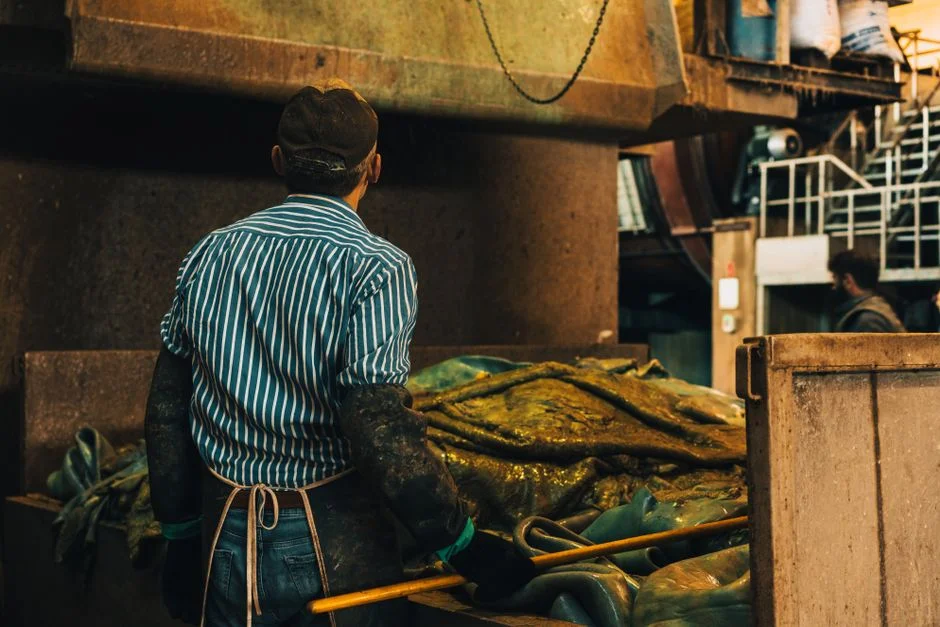
A filter cycle has four phases: fill, press, optional cake wash, and discharge. Tuning each phase to the hydroxide sludge is what separates a press that meets its data sheet from one that drifts toward wet cake and long cycles. Sludge cake forms between the plates and is released by opening the plate pack; consistent cake thickness across the pack is the best on-floor indicator that cloth, pressure, and feed solids are in balance. Cloth blinding by fine metal-hydroxide floc is the most common cause of rising cycle time on anodizing service, and the most effective fixes are routine wash-water quality checks and a scheduled cloth-replacement interval rather than a reactive change after throughput collapses. Filtrate—the water pressed out of the cake—is normally returned to the equalization tank for retreatment rather than discharged directly, because it still carries dissolved metal that the upstream pH adjustment was intended to precipitate.
Disposal Economics and How Press Choice Changes Them
Cake dryness dominates disposal cost: even a small gain in dry solids reduces the number of truck movements per year and the tipping fee per ton at a hazardous-waste landfill. For higher-value metals such as nickel and copper, a drier, cleaner cake also improves recyclability and can offset press capital cost over the operating life of the line. Recessed-plate presses, which the EPA notes achieve the highest cake solids of any mechanical dewatering device (EPA 832-F-00-058, 2000), generally carry higher capital cost but lower lifetime disposal cost on a steady stream, while plate-and-frame presses trade some cake dryness for cloth flexibility on variable chemistry. The economic case for either press must be written against the actual disposal route the plant will use, not against a generic hauling rate.
Frequently Asked Questions
What plate type, cloth and area should I specify for an anodizing line?
For a steady captive line, specify a recessed-plate press to reach the highest cake solids the EPA references (EPA 832-F-00-058, 2000), with PP monofilament cloth for chemical resistance and a filtration area scaled to the dry-solids mass the upstream train delivers, not to the wastewater flow. The BRIN plate-frame study reported 56.00% solids removal with cotton cloth at 4% w/w CaCO3 (BRIN JTL article 218), which is a useful reference point when comparing cloth options, but request a lab or pilot test on the actual hydroxide slurry before finalizing the specification.
What payback period should I expect on the filter press?
Payback is driven by the gap between current disposal cost and the cost of hauling a drier cake, so identify the tipping fee per ton and the current cake moisture at the existing dewatering step. The EPA notes that recessed-plate presses reach the highest cake solids of any mechanical dewatering device (EPA 832-F-00-058, 2000), which is the technical basis for the disposal savings, but the actual payback depends on local hauling rates, landfill classification of the cake, and any metal-recovery credit for nickel or copper; request those three numbers from procurement before the vendor quotes payback.
What should I check when shortlisting filter-press suppliers?
Verify that the supplier can document wetted-material compatibility with the full pH range the upstream train can produce, provide a reference list of installed metal-hydroxide presses rather than only municipal-biosolids work, and offer a filtration-area range that covers the dry-solids mass the train will actually deliver. The HydropureWater product catalog lists 1 m² to 500 m² plate-and-frame units with manual, hydraulic, or PLC control (hydropurewater.com), which is a useful baseline for what a credible supplier should offer. Ask each vendor for a site-specific cycle-time and cake-solids guarantee tied to a feed-solids value, because that clause determines whether the press will meet the disposal-economics case.
How long does delivery and installation usually take, and what compliance risk should I plan for?
Plate-and-frame presses in the 1–500 m² range are typically built to order, so lead time is driven by plate count, cloth specification, and PLC scope rather than by a standard catalog part. Plan a compliance review around the cake classification at the receiving disposal site, because a hydroxide cake from an anodizing line is usually a hazardous waste in the US regardless of moisture content, and the transporter needs the correct waste code on the manifest before the first load leaves. Ask the vendor for a recommended spare-cloth inventory and a cloth-replacement interval up front, because cloth life is the variable that most often disrupts the operating schedule after handover.