What Counts as an Effluent Treatment Plant in Salalah
Effluent is waste other than waste from kitchens or toilets, surface water or domestic sewage, and it can be produced and discharged by any industrial or commercial premises (Water & Wastes Digest, "What is Effluent?"). In Salalah, an effluent treatment plant in Salalah is the engineered train that handles that industrial side of the definition — process wastewater, cooling-tower blowdown, equipment wash water, and contaminated stormwater — before the stream reaches a sewer, a wadi, the marine outfall, or an on-site reuse loop. The plant is sized against four operating variables: design flow in m³/day, influent load (BOD, COD, TSS, FOG, salinity), the discharge or reuse target, and the available footprint.
Sludge is a by-product of every ETP, and if it is properly dewatered it can potentially be used as a soil additive or fertilizer (Water & Wastes Digest). That means the sludge line — thickening, dewatering, cake handling — belongs in the scope from day one, not as a retrofit. A 2026 Salalah buyer should fix the end use at the front end of the project: discharge-to-sewer, discharge-to-marine, or on-site reuse. The decision changes every downstream choice, from biological reactor volume to membrane area, and it changes the capex envelope before any vendor is engaged. For sites with limited civil footprint, an integrated MBR plant packages biological and membrane separation in a single skid, which compresses both plot area and commissioning time compared with a stick-built activated-sludge train.
Oman Compliance Triggers a 2026 Salalah ETP Must Cover
Oman wastewater compliance is layered: a Royal Decree-level environmental law, ministerial decisions, regulator standards, and a port- or free-zone overlay when the plant sits inside the Salalah Port concession or the Salalah Free Zone. The U.S. EPA's "Effluent Guidelines" concept — national regulatory standards for wastewater discharged to surface waters and municipal sewage treatment plants, issued by industrial category (Water & Wastes Digest) — is the right mental model for a Salalah engineer: the regulator judges the plant against category-specific limits, not a single universal number, and the limits tighten for food, fish-processing, refinery and pharma duty.
The parameter list that almost always drives the limit set is: pH, TSS, COD, BOD, oil and grease, total nitrogen, total phosphorus, residual chlorine, temperature, salinity, and — for food and pharma sites — specific organics. Once the end use shifts to reuse, tertiary or membrane steps become mandatory; research on direct nanofiltration of WWTP effluent was framed as a polishing route to meet reuse standards suitable for agricultural or potable usage (Schrader, PhD thesis, University of Twente, DOI 10.3990/1.9789036523325). The auditable evidence base for any design is a pre-FEED sampling campaign of composite 24-hour samples across at least one wet and one dry week, with separate grabs for hot-shift and cold-shift flows. For a cross-jurisdiction benchmark on category-specific industrial limits, the industrial discharge standards reference provides a useful structural comparison.
| Compliance layer | What it controls | Engineering input required |
|---|---|---|
| Royal Decree environmental law | General duty of care, discharge prohibition, penalties | Legal review of permit conditions |
| Ministerial decisions / regulator standards | Numeric limits by industry category | Category-specific parameter list |
| Port / Free Zone overlay | Site-specific effluent rules inside the concession | Concessionaire's discharge schedule |
| Reuse standard (if applicable) | Tighter microbial and salinity limits | End-use specification and reuse risk assessment |
Choosing the Right Process Train for Salalah Conditions
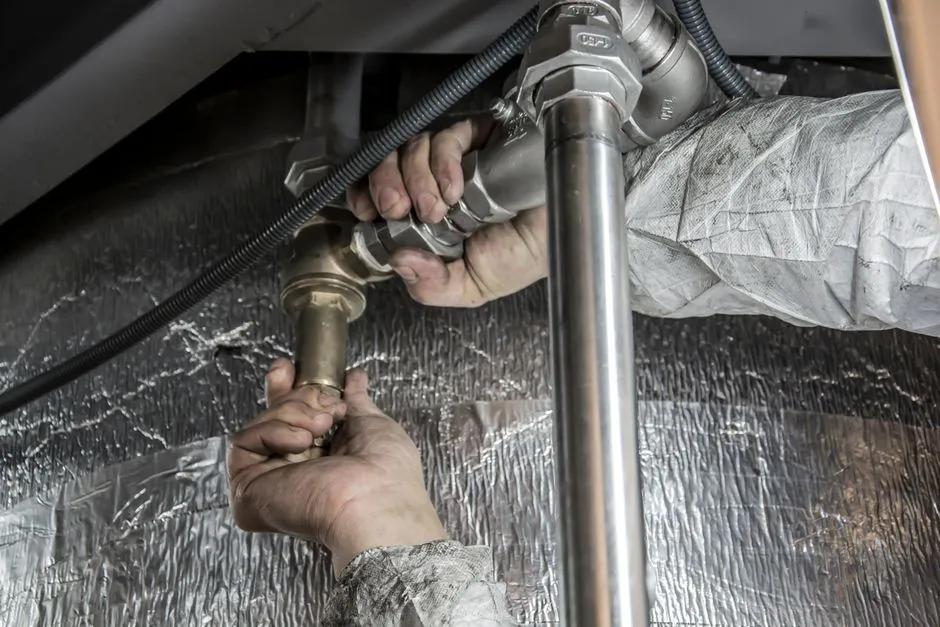
Every Salalah train starts with screening and flow equalization; the variable stages are physico-chemical, biological, tertiary and disinfection. Selection must be based on influent, footprint, and end use.
Dissolved air flotation (DAF) is the documented high-efficiency route for suspended solids, FOG, oil and grease, and colloidal matter across food, paper, textile, metalworking, petrochemical and municipal pre-treatment duty. In a Salalah fish-processing or refinery context, a DAF pre-treatment stage cuts the load on the downstream biology and protects the membranes from oil fouling. MBR combines activated sludge with submerged membrane filtration to deliver near-reuse effluent in a smaller footprint than a conventional activated-sludge train — relevant where the plot is constrained inside the port or free-zone lease. Ultrafiltration with 0.03 µm PVDF membranes removes bacteria, colloids and suspended solids without chemicals and tolerates feed turbidity up to 300 ppm, which is why a UF polishing train is the typical RO pre-treatment step. Membrane polishing to reuse quality is supported by direct nanofiltration research on WWTP effluent (Schrader, PhD thesis, University of Twente), and constructed wetlands are a documented biological-polishing option for micropollutants (Lei, PhD thesis, Wageningen University, 23 September 2022).
Match selection to end use: sewer discharge → biological + clarification; marine discharge → biological + DAF or sand filter + disinfection; reuse → MBR or UF + RO, plus UV or ClO₂. A defensible RO design criteria for industrial wastewater starts from this train selection and works backwards into energy and membrane area.
| Train option | Best-fit Salalah duty | Key input to size it |
|---|---|---|
| DAF + biological | Fish, food, refinery pre-treatment; FOG and oil removal | FOG and TSS load from composite sampling |
| MBR | Space-constrained hotel, port, or free-zone site targeting near-reuse | Design flow, footprint envelope, target effluent turbidity |
| UF as RO pre-treatment | Reuse loop with RO downstream | RO feed turbidity and SDI requirement |
| RO / nanofiltration | On-site reuse, cooling-tower make-up | Target salinity, recovery, and energy budget |
| Constructed wetlands | Biological polishing for micropollutants on larger sites | Land availability, influent micropollutant profile |
Design Parameters and Effluent Targets the Plant Must Hit
Primary treatment removes about 60% of suspended solids from wastewater, and secondary treatment removes more than 90% of suspended solids, according to the USGS as cited by Water & Wastes Digest. Those two numbers anchor any design review: the engineer can defend the upstream removal claim, then argue for the tertiary step on the residual fraction. The standard contaminant list — BOD, COD, TSS, TDS, oils and grease, metals, nutrients and pathogens (Water & Wastes Digest) — sets the row set for the parameter table.
Salalah adds three rows that a temperate-zone spec does not: salinity, temperature, and residual chlorine. Gulf seawater intrusion and hot ambient temperatures shift both biological kinetics and disinfection sizing, and residual chlorine becomes a controlling parameter the moment the end use is reuse (it damages RO membranes and irrigation crops). A UV disinfection unit or a chlorine dioxide generator is the standard answer; the choice is driven by whether the downstream RO or irrigation end use can tolerate a chlorine residual.
| Parameter | Typical Salalah raw influent | Sewer discharge target | Marine discharge target | Reuse target |
|---|---|---|---|---|
| BOD (mg/L) | Site-specific, obtain by sampling | Lower than marine, regulator-set | Regulator-set marine limit | Tightest, end-use driven |
| COD (mg/L) | Site-specific, obtain by sampling | Regulator-set | Regulator-set | End-use driven |
| TSS (mg/L) | Site-specific, obtain by sampling | Regulator-set | Regulator-set | End-use driven |
| Oil & grease (mg/L) | High for refinery, food, fish | Regulator-set | Regulator-set, often <10 | End-use driven |
| Total nitrogen (mg/L) | Site-specific, obtain by sampling | Regulator-set | Regulator-set | End-use driven |
| Residual chlorine (mg/L) | Not present in raw | Regulator-set | Regulator-set, marine-toxic | Near zero before RO / irrigation |
| Salinity (TDS mg/L) | Gulf-influenced | Regulator-set | Regulator-set | End-use driven, often <500 for irrigation |
End-use choice tightens the parameter set in a predictable order: sewer < marine < reuse. The procurement lead should expect capex to step up each time the end use moves rightward in the table, and the engineer should brief leadership on that cost impact before the RFQ is issued.
2026 Cost Drivers and Supplier-Evaluation Scorecard

The capex drivers a Salalah buyer should request line-itemed quotes against are: civil works and tankage, equipment skids, membrane area, instrumentation and control, electrical, containerization, and installation. A bid that does not break out those lines cannot be audited against the next bid; it is a black-box price. Opex drivers sit on top of capex and are dominated by energy — especially MBR aeration and RO high-pressure pumps — membrane replacement, chemicals, sludge hauling, and operator hours.
The Neya Water Solutions Salalah page surfaces "several specifications" and "quality parameters," so a 2026 buyer should request the underlying datasheet. The same discipline applies to any vendor: the RFQ must ask for the datasheet, the reference-plant list, and the process guarantee with liquidated damages. A 2026 supplier scorecard should weigh six criteria: documented reference plants, local service footprint, process guarantees with liquidated damages, membrane supply continuity, inclusion of a sludge dewatering press and an automatic chemical dosing system in the train, and after-sales response time. A one-page weighted scoring sheet, attached to the RFQ, makes the award defensible to leadership and to audit. For a broader cross-reference on how cost and compliance connect in another industrial city, the industrial ETP cost and compliance blueprint lays out the same framework for a different jurisdiction.
| Scorecard criterion | What to ask the vendor | What "good" looks like |
|---|---|---|
| Reference plants | List of Salalah or Gulf-region ETPs in last 5 years | Site visit or owner reference supplied |
| Local service footprint | Service office location, response time SLA | Engineer on site within agreed hours |
| Process guarantee | Performance guarantee with liquidated damages | Bounded penalty per parameter missed |
| Membrane supply continuity | Membrane OEM and spare-parts lead time | Spares ex-stock in-region, not on indent |
| Sludge-train inclusion | Filter press and dosing system scope | Single-source responsibility for full train |
| After-sales response | Hours-to-attend in writing | Bound in the purchase order, not a brochure |
Frequently Asked Questions
What is the 2026 capex envelope for an effluent treatment plant in Salalah?
There is no public 2026 price list for a Salalah ETP, and a defensible budget must be built from line-itemed vendor quotes. The right request to the RFQ shortlist is a capex breakdown covering civil works, tankage, equipment skids, membrane area, instrumentation, electrical, containerization and installation, plus a separate opex line for energy, membrane replacement, chemicals, sludge hauling and operator hours. Without that breakdown, any "per m³/day" number quoted in a brochure should be treated
Frequently Asked Questions
What is the typical 2026 capex range for an effluent treatment plant in Salalah and what line items drive the price?
For industrial effluent treatment plants in Salalah, capital expenditure typically ranges from 150,000 OMR to 850,000 OMR depending on capacity and complexity. Costs are driven primarily by the selection of advanced filtration stages, high-grade corrosion-resistant materials (such as SS316 or epoxy-coated concrete) required for the local climate, and the integration of automated SCADA control systems.
Additional cost drivers include the procurement of specialized chemical dosing skids, redundant blower systems for aeration, and the civil works required to meet Omani seismic and geotechnical standards. Logistics for remote site delivery and the inclusion of post-treatment polishing units for tertiary reuse also significantly impact the final investment figure.
How do I shortlist ETP suppliers in Salalah without paying for a generic packaged plant that misses Oman compliance?
To avoid generic solutions, evaluate potential suppliers based on their track record with Ministry of Environment and Climate Affairs (MECA) or Environment Authority (EA) permits. Require a detailed process flow diagram (PFD) that explicitly references Omani Ministerial Decision 145/93 or updated local standards, rather than international benchmarks that may be less stringent.
Request references for existing installations in the Dhofar region that have successfully passed effluent quality audits. Suppliers must provide a performance guarantee that links final payment milestones to successful laboratory testing of the treated effluent against Oman’s specific discharge parameters, rather than simply confirming operational status.
What flow rate and influent data do I need before an engineer can size an ETP in Salalah?
Engineers require a verified average daily flow rate (m³/day) and peak hourly flow rate (m³/hr) to size balancing tanks and hydraulic equipment. Influent data must include precise concentration ranges for Biochemical Oxygen Demand (BOD5), Chemical Oxygen Demand (COD), Total Suspended Solids (TSS), Oil and Grease (O&G), and Total Dissolved Solids (TDS).
Furthermore, you must provide pH levels, temperature profiles, and the presence of any heavy metals or surfactants that could inhibit biological treatment. If the effluent is seasonal or subject to batch discharge, providing the frequency and volume of these spikes is essential to prevent system failure or non-compliance during peak operational loads.
Can a packaged MBR STP meet Oman marine discharge limits, or do I still need DAF and UF in front of it?
A standard Membrane Bioreactor (MBR) can often achieve high-quality effluent, but its ability to meet Oman’s marine discharge limits depends entirely on the influent pre-treatment. If your effluent contains high concentrations of fats, oils, and grease (FOG) or non-biodegradable suspended solids, a Dissolved Air Flotation (DAF) unit is mandatory upstream to protect the MBR membranes from irreversible fouling.
Ultrafiltration (UF) is generally redundant if the MBR is sized correctly, as the MBR process already utilizes a microfiltration or ultrafiltration membrane barrier. However, if the marine discharge permit requires extremely low levels of total nitrogen or phosphorus, an additional chemical precipitation or tertiary polishing stage may be necessary regardless of the primary MBR configuration.
What compliance risk should a Salalah facility flag before signing a 2026 ETP purchase order?
The primary compliance risk is the misalignment between the plant’s design capacity and the facility’s actual 2026 production output, which can lead to hydraulic overloading and immediate regulatory failure. Ensure the purchase order includes a clause for "compliance-by-design," which forces the supplier to take legal and financial responsibility if the effluent fails to meet the Environment Authority's testing standards during commissioning.
Additionally, confirm that the electrical and mechanical components meet the specific harsh-environment requirements of the Dhofar coast, including high humidity and salinity levels. Failure to specify marine-grade protection for control panels and outdoor equipment often leads to rapid deterioration, resulting in operational downtime that constitutes a breach of your environmental operating permit.