Why New Haven's Petroleum Bulk Plants Face Stricter Pretreatment Scrutiny
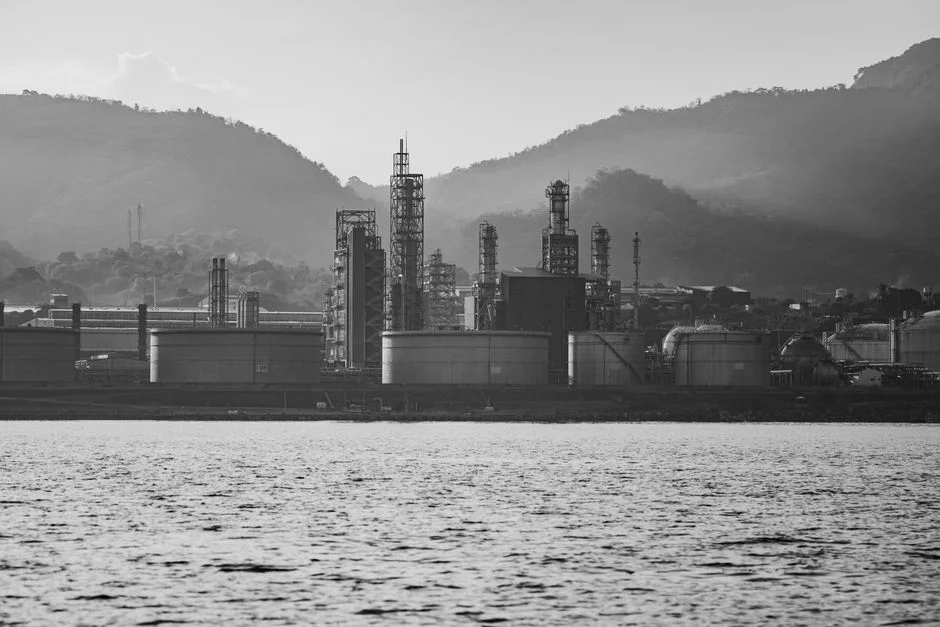
New Haven Harbor handled an estimated 64 million barrels of petroleum products in 1979 across 11 ship and barge terminals, making it the second-largest New England port for petroleum product throughput at the time, according to the New Haven City Plan Department's 1980 study Petroleum Storage in New Haven Harbor: Waterfront vs. Inland (S4). That volume remains relevant because the same study mapped three waterfront tank-farm clusters that drive local discharge risk today.
The East Shore industrial area on both sides of Interstate 95 held about 2.8 million barrels of storage on 49 acres; the Belle Dock area on the West Shore held roughly 1.5 million barrels on 17 acres; and Fair Haven on both sides of the Quinnipiac River held about 545,000 barrels on 14 acres (S4). The study also found that 26% of New Haven's petroleum storage capacity already sat at inland sites in 1979, which means a New Haven-area operator today is auditing a mixed waterfront-and-inland asset base rather than a single uniform site (S4).
That asset base discharges into New Haven Harbor and the Quinnipiac River, both tributaries of Long Island Sound, placing them in the same regulatory neighborhood as other impaired New England tidal waters. EPA, in its 2021 draft permits for five Chelsea River bulk petroleum terminals, noted that Chelsea River is listed as impaired for ammonia, dissolved oxygen, petroleum hydrocarbons, turbidity, odor, and trash/debris, and that the agency responds by writing "strict conditions on the discharge of solids, bacteria, petroleum hydrocarbons and other pollutants" into each renewal (S3). A New Haven operator should assume the same logic will be applied at the next permit cycle and confirm with environmental counsel which CT DEEP and Greater New Haven WPCA orders apply to a specific outfall before sizing equipment.
The Three-Layer Permit Stack Governing a New Haven Discharge
A petroleum bulk plant near New Haven answers to a stack of three permits, and the tightest layer sets the design basis. Layer 1 is federal: the Clean Water Act's National Pollutant Discharge Elimination System (NPDES) program, which EPA Region 1 implements in Connecticut for the bulk petroleum storage sector. EPA's bulk petroleum storage permits run on a five-year renewal cycle and require the operator to "monitor their discharge on a regular basis, document their control measures, and frequently report those results to EPA" (S3). Layer 2 is the Connecticut DEEP industrial wastewater discharge permit, which is the state analog to the Massachusetts DEP permits that EPA noted are issued in parallel to the federal permit (S3). Layer 3 is the local sewer-use ordinance and local limits enforced by the receiving POTW; in greater New Haven that authority is the Greater New Haven Water Pollution Control Authority, which sets site-specific ceilings for oil & grease, total petroleum hydrocarbons (TPH), BTEX, total suspended solids (TSS), pH, and sulfide above the federal floor.
Permit writers use the receiving water's impairment record as the starting point for limits. Each layer has its own monitoring frequency and analytical methods, so the operator must keep parallel chains-of-custody so a single sampling event can satisfy NPDES, CT DEEP, and the POTW without rerunning analyses. A practical rule is to design to the tightest of the three limits, then verify that the chosen equipment train has margin to absorb aging, slug loads, and first-flush spikes.
Which Wastewater Streams Must Be Treated Before Sewer Discharge
EPA's 2021 Chelsea River draft permits identify four wastewater streams that a bulk petroleum facility must account for (S3), and CT DEEP expects the same segregation logic in Connecticut.
- Stormwater accumulating in containment areas around aboveground storage tanks and on paved surfaces is the largest volume and the most variable in quality. EPA notes that "most of the discharges from the facilities consist of stormwater" (S3).
- Hydrostatic test water, used to verify pipe and tank integrity, is generated at all five EPA-permitted Chelsea River terminals and is treated the same as process wastewater before discharge (S3).
- Treated groundwater from remediation or dewatering activities is identified as a permitted discharge at two of the five reference terminals (S3) and typically requires its own permit review in Connecticut.
- Boiler blowdown was identified at one of the five reference terminals as an occasional discharge stream (S3). On the petroleum side the volume is usually minor, but it still has to meet the discharge limits in force.
Operators must physically segregate these streams at the tank-farm boundary. First-flush stormwater and hydrostatic test water can carry significantly more oil than contact stormwater from a clean secondary-containment area, and commingling forces the cleaner stream to be over-treated. Segregation also makes the permit's monitoring schedule easier to defend, because each outfall can be sampled against the limits that actually apply to its stream.
The Pretreatment Equipment Train Used at Modern Bulk Plants
The treatment train at a compliant petroleum bulk plant is a stack of unit operations, not a single device. The order matters because each step removes a class of contaminant the next step is not designed to handle.
- Gravity oil/water separator. EPA requires that "before any water is discharged … it is treated, at a minimum, through an oil/water separator" that uses gravity to separate floating oil and sludge, with the recovered oil and sludge shipped off-site for disposal (S3). This is the regulatory floor, not the design ceiling.
- Coalescing plate separator (CPI). A corrugated-plate interceptor downstream of the gravity separator drops out fine oil droplets. It is the standard add-on where the receiving POTW's oil & grease limit sits below roughly 50 mg/L, which is common for the Greater New Haven WPCA service area.
- Dissolved air flotation (DAF). A dissolved air flotation (DAF) system floats residual emulsified oil and suspended solids that slip past the CPI. DAF is a proven unit operation for petrochemical pretreatment (S5), and a DAF unit is a standard offering sized for 4–300 m³/h, which covers the range most New Haven-area terminals see on a peak first-flush day.
- Multimedia filtration and activated carbon adsorption. A multi-media filter followed by carbon polishes TSS, residual oil, and dissolved hydrocarbons. CT DEEP and local POTWs typically require this stage when TPH or BTEX is the limiting parameter, because the carbon bed drives benzene and toluene below the sewer-ordinance daily maximum.
- Optional ultrafiltration + reverse osmosis reuse train. Where the operator wants to recover water rather than discharge it, an ultrafiltration system followed by a three-stage industrial RO system can produce cooling-tower make-up water. The reference petrochemical reuse design reports ≥90% recovery per UF pass and 98% stable desalination across the RO train (S5). This is a reuse path, not a sewer-discharge prerequisite; for guidance on sizing the membrane stage, the engineering reference RO membrane system design criteria for industrial wastewater walks through recovery rates and pretreatment requirements.
A New Haven-area operator should walk the P&ID against this stack and identify which unit is the controlling bottleneck for the local limit. In most renewal cycles the bottleneck is the carbon contactor on BTEX, not the separator on free oil.
Pretreatment Parameters That Drive Equipment Sizing and Sampling

Regulatory language translates into equipment sizing through a small set of parameters. The table below organizes the parameters a New Haven petroleum terminal should plan around; the actual numeric ceiling for each must be requested from the Greater New Haven WPCA and CT DEEP, because the local limits vary by outfall.
| Parameter | What it controls | Why it matters for equipment sizing |
|---|---|---|
| Oil & grease | Headline permit limit; both daily maximum and monthly average | Drives gravity separator and CPI sizing; sets the DAF skimming rate. EPA's 2021 draft permits added stricter petroleum hydrocarbon limits, so a renewal should expect at or below the prior value. |
| TPH and BTEX (benzene, toluene, ethylbenzene, xylene) | Daily maximum and monthly average | Controls carbon-bed contact time, empty-bed contact time, and breakthrough monitoring frequency. |
| Total suspended solids (TSS) | Daily maximum and monthly average | Drives DAF and multimedia filter sizing; high TSS also drags more oil carryover, so it is a coupled parameter. |
| pH | Typically 6–9 for sewer discharge | Matters where contact stormwater passes through caustic or amine-based additives; affects corrosion and downstream biological treatment at the POTW. |
| Sulfide | Common local limit at the POTW | Drives corrosion and odor at the receiving plant; often flagged in GNHWPCA local limits. |
| Whole effluent toxicity (WET) | Acute and/or chronic test requirements | EPA and CT DEEP increasingly require WET for petroleum outfalls; the operator should budget quarterly WET into the monitoring plan. |
The right next step is to request the actual numeric local limits from the Greater New Haven WPCA before finalising equipment sizing. The same caution applies if comparing situations to other Connecticut sites; for example, the pretreatment framework for chemical plant pretreatment near Fairfield uses a similar parameter table but different numeric ceilings, and the fabricated metals pretreatment near Freeport guide targets a different pollutant mix.
Monitoring, Reporting, and Renewal: The 2026 Compliance Calendar
EPA's bulk petroleum permits require facilities to monitor their discharge on a regular basis, document their control measures, and frequently report those results to EPA (S3). The five-year renewal cycle is the most reliable trigger for tightening limits: EPA's 2021 Chelsea River draft permits replaced 2014 permits and further increased protections of water quality and health (S3). CT DEEP and the receiving POTW run on separate but overlapping renewal cadences, so a best-practice terminal aligns all three renewals on a single master schedule so treatment upgrades can be scoped once and amortised across one outage.
On the operational side, visual inspections of secondary containment, oil/water separator sludge layers, and DAF skimmings should be logged on every operating shift; analytical sampling follows the permit's stated frequency. Spill and sheen events are reported on the day they occur, and any non-stormwater discharge that leaves secondary containment triggers an immediate notification under most state and local programs. A defensible 2026 calendar therefore has four moving parts: the routine DMR cadence, the WET schedule, the visual inspection log, and the five-year renewal trigger, all running on a single shared Gantt so a missed sample in one quarter does not slip into a permit violation at renewal.
Frequently Asked Questions
What does a New Haven petroleum bulk plant actually have to install to meet sewer pretreatment limits in 2026?
At minimum, EPA requires treatment through an oil/water separator before any discharge (S3). In practice, a New Haven-area terminal targeting both the federal NPDES floor and the Greater New Haven WPCA local limits will stack a gravity separator, a CPI, a DAF, a multimedia filter, and a carbon adsorber. The local numeric ceilings for oil & grease, TPH, BTEX, TSS, pH, and sulfide must be requested from the GNHWPCA and CT DEEP for the specific outfall before any equipment is purchased.
How much does a compliant pretreatment train cost to install and operate for a New Haven tank farm?
The cost varies sharply with flow rate, influent TPH, and whether the operator is building new or retrofitting. The right input to bring to a vendor is the design flow in m³/h, the expected peak first-flush loading, the BTEX ceiling from the local limits, and the desired discharge point (sewer vs. reuse). A vendor quoting on flow and target contaminant removal will produce a number that maps to the permit.
How do I choose a pretreatment equipment supplier without getting locked into an undersized train?
Confirm that the supplier's DAF is offered in the flow range matching the terminal's peak first-