The Three-Layer Rule That Governs an Auto Plant Sewer Discharge
An EV or legacy auto assembly plant that discharges to a sanitary sewer in the Richmond, Virginia region is regulated by a stack of three overlapping authorities, and the engineer responsible for compliance has to know which layer controls which number on the discharge report. The Clean Water Act Section 402(b)(8), 33 U.S.C. § 1342(b)(8), obliges the receiving POTW to operate a pretreatment program that controls significant sources — and a battery plant or paint shop that sends tens of thousands of gallons a day to HRSD is exactly that kind of source (EPA, Local Limits Development Guidance, 2015-10-25).
Layer 1 is the National Categorical Pretreatment Standards at 40 CFR Chapter I, Subchapter N, Parts 405–471, which the South Charleston ordinance reproduces verbatim as the controlling citation for any auto/EV plant subject to a metal-finishing or battery-related category (South Charleston Ord. 2181, 4-4-13). Layer 2 is the State Pretreatment Standards referenced in the same South Charleston ordinance, Section 930.2.3, which apply on top of the federal categories. Layer 3 is the POTW's own Local Limits, which Section 930.2.4 of the same ordinance says are developed under 40 CFR 403.5(c) using EPA's five-step MAHL method (South Charleston Ord. 2181, 4-4-13; EPA, 2015-10-25). Two trigger concepts drive how strict Layer 3 gets: "pass through," defined in the Richmond, CA draft ordinance as a discharge that causes a violation of the POTW's NPDES permit alone or in combination with other sources, and "interference," which the same ordinance defines as a discharge that inhibits or disrupts the POTW, its workers, or its sludge-handling process.
The data gap to flag up front: the supplied research does not contain the exact numeric local limits for the Richmond, VA service area. HRSD is the control authority for much of the region, and the engineer must request the current HRSD sewer use ordinance and the host POTW's MAHL basis before quoting any specific metals, FOG, or ammonia ceiling to a regulator. The article's equipment-level recommendations therefore stand on the federal framework and the published reference set below.
Which Plant Wastestreams Drive Pretreatment Risk
Auto and EV plants do not have a single wastestream — they have six or seven, each pulling a different parameter up against a different limit. Mapping the drain to the rule is the first step in scoping the right unit operation.
| Plant wastestream | Dominant pollutants of concern | Reference limit (South Charleston Ord. 2181, 4-4-13) |
|---|---|---|
| Phosphate conversion coating, e-coat rinse, parts washers | Cr+6, copper, lead, nickel, zinc, oil/grease | Cr+6 0.4 mg/L, Cu 2.5 mg/L, Pb 0.5 mg/L, Ni 3.5 mg/L, Zn 3.0 mg/L, FOG 100 mg/L |
| Paint booth scrubber water and overspray | Suspended paint solids, solvents, phenolics, BOD/TSS | BOD 300 mg/L, TSS 350 mg/L surcharge thresholds; phenols 1.5 mg/L |
| Stamping lubricants, dielectric fluid, electrolyte contamination | FOG, ammonia | FOG 100 mg/L, NH3-N 30 mg/L |
| Boiler blowdown and cooling tower bleed | Dissolved solids, copper, zinc from corrosion inhibitors | Cu 2.5 mg/L, Zn 3.0 mg/L, TDS 1,500 mg/L |
| Domestic and cafeteria waste | Background BOD/TSS/FOG | Subtracted out as "uncontrolled sources" under EPA MAHL allocation (EPA, 2015-10-25) |
| Slug risk streams (plating cyanides, paint solvents, cleaning acids) | Free/amenable cyanide, solvents, pH swings | Cyanide (free) 0.1 mg/L, cyanide (amenable) 0.05 mg/L; Slug Control Plan required |
Pre-treatment metalworking streams — phosphate conversion coating, e-coat rinse water, and parts washers — drive the heavy-metal and oil/grease load; these are the streams most likely to bump the chromium +6, copper, lead, nickel, and zinc limits reproduced above (South Charleston Ord. 2181, 4-4-13). Paint shop and overspray streams from booth scrubbers carry suspended paint solids, solvents, and organics, and the resulting BOD/TSS pushes the discharge across the South Charleston 300/350 mg/L surcharge thresholds (South Charleston Ord. 2181, 4-4-13). Assembly and battery cell streams — dielectric fluid, stamping lubricants, and electrolyte contamination — push FOG and ammonia up against the 100 mg/L FOG cap and the 30 mg/L NH3-N cap from the same ordinance. Boiler blowdown and cooling tower bleed are typically low-flow but high in dissolved solids, and they pick up copper and zinc as corrosion inhibitors degrade. Domestic and cafeteria waste are the "background" load the local limit calculation must back out before allocating mass to industrial users, exactly the "uncontrolled sources" concept the EPA Local Limits Development Guidance describes (EPA, 2015-10-25). Slug and accidental discharge risk from plating cyanides, paint solvents, and cleaning acids triggers a Slug Control Plan under both the South Charleston ordinance (Section 930.3.3) and the Richmond, CA ordinance (Section 12.18.030.4).
How EV and Auto Plants Translate Limits Into a Treatment Train
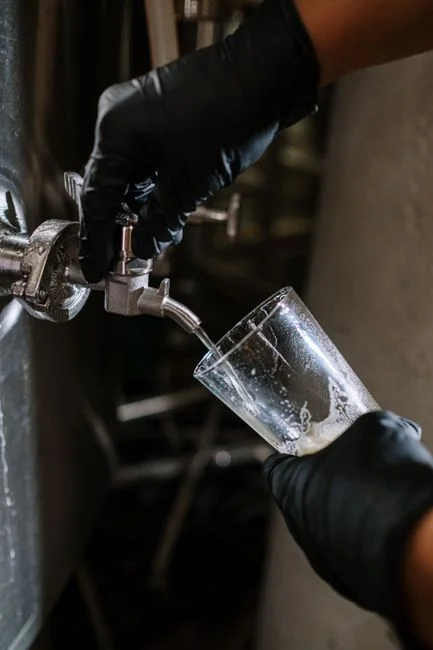
Once the engineer has a wastestream map, the next step is to translate each limit into a unit operation that fits on a P&ID and a CAPEX request. The train below is the typical 2026 sequence for an auto/EV plant in the HRSD service area; every step is justified by a specific reference limit from the South Charleston ordinance reproduced above.
Step 1 is equalization. A flow and pH equalization tank is the foundation for any auto plant, both for load smoothing and to keep the plant below the 66%/6-month chronic-violation threshold that defines Significant Noncompliance under 40 CFR 403.8(f)(2)(vii), as cited in the Richmond, CA draft ordinance. Step 2 is oil/water and FOG removal: an API or coalescing separator first to drop free oil, then a DAF unit for FOG and suspended solids to break emulsions and lift the residual oil and paint solids so the discharge sits below the 100 mg/L FOG reference and does not interfere with downstream biological or physical-chemical steps (South Charleston Ord. 2181, 4-4-13).
Step 3 is pH adjustment and chemical precipitation. A PLC-controlled chemical dosing skid delivers caustic or sulfuric for pH control plus coagulant (typically ferric chloride or polymer) for metals precipitation, addressing the copper, lead, nickel, and zinc reference limits listed above (South Charleston Ord. 2181, 4-4-13). Step 4 is clarification: a lamella clarifier for metals precipitation removes the metal hydroxide floc in a compact footprint that suits Richmond-area sites where building pad is constrained. Step 5 is sludge dewatering: a plate and frame filter press for metal-bearing sludge concentrates the precipitate to a handleable cake for off-site disposal, which keeps hauling cost down and prevents the dissolved-solids and metals load from re-entering the plant water loop. Step 6 is final polishing and monitoring: pH, flow, and temperature verification plus an automatic sampling station feed the Self-Monitoring Report required by the host POTW and the Periodic Compliance Reports section of the Richmond, CA draft ordinance.
One rule applies to every step: South Charleston Section 930.2.6 explicitly bans dilution as a substitute for treatment, and the General Manager may impose mass limits on any User who tries to use dilution to meet applicable Standards. The same prohibition is repeated in the Richmond, CA draft ordinance. For a deeper read on metals pretreatment and sewer compliance, see the metals pretreatment and sewer compliance guide, and for a head-to-head on DAF versus clarifier selection, see the DAF vs clarifier selection for metals wastewater factory guide. A broader treatment of pretreatment compliance for industrial plants is also available.
Categorical vs. Local: Who Enforces Which Limit
The fastest way to tell whether an argument is with EPA, the state, or the POTW is to look at which layer of the rule stack the disputed number comes from. The table below is built directly from the South Charleston and Richmond, CA ordinances, and the 40 CFR citations they reproduce.
| Citation | What it controls | Who enforces |
|---|---|---|
| 40 CFR 403.6(e) — Combined Waste Stream Formula | Alternate limit when a categorical stream is mixed with unregulated wastewater at the same plant | Control Authority (the POTW) imposes the alternate limit |
| 40 CFR 403.6(c) and (d) | Equivalent mass/concentration conversions; prohibition on dilution as a substitute for treatment | POTW documents the conversion; EPA can challenge |
| South Charleston Section 930.2.2.D — Net/Gross credit | Credit for pollutants in intake water, up to the influent value | South Charleston Sanitary Board (analogous role for HRSD) |
| Richmond, CA Class IIA / IIB definitions | SIU threshold: ≥25,000 gpd average work day = Class IIA, full SIU reporting duties | POTW issues the Wastewater Discharge Permit |
| South Charleston Section 930.2.5 — Right of Revision | POTW may set more stringent limits by ordinance or in individual permits | POTW, with EPA/State approval authority oversight |
When a regulated categorical stream is mixed with unregulated wastewater, the General Manager must impose an alternate limit using the 40 CFR 403.6(e) Combined Waste Stream Formula, exactly as South Charleston Section 930.2.2.C requires. Equivalent mass and concentration conversions follow 40 CFR 403.6(c), and the prohibition on dilution as a substitute for treatment follows 40 CFR 403.6(d) — both reproduced in South Charleston Section 930.2.2 (Ord. 2181, 4-4-13). Plants that use city water for rinses and want credit for background metals can apply for a net/gross adjustment under South Charleston Section 930.2.2.D, provided they can show the intake water is drawn from the same body of water as the POTW's receiving stream. The Richmond, CA draft ordinance's Class definitions set the SIU threshold: Class IIA is ≥25,000 gpd on an average work day, Class IIB is <25,000 gpd, and crossing the 25,000-gpd line is what triggers full Significant Industrial User reporting duties. The South Charleston Sanitary Board reserves the right under Section 930.2.5 to set more stringent limits by ordinance or in individual wastewater discharge permits, and the Richmond, CA draft ordinance carries an equivalent reservation.
Sizing the System and Avoiding Common Permit Failures
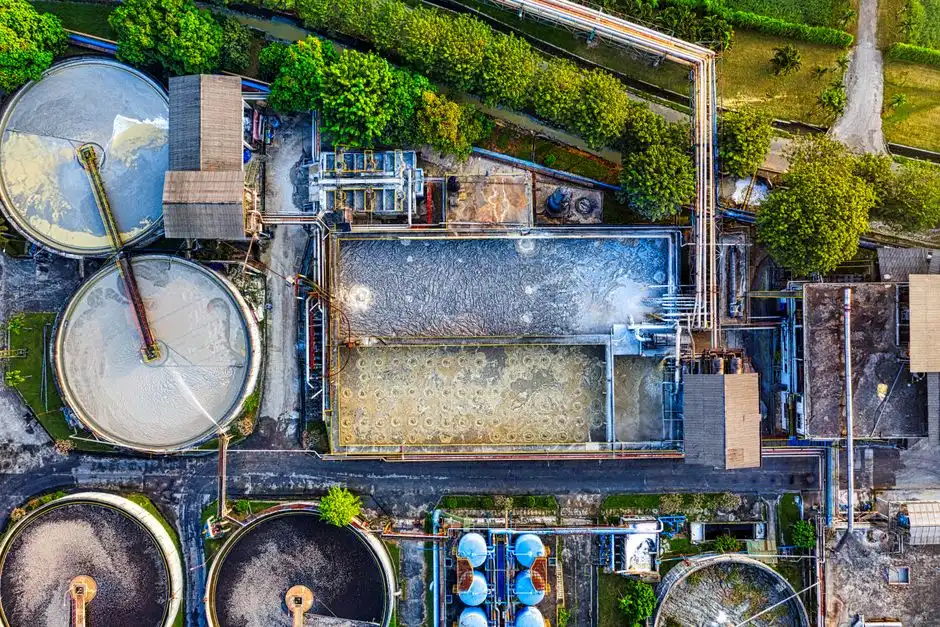
Turning the limit-by-limit analysis into a defensible 2026 design means collecting the right inputs from the host POTW and avoiding the permit pitfalls the South Charleston and Richmond, CA ordinances are built to catch. The first input set is documentation: the current local limits ordinance, the MAHL basis, the draft SIU permit, and the sampling/reporting frequency are the documents both the South Charleston and Richmond, CA ordinances explicitly call for as a condition of discharge.
For hydraulic sizing, the qualitative direction is to design the equalization tank for at least one full shift of expected flow variation before any downstream treatment, because flow equalization is explicitly authorized in the Richmond, CA draft ordinance (Section 12.18.030.3.B) and is the cheapest insurance against SNC trips. The most common permit failures are administrative: missed Baseline Monitoring Report deadlines, failure to recertify periodically, and chronic exceedances that trip the 66%/6-month SNC rule at 40 CFR 403.8(f)(2)(vii), as cited in the Richmond, CA draft ordinance. The most common engineering failures are under-sized DAF or clarifier for FOG, no Slug Control Plan for plating-area cyanides, and an inadequate Slug Control Plan that omits stored chemicals and notification procedures — all of which the South Charleston ordinance (Section 930.3.3) and the Richmond, CA draft ordinance (Section 12.18.030.4) describe in detail. For auditing, the Richmond, CA draft ordinance gives the POTW right of entry for inspection and sampling, including search-warrant procedures, so the plant must keep records and calibration logs for analyzers and make them available on demand.
Frequently Asked Questions
What does an EV or auto plant near Richmond actually have to meet before sewer discharge in 2026?
The plant has to meet the National Categorical Pretreatment Standards at 40 CFR Chapter I, Subchapter N, Parts 405–471 where a category applies, the State Pretreatment Standards where Virginia imposes them, and the receiving POTW's own Local Limits developed under 40 CFR 403.5(c) using EPA's MAHL method (South Charleston Ord. 2181, 4-4-13; EPA, Local Limits Development Guidance, 2015-10-25). The numeric HRSD local limits are not in the supplied research; the engineer must request the current HRSD sewer use ordinance and the host POTW's MAHL basis before quoting specific ceilings.
How should a buyer scope a pretreatment system for a Richmond-area EV or auto plant, and what is a defensible supplier selection check?
The defensible scoping check is to map every wastestream (e-coat, phosphate, paint booth, assembly, battery cell, blowdown) to a specific reference parameter and a specific unit operation, then verify that the chosen equipment train handles the worst-case slug scenario the host POTW will write into the Slug Control Plan. For supplier selection, a defensible check is to require evidence that the vendor has delivered an integrated equalization-plus-DAF-plus-lamella-plus-filter-press train under a documented commissioning plan that includes pH, flow, and temperature verification — the elements both the South Charleston and Richmond, CA ordinances rely on for compliance reporting.
What CAPEX range should a buyer plan for an auto-plant pretreatment train?
The supplied research does not contain a CAPEX figure for an auto-plant pretreatment train, and no typical range is reproduced here. A buyer must request a site-specific budgetary quote from a vendor that has installed a comparable train at a comparable flow, and must build in the cost of the Slug Control Plan, the self-monitoring station, and the off-site sludge disposal route that the South Charleston and Richmond, CA ordinances all require.
What compliance risks should a plant engineer flag to EHS before signing a permit?
The two risks that show up most often in enforcement actions are chronic exceedances that trip the 66%/6-month SNC threshold at 40 CFR 403.8(f)(2)(vii) and inadequate Slug Control Plans that omit stored chemicals and notification procedures (South Charleston Section 930.3.3; Richmond, CA Section 12.18.030.4). The engineer should also flag the anti-dilution rule — South Charleston Section 930.2.6 explicitly bans increasing process water to meet a limit — because that single clause has invalidated more than one seemingly compliant discharge report.